
Palm pest
Palmetto Weevil
North America's largest weevil and the most lethal insect pest of palms in Florida. Its larvae bore into the crown and destroy the bud, and by the time the crown collapses the palm is already lost.
Palms it affects: Cabbage palm (Sabal), Canary Island date palm, Bismarck palm, Latan palm, Saw palmetto, Royal palm, Coconut palm, Date palm, Washingtonia, Pritchardia, Florida thatch palm, Caryota
- Affects
- Cabbage palm (Sabal), Canary Island date palm, Bismarck palm, Latan palm and more
- When it shows
- Adults fly year-round. The high-threat window runs roughly March through June or July.
- What we do first
- A crown check on every high-risk palm at each visit.
What you see
Signs in the field
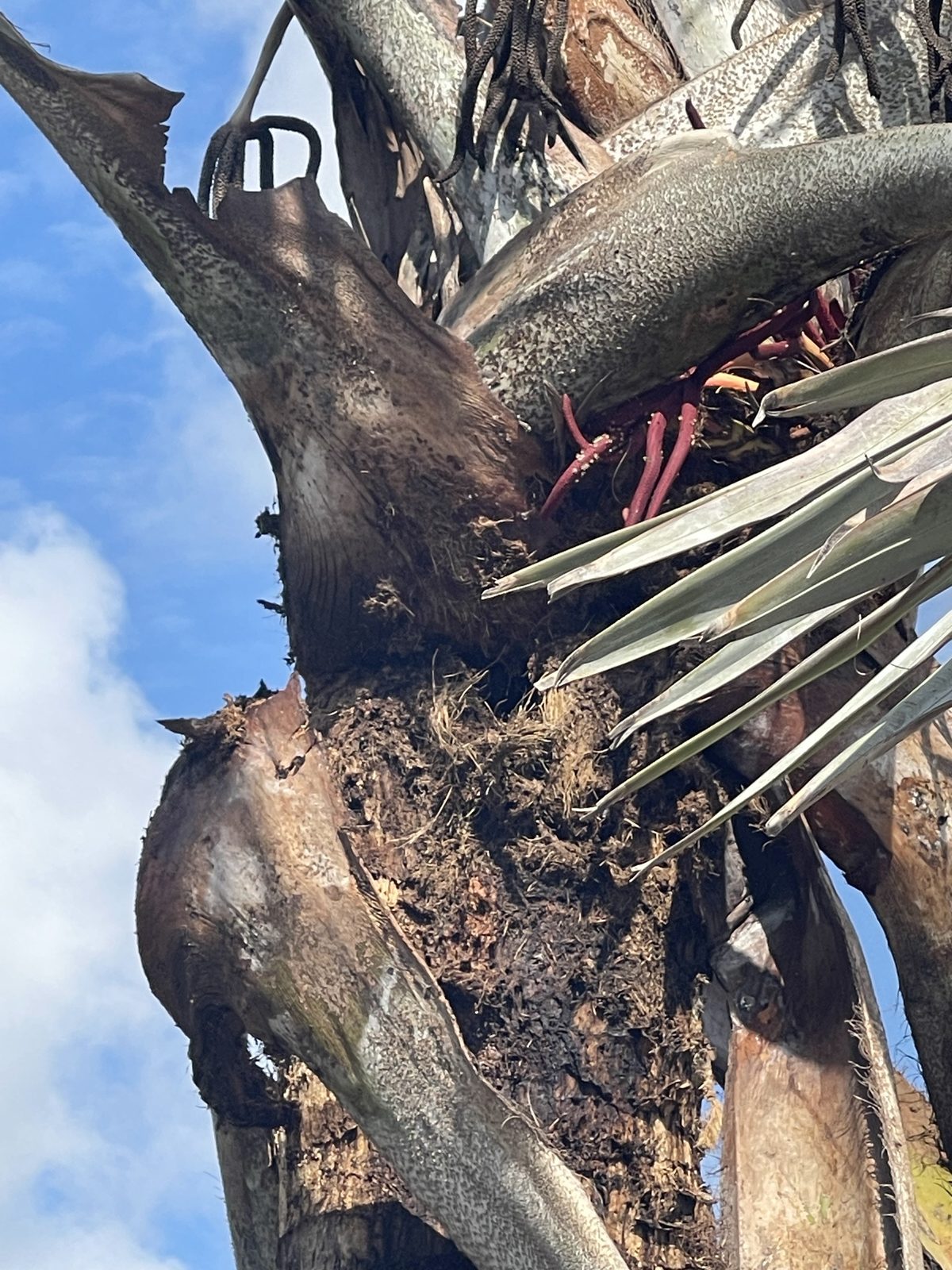
- Wet, chewed fiber (frass) at the base of the crown and leaf stems, sometimes running down the trunk
- A fermenting, rotting odor when the crown is disturbed
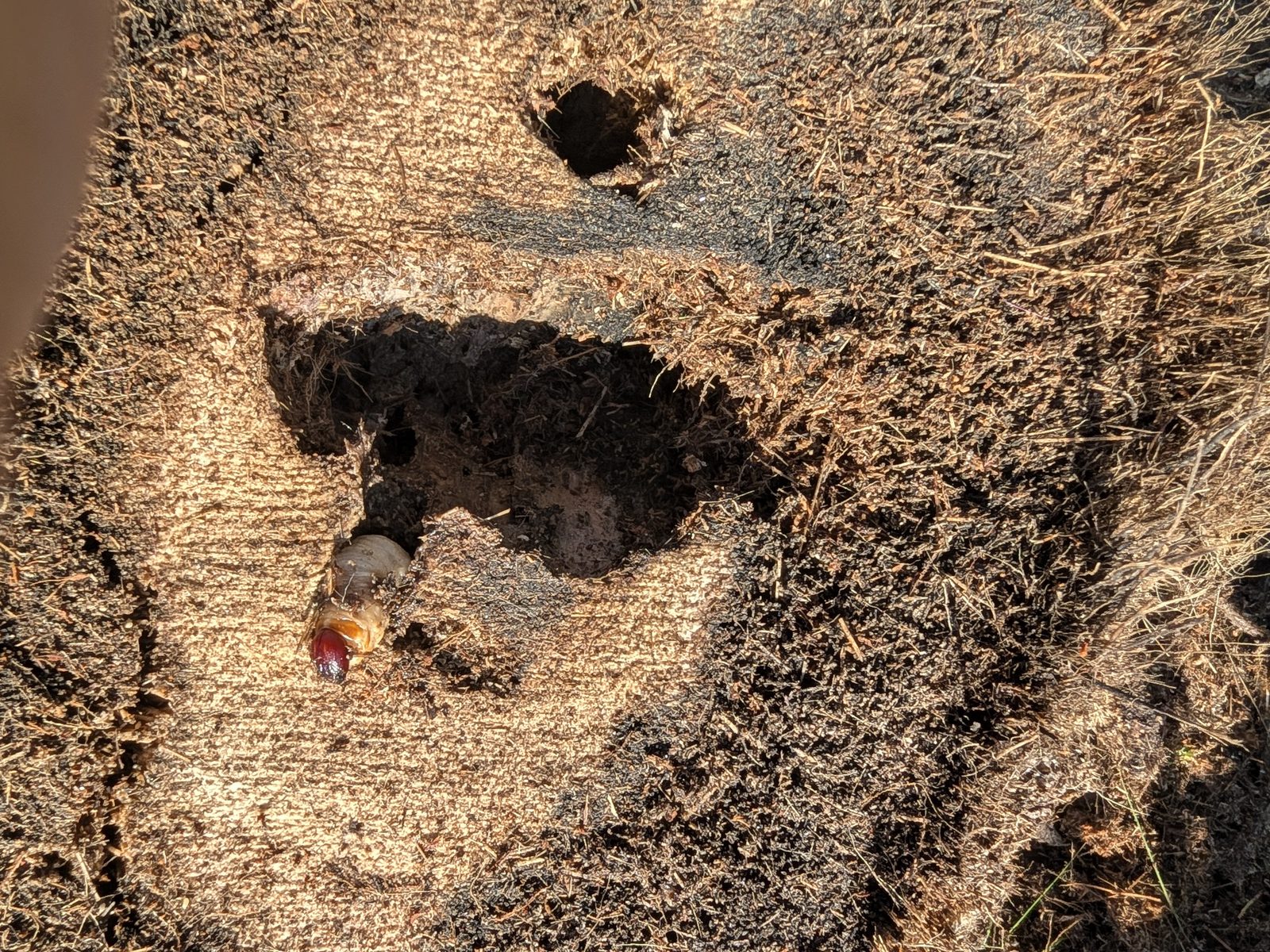
- Entry holes about 0.3 to 0.5 inch (8 to 12 mm) near the crown, in leaf bases or in pruning wounds
- A spear leaf that pulls free with little resistance
- Fronds drooping and collapsing, ending in a toppled crown, the "popped neck"
- Legless cream grubs with a dark brown head inside the crown tissue
From the field · 1 of 7
The detail
What else to know
Why it matters
The weevil goes after the bud, the palm's only growing point. Once larvae destroy it, the palm cannot be saved.
For the first few weeks there are no canopy symptoms. The palm looks normal from the ground. Crown collapse usually shows from a distance 8 to 12 weeks or more after the attack, and by then there is nothing to treat.
What draws it in
Stress. Adults are drawn to the scent of wounded and stressed palms. Transplant shock, over-pruning, lightning strikes, construction damage and poor nutrition all raise the risk.
Canary Island date, Bismarck and latan palms seem to attract weevils even when healthy. Adults are active year-round here. The high-threat window runs roughly March through June or July.
How it spreads
Adults fly. An infested palm left standing, or a fallen crown left on site, can finish raising a new generation that moves to the next palm. Egg to adult takes about 84 days. That is the window to remove an infested palm.
Severe damage is not always a dead bud
Heavy damage does not prove the bud is gone. We have seen a severely damaged palm recover after a bud drench because its bud was still alive. So we assess the bud before any palm is written off. No outcome can be promised.
What we do
How Ptolemy handles it
Field condition first, then the recommendation. Treatment, removal and diagnosis calls are made by an ISA Certified Arborist, and the serious ones are confirmed in a lab.
Written down before it is neededThis is covered by our palmetto weevil protocol.
- Crown checks at every service visit on high-risk palms: transplanted in the last 6 months, pruned in the last 60 days, Canary Island date, Bismarck and latan palms, and palms near a lightning strike or construction.
- No green-frond pruning, above all in flight season. Every pruning cut on a palm is a permanent wound.
- A preventive soil drench plus a crown spray on high-risk, high-value palms, as a case-by-case call by our certified arborist. We treat targeted palms, not the whole property.
- When the bud is destroyed, prompt removal: chipped on site or hauled at once, never stockpiled near other palms.
- Any weevil larger or redder than expected is escalated. The arborist reports a suspected red palm weevil to the state (FDACS) and keeps a specimen.
Next step
Seeing palmetto weevil on your property?
Keep reading
More palm pests
 Serious
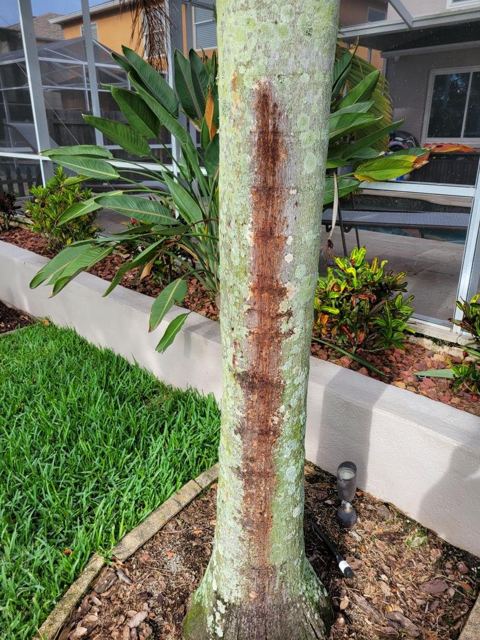
Tiny wood-boring beetles that attack palms and trees already under stress.
Signs and what we do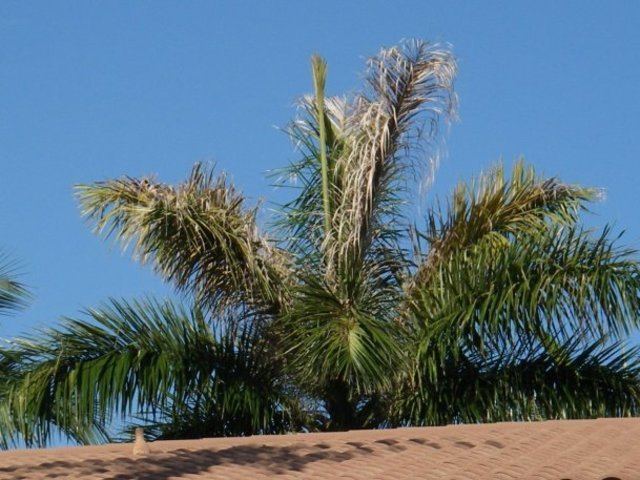 Mostly cosmetic
A tiny bug that feeds only on royal palms.
Signs and what we do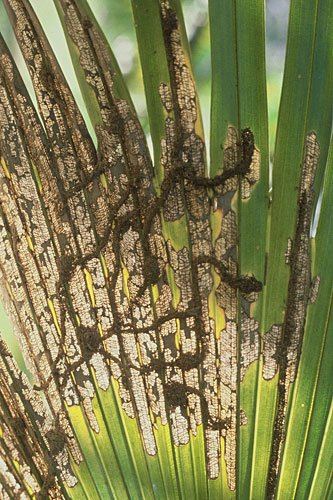 Mostly cosmetic
A small caterpillar that feeds under a mat of silk and droppings on the underside of fronds.
Signs and what we do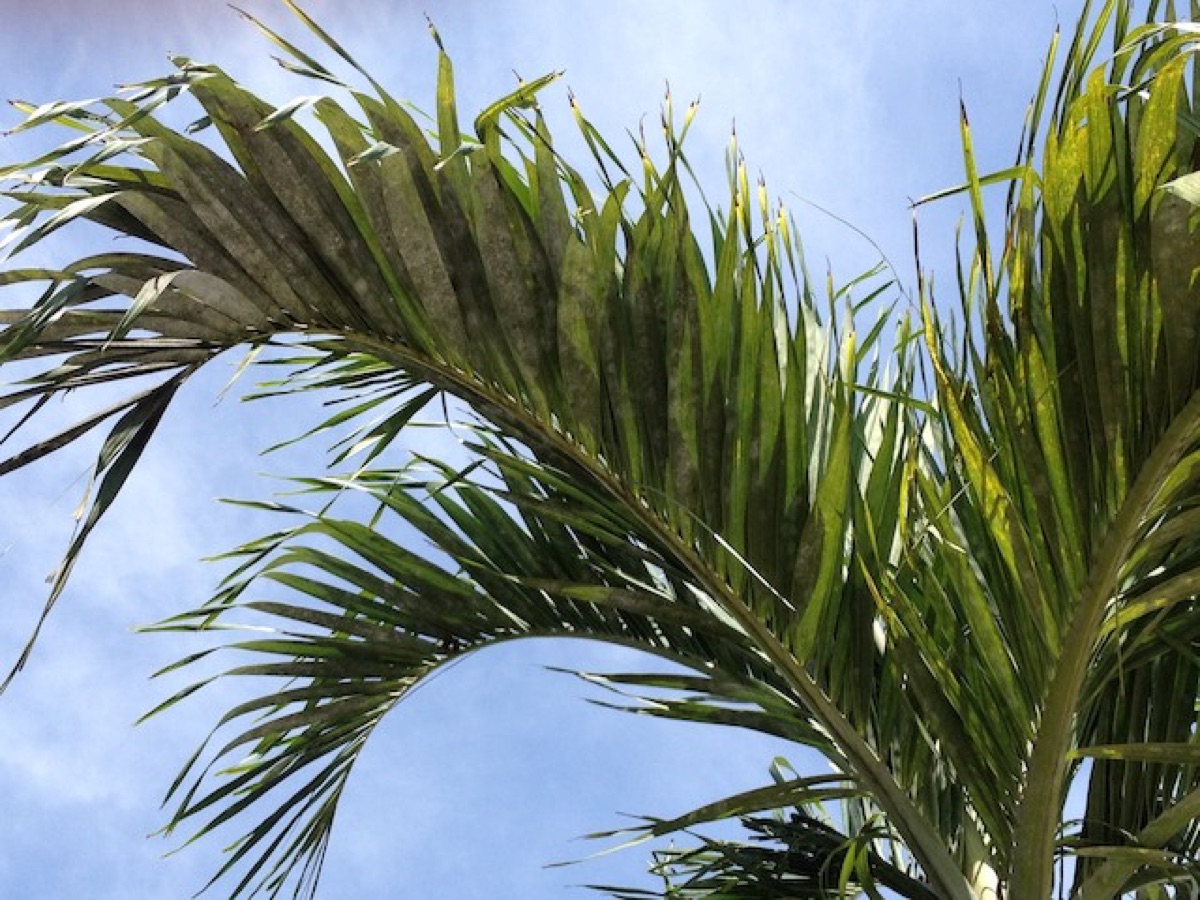 Manageable
Rugose spiraling whitefly is mostly a cosmetic problem on palms: sticky honeydew and black sooty mold.
Signs and what we do