
Facts for board members
What every board member should know about palms, trees and the budget.
Seventeen facts, each with its source, that you can read in two minutes and repeat at the next meeting. Then how to vet any palm and tree company, ours included, and who decides what.
The facts
Short, sourced, and safe to repeat in a meeting.
A community can lose 30 palms and trees in about two years.
A community with a few thousand palms and trees can lose 30 or more of them to pests and disease over about two years, often with every usual contract in place.
Source: Ptolemy field experience, Southwest FloridaYou can know next year’s number before you vote.
On our agreements, any price change is noticed in writing by August 1 and takes effect January 1, ahead of most budget adoptions.
Source: Ptolemy agreement termsFour palm diseases have no cure once they are established.
Lethal bronzing, Fusarium wilt, Ganoderma butt rot and Thielaviopsis trunk rot. Once a palm is infected, the decisions are about the palms around it. That is why protection has to come before infection.
Source: UF/IFAS; Ptolemy program standardAnd 14 more, by topic
Money and budget (5)
Treating a palm or tree costs less than replacing it, for decades.
In a typical treatment program, it takes about 20 to 30 years before the cost of treatment equals the cost of replacing a single tree.
Ptolemy treatment program analysis, 2023Nobody in your current contracts watches palm health.
Landscape maintenance covers everything up to about 12 feet: turf, shrubs, irrigation and ground-level feeding. Tree service budgets are built around trimming and removal. Palm health sits in the gap.
Ptolemy program standardA written standard makes bids comparable.
When the plan says what gets done, how often, to what standard and how it is counted, every vendor bids the same scope and every invoice can be checked against it.
Ptolemy Palm and Tree Master Plan specificationSabal palm pruning averages about $27.50 a palm in communities.
Sabal palms (cabbage palms) are the palm we prune most, tens of thousands a year. Our sabal pruning averages about $27.50 a palm in HOA and master-planned communities, and about $34 a palm on golf courses. Your price comes from your own counts after an assessment.
Ptolemy pruning averages, 2026Palm health care is usually 2 to 3 percent of the landscape budget.
A palm health care program typically runs about 2 to 3 percent of a community’s landscape and lawn maintenance budget. That is where we usually fall.
Ptolemy program averagesPalm and tree health (6)
Sterilized tools on every palm is the ideal.
Ideally, yes, and for a homeowner with a few palms it is usually worth it. At community scale it is white-glove service, and the budget often does not allow it. It is recommended on the seven Fusarium host palms, highly on Canary Island date, Medjool and Sylvester, and wherever Fusarium has been lab-confirmed on or near the property. It is an add-on you elect.
Ptolemy pruning tool sterilization specificationSymptoms look alike. The lab tells them apart.
Disease, nutrient deficiency, transplant shock and drought can look the same from the ground. We once called lethal bronzing on a palm, and so did a second palm professional with three decades in the field. The lab did not detect it. That palm is alive and grading Normal today.
Ptolemy field recordsThe killers spread in different ways.
Lethal bronzing is spread by a planthopper insect that breeds in turfgrass. Ganoderma lives in the soil. Thielaviopsis enters through wounds. Prevention depends on which one you are facing, so the diagnosis comes first.
UF/IFASA palm has no savings account.
Palms store less than 10 percent of their dry weight as carbohydrate. Oaks store 15 to 30 percent. A palm depends on a steady supply of water and nutrients, and by the time symptoms show, the window has often closed.
Ptolemy soil and nutrition standardsNormal is the goal: 80 percent canopy health.
Where a service grades condition, every palm is graded Normal, Fair, Poor, Critical or Dead. We do not use “good” or “excellent.” Normal means 80 percent canopy health or better. It is the goal for every palm and tree we manage on a community budget: a management target, not a guarantee.
Ptolemy rating scaleA new tree needs more than a year of reliable water.
A tree is established after about 3 to 4 months per inch of trunk caliper. A 4 inch (10 cm) tree needs over a year. On our program, every new tree gets 2 years on the establishment schedule, with the water measured at every visit.
UF/IFASLaw and licensing (3)
Florida has no state arborist license.
ISA certification is the credential cities and counties ask for on tree permits. A certified arborist passed a third-party exam and must keep learning to keep the title. Ask for the number and look it up.
International Society of ArboricultureAnyone who treats your palms for pay needs a state license behind them.
Spraying, drenching or injecting palms for pay must be done under a Florida licensed pest control business. An unlicensed landscaper treating palms exposes the association.
Chapter 482, Florida Statutes; FDACSNew trees and palms have a grade, and a deadline.
Florida grades nursery stock Florida Fancy, Florida No. 1, Florida No. 2 or Cull, checked at delivery. Within 30 days after delivery, a party to the installation contract may ask the state for a regrading inspection.
FDACS, Florida Grades and Standards for Nursery PlantsBefore you sign with anyone
How to vet any palm and tree company
Ten questions to ask every vendor before the board signs. We would rather you ask them of us too.
- Who is the ISA Certified Arborist, and what is the number?Look it up on the ISA website. Ask whether that person directs the work on your property, not just the proposal.
- Is it a licensed Florida pest control business?Any spraying, drenching or injection for pay requires one. Ask for the FDACS license and the category.
- Who makes risk and removal calls, and how?Ask for an assessor qualified in the ISA tree risk assessment method (TRAQ), and for the call in writing.
- Do they test before they call a disease?A disease call made from a photo can cost you a palm that never needed to come out.
- Will they work to a written standard?ANSI A300 for pruning, ANSI Z133 for crew safety. Anything outside the standard should need your written approval first.
- What insurance do they carry?Ask for certificates of general liability and workers’ compensation, named the way your manager requires. Ptolemy carries general liability, workers’ compensation and auto.
- Will they share the records?Ask: will you share the inventory, grades and photos with us in every report and on request?
- How do they decide what to cut?“Trim everything” is not a plan. Ask for prescription pruning, written per tree or group.
- What is included, and what is billed as a visit?A question about a conk at the base of a palm is a paid visit without a plan. Ask whether it is covered on theirs.
- How will price changes reach us?In writing, and before your budget is adopted. Ask for the date.
Who decides what
The board sets the budget. The arborist makes the clinical call.
Clear lines mean nobody waits for a decision that is not theirs to make.
| Decision | Board | Manager | Ptolemy |
|---|---|---|---|
| The plan level and the budget | Votes on it | Prepares it and brings our number | Builds the plan and number from the counts |
| Which palms are in the plan | Set by the governing documents | Confirms the map | Maps them in the inventory |
| Diagnosis, treatment, removal | Approves the spend | Receives the written finding | A certified arborist makes the call in writing, lab confirmed where testable |
| Testing a palm | Informed | Authorizes | No palm is tested without the client’s authorization |
| Removal permits | Authorizes | Files with the county | Provides the risk assessment the permit needs |
| Scheduling and resident notice | Not involved | Shares the schedule with residents | Schedules crews, sends notice and daily updates |
| Changes in scope | Approves the change order | Requests it | Writes it |
Questions
Questions board members ask
What is the difference between Monitor, Standard and Advanced?
Monitor is inspection only: we look for threats and issues and report, and put nothing into the palm. Standard adds palm fertilization and as-needed treatment of issues found. Advanced adds protective root and bud drenches against palmetto weevil and lethal bronzing. A drench after a storm or freeze is billed separately, on any tier. Visits are 4 a year for communities and 6 for homes.
Why does every palm start at Monitor?
Because the right level depends on the palm, not the property. Every palm enters at Monitor, and our arborist recommends raising a palm’s level one by one, by species, value and risk. We recommend the mix; you decide.
Do you guarantee results?
No. Palm and tree health depends on irrigation, soil, pests, disease and storms, much of it outside anyone’s control. What we promise is that someone is watching, and that when a palm declines, we tell you whether it threatens the rest.
Do you recommend trunk injections for lethal bronzing?
Not as a first step. Antibiotic (OTC) injection is a last resort: a disclosed client choice for a high-value, hard-to-replace palm with no symptoms, in an active zone, whose sample came back Not Detected. Port injection only. Every injection is a permanent wound. The Palm Health Program comes first.
Our residents want the palms cut back hard before hurricane season. Should we?
We prune palms to the 9-and-3 standard: everything below the line comes off, and nothing above it is cut. Cutting harder removes the potassium and magnesium a palm stores in its older fronds. If the board wants something different, we will explain the tradeoff and put it in writing first.
Will you present to our board?
Yes, in person or on a call. Your manager can hand out the one-page board budget brief ahead of the meeting.


ISA Certified Arborist #FL-10118A · TRAQ · Prescription Pruning Qualified · Licensed Florida pest control business

The next step
Start with the free master plan.
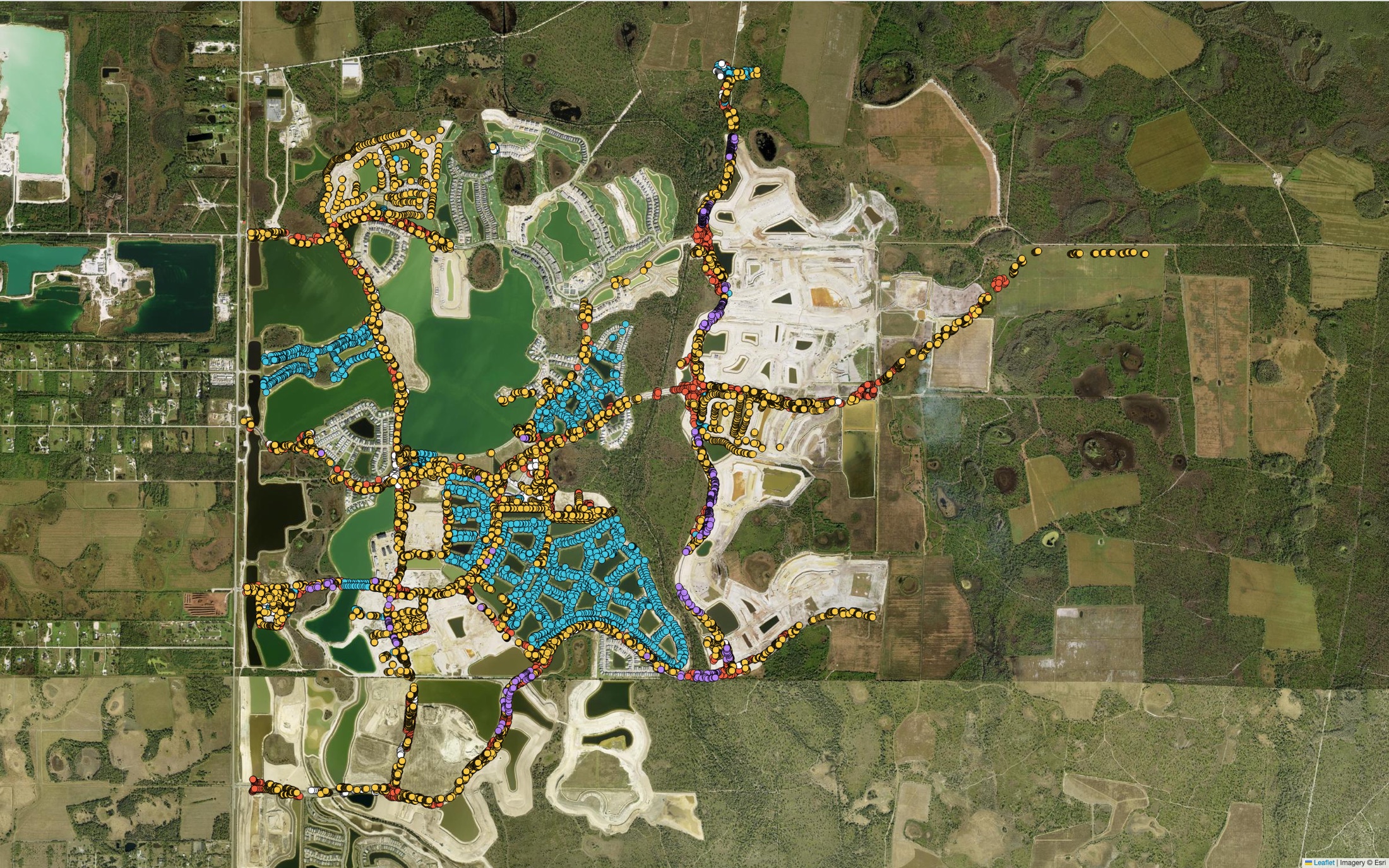
We map every palm and tree, write the plan, and present it to your board.
Request the free master plan