
Palm pruningManage
Palm pruning to one line: the 9-and-3.
Dead fronds, spent stalks and seed pods come off, and so does every frond below the 9-and-3 line, green or brown. Nothing above the line is cut. Every crew works to the same written standard, timed by species.
Storm or emergency: (239) 467-0142- The line
- Everything below 9-and-3 off. Nothing above it cut
- Cycle
- Most palms yearly. Coconut every 6 months
- Fusarium hosts
- Sterilized handsaws when you elect it
- Sabal palm average
- About $27.50 a palm in communities. About $34 on golf courses
What we see in the field
Over-pruned palms are easy to spot from the road.
Palms cut to a narrow tuft. Green fronds on the ground. Boots shaved down to the trunk. It looks tidy for a month.
A living frond is a store of potassium and magnesium. Take it off and the palm pulls those nutrients from the fronds that are left, so deficiency speeds up. Every cut on a palm is permanent. A palm cannot compartmentalize a wound the way a tree does, so each one stays an open door for trunk rot and palmetto weevil.
So we hold one line. Everything below it comes off. Nothing above it is cut, and nothing is cut into the trunk.
How we do it
One standard, held by every crew.
- Count it
Each palm is in our GIS inventory by species and height band, so the scope is counted, not guessed, and every invoice can be checked against it.
- Set the cycle by species
Most palms yearly. Coconut every 6 months. Queen twice a year recommended. Thorny date palms April to May once pods form. Cabbage palms August to October, or November to March at the floor.
- Prune to the line
Dead fronds, spent stalks, pods and every frond below 9-and-3 off. Nothing above the line is cut. Cold-damaged fronds stay until the cold season passes.
- Stop and flag
One-sided frond death, a stripe down the petiole, ooze on the trunk or a soft bud: the crew stops on that palm, sets those tools aside and flags it for lab confirmation.
- Record it
Any palm flagged for symptoms is logged by ID, date and what was seen, so it is checked again at the next visit.
Bees firstSylvester, Medjool and Bismarck palms on a protective soil drench are pruned in April to May, so the flowers and seed stalks are off before the drench season and bees stay off a treated palm.
What is included
What a pruning cycle covers.
Everything below the line
Dead fronds, and every frond below the 9-and-3 line, green or brown, weak fronds included, come off at every cycle. Fronds above the line stay.
Flower stalks and seed pods
Spent stalks off. On thorny date palms on a health program, as many pods as we can reach. Never a cut into the thorny leaf bases.
Boots trimmed, never skinned
On a cabbage palm, boots are trimmed within the first 2 ft below the lowest frond. Cut cleanly in the dead leaf-base layer, close to the trunk and never into it. De-booting below that is its own line.
Clearance above the line
Where a frond above the line hangs over a walk, a drive or a sight line, we tip-prune to lift it before we take it.
Timing by species
Cabbage palms, date palms, coconuts and queens each on their own schedule, so the work lands when it does the most good.
Complete cleanup
Fronds, stalks and pods raked up and hauled off site at every cycle.
Priced on its own lineRoyal palm banding, tool sterilization (an add-on you elect by species), removals, and treatment or nutrition.
Fusarium host palms
Sterilized handsaws, palm to palm.
Fusarium wilt moves from palm to palm on pruning tools. A chainsaw cannot be verified clean in the field. Residue hides in the bar groove, the clutch housing and the chain links. A handsaw can be cleaned and checked.
When you elect sterilization, the crew switches to handsaws on the named palms. Between palms every blade is wire-brushed, sprayed with disinfectant (25% household bleach or 50% isopropyl alcohol), given a quick torch pass and left to cool. What we cut does not change: the same 9-and-3 line, the same stalks and pods.
We highly recommend it on Canary Island date, Medjool and Sylvester palms. On a large community we usually recommend it where Fusarium has been lab-confirmed on or near the property. Bismarck palms get the handsaw for a different reason: Thielaviopsis trunk rot.
The seven Fusarium tool-transmission hosts
- Canary Island date palm
- Medjool date palm
- Sylvester date palm
- Senegal date palm
- Queen palm
- Washingtonia palm
- Sabal (cabbage) palm, recommended at a lower strength
Standards we work to
Written down, so you can hold any crew to it.
Our lines
- Palmetto weevil season, about March through June or July: on palms at high risk for the weevil (Canary Island date, Bismarck and latan palms, and recent transplants), green fronds below the line wait until the season ends. A fresh cut draws the weevil. Dead fronds, stalks and pods still come off.
- No hurricane cuts. Nothing above the 9-and-3 line is cut. Those fronds are the palm's reserve going into storm season. Dead fronds off before June 1 cuts storm debris.
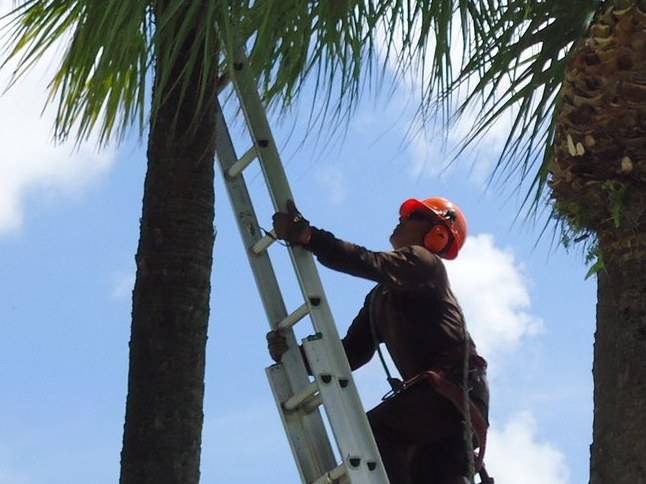
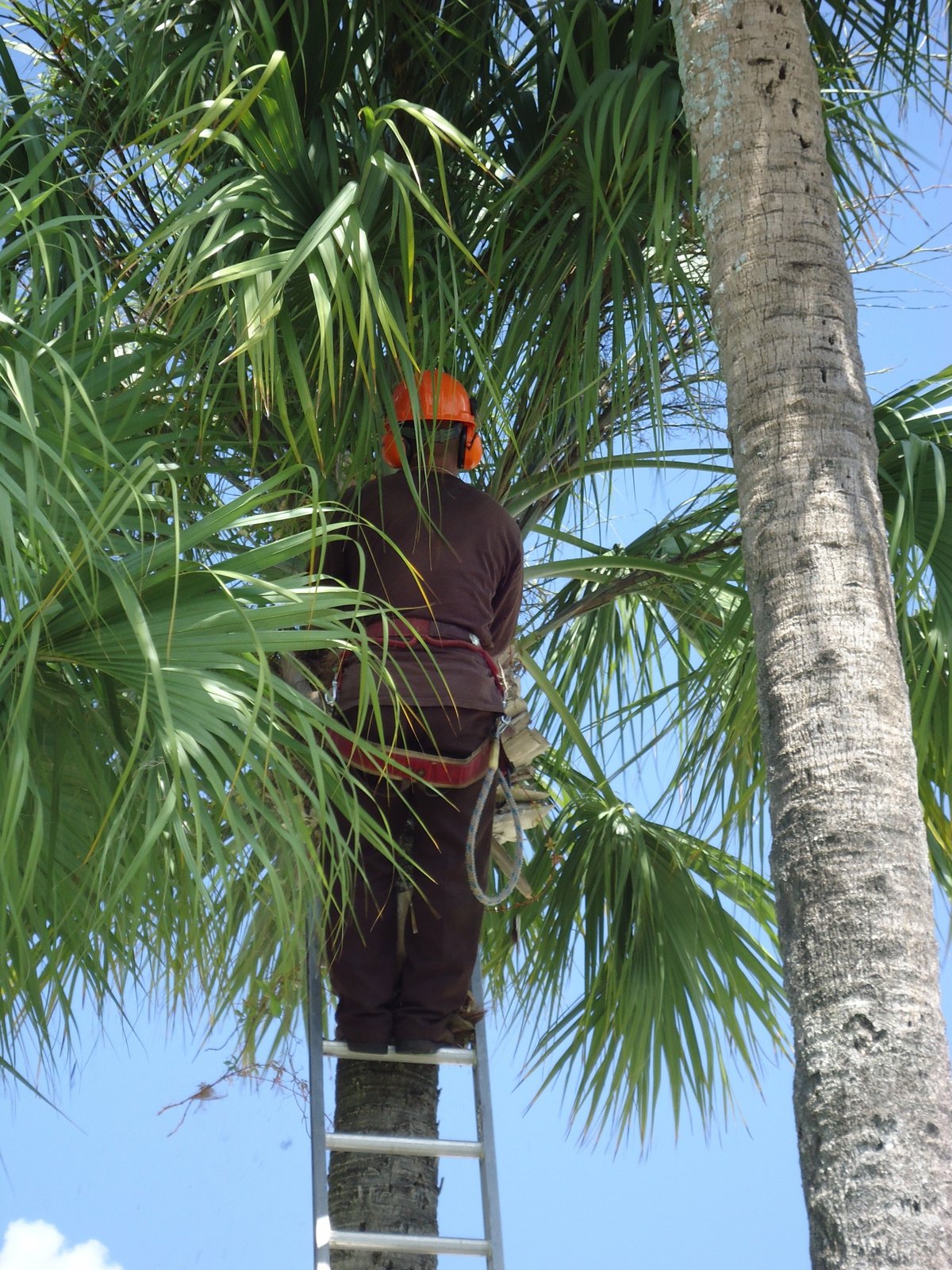
- No climbing spikes on a palm that is staying, unless a ladder or lift cannot reach it and you sign off in writing.
- No ladder on a palm flagged for Ganoderma or Thielaviopsis. Pole pruner from the ground or a bucket truck only.
- After a hurricane, damaged fronds stay as reserve. Broken fronds only, boots untouched.
- Crownshaft palms (royal, foxtail, Alexander, Christmas) largely clean themselves. Half-dead fronds hanging on them point to potassium deficiency, not a pruning need.
Picture the crown as a clock. Everything below the line from 9 to 3 comes off, green or brown. Nothing above the line is cut. The line is where we stop, every palm, every level.
Keep the fronds above horizontal. Cutting higher than that speeds potassium deficiency. Shaving boots scars the trunk.
The basis for our handsaw protocol on Fusarium host palms.
The national safety standard for tree and palm work, ladders, lifts and climbing.
Sources: Ptolemy Palm Pruning and Pruning Tool Sterilization specs; our positions on the 9-and-3 standard, tool sterilization and bee timing; UF/IFAS EP443 and PP139; ANSI A300 Part 1; ANSI Z133.
On the job
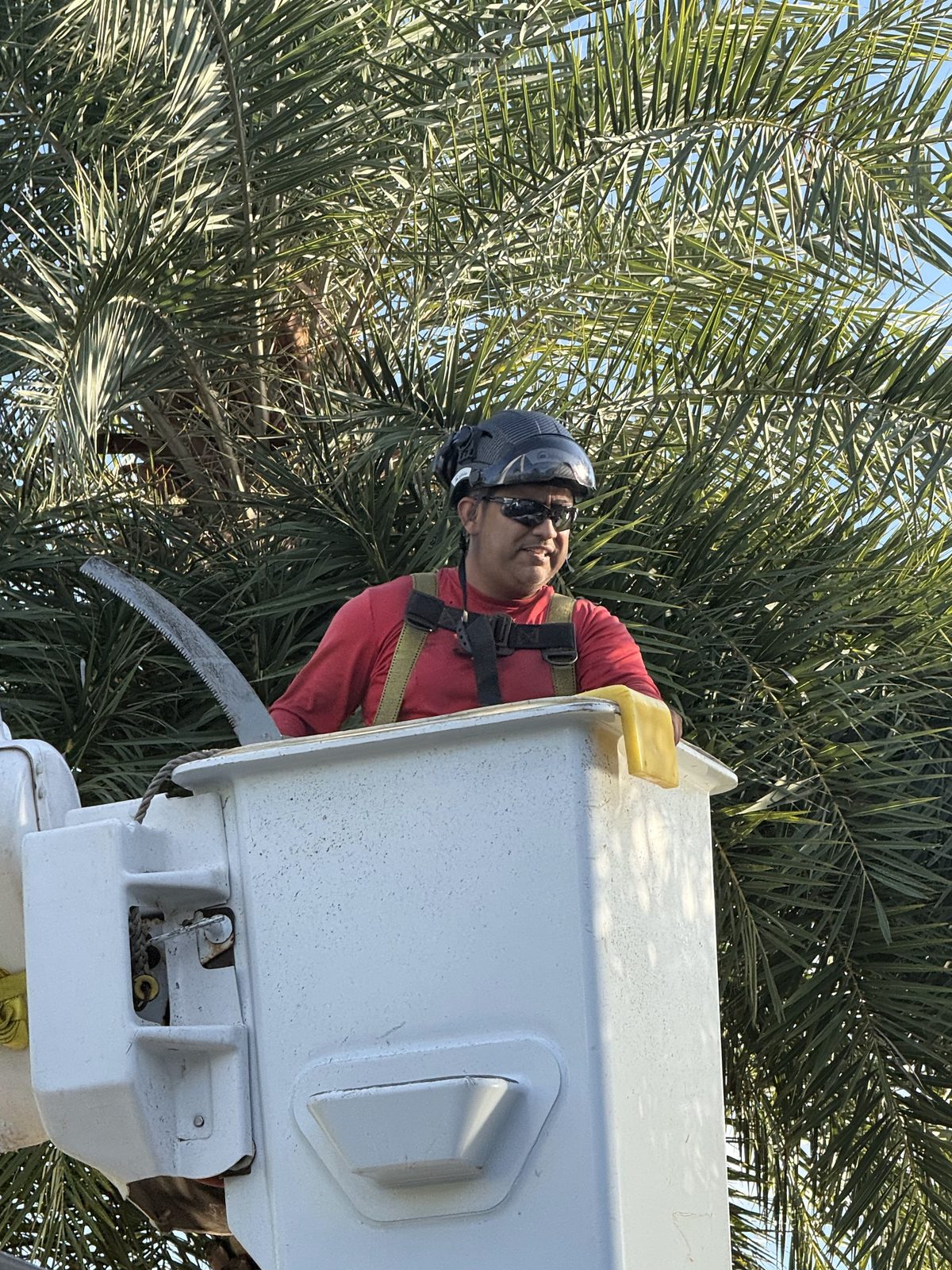
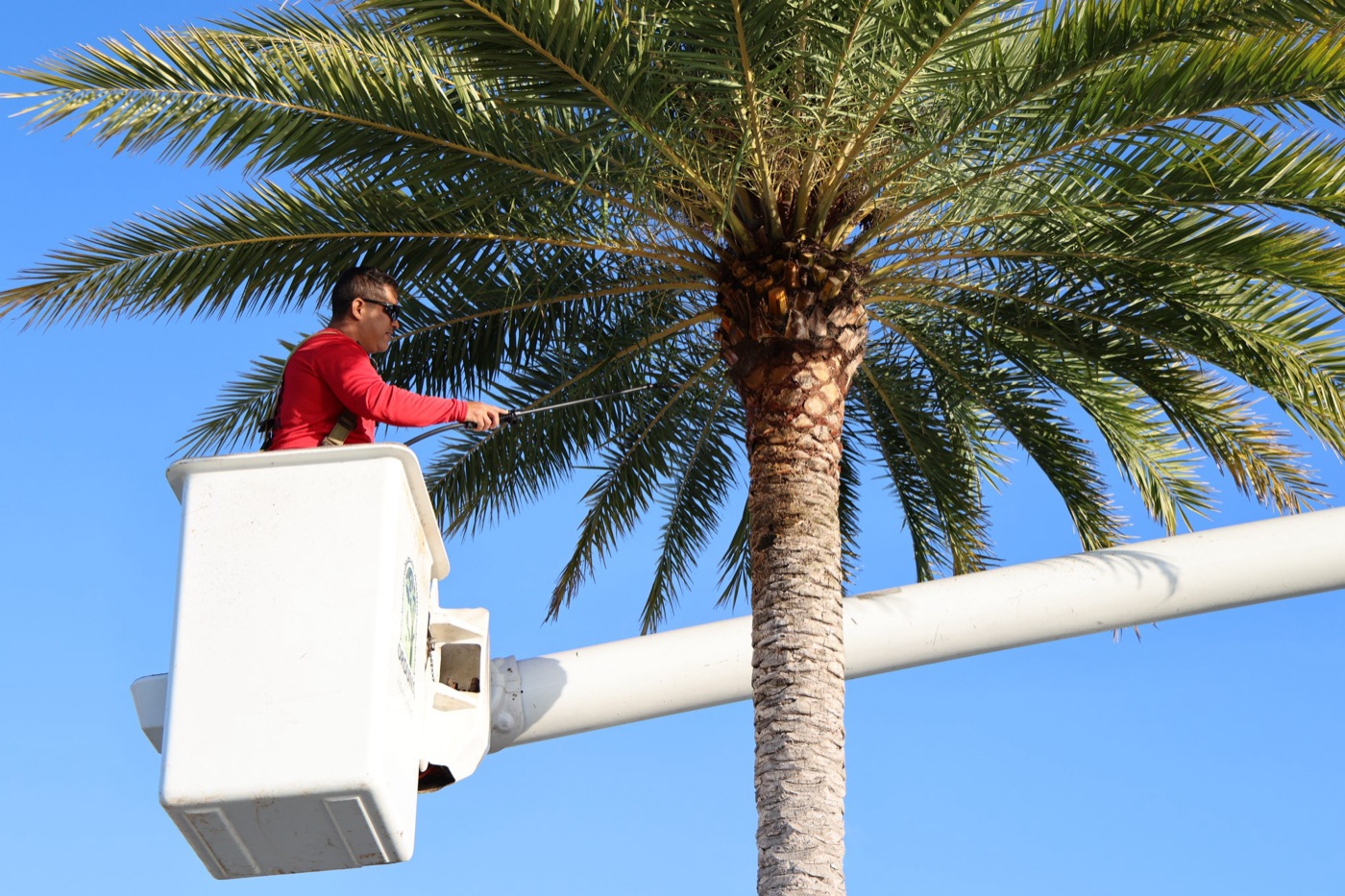
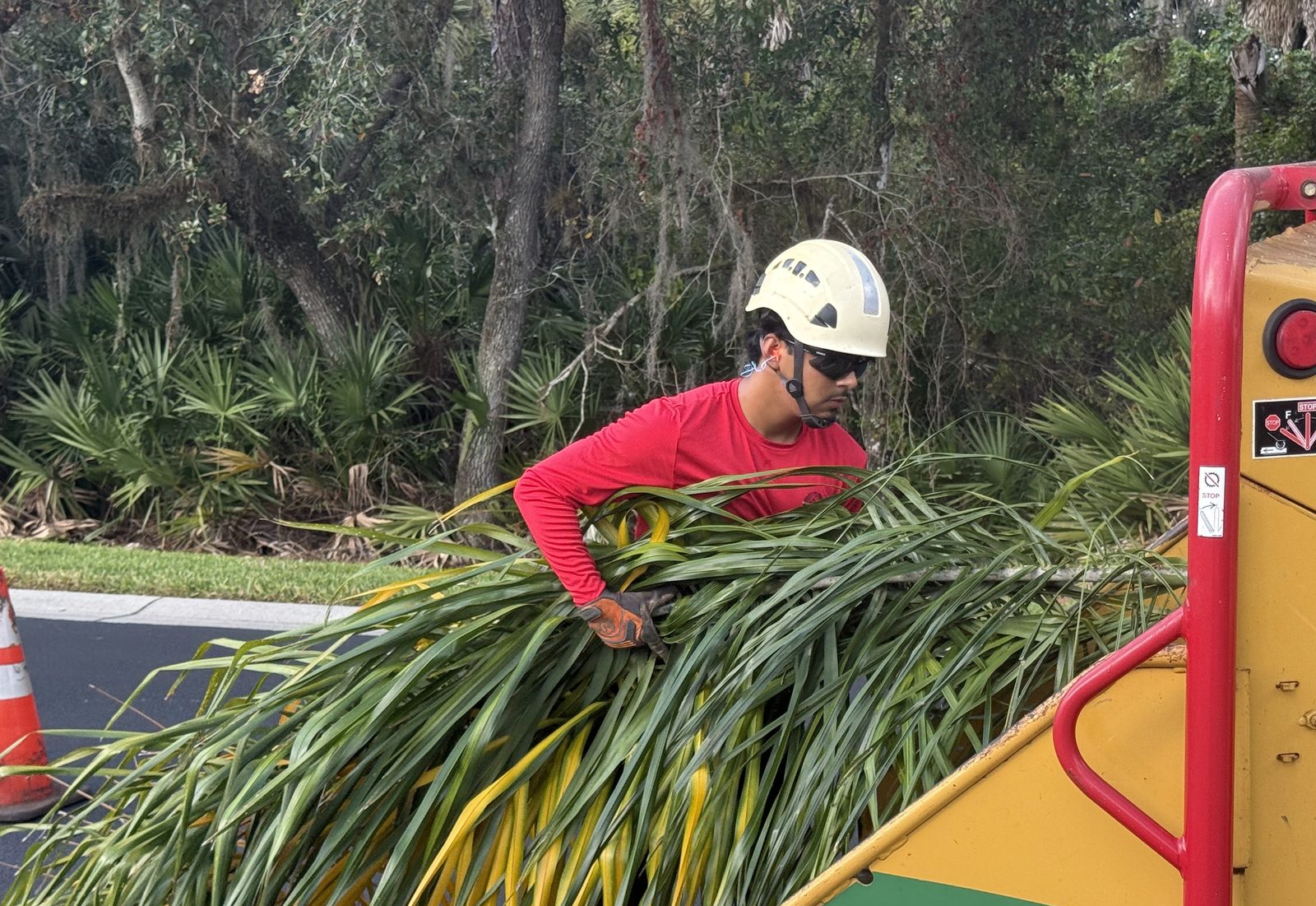
Palm pruning, in the field.
Illustration
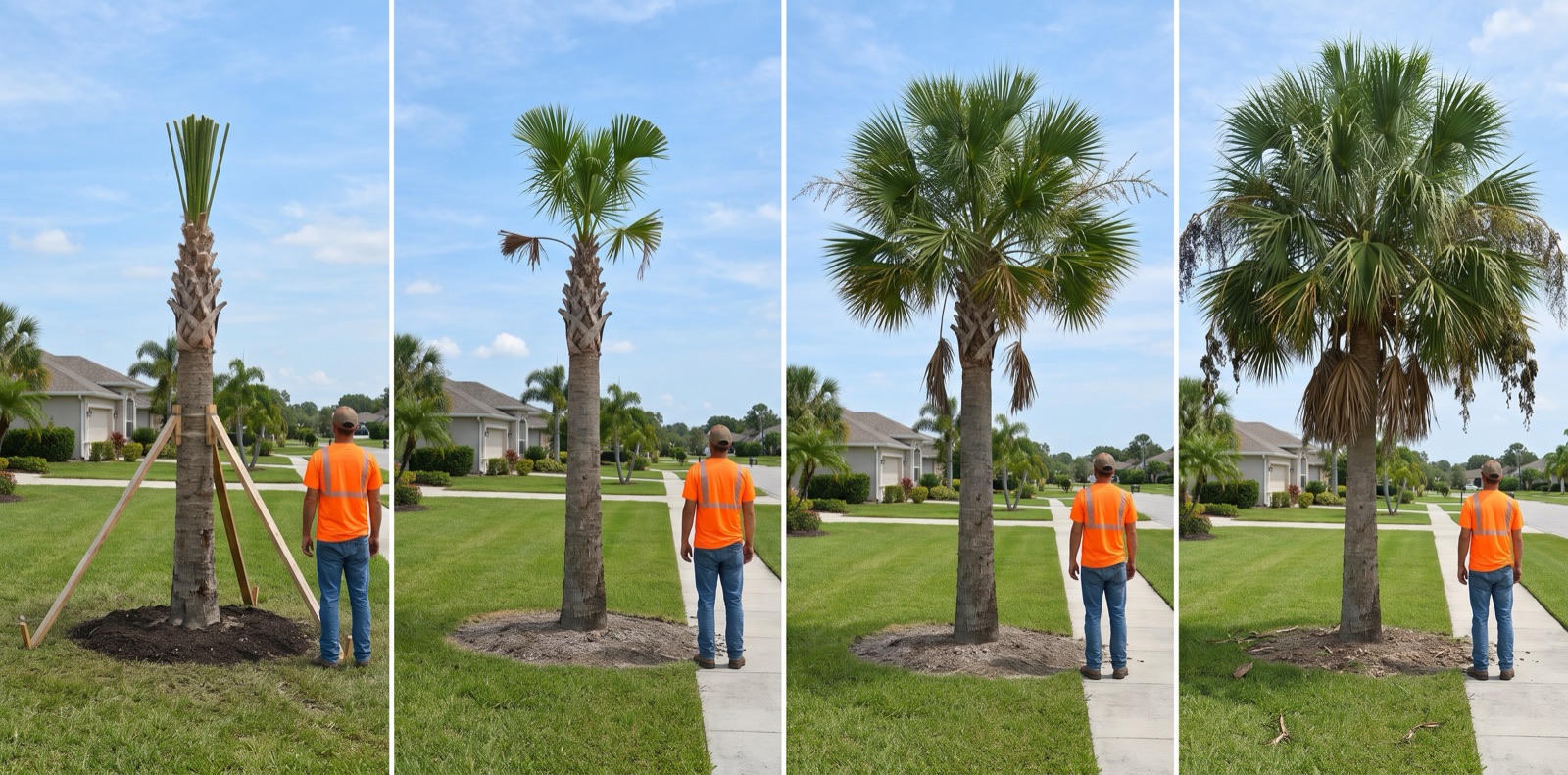
Why the Sabal trim grows each year.
Most cabbage palms in a new community go in hurricane cut. The trim follows the canopy as it grows back, so a plan counts each Sabal by its years in the ground.
Who it is for
Written for the people who answer for the trees.
- Community association managersOne standard to hold every crew to, and a cycle you can put on the calendar.
- HOA and POA boardsPruning by species in a budget year, without paying to cut fronds the palms still need.
- CDD and ISD boardsA written spec for a public bid, so every bidder prices the same work.
- Golf course superintendentsClubhouse, entry and on-course specimen palms pruned to one standard.
Inside a plan
Palm pruning sits under Manage.
On a 10-year Palm and Tree Master Plan, palm pruning is part of the Pruning Program. The floor is every established palm pruned yearly to 9-and-3, November to March, with Advanced-tier palms in April to May, coconuts twice a year and new installs left alone. Protect what matters prunes each palm in its best months and puts sterilized handsaws on the Canary Island date, Medjool and Sylvester palms. The full program puts sterilized handsaws on every palm.
Pruning is counted per palm by species, so the budget is built from the inventory, not from last year's invoice.
Questions
Questions managers and boards ask.
Still have a question? Call (239) 467-0142 or send a request.
What is the 9-and-3 standard?
Why not cut the palms tighter so they last longer between visits?
How often do our palms need pruning?
Do we need sterilized tools on every palm?
Will your crew climb our palms with spikes?
What happens if the crew sees signs of disease?
Next step
Put every palm on one pruning standard.
Tell us how many palms and which kinds. We will set the cycle by species and show you what the year looks like, on its own or inside a 10-year Master Plan.