
For homeowners
Valuable palms, watched closely.
The same team that cares for whole communities, for the palms and trees at your home.
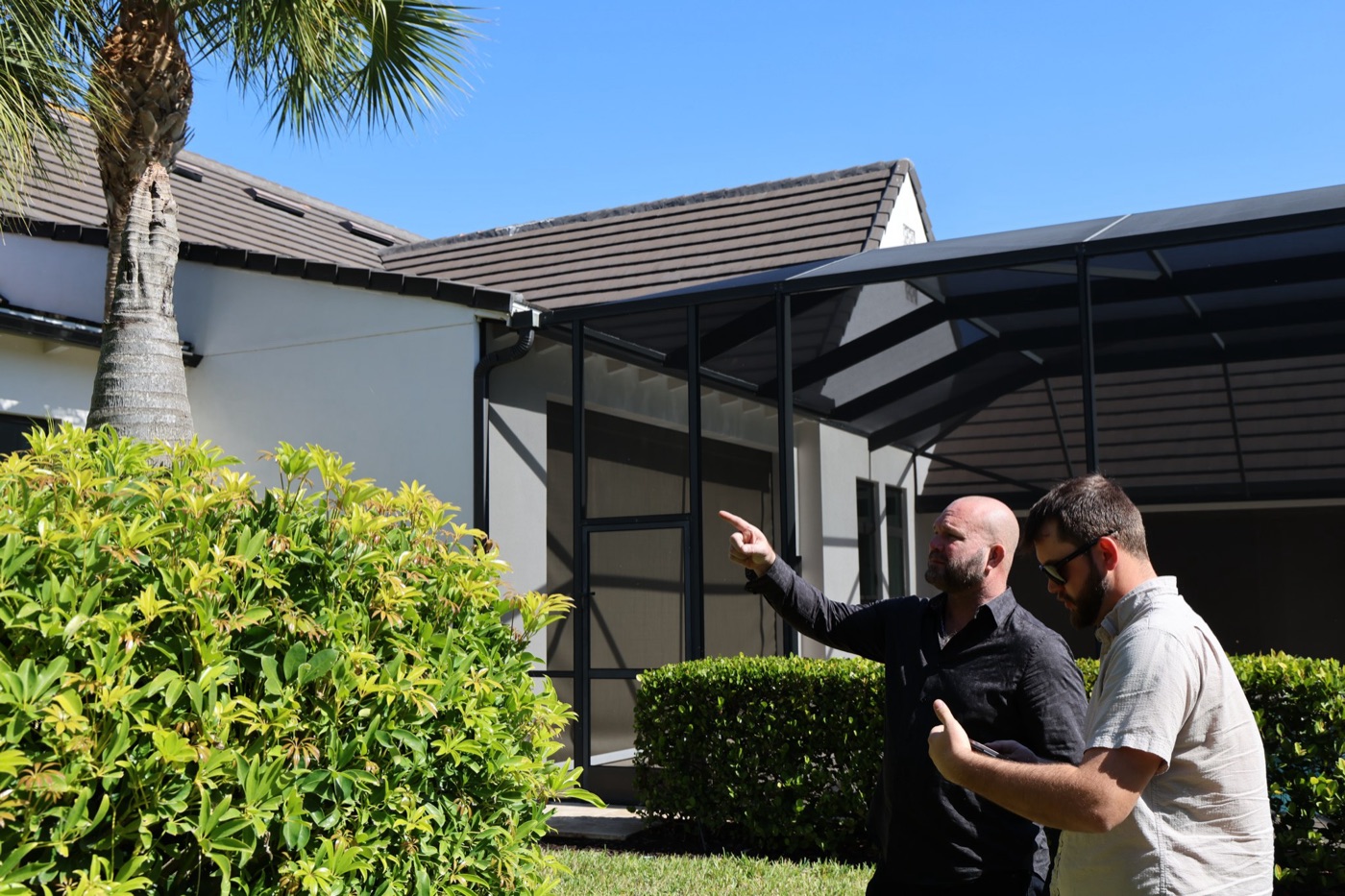
“Have we made any progress in getting this tree removed?”



What you’re dealing with
A palm you love, a tree in the way, and a question nobody answered.
A dead or problem tree.
You want it gone, safely and soon, without a fight over who is responsible.
What to plant back, and where.
A palm died. Is it the soil? Is it safe to plant in the same spot? What should go in instead?
Trees you eat from.
Fruit trees near the house. You want the problem handled without spraying what you harvest.
Where a home starts
Start on the Health Program.
A home can start on the Health Program alone: six visits a year, with each palm on the tier that fits its value and risk, Monitor, Standard or Advanced.
Communities and larger properties start with the Palm and Tree Master Plan: one written plan, 10 years, with an estimated budget each year. If you live in a community, your board or manager can ask us for one.
In your words
What people in your seat write to us, and what we do about it.
“Have we made any progress in getting this tree removed?”
What we do about itRemovals after an arborist’s written determination, and stump grinding, with a Sunshine 811 ticket placed before any digging.
“Based on your findings, do you recommend any soil remediation or treatment before installing replacement palms?”
What we do about itIt depends on what killed the last one. A soil test shows what the roots can actually reach.
“I’d rather not have it sprayed on a regular basis since we want to eat the lichees. I’d just like to prevent the problem from coming back for now”
What we do about itThose trees can stay on monitoring only, where we look and report and apply nothing.
From emails our clients and prospects have sent us, word for word. Names, companies and places are removed.
What the plan covers
Health care, pruning and removals for your home.
Health care
Monitor, Manage, Protect- Six visits a year for home programs, every palm inspected, with photos where they help.
- Nutrition and protection matched to each palm’s value and risk.
Pruning
Palms and trees, to a written standard- Palm pruning to the 9-and-3 standard: everything below the line off, nothing above it cut.
- Seed pods and fruit removed before they drop.
Removals
Planned, documented, permitted- Removals after an arborist’s written determination.
- Stump grinding, with a Sunshine 811 ticket placed before any digging.
See all 10 items in the plan
Health care
- Six visits a year for home programs, every palm inspected, with photos where they help.
- Nutrition and protection matched to each palm’s value and risk.
- A lab test before any disease call.
- Monitoring only, with nothing applied, for trees you harvest from, if you prefer.
Pruning
- Palm pruning to the 9-and-3 standard: everything below the line off, nothing above it cut.
- Seed pods and fruit removed before they drop.
- Tree pruning by written prescription to ANSI A300.
Removals
- Removals after an arborist’s written determination.
- Stump grinding, with a Sunshine 811 ticket placed before any digging.
- Root pruning and root barriers where the tree can stay.
“These kinds of visits are not free, but they’re included in your management plan.” Jeff Kaulbars, ISA Certified Arborist
You call about a conk at the base of your palm. Without a program, that is a field visit: the trip, the look and the write-up.
On a home program, your palm is already in the record from the last visit, graded. The answer starts from the record, not from a new site visit, and if a visit is needed, it is already covered.
Questions
Questions homeowners ask
How often do you visit a home on a program?
Six times a year, a closer schedule than the four visits a year we run for communities and commercial sites.
Do you spray fruit trees?
Tell us which trees you harvest from. Any treatment near edible fruit is discussed with you first, and those trees can stay on monitoring only, where we look and report and apply nothing.
Should I replant in the same spot?
It depends on what killed the last one. If it was Ganoderma, UF/IFAS advises against planting another palm in the same spot. Replanting a palm there is not off limits, but it carries risk. A tree or shrub lowers it. We tell you the risk, and you decide. Where to replant, how to remove the stump and what species to use is a site assessment, a separate written scope.
Is it the soil?
Often it is part of it. Many new homes sit on compacted, built soil, irrigated with water that leaves salts and lime behind. A soil test shows what the roots can actually reach.
Can you remove a tree that is lifting my pavers?
Yes, we do removals and stump grinding. Sometimes root pruning with a root barrier lets the tree stay. We will tell you which one makes sense.

Start with one visit