
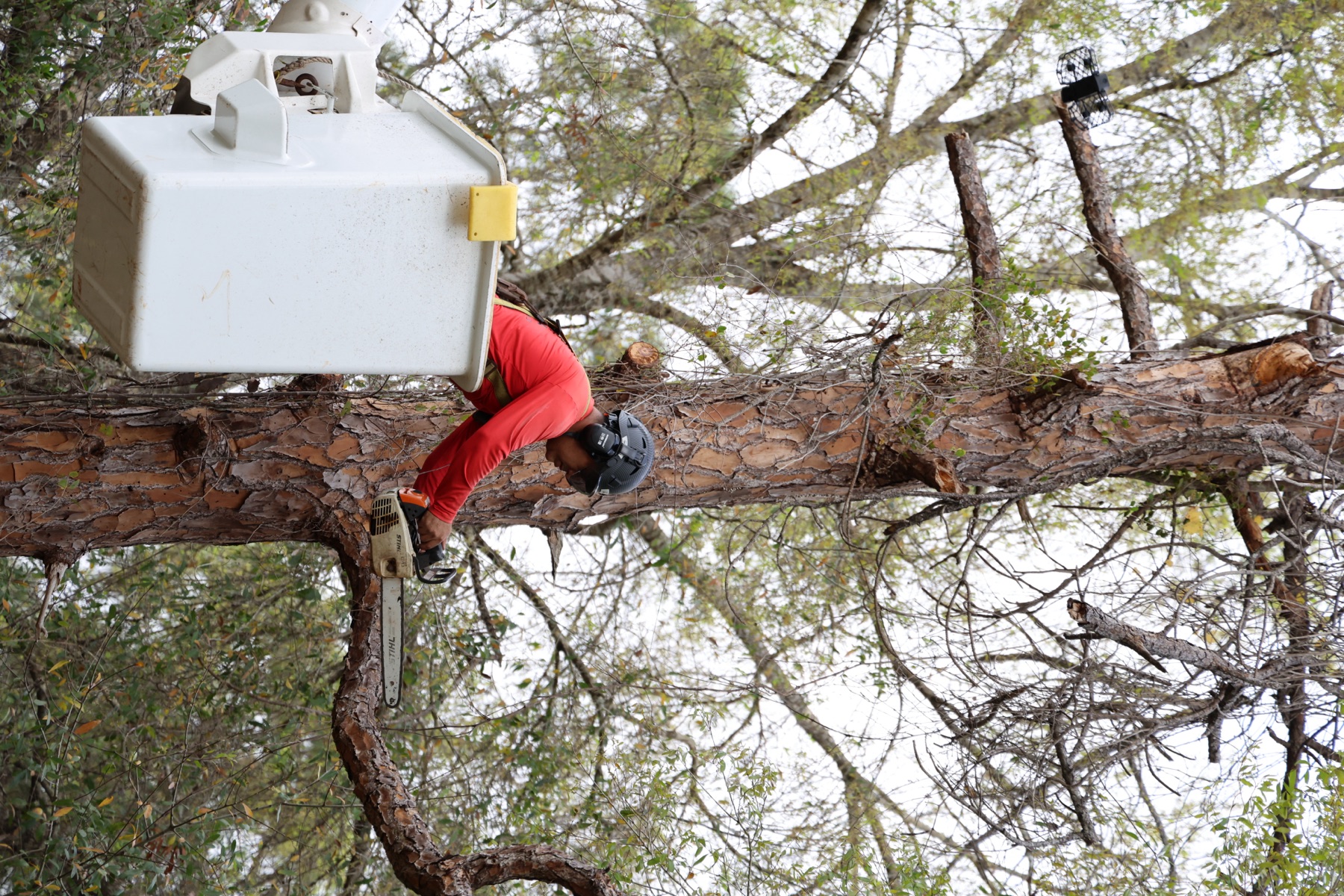
Tree pruningManage
Tree pruning by written prescription.
No tree is pruned without a written objective. Structure on young trees. Clearance, deadwood and hazards on mature ones. Written in the language of ANSI A300.
Storm or emergency: (239) 467-0142- Method
- Prescription pruning (PPQ)
- Standard
- ANSI A300 Part 1
- Live wood per cycle
- About 25% at most
- Young trees
- Structure every 2 to 3 years
What we see in the field
Most limb failures we see were set up years earlier.
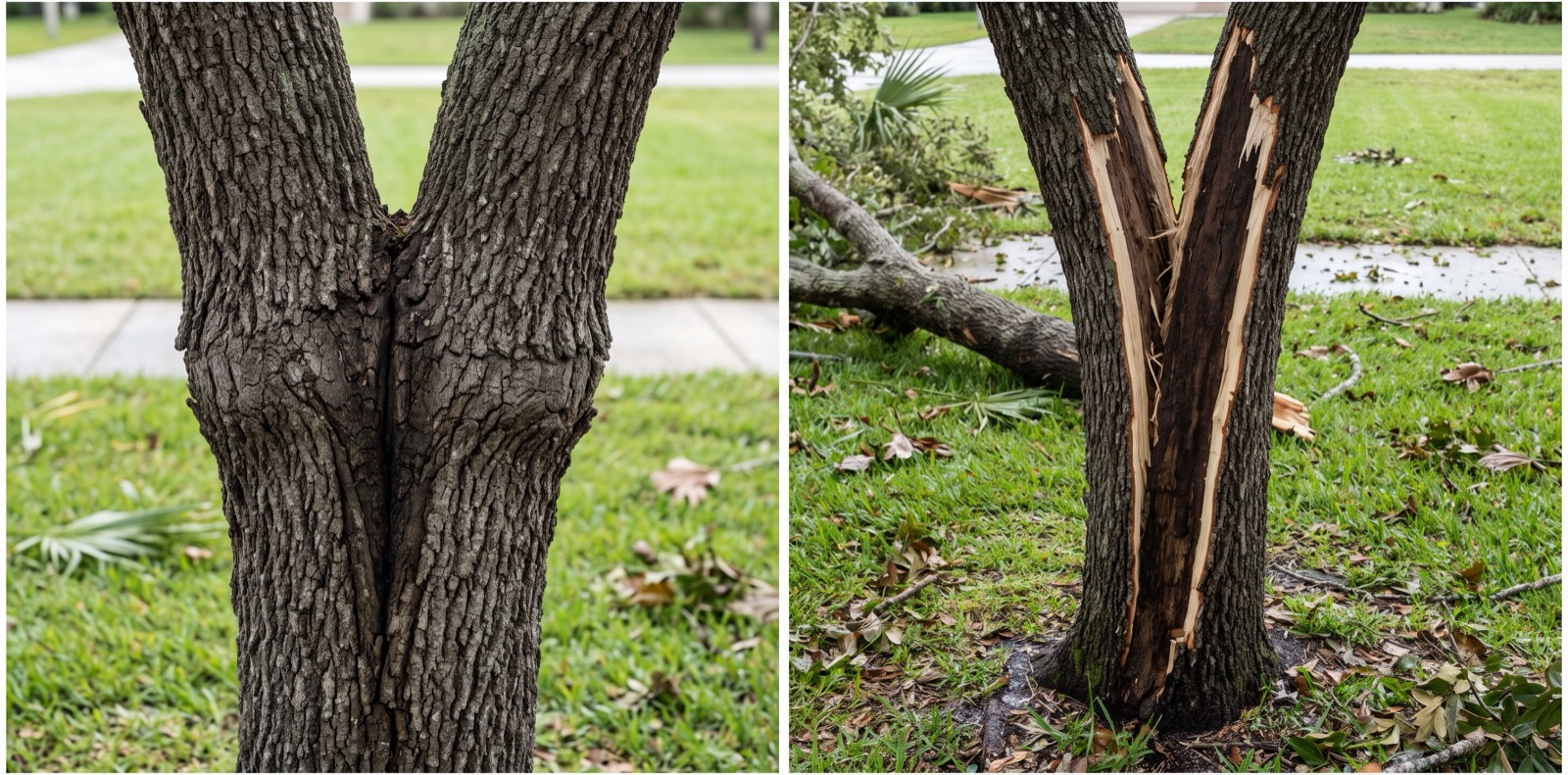
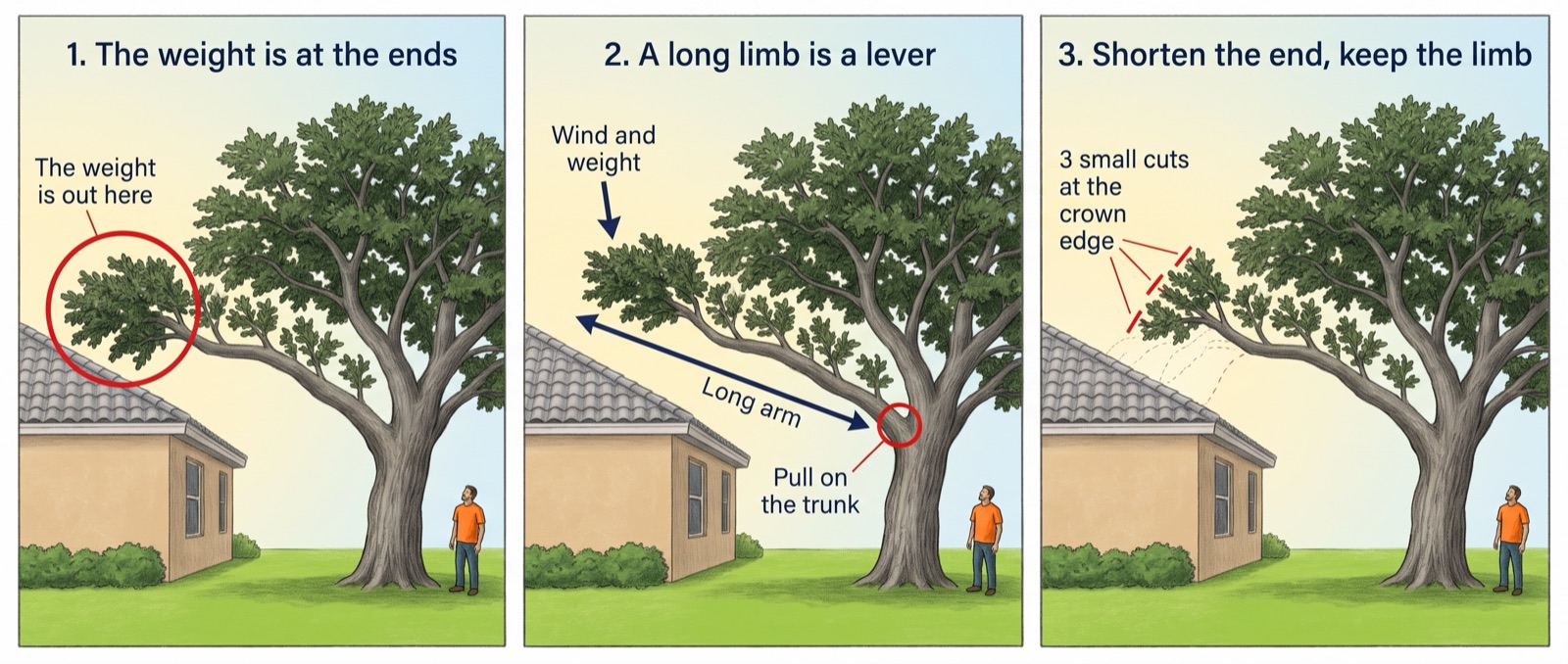
Codominant stems left to compete on a young oak. Limbs stripped bare along their length so all the weight sits at the tips. Canopies raised where nothing needed clearance. Each one starts as a routine trim and shows up later as a split limb after a storm.
Prescription pruning moves the decision from the crew on the day to a trained prescriber who looked at the tree first. Jeff Kaulbars holds the Florida Chapter ISA Prescription Pruning Qualification (PPQ), a method developed at the University of Florida. It pays off most on young trees.
You get a written plan for each tree or group of trees, not "trim everything."
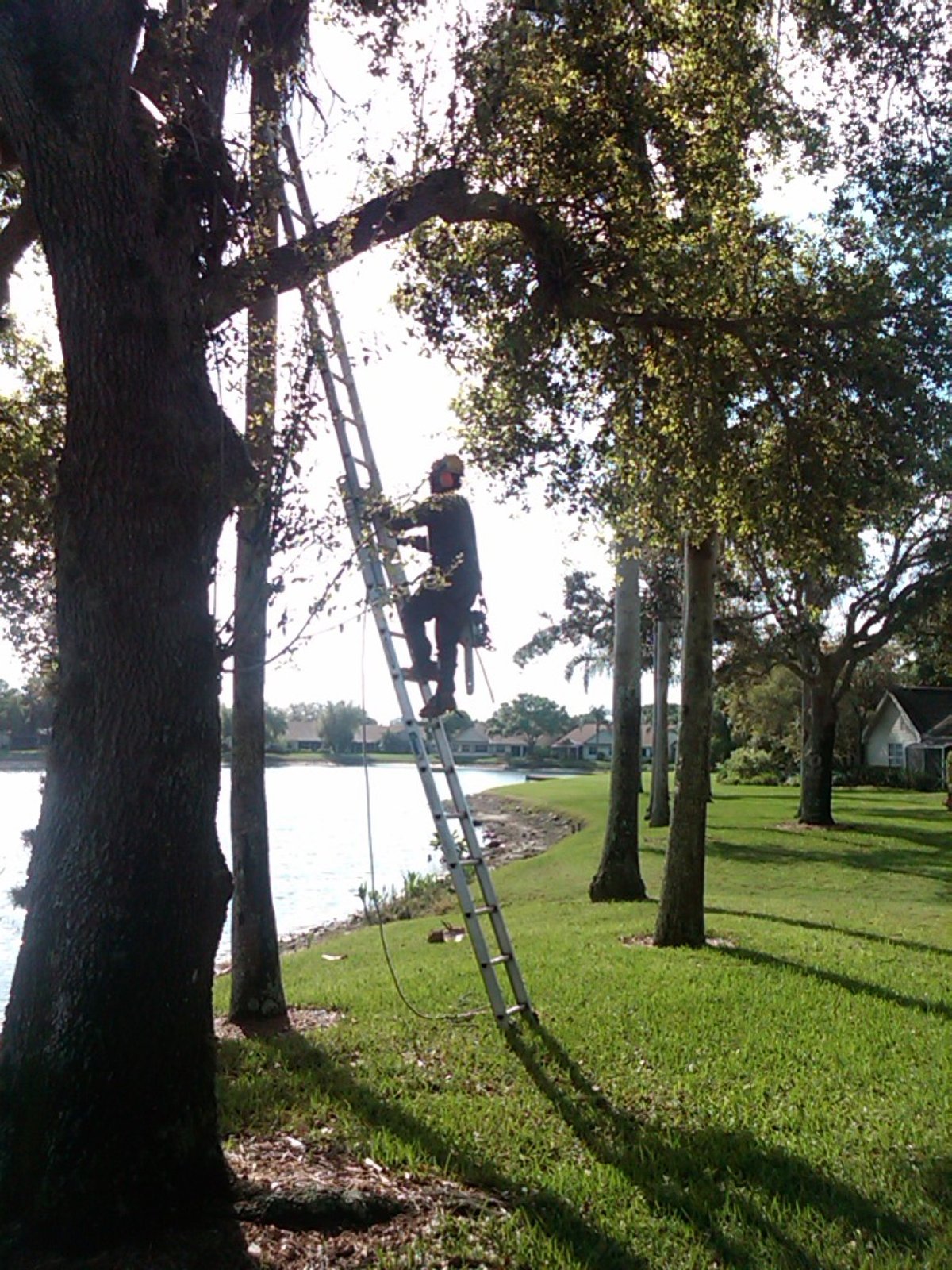
How we do it
Look first, write it down, then cut.
- Evaluate the tree
Find the best leader and the lowest permanent branch. Note the conditions of concern: cracks, cavities, dead bark, very long branches, codominant stems with included bark.
- Write the prescription
Stated as cuts, not a percentage. For example, 20 to 25 reduction cuts of 2.5 in at the ends of the three largest live branches.
- Prune to it
Smallest cuts and fewest cuts that meet the objective. Final cut just outside the branch collar, never flush, never a stub.
- Hold the dose
No more than about 25% of the live crown in a cycle. On large trees most live pruning is reduction at the crown edge, which lowers end weight.
- Keep the cycle
Young trees every 2 to 3 years for structure. Every tree over 18 in, every year: clearance, deadwood and end weight.
Reducing codominant stemsWhere two stems compete, we reduce one so its size relative to the other shrinks over time, for example from 8 to 10 down to 5 to 10 or less. Over several cycles a clear trunk and one leader emerge.
What is included
What tree pruning covers.
A written prescription
The objective, the pruning interval, the branches to prune, the number, size and type of cuts, and the limits, written before any cut. The cut count is the scope every crew bids.
A tree risk check every visit
Every tree is screened each visit. Flagged trees over roads, walks, pools and entrances get a full ground assessment. Hurricane wind is the load we plan for, and included bark is the defect we look for first.
Structural training on young trees
Under 6 in trunk diameter: one dominant leader, codominant stems and included bark corrected, scaffold branches spaced.
One setup pass on adolescent trees
6 to 18 in: finish the structure, set the lowest permanent branch, set clearance, take out deadwood and hazards. Then maintenance.
Maintenance on mature trees
Over 18 in, every year: clearance to target, deadwood over 2 in out, and end weight reduced at the crown edge. Hazard reduction cuts. No routine thinning.
Clearance only where there is a target
Roads and drive aisles 14 ft. Parking stalls 10 ft. Sidewalks and paths 8 ft. Buildings 3 ft. Lights, signs and sight lines kept clear. With no target, the lowest permanent branch sits about 5 ft up in mowed grass, for the mowers. In beds and natural areas the lower limbs stay.
Groups of trees, one plan
We survey about 10% of a group (at least 5 trees), count the cuts each needs, and write one prescription with the range and average.
Priced on its own lineVine removal, root work, removals and palm pruning.
Standards we work to
The standards a board can hold us to.
Our lines
- No topping, no lion-tailing, no over-lifting.
- No canopy raised where there is nothing beneath to clear. Lower limbs build trunk taper and caliper.
- No crown thinning except by prescription. Never routine.
- No climbing spikes in a tree that is staying.
- Where clearance would take a limb over about 4 in at the trunk, a reduction cut along the limb instead.
- Large or heritage oaks: we check for a permit first.
- Any work outside ANSI A300 needs your written sign-off before the first cut.
The national standard for how pruning cuts are made and how much is removed. Cities often write it into tree specs.
The companion guide to A300, with the reasons behind each cut.
Prescription pruning: a written plan per tree or group, built on the tree's long-term structure.
The safety standard for climbing, rigging and aerial work.
Sources: Ptolemy Tree Pruning spec; Tree Pruning subject file; PPQ course material, Florida Chapter ISA; ANSI A300 Part 1; ISA BMP Pruning; ANSI Z133.
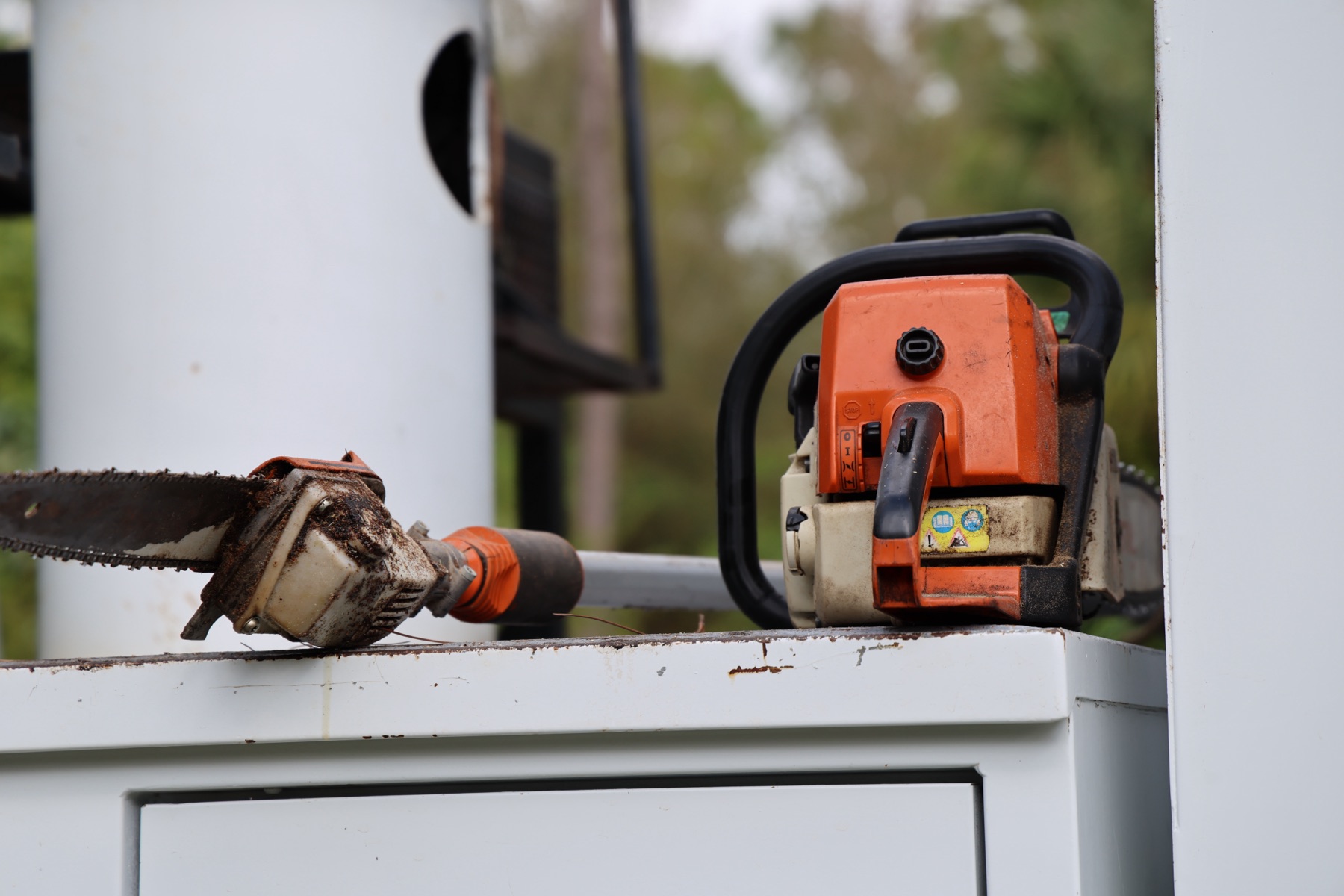
On the job
Tree pruning, in the field.
Illustrations
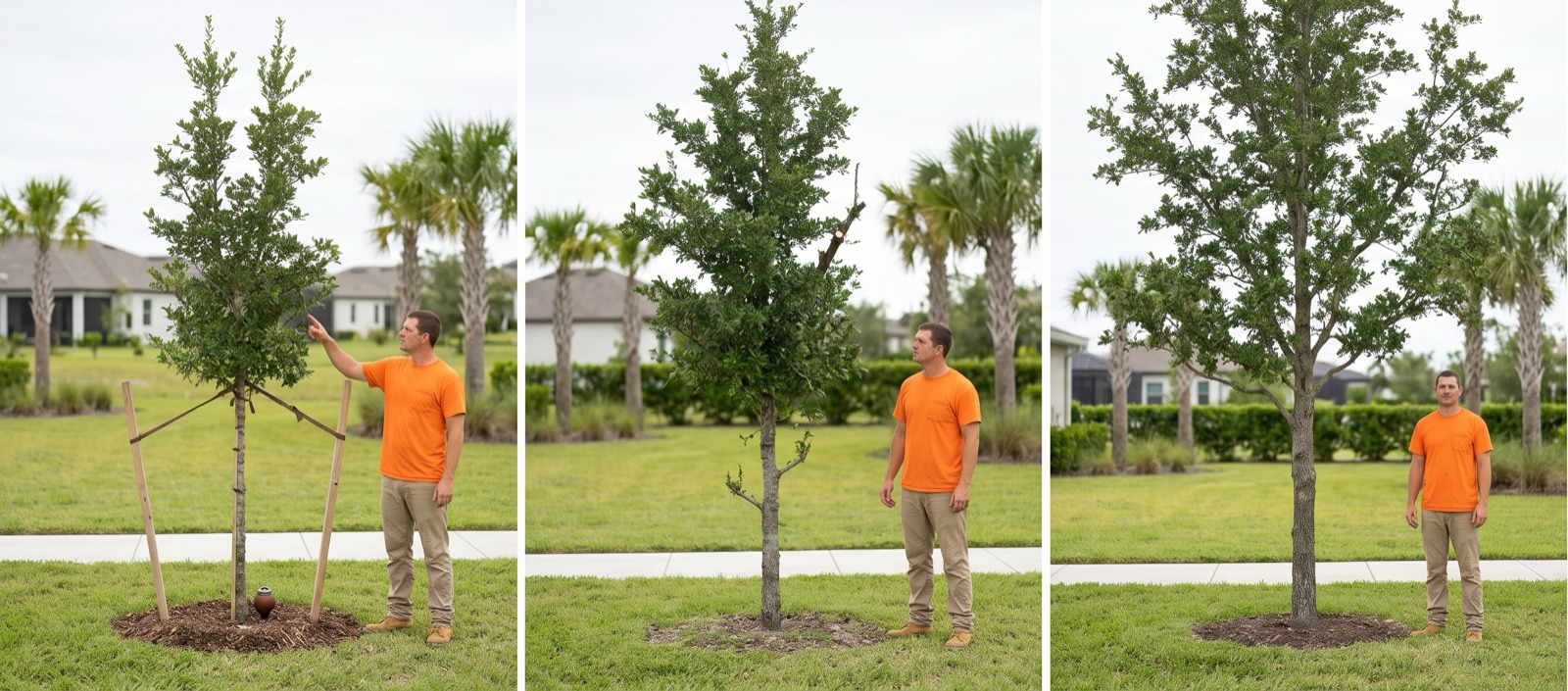
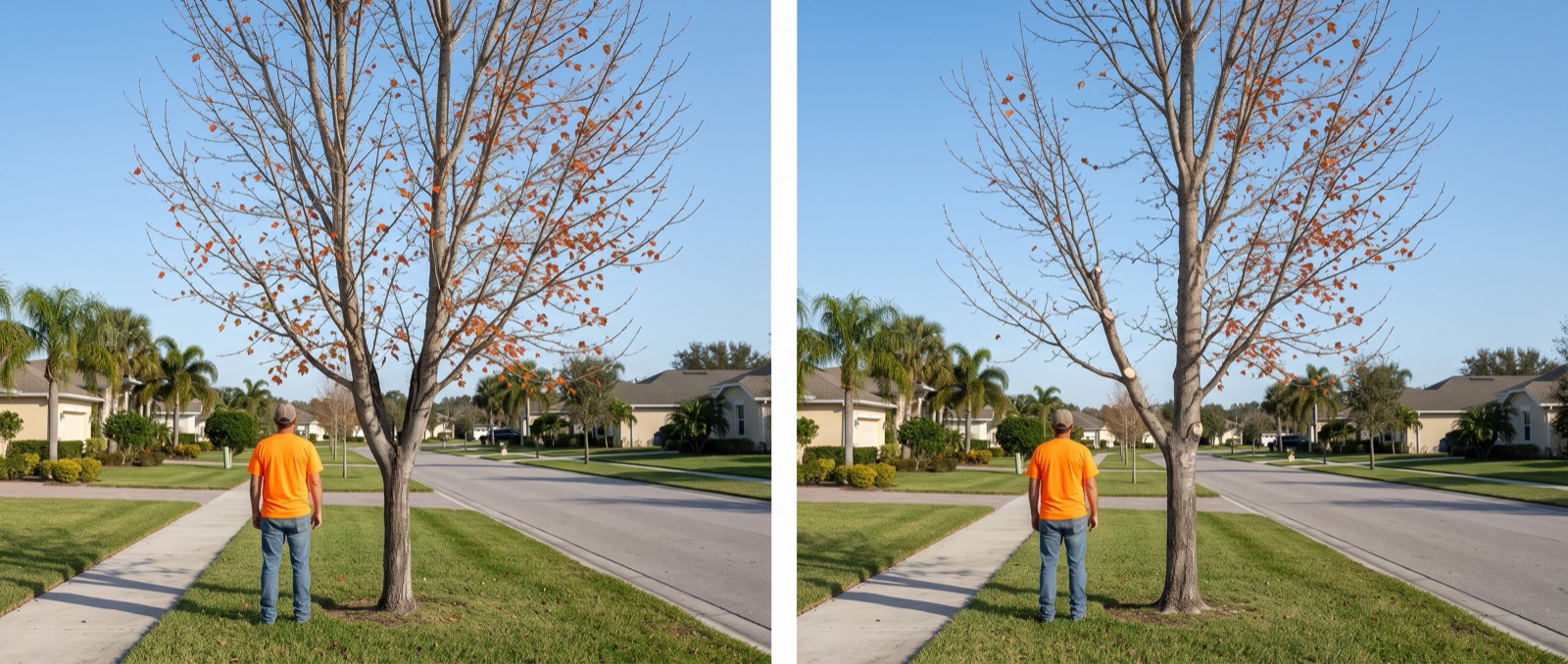
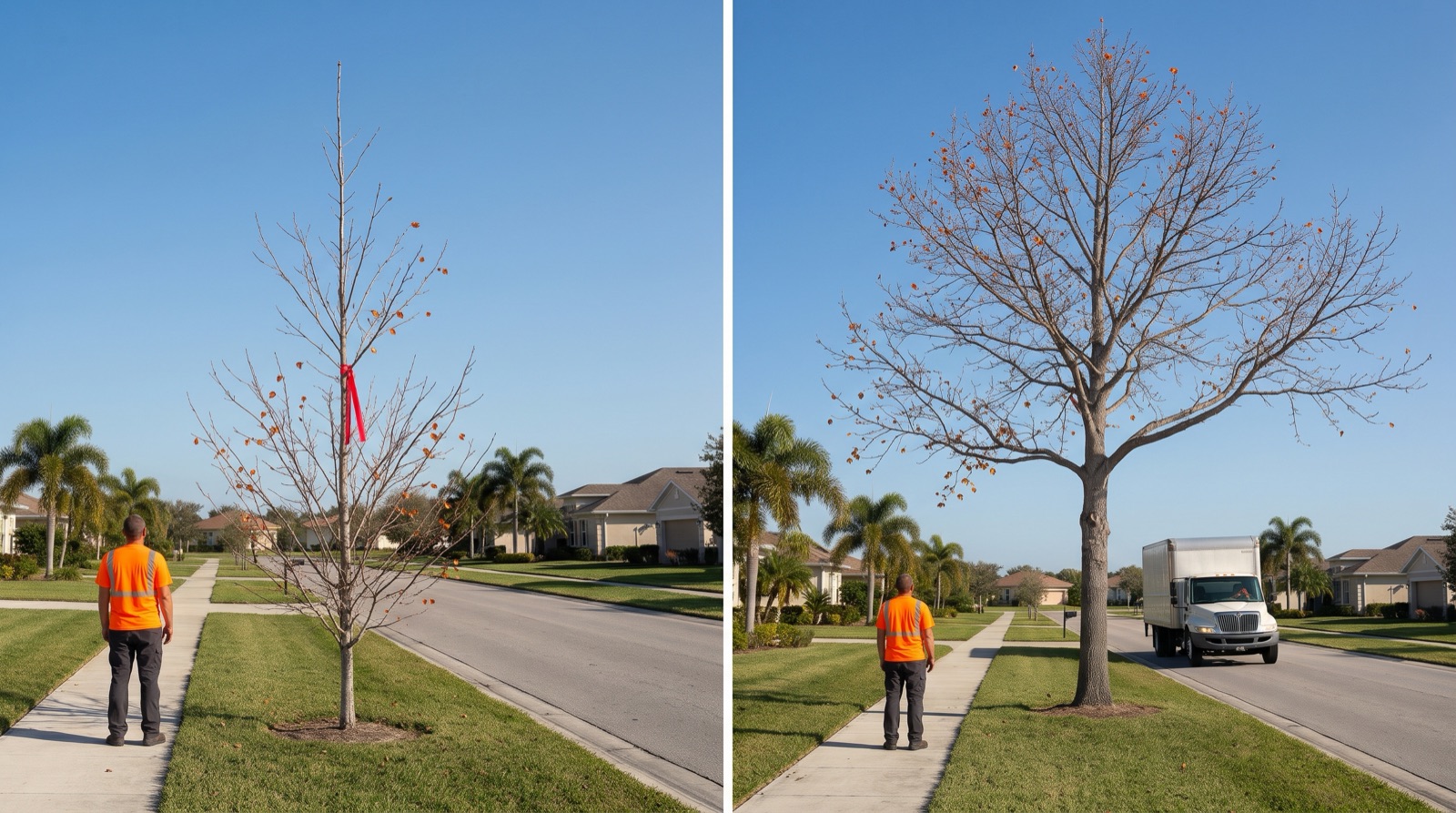
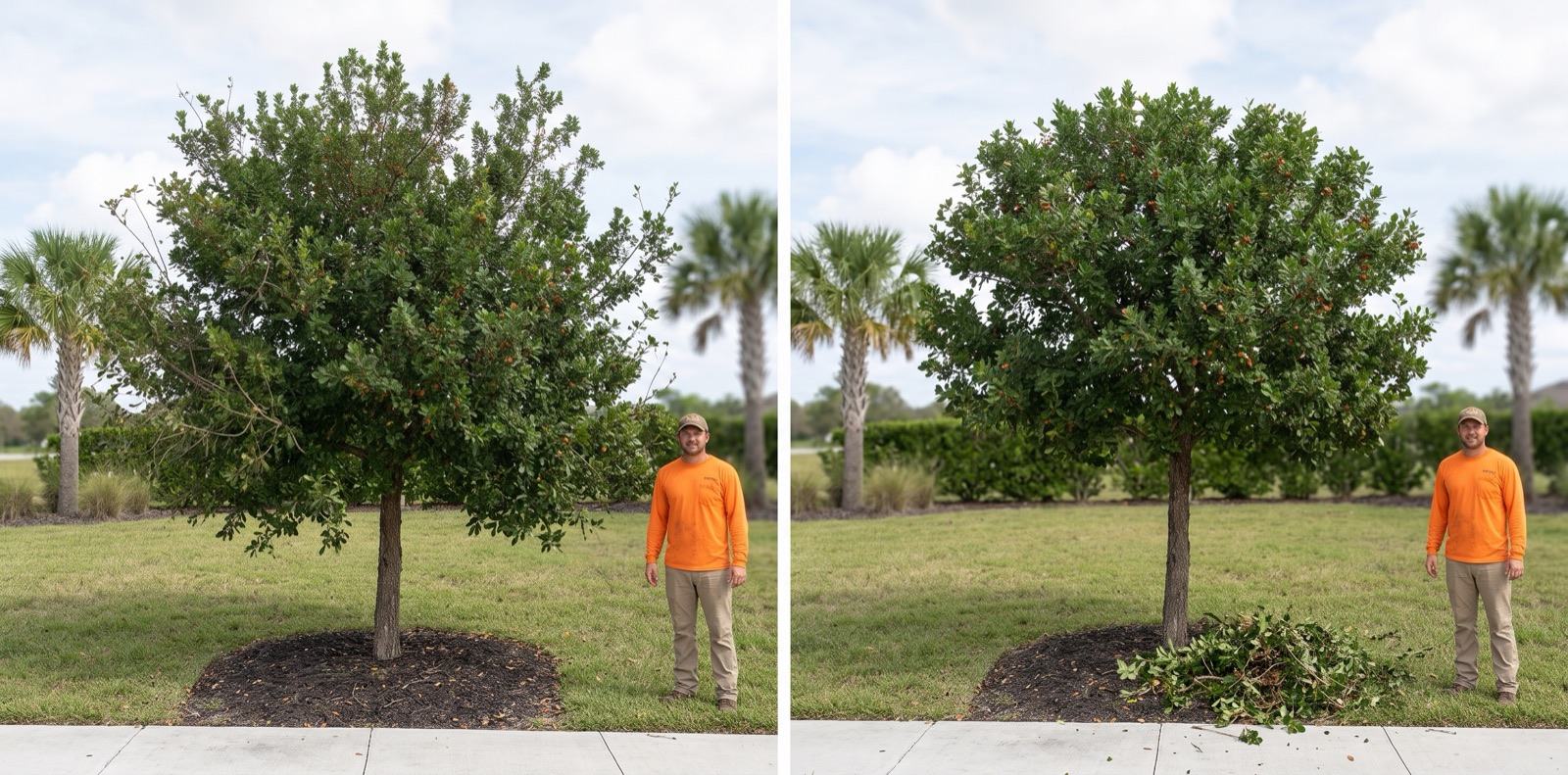
What a prescription is aiming for.
Drawn, not photographed: the same lessons we teach on site, in our own illustrations. Small cuts on a young tree save a failed limb later.
Who it is for
Written for the people who answer for the trees.
- CDD and ISD boardsThousands of young trees on one plan, with structure built in early when it is cheapest.
- HOA and POA boardsA written scope you can compare across bids, and a cycle that holds the budget steady.
- Community association managersClearance for roads, walks and lights, done to heights you can point to.
- Golf course superintendentsClearance over cart paths and shade management around play, planned per hole.
Inside a plan
Tree pruning sits under Manage.
On a 10-year Palm and Tree Master Plan, tree pruning is part of the Pruning Program, and every tree is pruned to a written prescription at every level. The floor keeps clearance where there is a target and takes deadwood and hazards out of mature trees. Every tree over 18 in gets clearance, deadwood and end weight every year. Protect what matters adds structural training on young trees, the busiest places first.
The full program is Protect what matters backed by PPQ. A PPQ arborist works field days on site, writes every tree's prescription and checks the work. Where the prescription calls for it, oaks over 12 in get select crown reduction, about a third of them a year, each oak after 5 years in the ground. Young trees go on a shorter cycle.
Trees are counted by trunk size class, so the pruning budget is built from the inventory and grows as the trees do.
Questions
Questions managers and boards ask.
Still have a question? Call (239) 467-0142 or send a request.
What is prescription pruning?
Does prescription pruning cost more?
How much will you take off?
Why not raise every canopy while the crew is here?
Is there a best time of year to prune trees here?
Do you ever use heading cuts?
Next step
Get a written pruning plan for your trees.
We walk the property, sort the trees by age and size, and write the prescription before any crew starts. On a 10-year Master Plan, it is built in.