
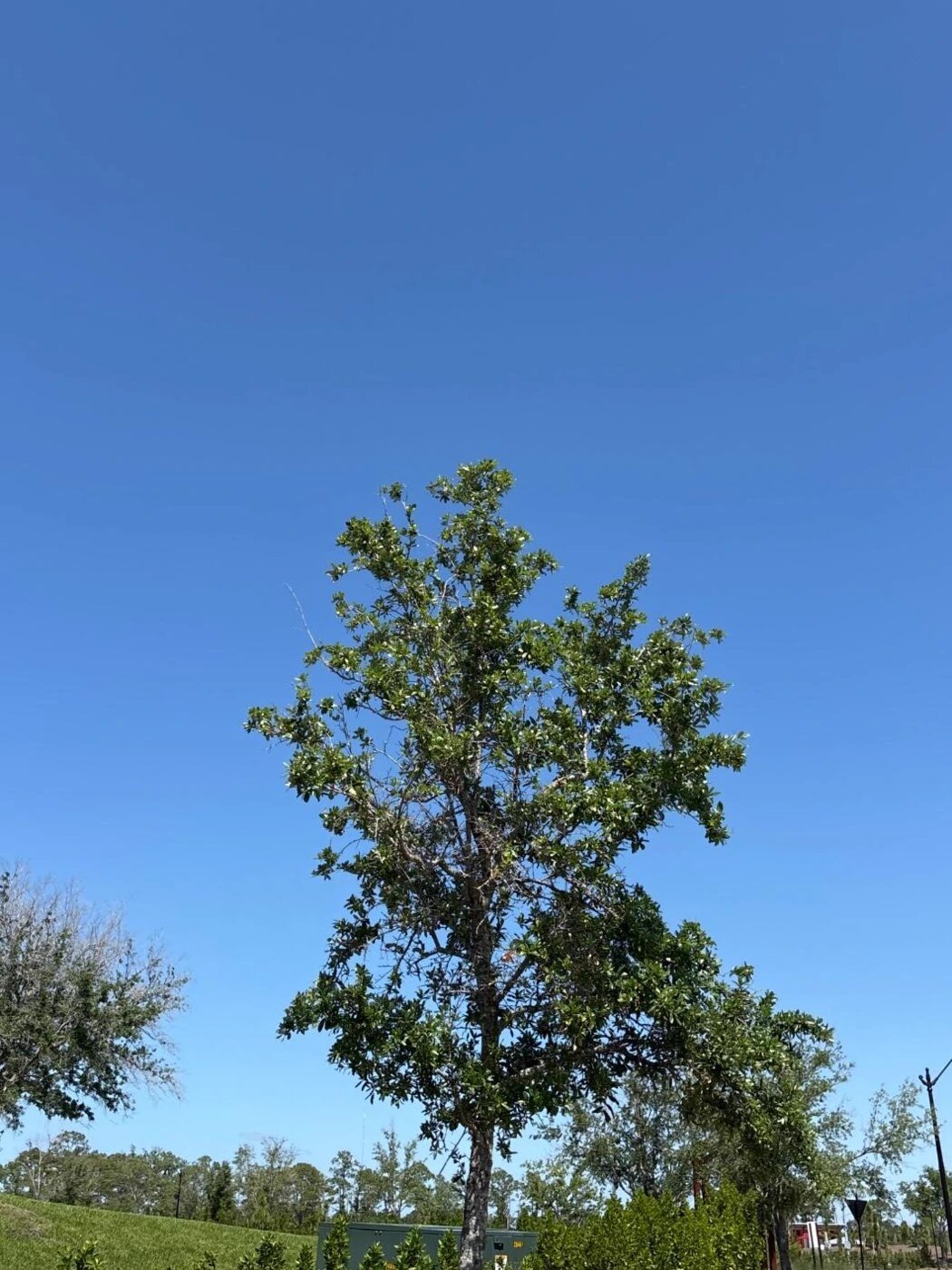
Tree and palm establishmentMonitor
Getting a moved tree to established, with the water measured.
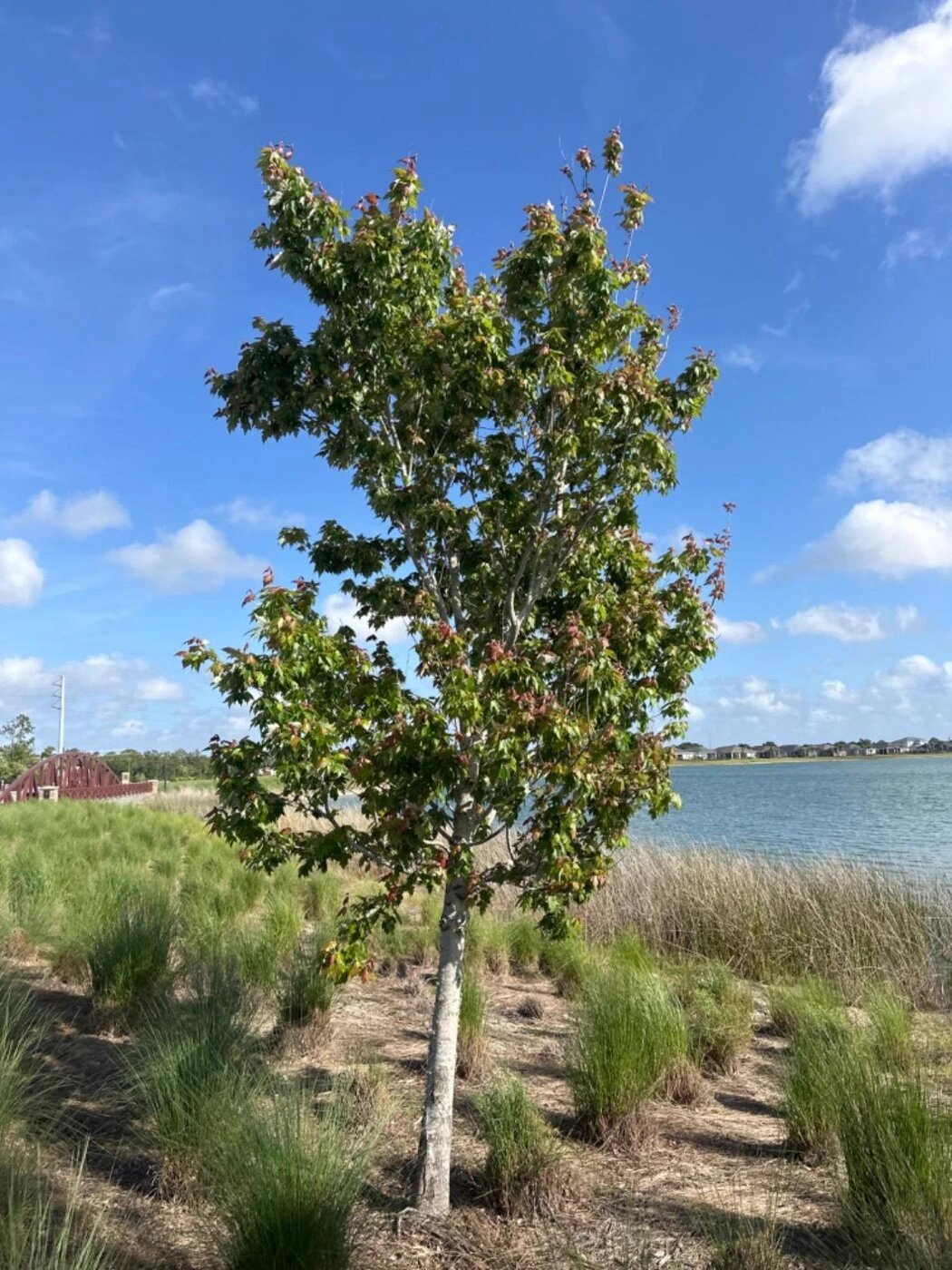
A new tree or palm keeps its canopy but loses most of its roots. The Establishment Program checks that water reaches the root ball, tracks every planting with photos, and reports what it finds. It is for clients on our Health Program.
- Time to establish
- About 3 to 4 months per inch of trunk
- Water target
- 2 to 3 gal per inch of trunk, per watering
- Every new tree
- 2 years on the establishment schedule
- Established when
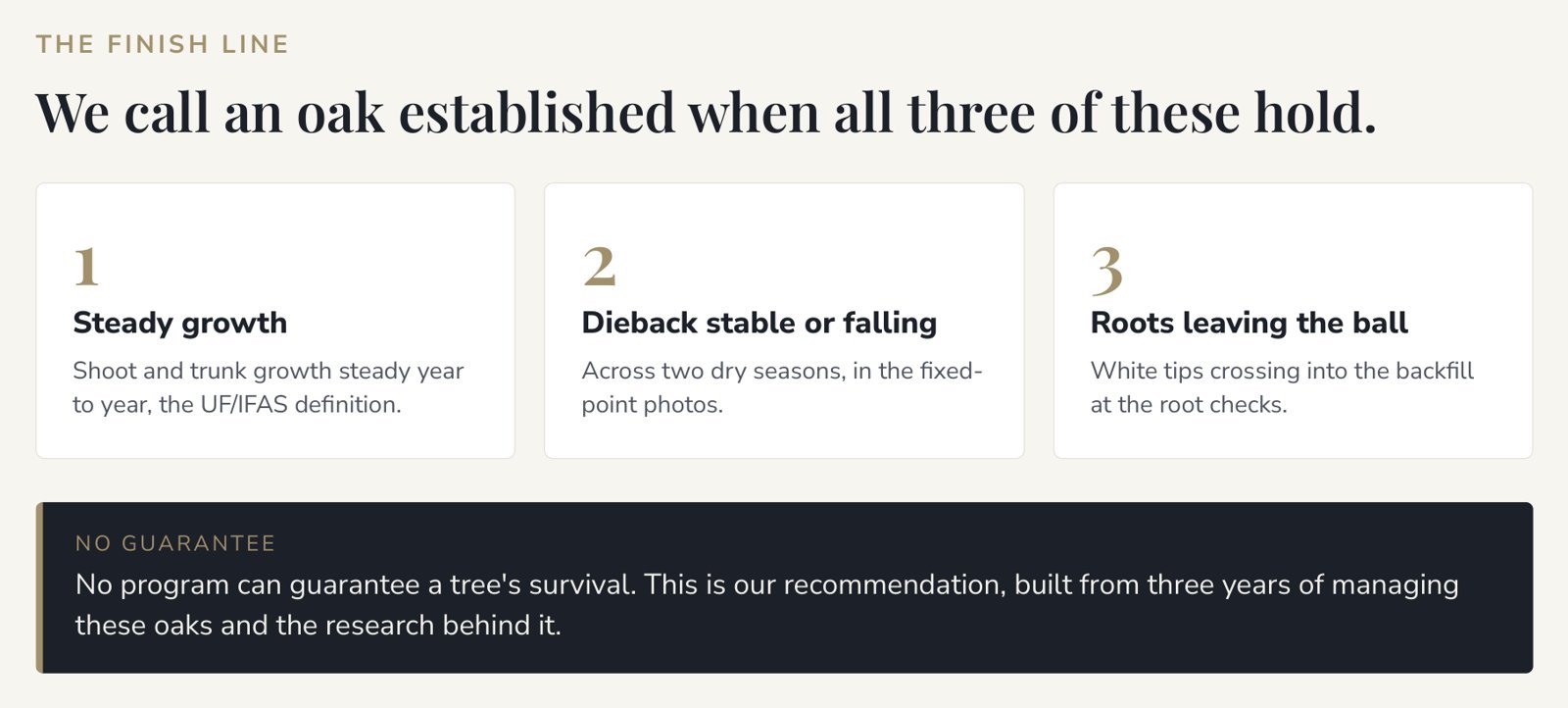
- Three signs hold
What we see in the field
The trees that decline are the ones that did not get enough water.
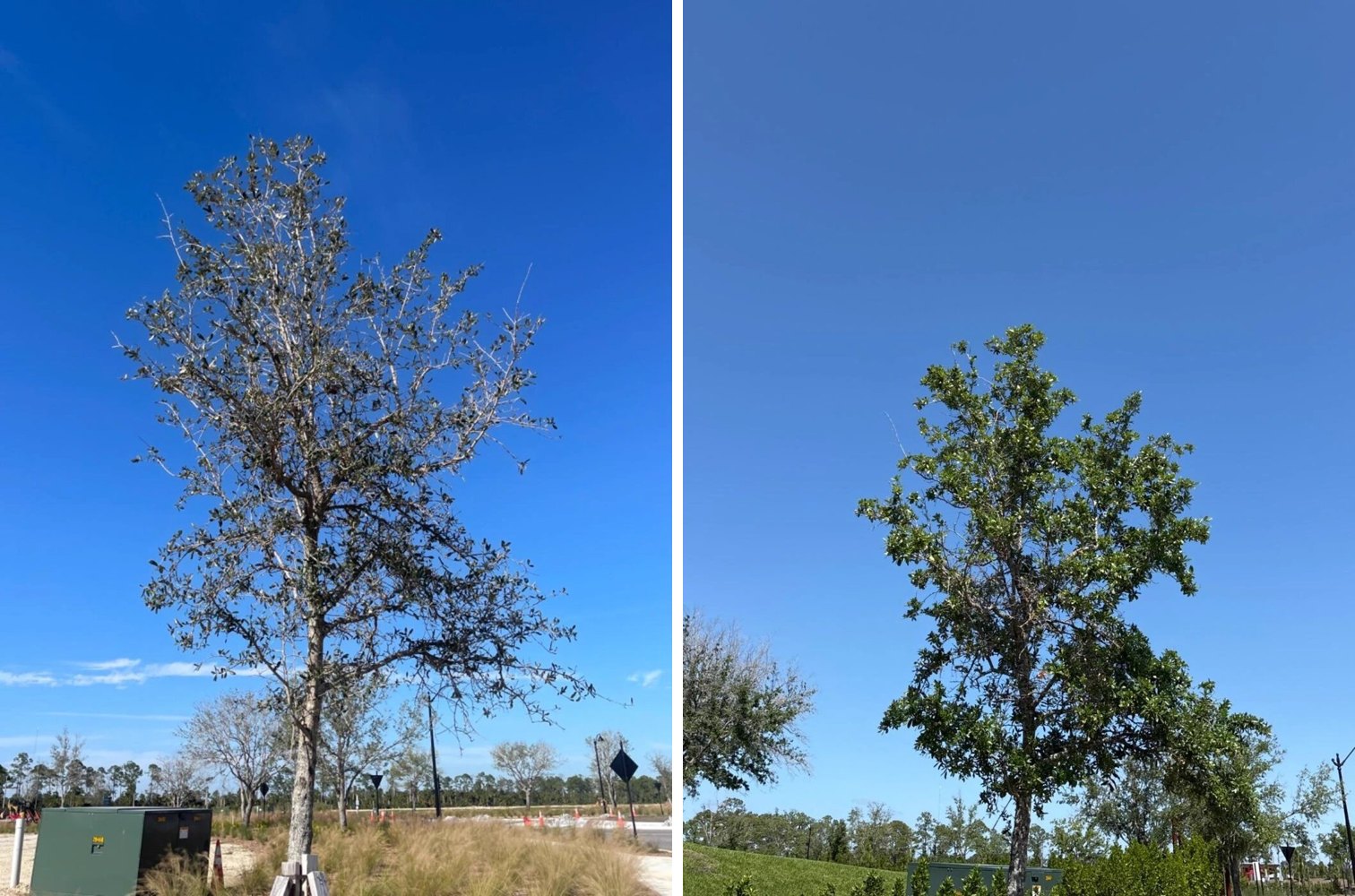
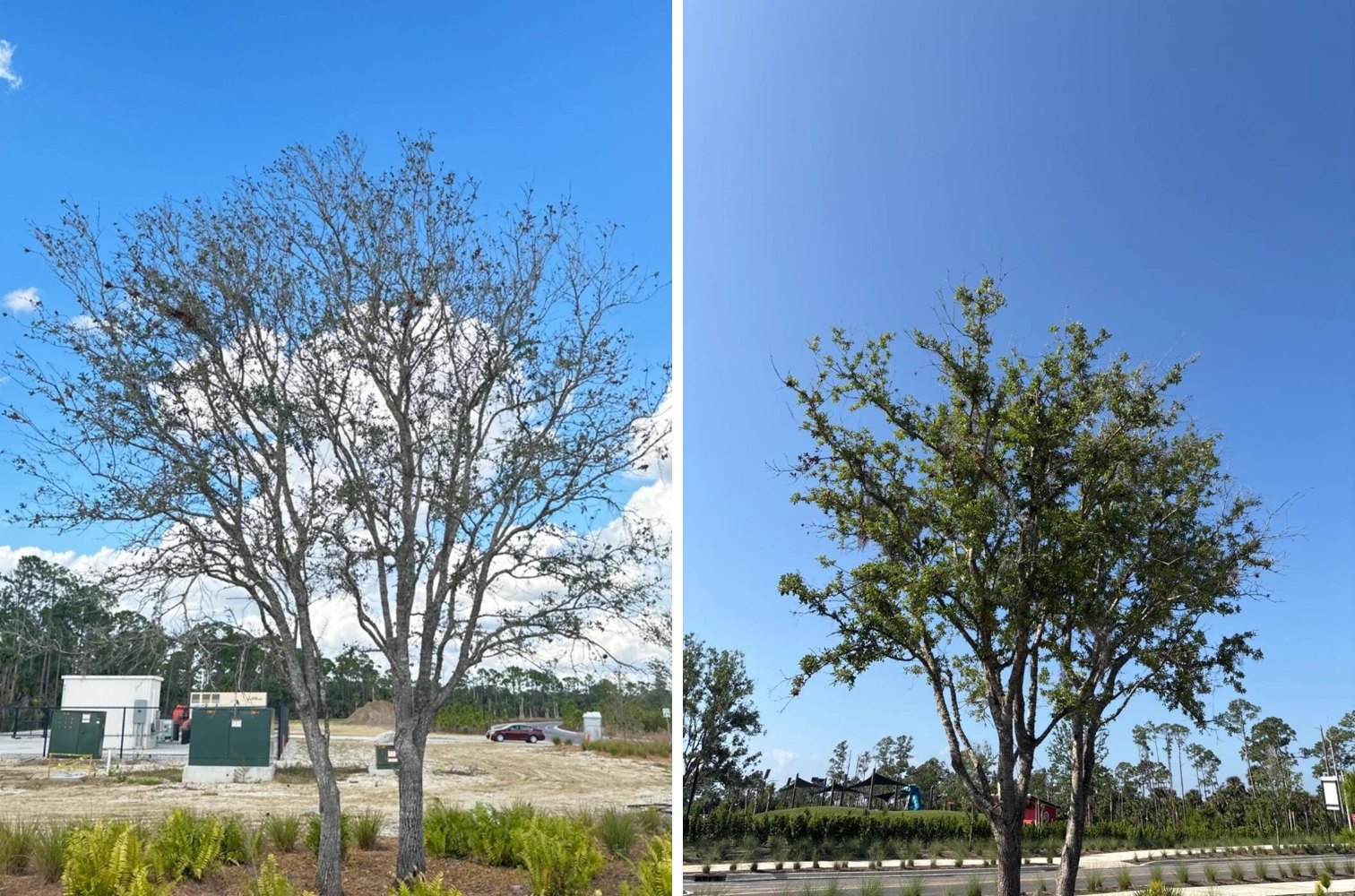
On one walk of stressed oaks at a district we manage, nobody was measuring the water any of them received.
The water each oak got was assumed, not known. The establishment program changes that: a flow meter on the bubblers, read at every visit, a hand check of the ball, and a report.
The full walk, and the establishment protocol
At that district, tip dieback fell from 1,094 trees of several species (oaks, hollies, magnolias and maples) in April 2024 to 144 oaks in October 2026, counted tree by tree, while the oak count doubled. 88% of the oaks now grade Normal, up from 69%.
How we do it
Front-loaded when the tree is most at risk, then stepping down.
- Check the planting
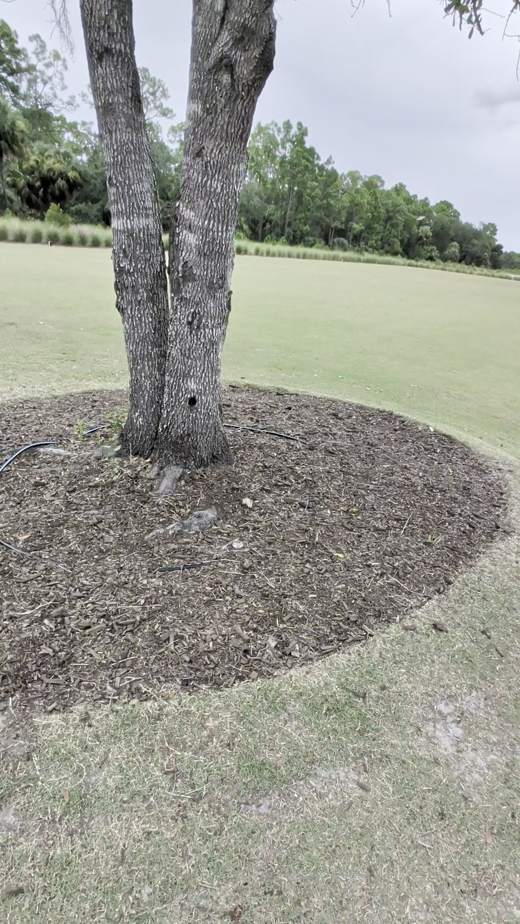
Flare, depth, berm and bubblers in the first week. Faults go back to the installer the same day.
- Set the baseline
Condition, photos, trunk diameter, tip dieback and soil readings on every tree in the program.
- Measure the water
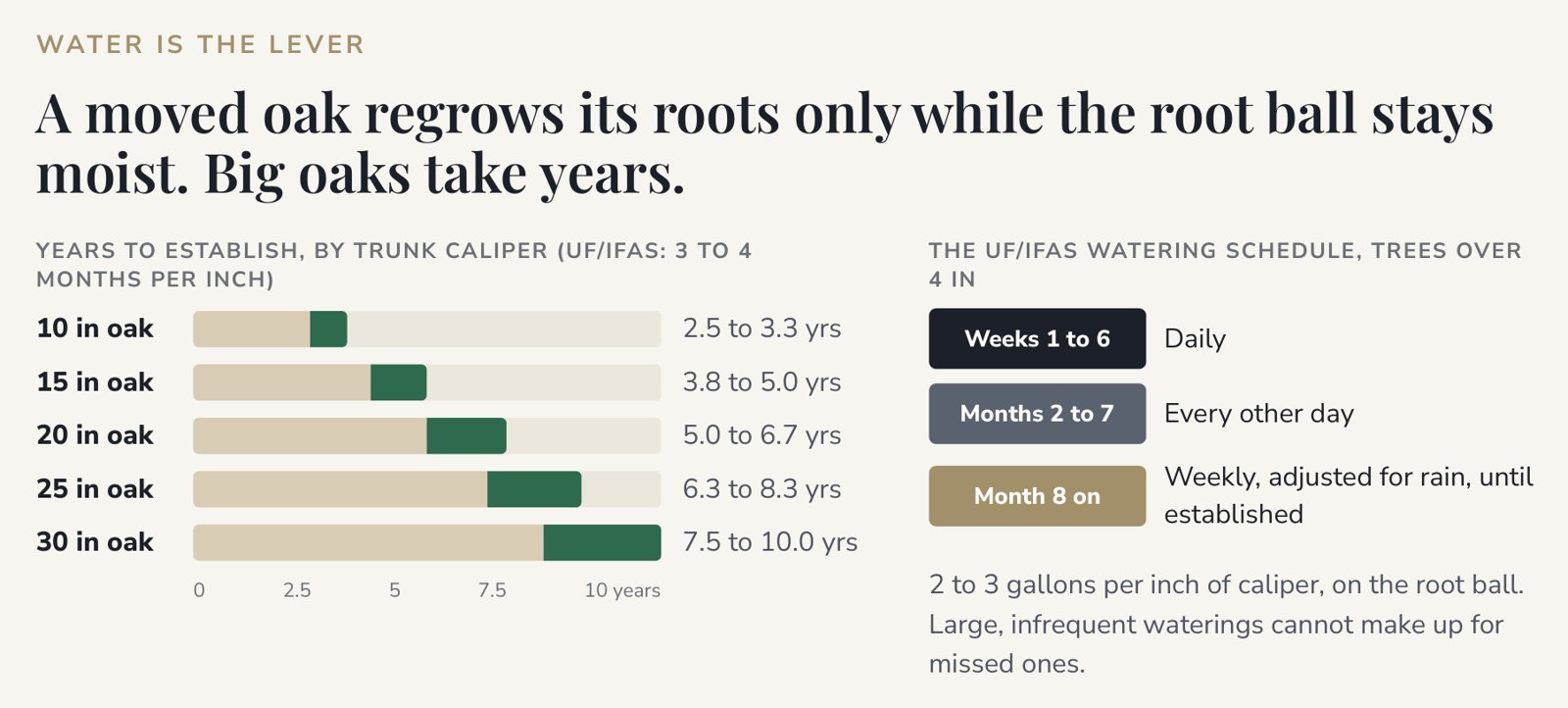
Every visit: water delivered, rain at the planting, ball checked by hand. The watering schedule we verify: daily for the first 6 to 8 weeks, then 3 days a week through year 1, then weekly until established.
- Flush and rescue
When the soil water shows salt, in a drought, or when the irrigation fails, we put water on the root ball from our water trailer. Level 3 starts sooner than Level 2.
- Check the roots
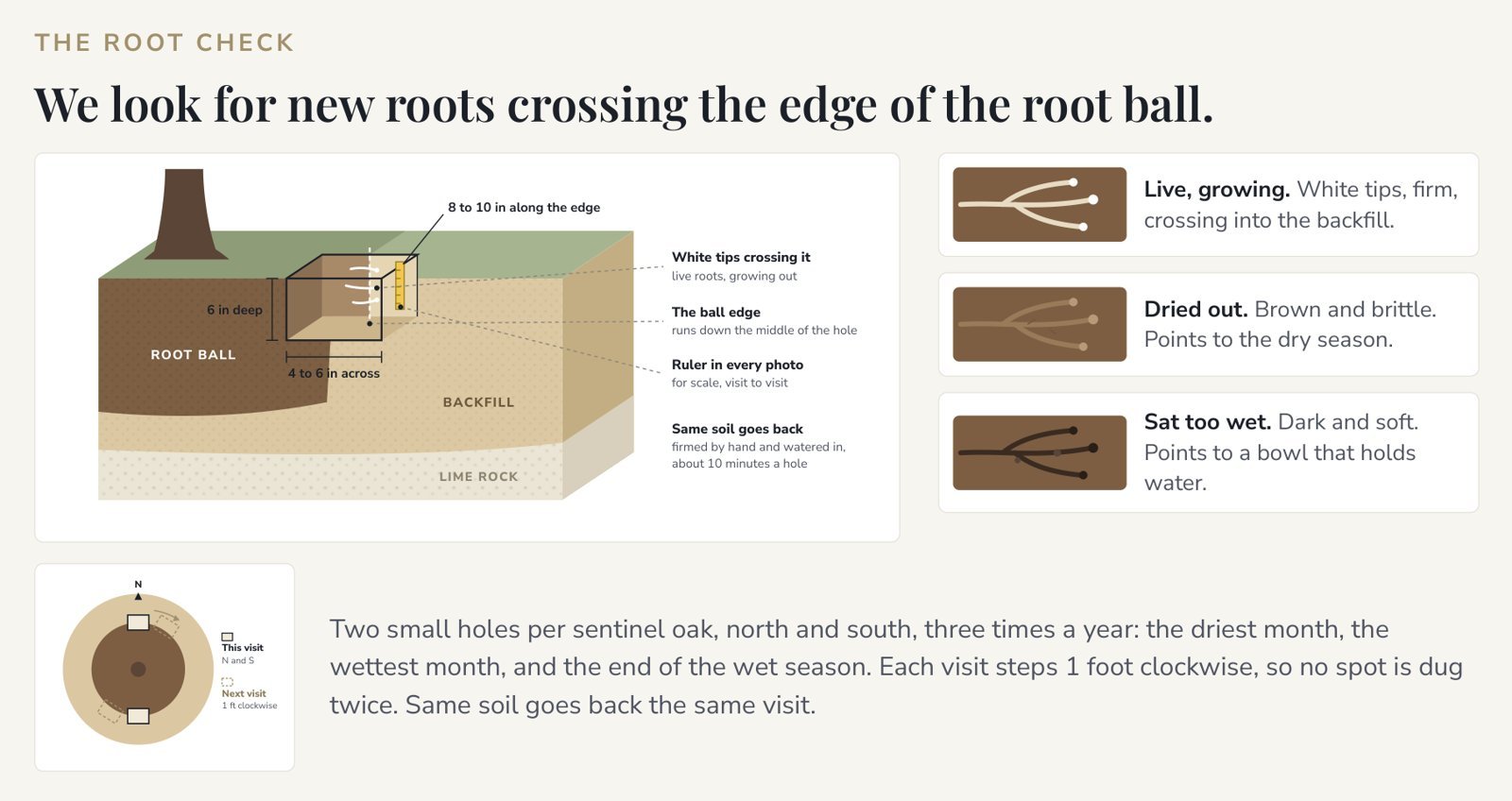
Small holes at the ball edge show whether new roots are growing out, drying back or sitting too wet.
- Step down
Trees 8 in and up: weekly the first 8 weeks, every 2 weeks to month 6, then every 2 weeks in the dry season and monthly in the wet, then monthly in year 2. Smaller trees: 2 visits a year for their 2 years, on the Health Program.
The daily watering stays with the irrigationThe program measures and reports. It does not replace the irrigation contractor, the installer or the site team. When rain and irrigation fall short, we tell you within 24 hours and step in with the flush or rescue watering. A certified arborist signs every watering, flush and treatment call.
What is included
What the program checks.
Planting check
Day 0 to 7: root flare at or just above grade. A buried flare is reported to the installer the same day.
Three readings every visit
The water delivered, the rain received at that planting, and the root ball moisture by hand: moist, never dry, never standing wet.
Eight points every visit
Canopy, twigs and branches, trunk, root flare, mulch and berm, bracing, pests and disease, and photos from the same marked points.
Instruments
Flow meters on the bubbler line, a soil moisture meter every visit, in-ground soil moisture loggers, ceramic cup soil water samplers and tensiometers. At Level 2 the certified arborist decides how many and where; at Level 3, every program planting. Every meter and measuring tool stays Ptolemy's property.
Soil and water tests
A soil test and an irrigation water test at setup, and one follow-up of each after the first dry season.
The flush and rescue watering
Hydrant water on the root ball from our water trailer when the soil water shows salt or in a drought. Rescue watering right away when the irrigation is not working, a flow meter reads zero, or a long dry spell runs.
Fertilizer and MitoGrow
On trees 8 in and up, on 2 visits a year for both years, included. Rates set by a certified arborist. None June 1 to September 30.
Baseline and photos
Five-tier condition, fixed-point photos, trunk diameter and a tip dieback estimate, then compared visit over visit.
Root check
Every 6 months on a small sample of plantings, the first at month 3: small holes at the ball edge show whether new roots are growing out.
Staking and mulch
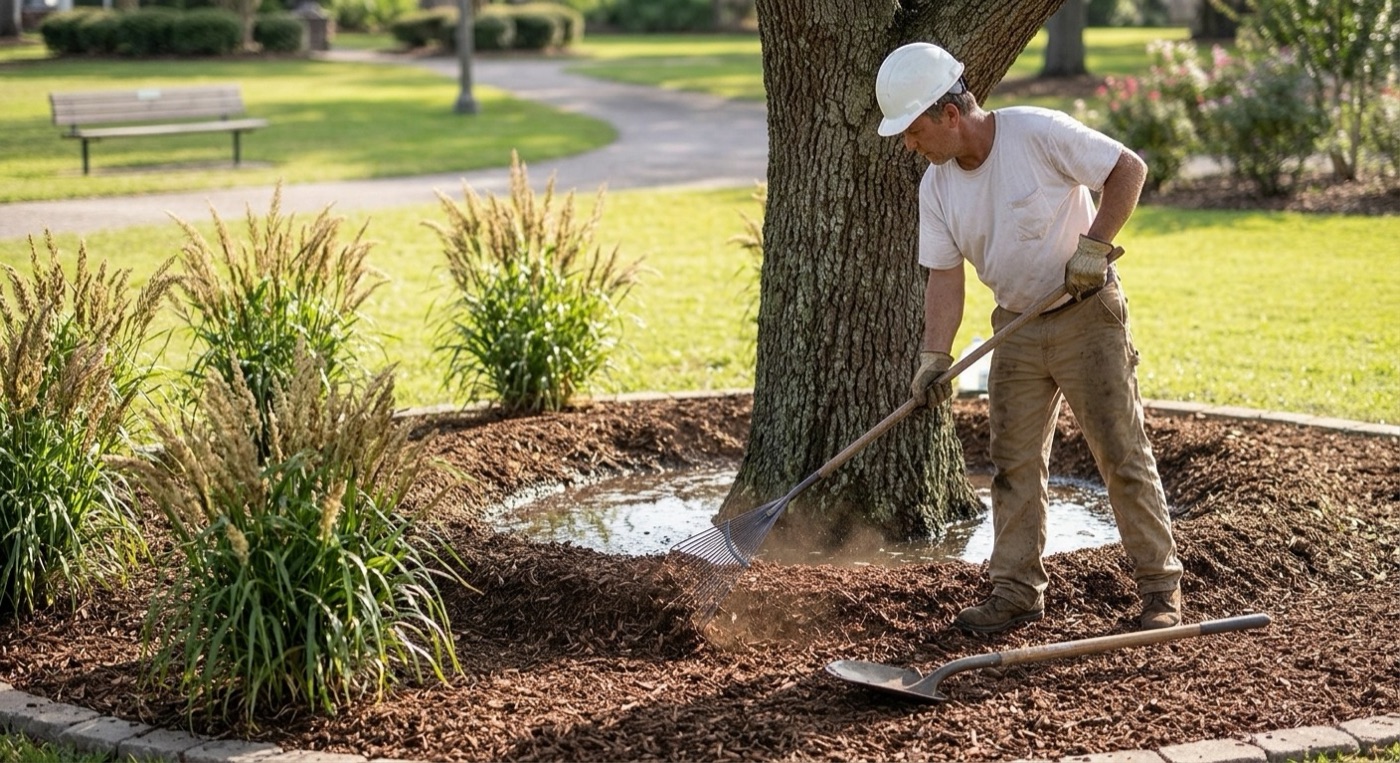
Anchors outside the ball, guying off by the end of the first growing season. 4 to 6 in of coarse mulch in the ring, none on the trunk.
Reports
A report every quarter, with the Health Program report, discrepancy notices within 24 hours, and a rain gauge on site.
Priced on its own lineInstalling or moving trees, staged root pruning, tree permits, irrigation repair, and the daily watering, which is the irrigation's or the installer's. Watering beyond the rounds built into Levels 2 and 3 is billed separately.
Standards we work to
The research behind the schedule.
Our lines
- Water before food. Fertilizer and MitoGrow go on a tree whose root ball we have checked, at a rate the arborist signs.
- Pruning on a moved tree: dead or broken wood only.
- Over 300 psi on the penetrometer: decompact beyond the ball, after 811, never during drought.
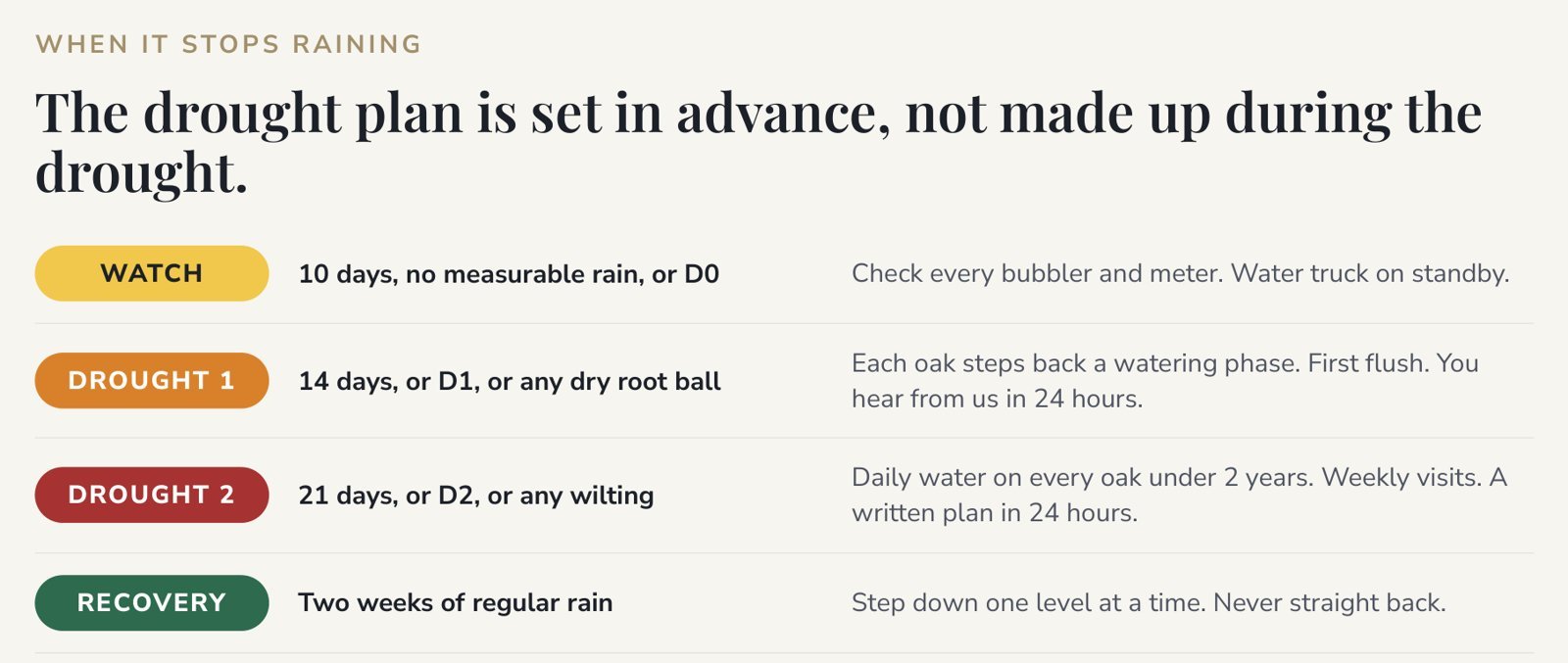
- During drought: no fertilizer, no pruning of new dieback, no decompaction.
- We do not fertilize pines.
- No program can guarantee a tree's survival.
About 3 months per inch of trunk caliper in zones 10 to 11, and 4 months in zones 8 to 9. A 20 in oak takes 5 to 7 years.
For trees over 4 in caliper: daily at first, then every other day, then weekly until established. Large, infrequent waterings cannot make up for missed ones.
Flare at or above finished grade.
No fertilizer June 1 to September 30.
Sources: Ptolemy Establishment Program, Irrigation Verification and New Planting Acceptance specs; Large Tree Transplanting subject file; UF/IFAS (Gilman) establishment research; ANSI A300 Part 6.
On the job
Tree and palm establishment, in the field.
From the program
How we explain it to a board.
Pages from the establishment program we run for a large special district, with the client details removed.
The flush and the rescue
A new tree lives or dies on water.
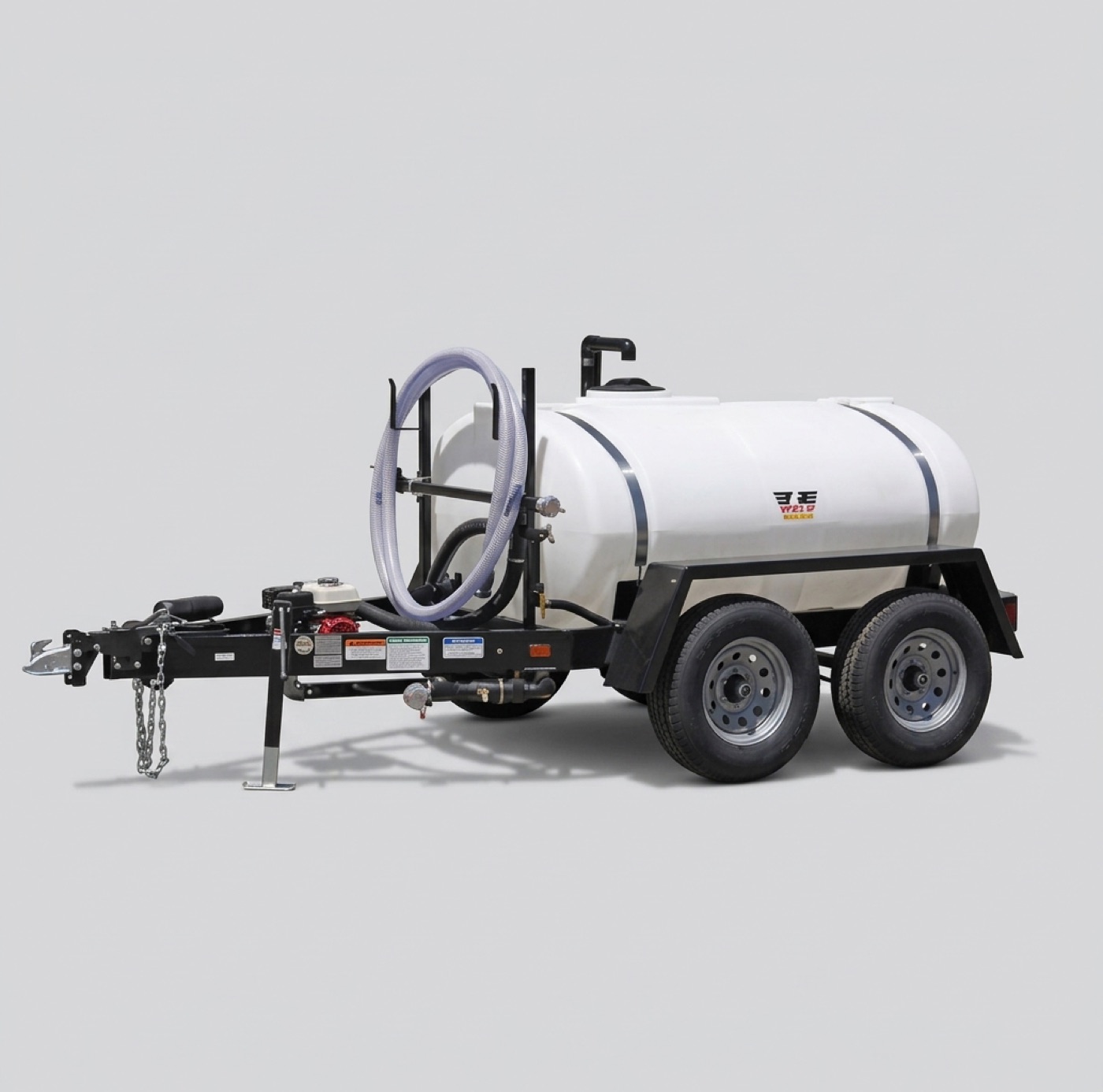
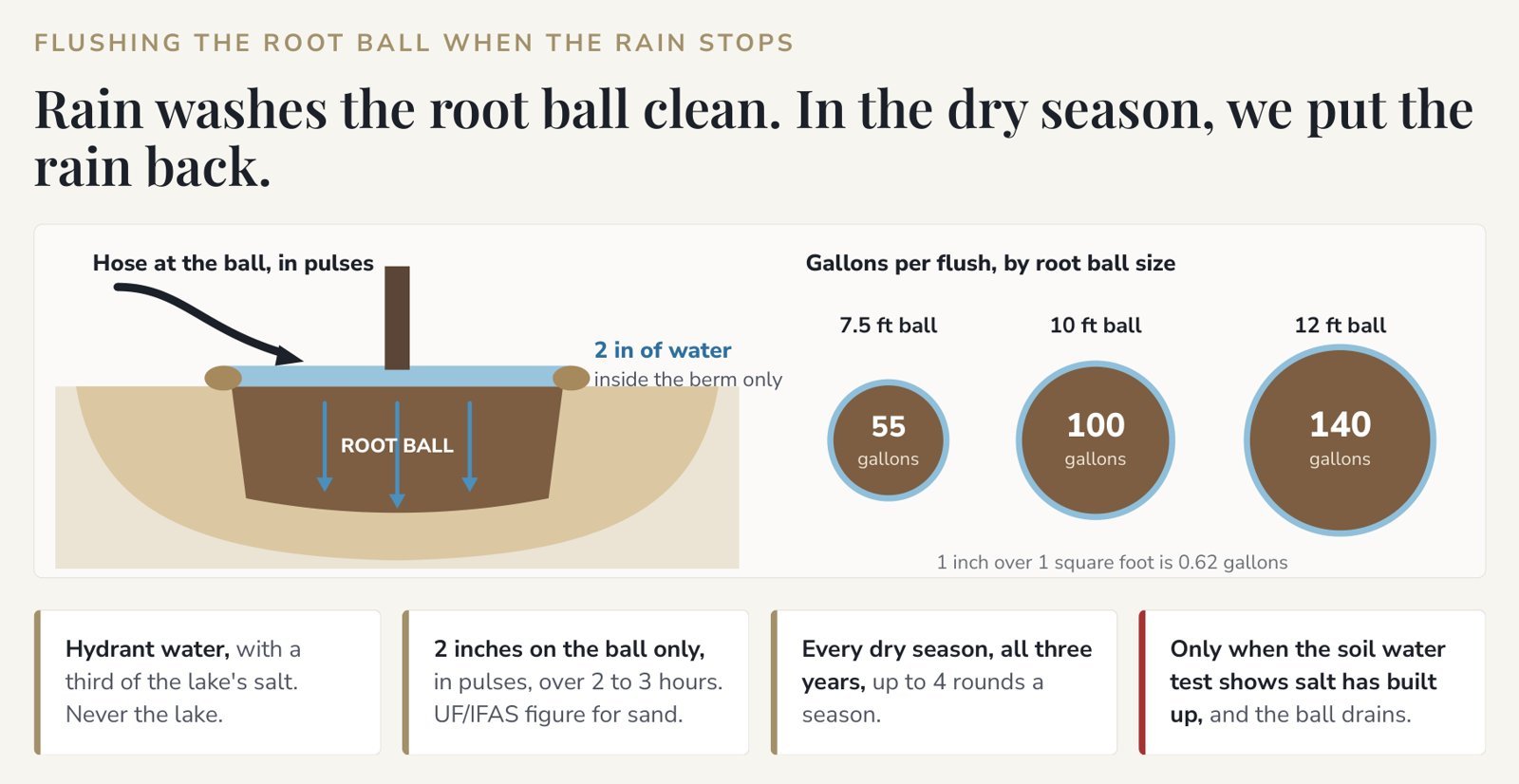
Rain washes salt out of the root ball. In the dry season we put the rain back: clean hydrant water on the ball from our 800-gallon water trailer, about 100 gal on a 10 ft ball. The first flush comes after 14 days in a row without rain, and any time the soil water shows salt has built up.
Rescue watering goes on right away when the irrigation is not working, a flow meter reads zero, or 21 days pass with no rain. You and the irrigation contractor hear the same day.
Levels 2 and 3 include a set number of flush rounds and rescue waterings each year. We set them from 45 years of Southwest Florida rain, so they cover what most years need.
The trailer carries about 3,600 gal a day. Level 3 starts sooner than Level 2. A certified arborist signs every watering and flush call.
What we measure, every visit
The water, read, not assumed.
Three readings every visit, logged the same way so a trend shows before the tree does: the water delivered, the rain received at that tree, and the moisture in the root ball, its edge and the soil beyond.
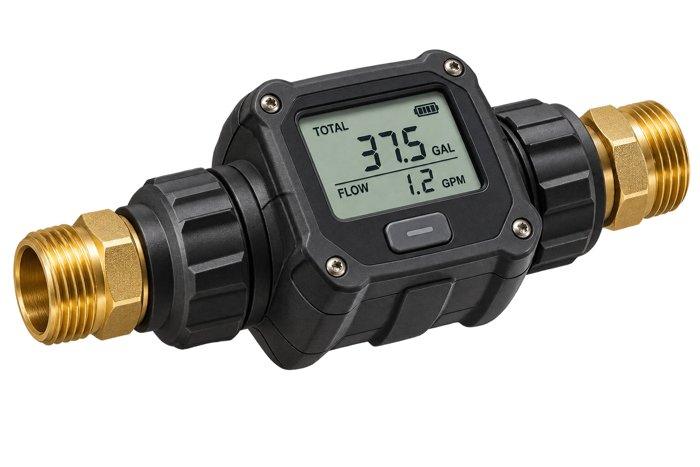
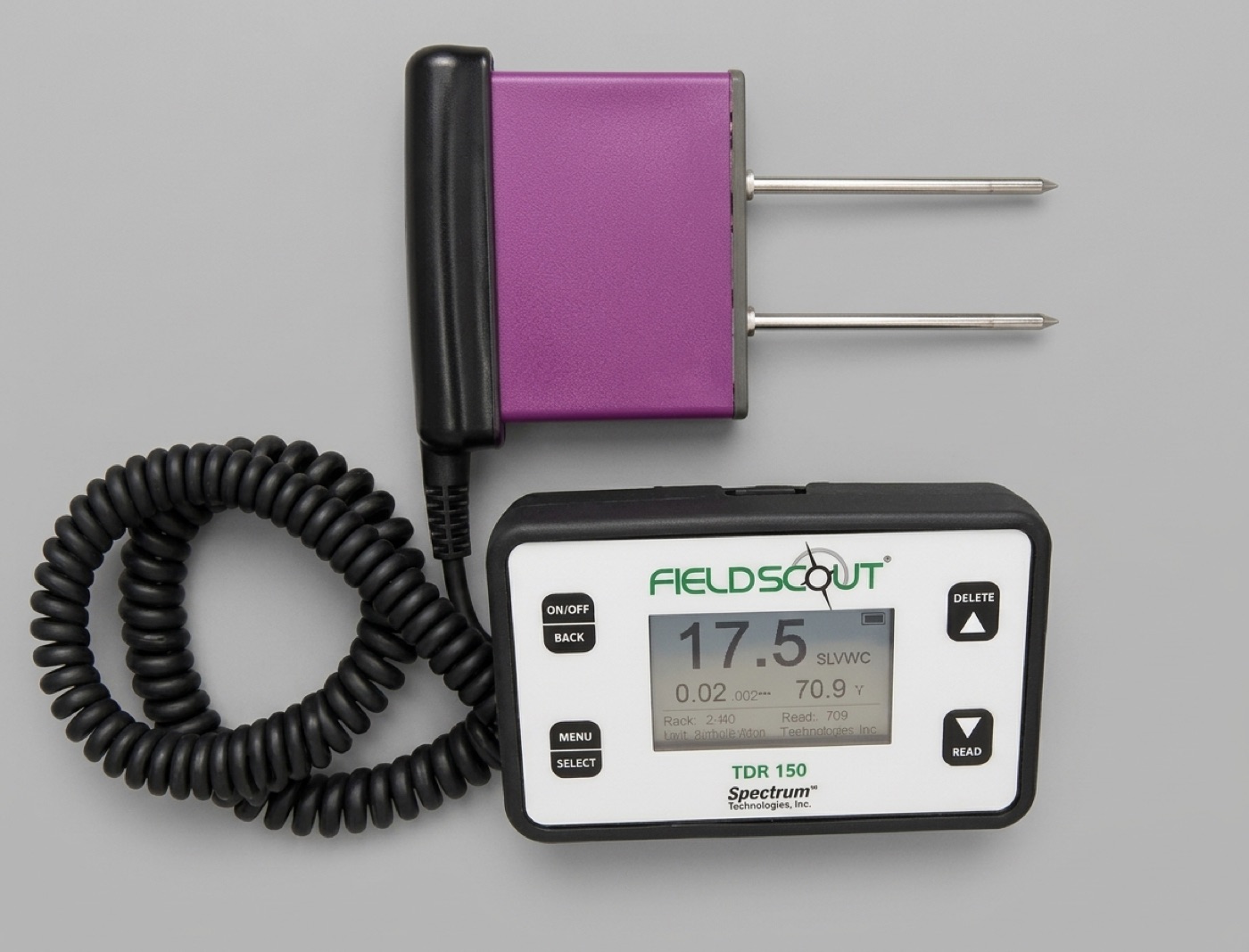
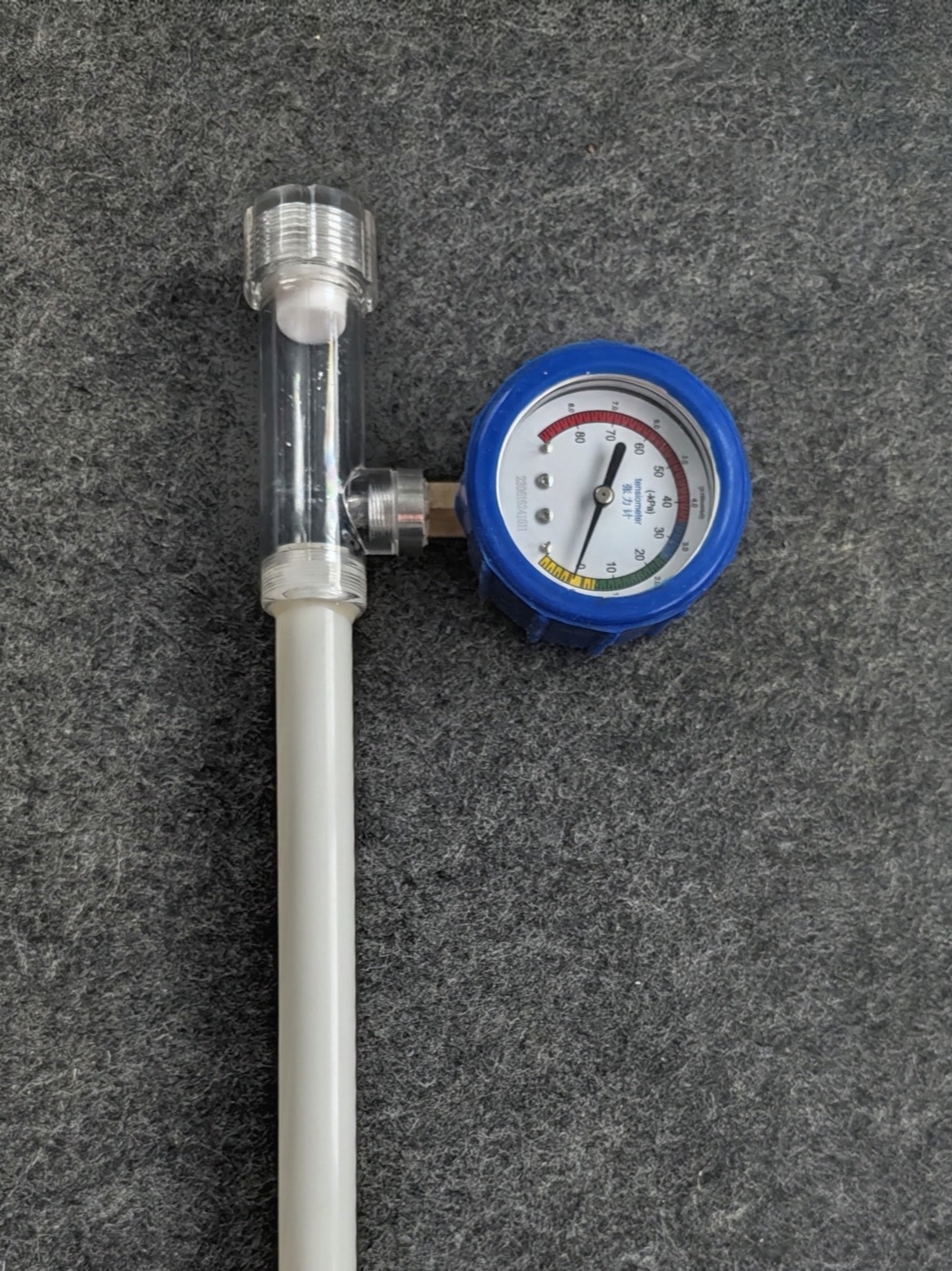
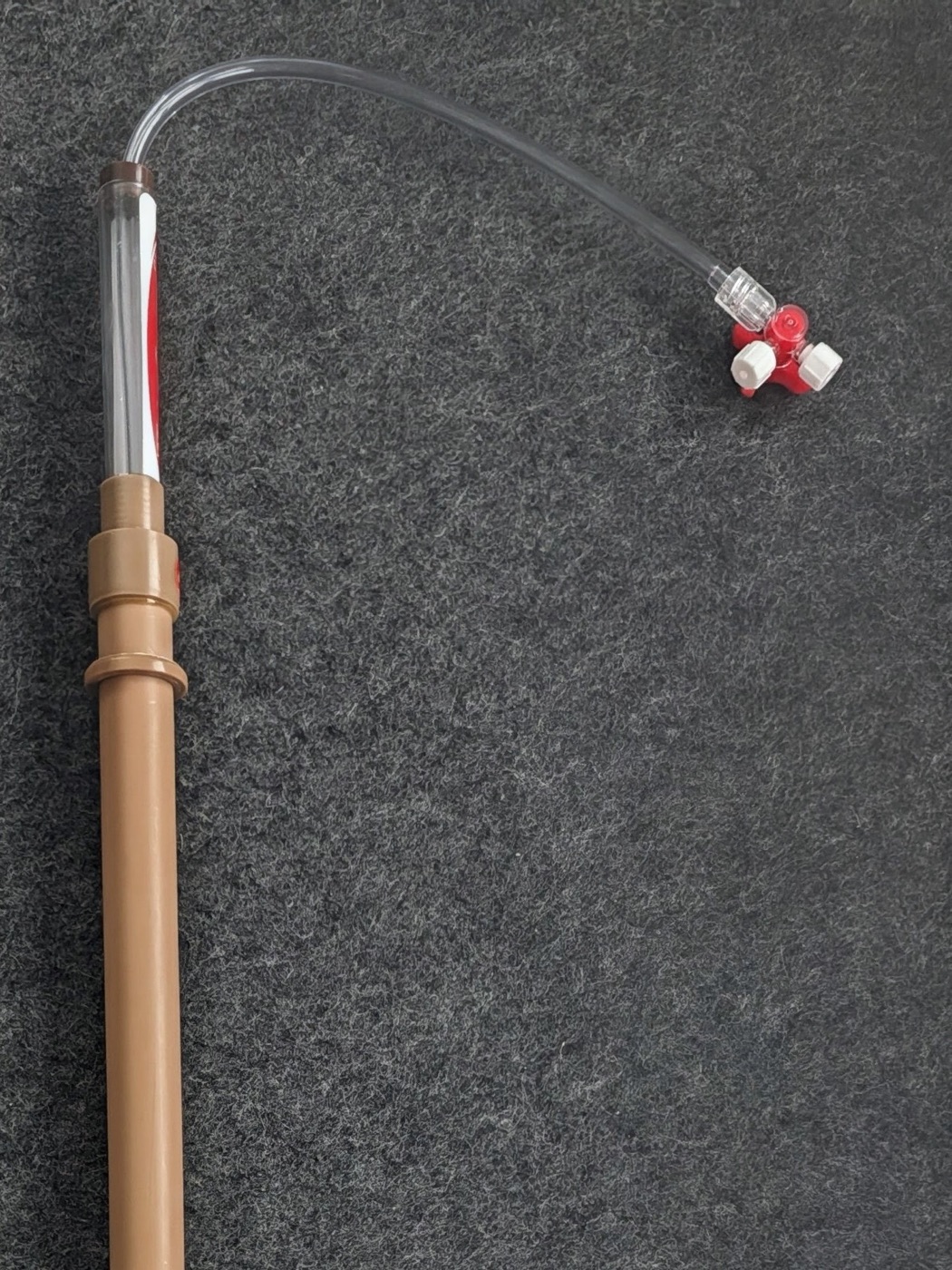
How many meters, tensiometers and samplers go in, and where, is the certified arborist's call. Every meter and measuring tool stays Ptolemy's property. Brands shown are examples; we may use an equal.
From the field
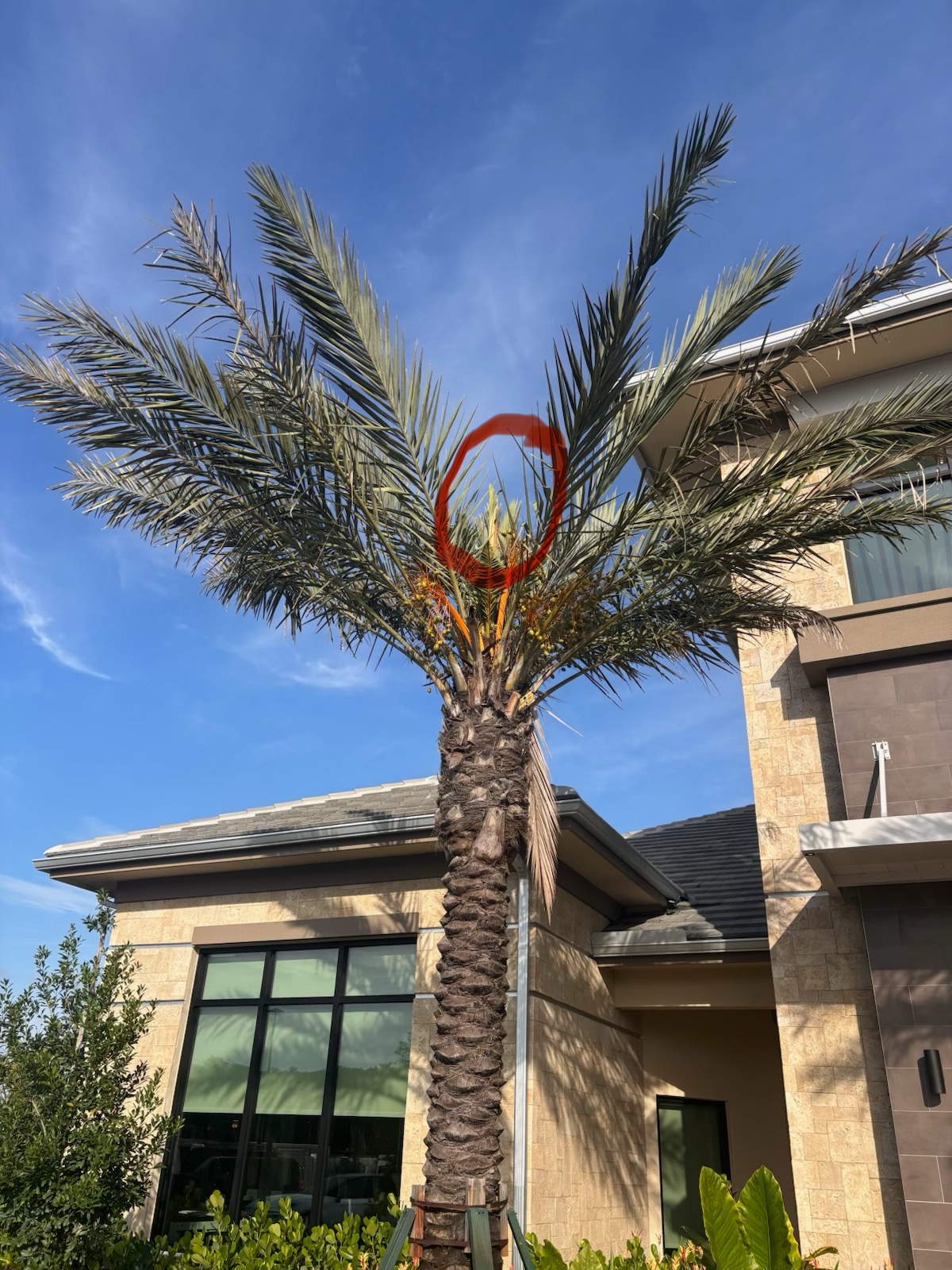
One Medjool, back from a hard transplant.
A Medjool date palm at a community entrance building struggled after it was moved. Our field note at the time: likely not enough water at the start. It went on the program and was graded at every visit.
 Start
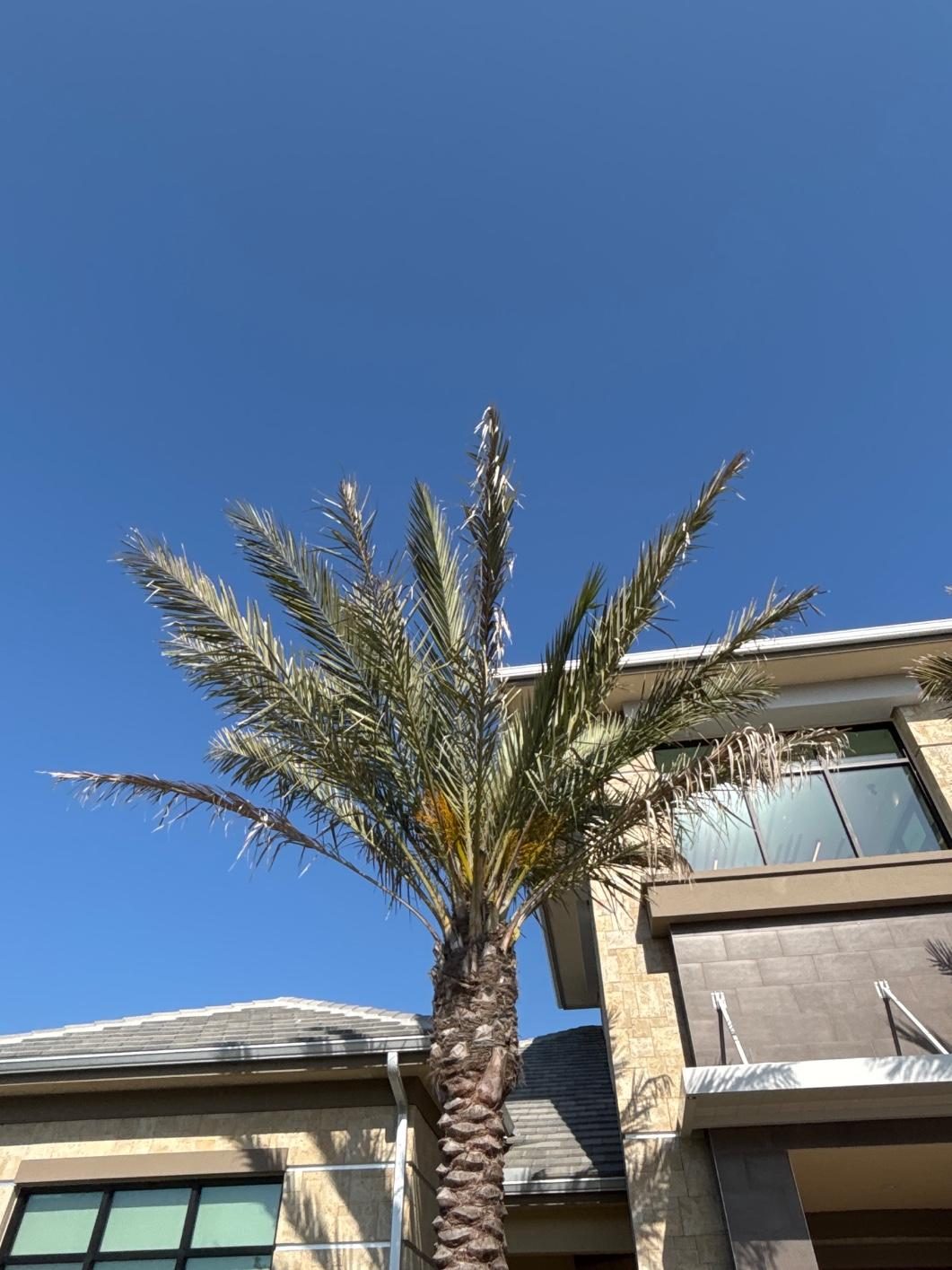 Poor
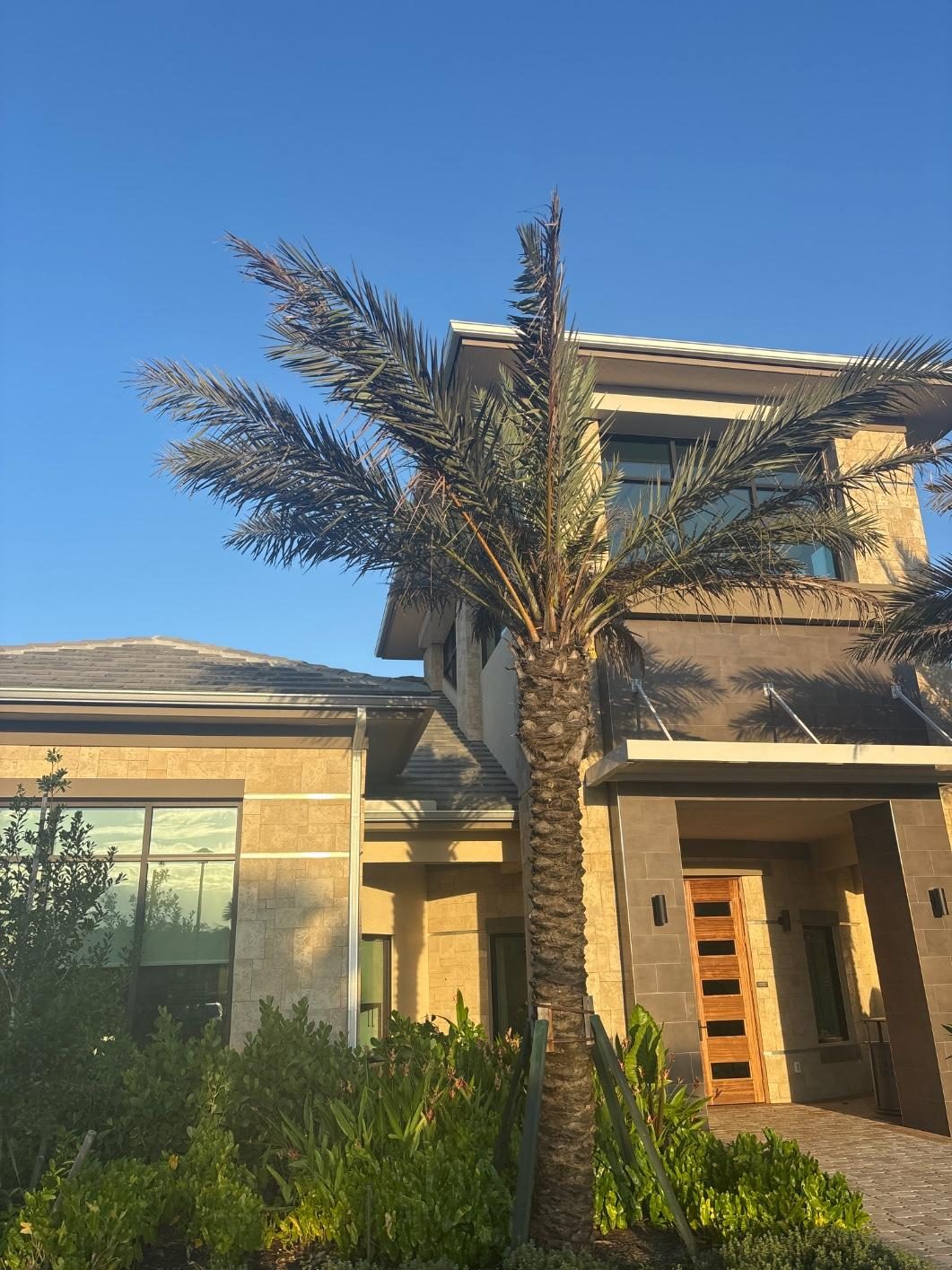 Critical
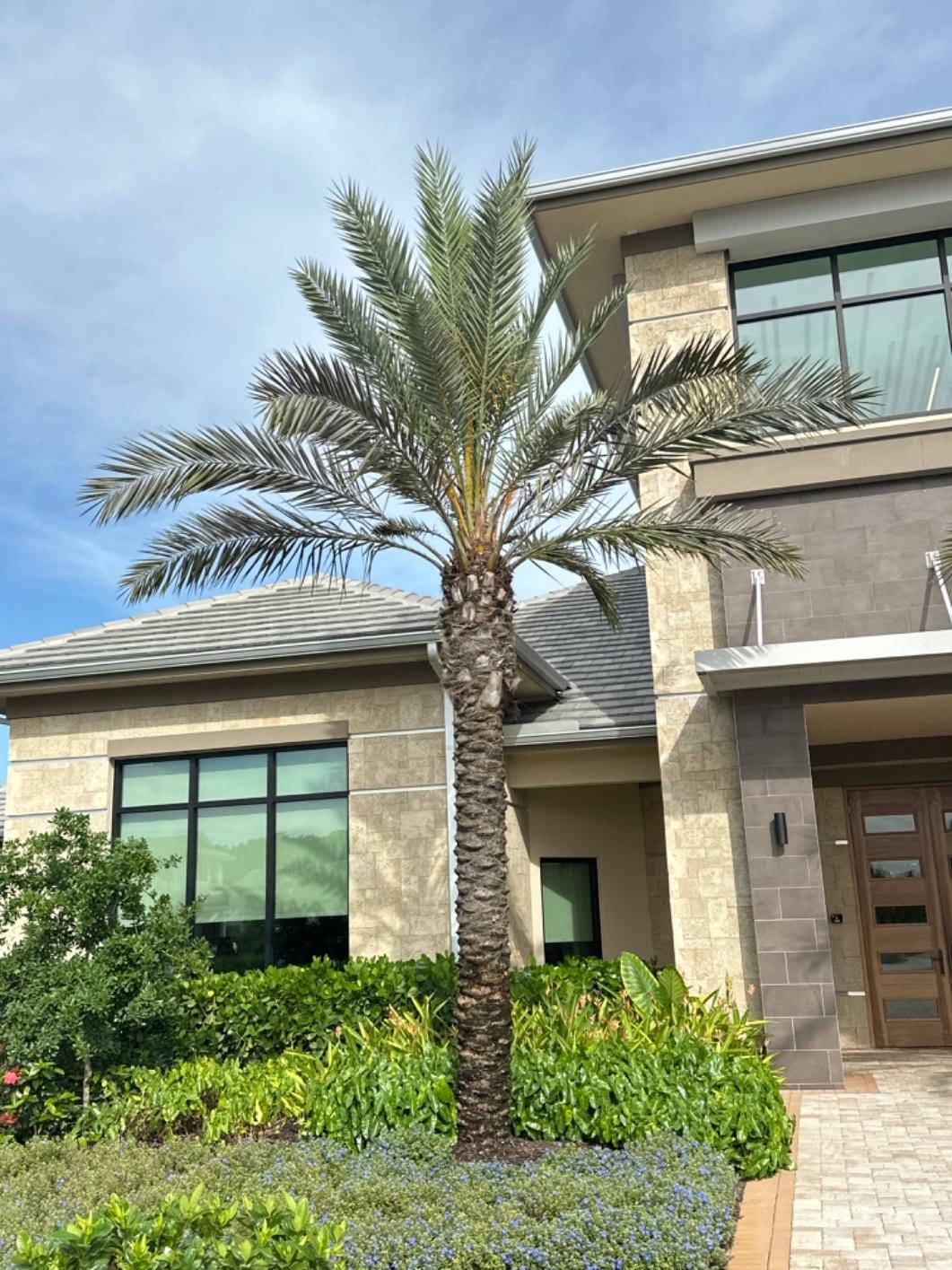 Fair
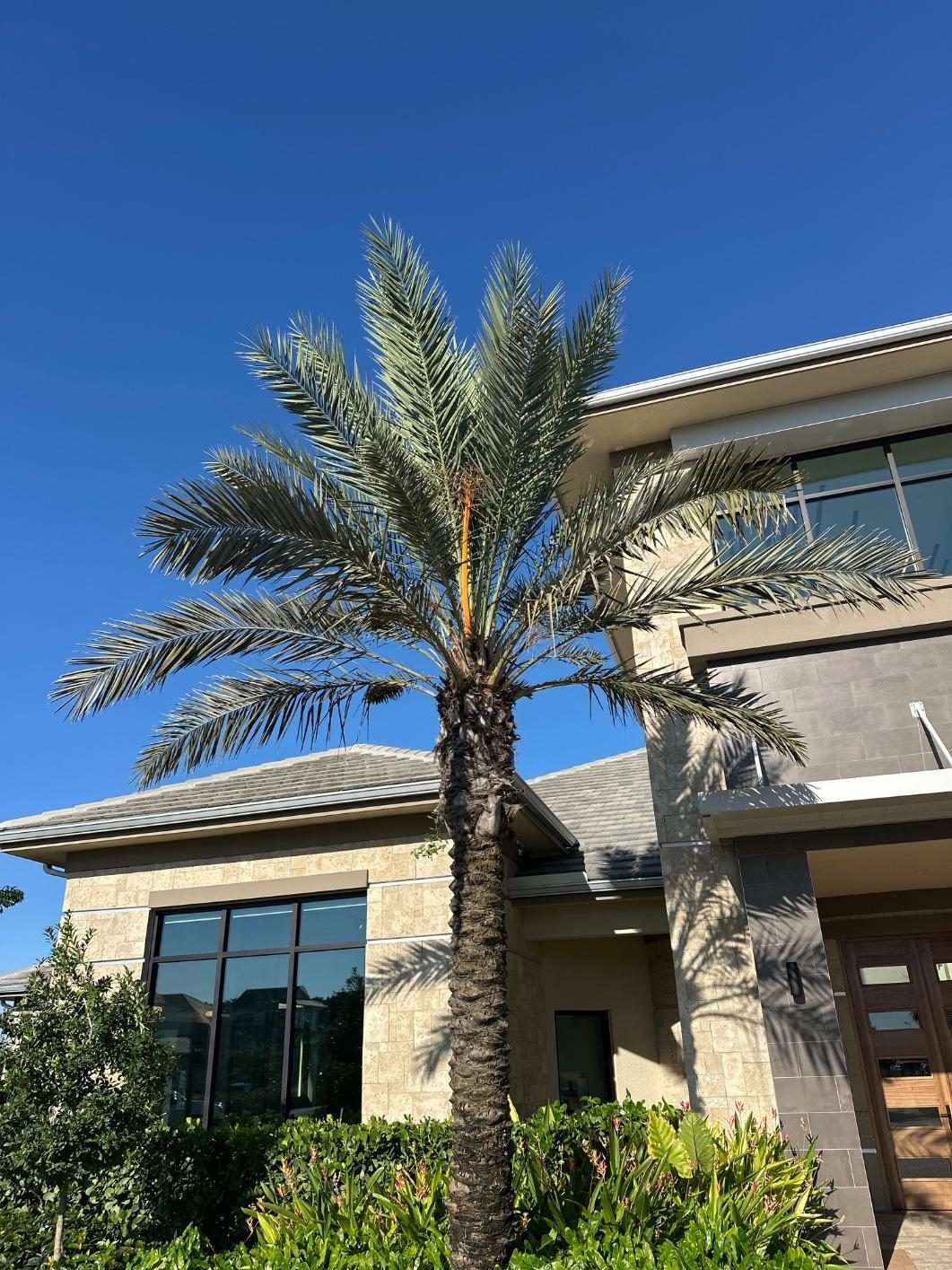 Normal
The work in between: bud and soil drenches from May to July 2025, and granular and liquid feedings from April 2025 through October 2026. Grades are from our inspection records. Recovery took a year and a half, and not every transplant comes back.
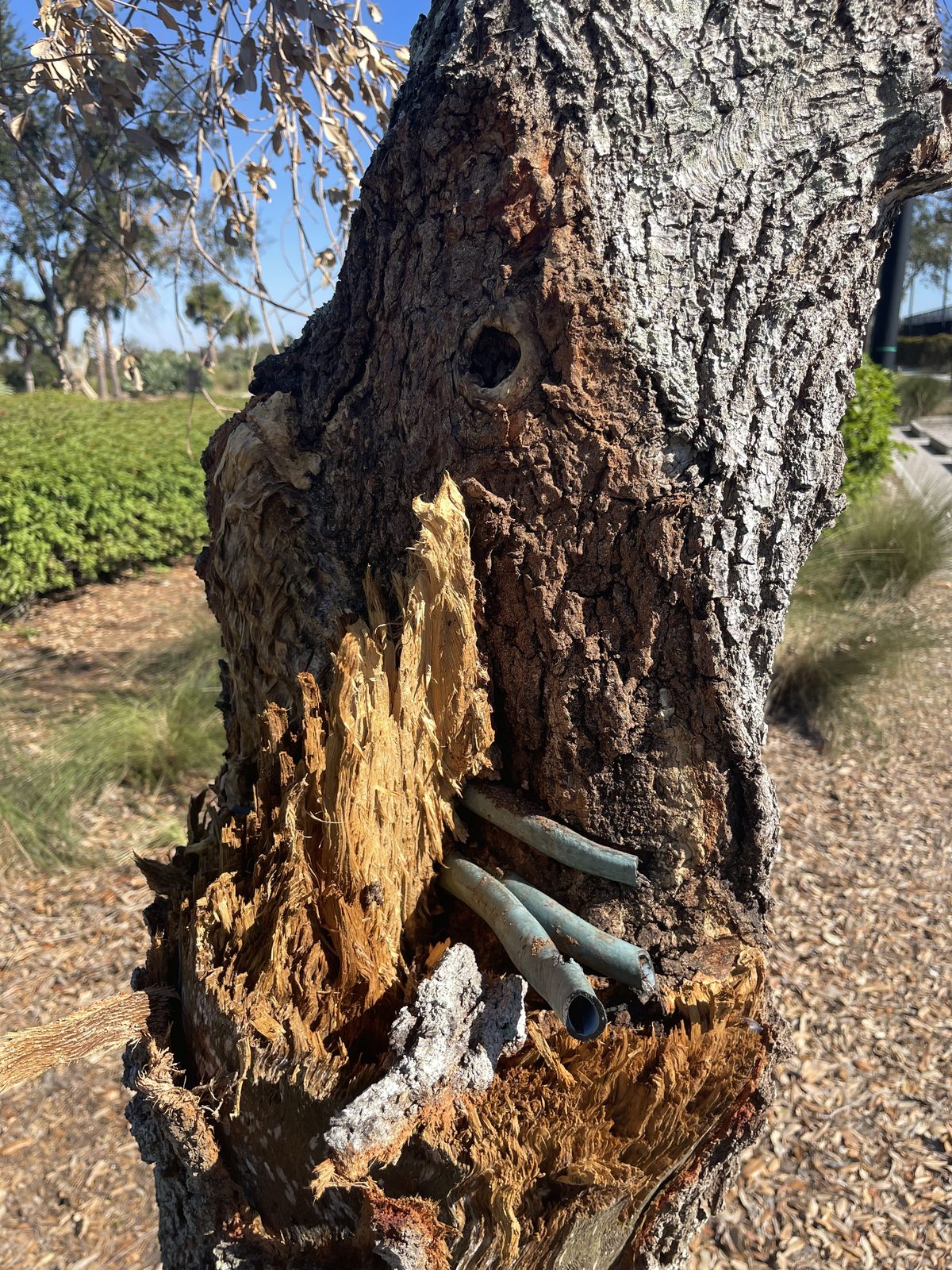
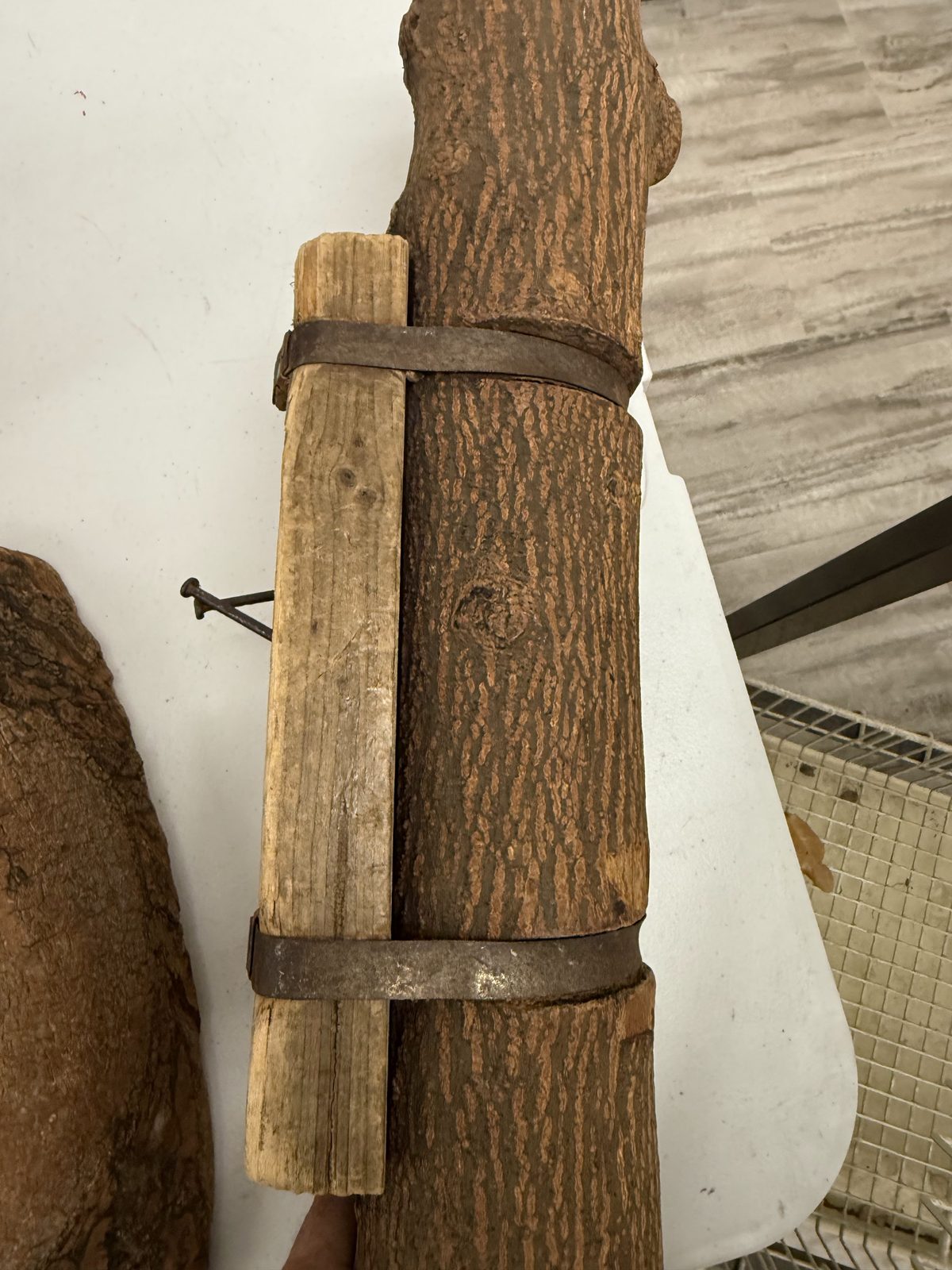
Stakes and guy wires
Supports come off on time.
Stakes, straps, hose and wire hold a new tree while its roots grow out. When nobody takes them off, the trunk keeps growing around them. The wire tightens and cuts in, and the tree breaks at that point years later.
Stakes and guy wires come off within about a year, often sooner for trees. We check them at every visit.
Our establishment spec takes tree guying off by the end of the first growing season. UF/IFAS (EP001) says palm supports stay in place for about a year. Where a county code sets a longer staking period, the county rule applies on that property.
Palms in small planters
Hold the rock for the first year.
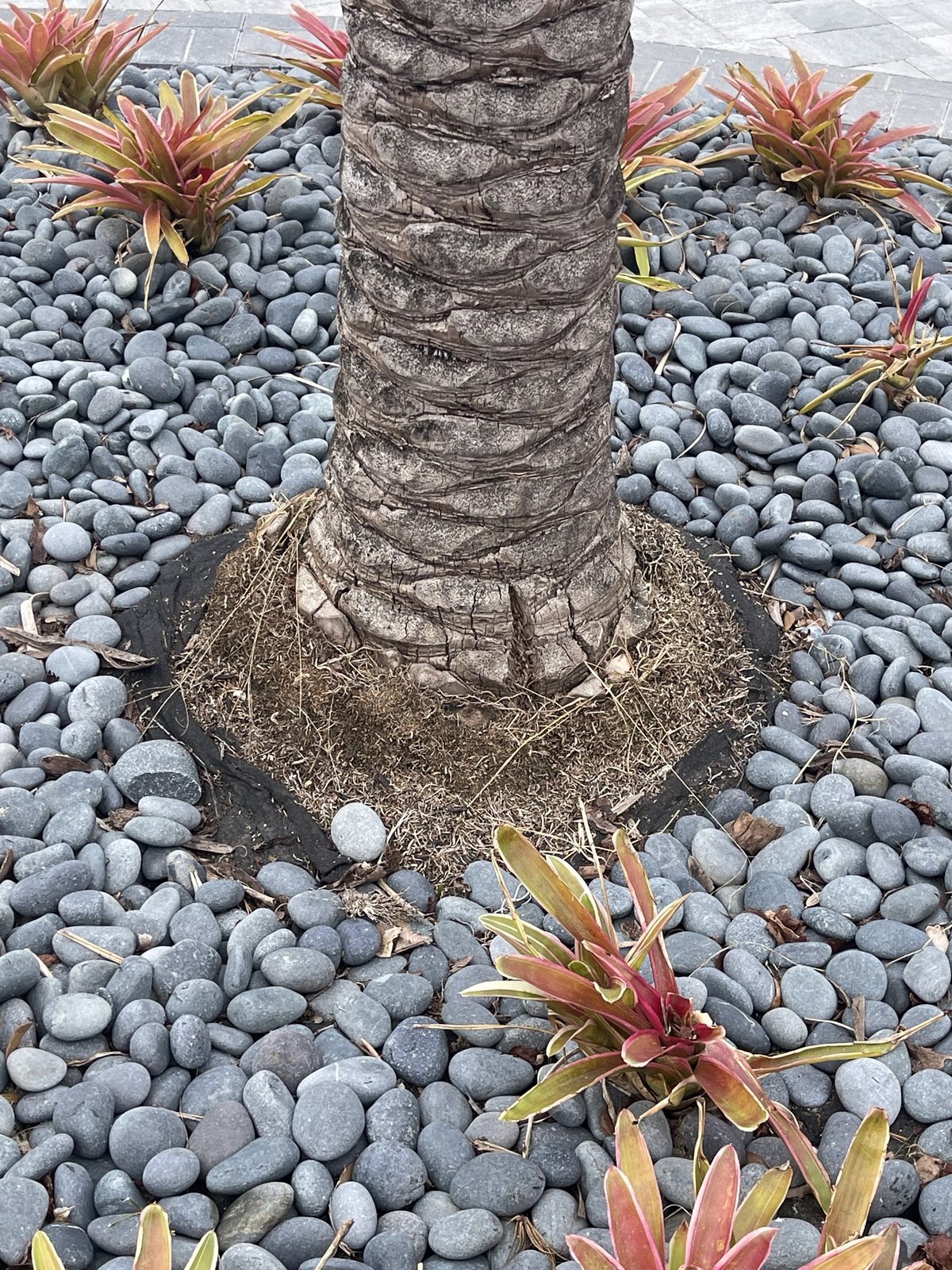
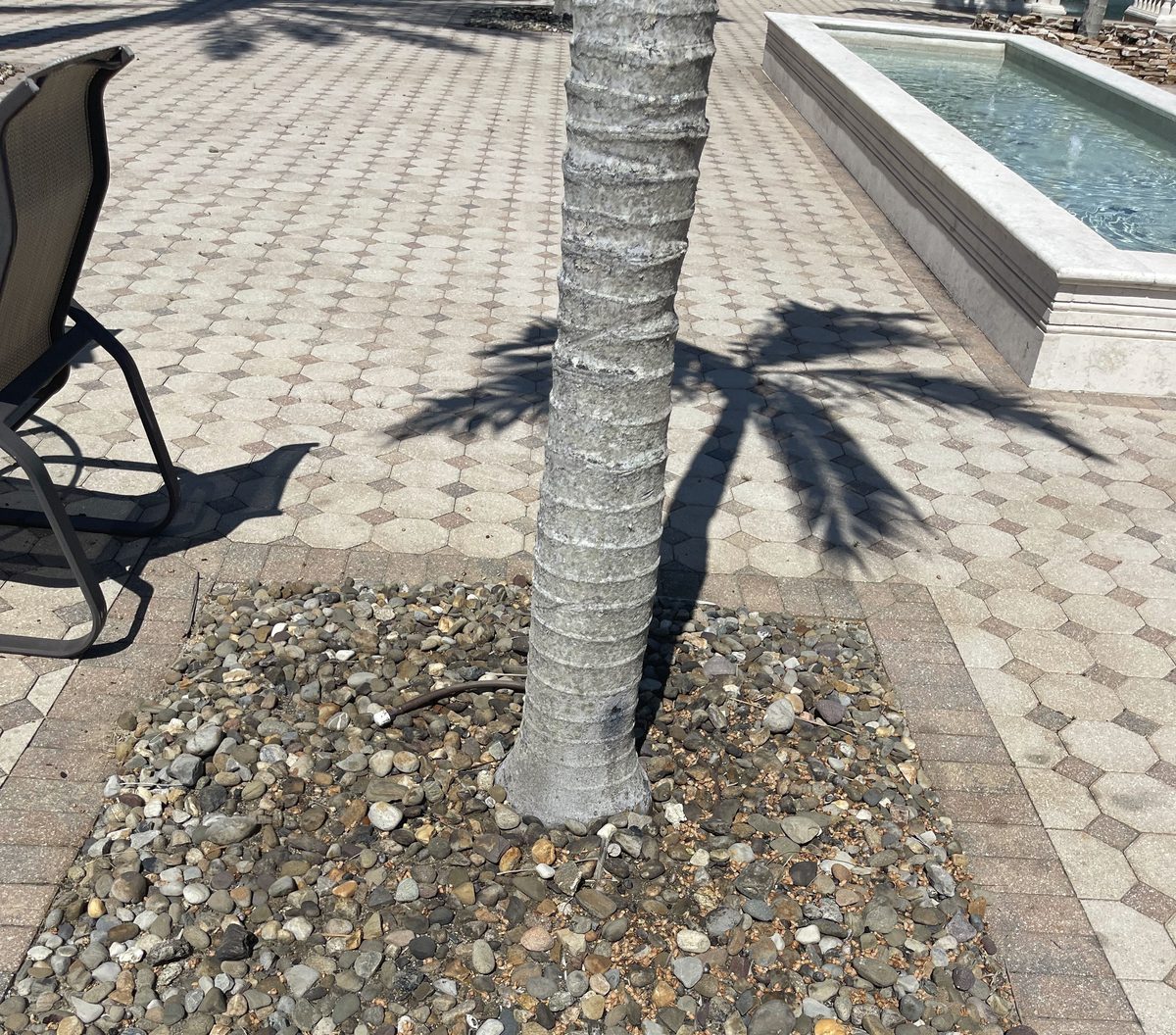
Pool decks put palms in small planters with rock on top. Little soil, and the rock sits right over the roots. That makes a palm hard to water, feed and check.
If you want rock around a new palm, we recommend waiting at least 12 months after planting.
This is our field practice, not a UF/IFAS number.
Who it is for
Written for the people who answer for the trees.
- CDD and ISD boardsA whole new town of young trees, with a record of the water each one got.
- Master-planned communitiesSpecimen oaks at entrances and amenity centers, carried to established.
- Golf course superintendentsReplacement trees after a storm or a renovation, tracked until they hold.
- Commercial property managersLarge trees moved for a project, with a report the owner can file.
Inside a plan
The establishment program sits under Monitor.
The Establishment Program is one of the programs inside a 10-year Palm and Tree Master Plan, for clients on our Health Program. It is not offered on its own. At the floor, every new planting gets an initial assessment, goes on Monitor and is checked every 3 months on the regular visits: root ball moisture by hand, root flare and settling, berm and tree well, stakes and straps, mower and trimmer wounds, new fronds on palms, and a photo from the same point.
Level 2 goes by trunk size at planting, not location. Every new tree gets 2 years on the establishment schedule. Trees 8 in and up get the full visit schedule: about 25 visits in year 1 and 12 in year 2, with fertilizer and MitoGrow on 2 visits a year. Trees under 8 in get 2 visits a year for their 2 years, with fertilizer and MitoGrow, on the Health Program. New palms of a Standard or Advanced species get the palm schedule for 1 year. A plan may instead put new palms straight onto their Health Program tier: Monitor, Standard or Advanced. Level 3 runs the program on every new planting, every size and species, with the irrigation checked on every one.
After the 2 years, each tree goes to regular monitoring on the Health Program.
Levels 2 and 3 include a set number of flush rounds and rescue waterings each year, more at Level 3. We set them from 45 years of Southwest Florida rain, so they cover what most years need.
Questions
Questions managers and boards ask.
Still have a question? Call (239) 467-0142 or send a request.
How long until a moved tree is established?
Who is the program for?
Do new palms go on the program?
Do you water the trees?
Do new trees get fertilizer?
Who owns the flow meters and soil tools?
How do you know a tree is established?
What happens in a drought?
Can you guarantee the trees survive?
Next step
Moving big trees, or planting a lot of them?
Put the water on record from day one. We check it, measure it and report it until each planting is established.