Skip to content
ComingThe Ptolemy client portal: your map, reports, schedule and spending in one place.Portal coming:See what’s insideClient sign-in
Ptolemy(239) 467-0142Request the free master planFree master plan
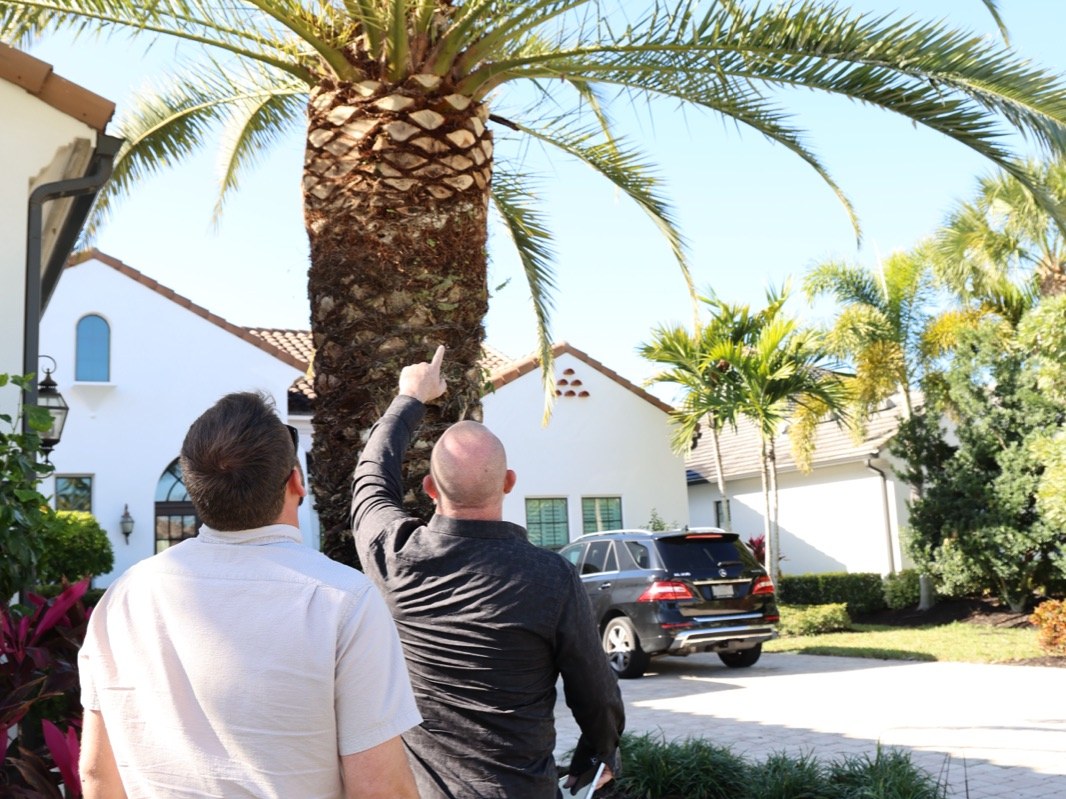
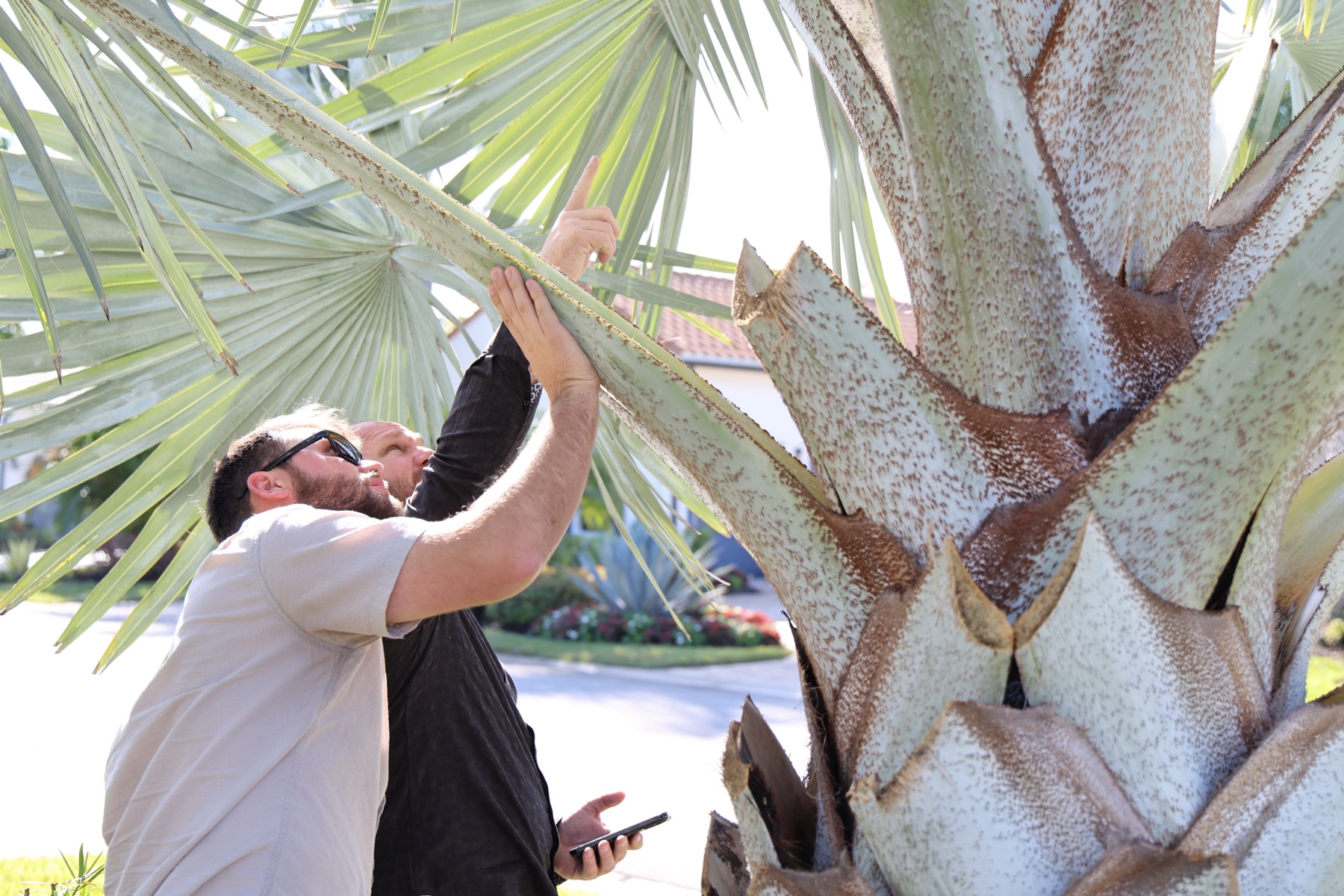
Assessing a Bismarck palm in the field

Credentials and standards

Credentials a board can check.

Every certification behind our work, what it took to earn, and what it means for the people who answer to residents. Each one ties back to a written standard you can hold us to.

At a glance

Six credentials. One standard behind each.

Jeff Kaulbars holds the personal credentials. Ptolemy holds the company license. Each card says what it took, what it means to your board, and the standard it ties to.

International Society of Arboriculture

ISA Certified Arborist

#FL-10118A
What it means to your board
A third party tested the person directing your palm and tree work, and he has to keep learning to keep the title. Florida has no state arborist license, so this is the credential cities and counties ask for on tree permits.
What it took, and the standard behind it
What it took
The core professional credential in tree care. It takes documented years in the field, then a broad exam on tree biology, diagnosis, pruning, soils, safety and risk. It is kept by earning continuing education every three years, or by retesting. Holders sign the ISA Code of Ethics. The program is accredited to the ISO 17024 standard for certification bodies.
The standard behind it
ANSI A300 tree care standards and ISA Best Management Practices.
International Society of Arboriculture

Tree Risk Assessment Qualification (TRAQ)

What it means to your board
When we call a tree high risk or recommend a removal, the call follows one industry method, written down. That makes it consistent and defensible to residents, insurers and the county, and it supports removal permits.
What it took, and the standard behind it
What it took
An advanced qualification for arborists who already hold a credential like Certified Arborist. Two days of instruction, then a written and field assessment. It is renewed by retraining and retesting.
The standard behind it
ANSI A300 Part 9 (Tree Risk Assessment) and the ISA Best Management Practices for Tree Risk Assessment.
Florida Chapter, ISA

Prescription Pruning Qualification (PPQ)

What it means to your board
You get a written pruning prescription for each tree or group of trees, not an instruction to trim everything. That prevents over-pruning and lion tailing, builds stronger structure in young trees, and gives the board a document to hold the crew to.
What it took, and the standard behind it
What it took
Awarded after the Prescription Pruning course and its exam. The course was developed with University of Florida tree researchers. It has a producer track for crews and a prescriber track for Certified Arborists. The Certified Arborist credential has to stay in good standing to keep it.
The standard behind it
Written in the language of ANSI A300 Part 1 (Pruning) and the ISA pruning Best Management Practices.
Landscape Inspectors Association of Florida

Landscape Inspector

What it means to your board
The person accepting your new palms and trees is trained to grade them against Florida’s standard and to inspect against landscape codes and plans. That is the check that catches a sub-grade palm before your community owns it.
What it took, and the standard behind it
What it took
LIAF has trained and certified Florida landscape professionals since 1983. Certification takes LIAF membership plus a related degree and two years of experience, or five years of verifiable experience in plan review, installation, maintenance, irrigation, plant and insect identification, material grading and tree pruning. Then a review course and a proctored exam. It is renewed every three years with continuing education.
The standard behind it
FDACS Florida Grades and Standards for Nursery Plants, county landscape codes, ANSI A300 Part 6 (Planting and Transplanting) and ANSI Z60.1 (nursery stock).
Florida DBPR, Community Association Managers

CAM Continuing Education Instructor

Course license #CRS10101
What it means to your board
Managers who sit in on the course earn credit, and they leave knowing what to ask any palm and tree vendor. It is a state-approved course. Approval is not an endorsement of any company.
What it took, and the standard behind it
What it took
The state approved Jeff to teach licensed community association managers for credit toward their license renewal. The course is "Practical Strategies for Preserving and Managing Urban Palms," one interactive hour. Ptolemy is the approved continuing education provider.
The standard behind it
Florida Department of Business and Professional Regulation, Regulatory Council of Community Association Managers.
Florida Department of Agriculture and Consumer Services

Licensed Florida pest control business

Lawn and ornamental
What it means to your board
Anyone who sprays or injects your palms for pay must work under a state-licensed business and a state-certified operator in charge. An unlicensed landscaper treating palms exposes the community. Our treatments are applied under state license and its record rules.
What it took, and the standard behind it
What it took
Ptolemy holds an FDACS pest control business license in the lawn and ornamental category, under Chapter 482 of the Florida Statutes. That is the category that covers palms and trees. It is renewed every year.
The standard behind it
Florida Statutes Chapter 482 and FDACS rules.

Prescription pruning, explained

No tree is pruned without a written prescription.

Most pruning in Florida is decided by whoever holds the saw. Prescription pruning moves that decision to a trained prescriber. The tree is evaluated first, an objective is set, and the prescription says how much to remove and where, as a number, size and type of cuts. The crew carries it out. Then someone checks it.

Heavy trimming that strips palms to a few fronds and thins trees to bare limbs is still common here. Palms are pruned to the 9-and-3 line: everything below it comes off, and nothing above it is cut. Trees keep the green they need, and we write down why.

Pruning prescriptionWritten before the first cut. Checked after the last.
  1. 1Evaluate

    Species, age, structure, condition and what is around the tree.

  2. 2Set the objective

    Structure, clearance or appearance. Often risk reduction or restoration too.

  3. 3Write the dose

    Number, size and type of cuts, and from where. Not a percentage guess.

  4. 4Crew carries it out

    The cuts on paper are the cuts in the tree. Nothing extra.

  5. 5Check and record

    The board gets a record of what was asked for and what was done.

There is no evidence that prescription methods cost more than what crews already do. The cost is in the training.

From Jeff’s PPQ notes
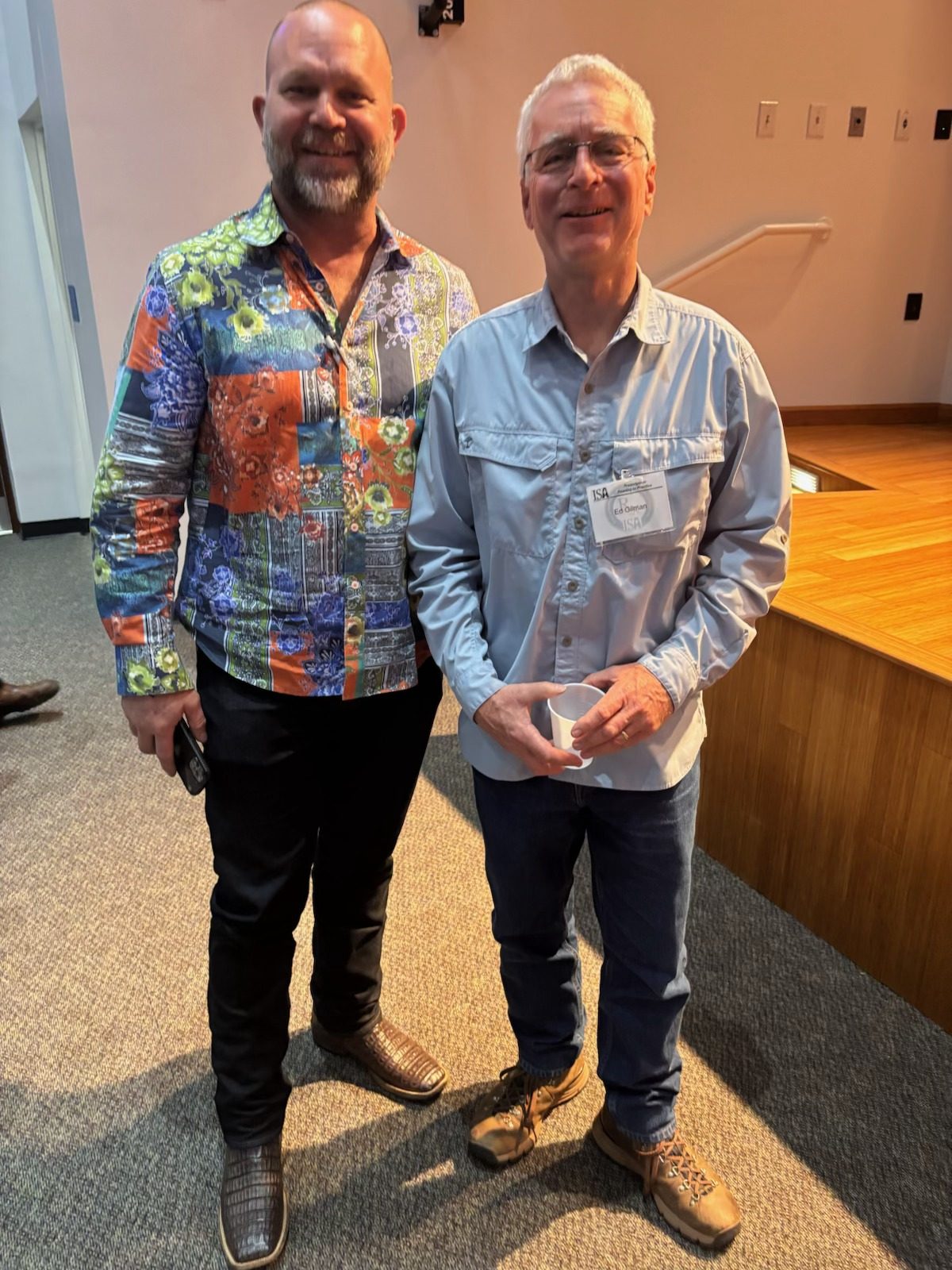
Jeff Kaulbars with Dr. Ed Gilman at the Prescription Pruning Qualification course

The research behind the course

Jeff with Dr. Ed Gilman at the PPQ course.

Dr. Gilman is professor emeritus of environmental horticulture at UF/IFAS. He spent 30 years there studying pruning, how trees stand up to hurricane winds, container root defects and tree roots. After the 2004 hurricanes, his work found that trees pruned on a regular cycle snap less often in strong winds.

PPQ is the Florida Chapter ISA prescription pruning course, developed by Dr. Gilman. He also wrote An Illustrated Guide to Pruning, written to the ANSI A300 standard.

See how we prune trees

Tree risk assessment, explained

A removal call you can defend in a public meeting.

A TRAQ assessment does not ask “does this tree look bad?” It asks three questions, the same way every time, and writes down the answers.

Likelihood of failure

Defects, decay, structure, lean and site. How likely is the tree or a part of it to fail in the time frame we are judging?

Likelihood of impact

What is under it, and how often: a sidewalk, a pool deck, a parking area, a road.

Consequences

If it fails and hits, how bad is it? A bent rail is not a damaged roof or an injured person.

The risk rating

Written down, the same way every time.

Why it matters to a boardWhen residents disagree about a tree, the board needs a finding, not an opinion. A written risk rating from a qualified assessor is consistent, it can go in the minutes, and it supports the permit when the county asks.
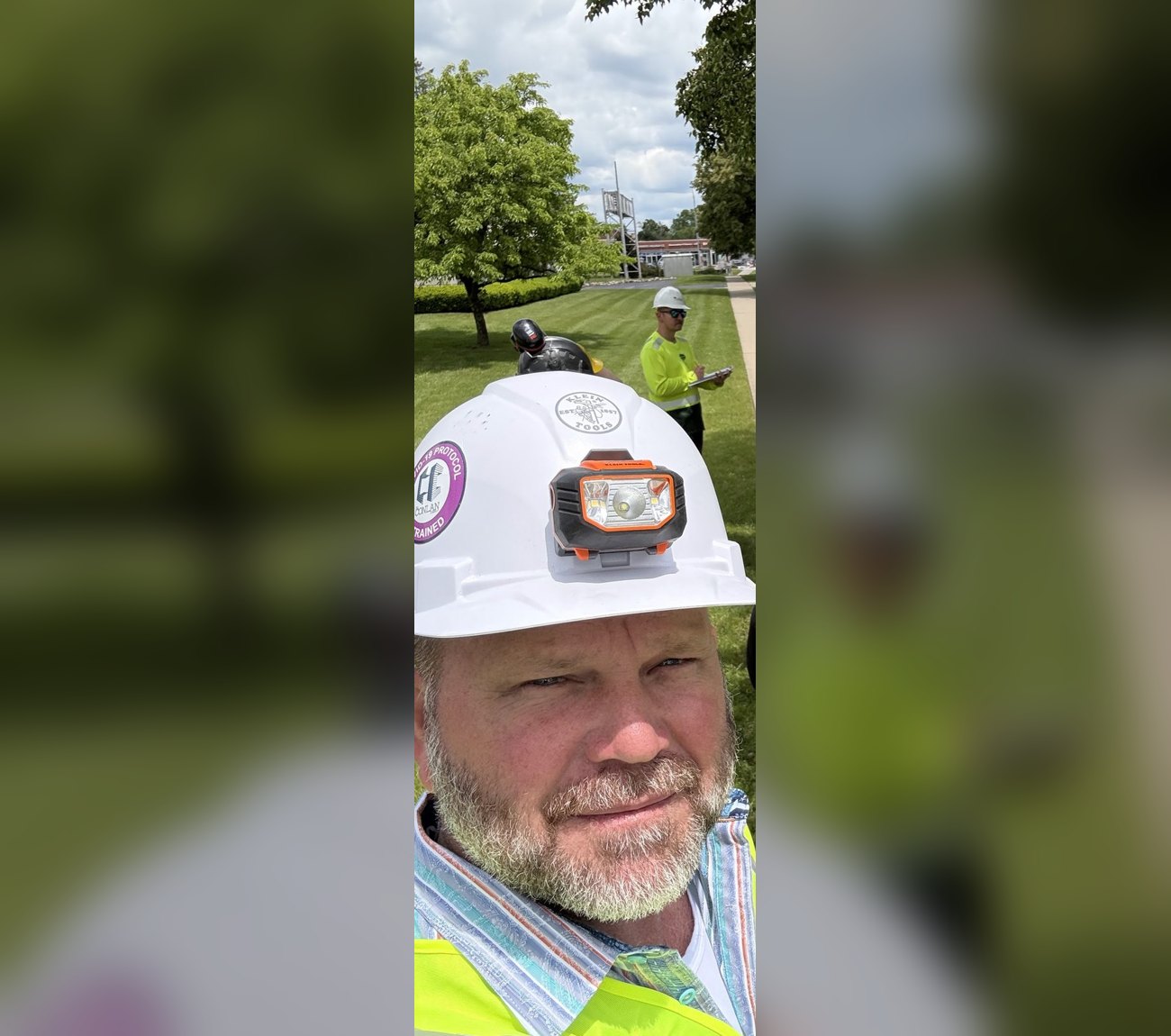
Jeff Kaulbars in a hard hat and safety vest during TRAQ course field work

In the field

TRAQ is earned outside, on real trees.

Jeff during the field work of his TRAQ course. Each tree is assessed on site, then the rating is written down the same way every time.

Tree risk assessment

Florida Grades and Standards, explained

Graded at the gate, while it is still the installer’s cost.

The Florida Department of Agriculture and Consumer Services, Division of Plant Industry, publishes the state’s grading system for nursery plants, palms included. Palms are graded on their leaves, trunk and root ball. Specs and contracts usually call for Florida No. 1 or Florida Fancy.

  • Graded at delivery. On the plant’s condition that day, not on past or predicted growth.
  • The plan sets the grade. When no grade is written, we hold the install to Florida No. 1.
  • County code can require it. Collier County requires code-required landscaping to be Florida No. 1 or better.
  • 30 days to ask for a regrade. A party to the installation contract can request a Division of Plant Industry regrading inspection within 30 days of delivery. We schedule our installed inspection inside that window.
  • More than the grade. We also check planting depth, the root ball, crown and trunk defects, and signs of disease.
Florida FancyTop grade

Exceptional form, canopy and vigor.

Florida No. 1Our default

Good form and health. The usual contract grade, and ours when nothing is written.

Florida No. 2Below standard

Misshapen or thin. UF/IFAS notes it may outgrow it.

CullRefused

Will not outgrow its defects. We reject it.

Why it matters to a boardDevelopers and installers hand over palms and trees the community then pays to maintain and replace. Refusing a defective plant at the gate costs a delivery slot. Accepting it costs the planting, years of care, and the removal and replacement. New planting acceptance
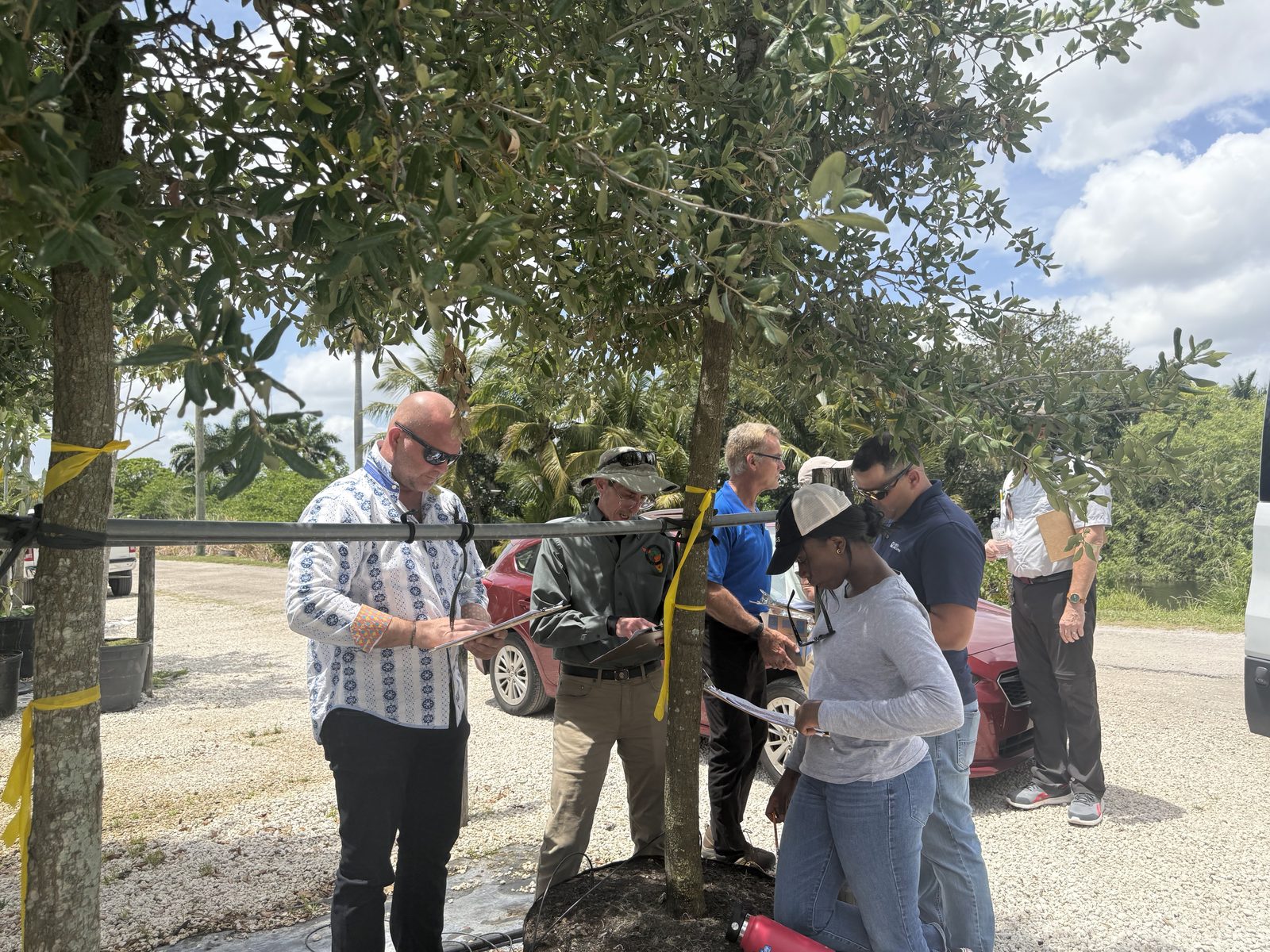
Landscape inspector class grading nursery trees in the field
The LIAF landscape inspector class, grading nursery stock against Florida’s standard.
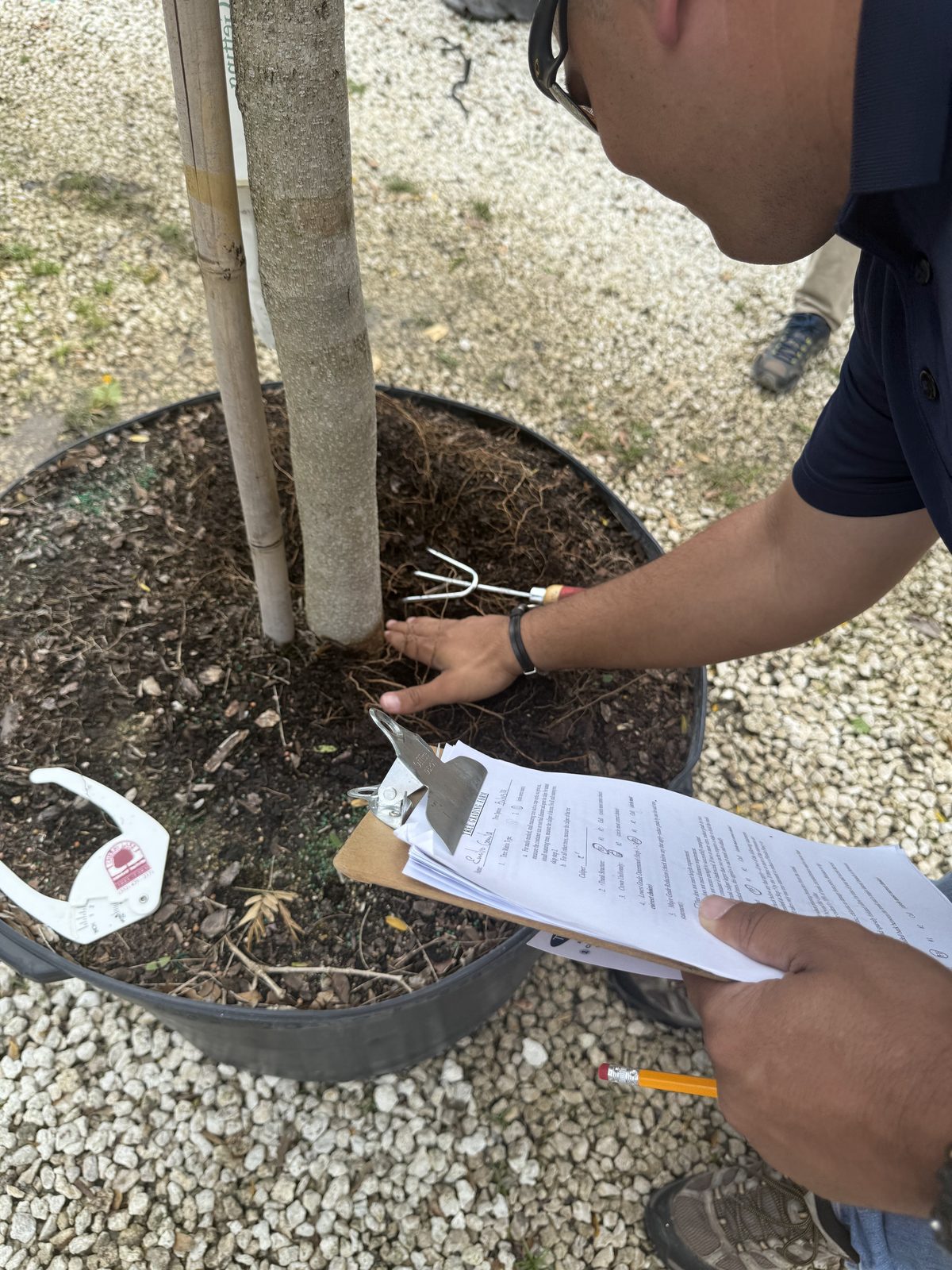
An inspector checking planting depth. The container was likely too small and the tree went in too deep.
Checking planting depth. The container was likely too small and the tree went in too deep. Many nursery plants arrive below grade, so it is one of the checks we run on every new planting.

The pest control license, explained

What “licensed” means when someone treats your palms.

Florida’s pest control law, Chapter 482, covers anyone paid to apply pesticides to lawns, ornamentals, palms and trees. Ptolemy is licensed by FDACS in the lawn and ornamental category. Here is what the law asks of a licensed business.

We lead with nutrition, vector control and monitoring, and we confirm disease in a lab before we treat. A license is the floor, not the plan.

Our written protocols

  • A licensed business, every year. Each business location renews annually and carries the insurance the statute requires.
  • A certified operator in charge. Full time, certified in lawn and ornamental, and responsible for every technician.
  • Carded, trained technicians. Everyone who applies carries an FDACS ID card, with supervised field training before working and yearly training after.
  • Records kept. Application records are kept for two years at the business.
  • Residents notified. Signs posted for lawn and foliage applications, and 24-hour notice to residents on the state’s prior notification registry.

The yardsticks

The standards your board can write into a contract.

ANSI A300

The national standards for tree care: pruning, soil management, support systems, lightning protection, planting and transplanting, and tree risk assessment. Cities often write A300 into their tree specs. Work outside it, such as heading cuts, needs the client’s written sign-off first.

ANSI Z133

The national safety standard for tree work: pruning, removal, climbing, equipment and electrical hazards. It protects residents, the crew and the community’s liability while work is under way.

ISA Best Management Practices

The how-to guides that sit on top of the standards, including tree risk assessment and pruning. They turn a standard into steps a crew can follow and a board can check.

Memberships

Where we stay current.

International Society of Arboriculture

The worldwide professional body for arborists. Issues the Certified Arborist and TRAQ credentials. Its Florida Chapter issues the PPQ.

isa-arbor.com

Tree Care Industry Association

The national trade association for tree care companies, focused on safety and the A300 standards.

treecareindustryassociation.org

Florida Nursery, Growers and Landscape Association

Florida’s statewide association for the nursery and landscape industry.

fngla.org

Landscape Inspectors Association of Florida

Trains and certifies landscape inspectors, and promotes best management practices across the state.

landscapeinspectors.org
Published in Tree Care Industry MagazineLethal Bronzing in Palms: Test Before You TreatBy Jeff Kaulbars. TCI Magazine, Tree Care Industry Association, November 4, 2026. Read the article →
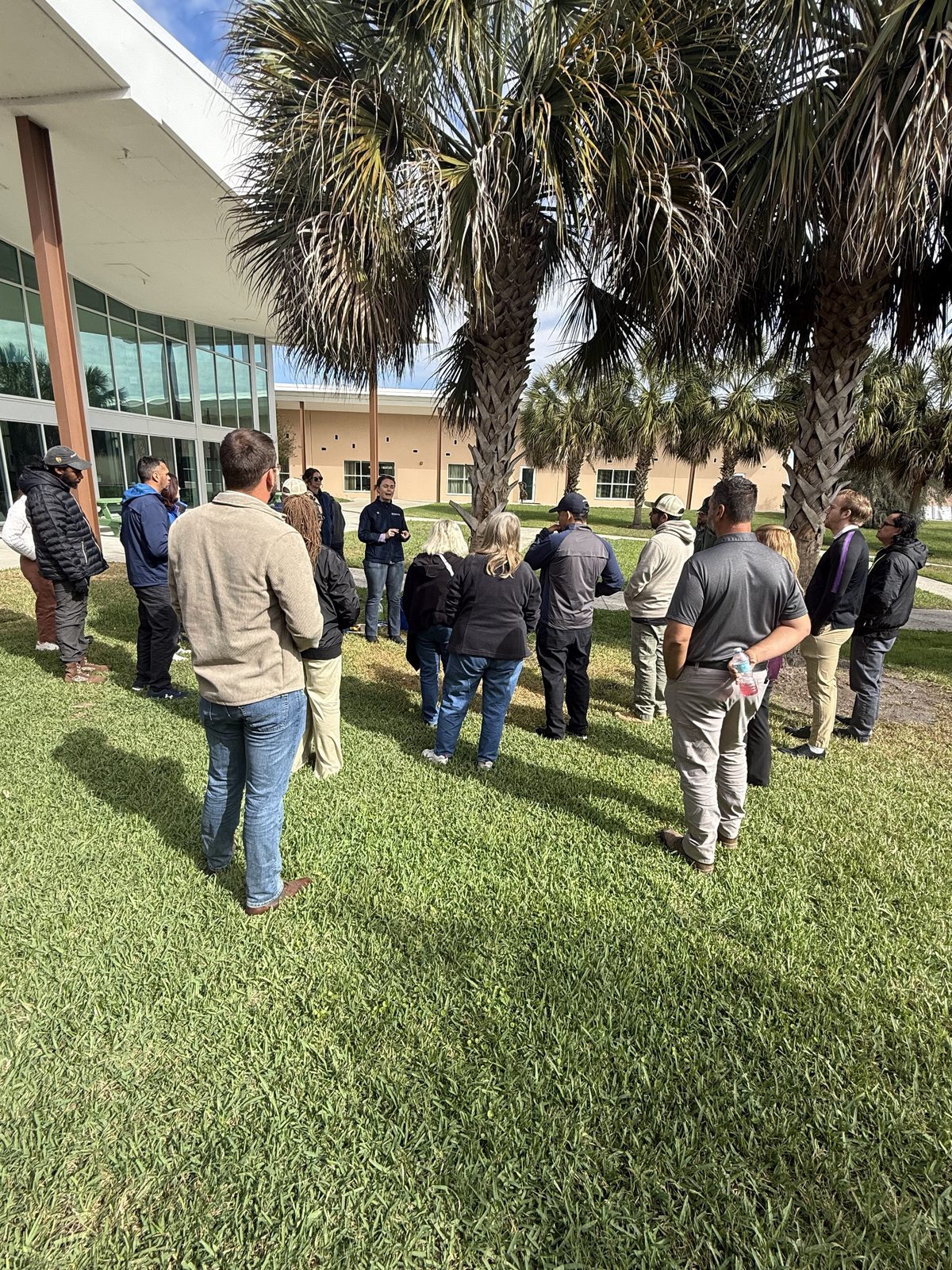
A continuing education class outdoors, gathered around palms
A continuing education class on taking a palm tissue sample the right way. A degraded sample can hide a disease from the lab.
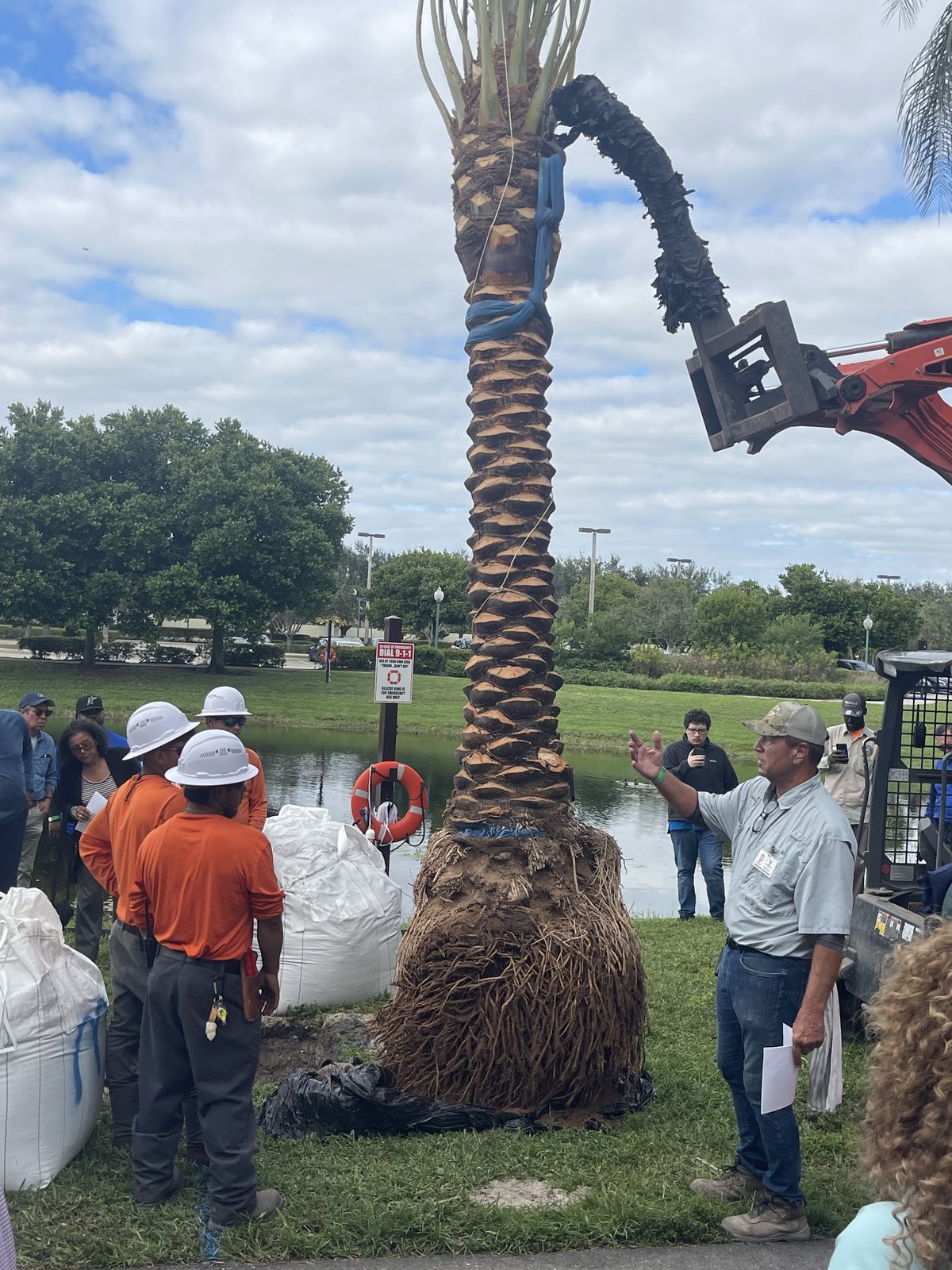
An instructor at a Medjool palm on a machine, teaching a class on installation
A continuing education class on installing a Medjool palm the right way.

For boards and managers

How to vet any palm and tree company.

Ask every bidder the same questions, us included. The answers should come back in writing.

  • Is an ISA Certified Arborist on staff, and will that person be on our property? Ask for the number.
  • Who calls a tree high risk, and are they Tree Risk Assessment Qualified?
  • Is the company a licensed Florida pest control business in lawn and ornamental, with a certified operator in charge?
  • Can we see current insurance certificates?
  • Which written standards will the work follow? ANSI A300 and Z133 should be the answer.
  • Do you confirm a disease in a lab before you treat or remove a palm?
  • Who inspects new trees and palms before we accept them, and to what grade?
  • Will you share the inventory, grades and photos with us in every report and on request?

Put the credentials to work

See what a certified arborist finds on your property.

Start with the free master plan. We map every palm and tree, write the plan, and present it to your board.

Request the free master plan
ISA Certified ArboristMember, International Society of ArboricultureMember, Tree Care Industry AssociationFlorida Nursery, Growers and Landscape AssociationLandscape Inspectors Association of Florida

ISA Certified Arborist #FL-10118A · TRAQ · Licensed Florida pest control business