
Our highest level of care
The Palm and Tree Master Plan
One written plan for every palm and tree on your property: the health plan, the pruning plan, removals and storm response, with an estimated budget for each of the 10 years. It is a tree plan first: the budget follows the counts and the written standards. It starts with a two-year Palm and Tree Care Program.
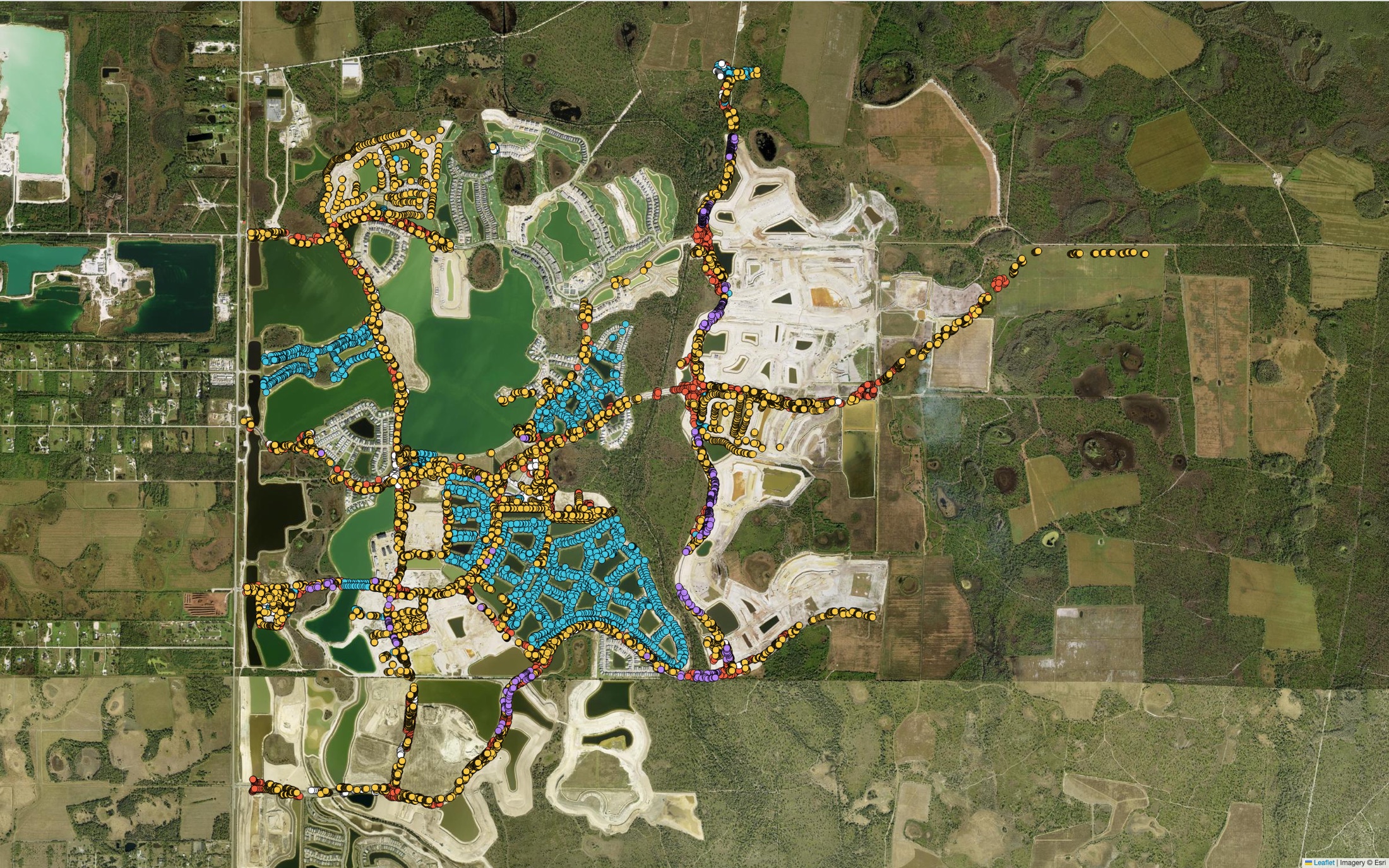
One master-planned community we care for
Why a plan
Stop buying palm and tree care one proposal at a time.
Most properties get a different scope from every vendor and a different budget every year. Nobody can say what the property will need in year five. A Master Plan fixes that: a spec for each kind of work, then a budget that is arithmetic, units times the trees in each class.
The trees rarely break a budget. Unplanned trees do.
A palm dies and nobody budgeted the removal.
The removal, the stump, the replacement and the lost years of growth all land in the same month, on no one’s line.
A storm hits and the reserves take it.
Without an order of work written before the season, cleanup is whoever is available at whatever it costs.
Three vendors, three scopes.
Bids that cover different work cannot be compared. The board picks the lowest number and gets the smallest scope.
Deferred pruning becomes emergency pruning.
Work skipped to save money this year comes back as hangers, storm failures and a bigger bill.
Disease response arrives as a variance.
A lethal bronzing positive or a Ganoderma call in the middle of the year, with testing, removals and treatment nobody planned.
The count grew. The budget did not.
New palms are planted every month. If nobody counts them, the budget is built for a property that no longer exists.
Swipe for all six →
How the plan works
Written standards first. Then a budget.
We plan your palms and trees the way a well-run city plans its urban forest. Every palm and tree is mapped and counted. Each kind of work has a written standard. The budget is built from the counts, year by year, and safety comes first. Cities fund tree care to a floor and add where it matters most. Your plan does the same, at three levels.
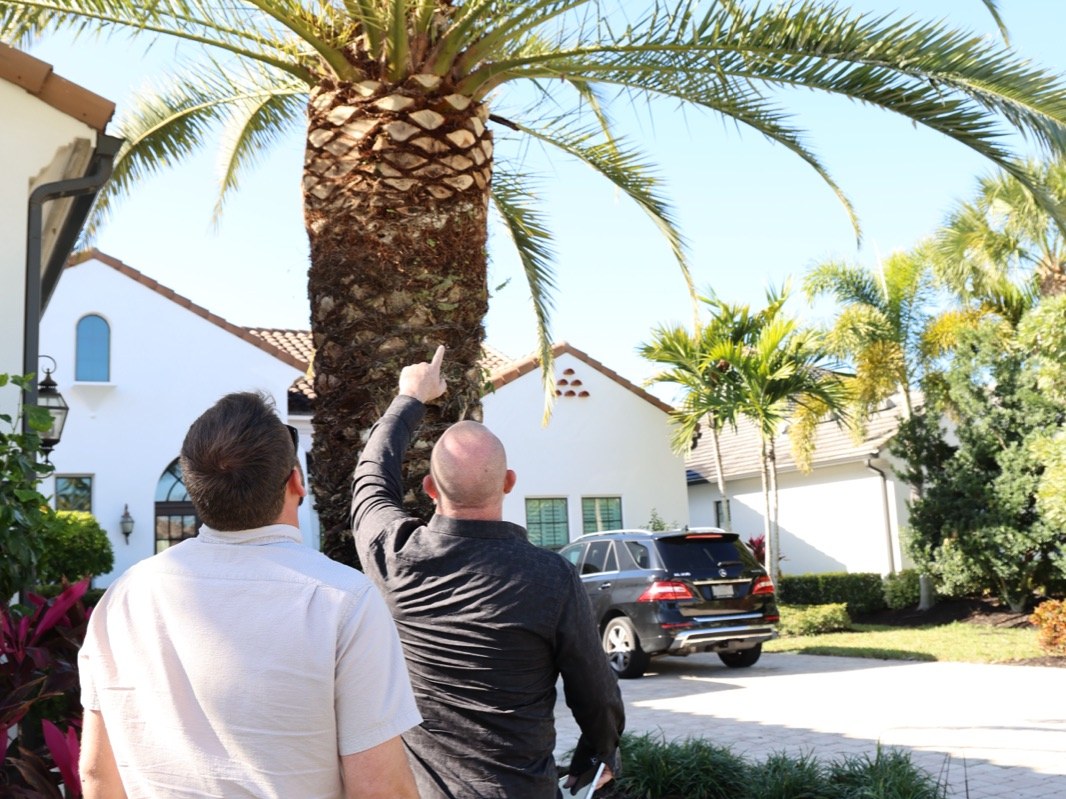
Then we fit it to your community. A city manages street trees. Your residents live with these palms and trees every day: at the entrance, around the clubhouse and pool, along the lakes, behind every home. So the plan adds what a community needs. Palm care built for Southwest Florida, from Sabals to Phoenix palms to lethal bronzing. A level your board picks for each program. A budget it can take to a vote. And one point of contact who knows your property tree by tree.
- 01Assess and map
We inspect and map every palm and tree by species, size and condition in our GIS inventory.
- 02Write the spec
For each kind of work: what gets done, how often, to what standard, and how it is counted. Every crew works to it and every invoice can be checked against it.
- 03Pick a level
For each program, from the required floor up to full preventive care. Most communities start at the floor and add where it matters most.
- 04Build the budget
Year by year for 10 years, from the specs and the counts, as trees grow and change size class.
Three levels for every program
Your board picks a level for each program. The floor is safety, clearance, inspection and the work that prevents losses.
| Program | The floor | Protect what matters | Full program |
|---|---|---|---|
| Health Program | Every palm on Monitor with a canopy inspection, 4 visits a year. The job is finding threats early, so there is no Normal target. Every tree gets a visual look each visit; anything seen goes to the tree risk assessment. A lab test before any disease call. | 4 visits a year, target 80% Normal. Commons and clubhouse: the palms that belong on Advanced covered, Standard on royal, foxtail and Alexander palms, the rest on canopy inspection. Homes and condominiums: a whole-palm inspection on every palm, Advanced offered. Trees in poor or critical condition and magnolias treated twice a year; no other trees treated. Ficus hedges and ficus trees on a whitefly program four times a year. Service calls for normal pest and disease included on palms and trees. | 6 visits a year, target 90% Normal. Every palm on Advanced or Standard where it belongs, the rest on whole-palm inspection. Every tree treated twice a year, magnolias six times. Service calls for normal pest and disease included on palms and trees. |
| Tree pruning | Every tree pruned to a written prescription. Clearance only where there is a target; every tree over 18 in kept clear, with deadwood and end weight taken out, every year. | Plus young trees shaped in their windows, and trees pruned by risk, the busiest places first. | Backed by PPQ: arborist field days on site, the arborist writing every prescription and checking the work, and select crown reduction on oaks over 12 in where the prescription calls for it, about a third a year, each after 5 years in the ground. |
| Tree risk | A risk screen of every tree each visit; a full ground assessment on every flagged tree over a target. | Plus a full assessment, once a year, of the trees in busy areas: the entrance, clubhouse and pool. | Plus a full assessment of every tree over two years, then every 10 years, and an advanced assessment where findings call for it. |
| Palm pruning | Every palm once a year, November to March, by chainsaw; sterilized handsaws where Fusarium is confirmed on the property. Palms on Advanced: April to May. Coconuts twice a year. | Each palm in its best months: Sabals August to October, queens March to April and October, royals and Arecas twice a year. Royals in high-traffic areas banded and pruned every 3 months. Sterilized handsaws on Canary Island date, Medjool and Sylvester palms. | The same months and banding, with every palm pruned by sterilized handsaw. |
| Establishment | Every new planting gets an initial assessment, findings reported to the community, then goes on Monitor with the establishment checks every 3 months. | Every new tree gets 2 years on the establishment schedule. Trees 8 in and up: the full Establishment Program, the water read every visit, and fertilizer and MitoGrow on 2 visits a year. Trees under 8 in: 2 visits a year for 2 years, with fertilizer and MitoGrow, on the Health Program. New palms of a Standard or Advanced species: the palm schedule, 1 year, or straight onto their Health Program tier. | The Establishment Program on every new planting, every size and species, with irrigation checked on each one and water triggers that start sooner. |
| Removals (a service) | Priced per tree by size class at every level. A certified arborist’s written determination comes before any removal. | ||
The Normal targets are management targets, never a guarantee. At every level, foxtails and the self-cleaning palms ride the visit the property already has.
What cities spend on a tree
Every plan shows one all-in number: what the plan costs per palm or tree a year, averaged over the 10 years, with the mapping, the monitoring, the health care where it is needed and all the pruning in it. Then it sets that number beside what cities spend, so a board can see where it stands.
A street tree a year, everything a city spends on it. National survey of 667 communities, 2014.
A city tree or palm a year, on the pruning contract alone. City budget, 2026-27.
City figures, not Ptolemy prices. Sources: Hauer and Peterson, Municipal Tree Care and Management in the United States (2016); City of Naples 2026-27 budget and Resolution 2023-15113.
What the plan includes
Health care, pruning and removals in one package.
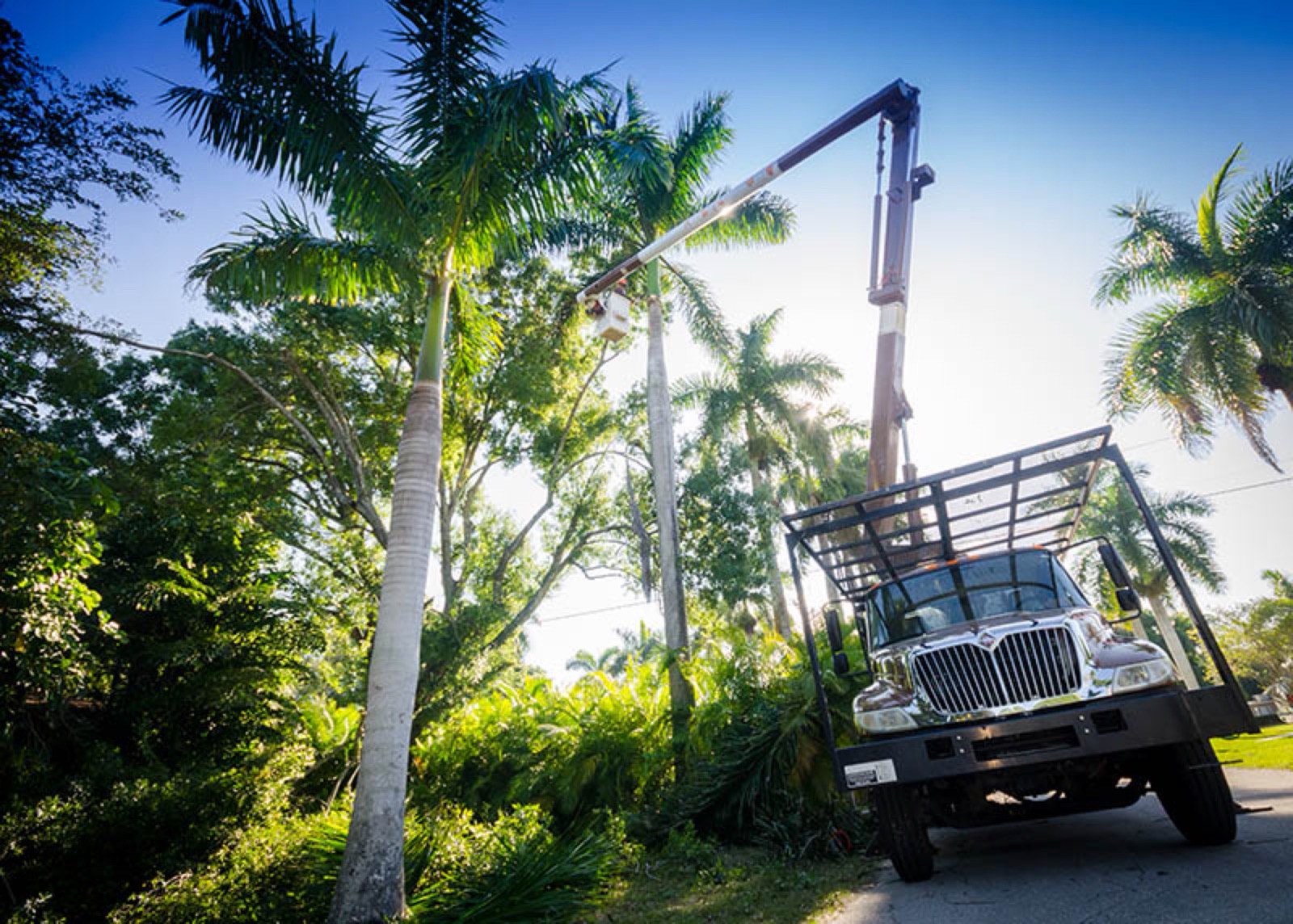
One plan, one team, one record. Pruning and removals are planned and budgeted in the same plan as the health care, so they arrive as scheduled lines, not emergencies.
Health care
Monitor, Manage, Protect- Every palm and tree mapped in our GIS inventory. Size, condition grades and photos are added by service.
- Scheduled inspections: 4 a year for communities and commercial sites, 6 for homes.
- Nutrition and protection by tier (Monitor, Standard, Advanced), palm by palm.
- Watching for more than twenty pests, diseases and disorders at every visit.
- A lab test before any disease call. Lab fees pass through at cost.
Pruning
Palms and trees, to a written standard- Palm pruning to the 9-and-3 standard, timed by species.
- Seed pods and fruit taken before they drop, on a named schedule.
- Sterilized handsaws where Fusarium wilt is a risk.
- Tree pruning by written prescription to ANSI A300. No canopy lifted where nothing needs clearance.
- Structural training on young trees, so storms do less damage later.
Removals
Planned, documented, permitted- No removal without a certified arborist’s written determination.
- Removals planned by size class, so they sit in the budget, not in an emergency.
- Stump grinding, with a Sunshine 811 ticket placed before any digging.
- A tree risk assessment (TRAQ) behind any risk call, ready for a county permit.
- Storm response with every tree assessed by number.
“These kinds of visits are not free, but they’re included in your management plan.” Jeff Kaulbars, ISA Certified Arborist
A community that is not on a plan calls about a conk at the base of a palm. Is it Ganoderma? We have to charge for the trip, the look and the write-up, the same as any field visit.
A plan client’s manager asks the same question. The palm is already in the record, often already flagged on the last report. The answer starts from the record, not from a new site visit, and if a visit is needed, it is already covered.
Multi-year phasing
What typically moves when.
Every property is different. This is the usual shape: the heavy setup work spread over the first three years, then steady cycles the budget can carry through year 10, with the plan rebuilt from the count every year.
Setup: years 1 to 3
Year 1
Count, protect, clear- Every palm and tree mapped, graded where the plan calls for it
- Protection on high-value palms and disease hosts
- Dead and high-risk trees removed
- Setup pruning starts on about a third of young trees
Year 2
Set the cycles- Second third of the setup pruning
- Pruning cycles named by month
- Watch-list palms re-graded
- Replacements planned, not rushed
Year 3
Setup complete- Last third of the setup pruning
- Young trees move to a regular rotation
- Palms planted three years ago join the annual trim
Steady care: years 4 to 10
Years 4 to 10
Steady care- Settled pruning and health cycles
- Mature trees kept clear every year
- Replanting phased in where trees were lost
Every year
Rebuilt from the count- Count re-verified, new plantings added
- A yearly review: what was done, what changed
- Next year's estimate rebuilt from the inventory
A real example: a growing community where most cabbage palms were planted in the last three years. A new cabbage palm needs little or no trimming. After about three years in the ground it needs a full trim every year. The plan shows that line coming before it arrives: trim where people are every year, natural areas on a longer cycle, split by planting age, and count every year.
The health plan
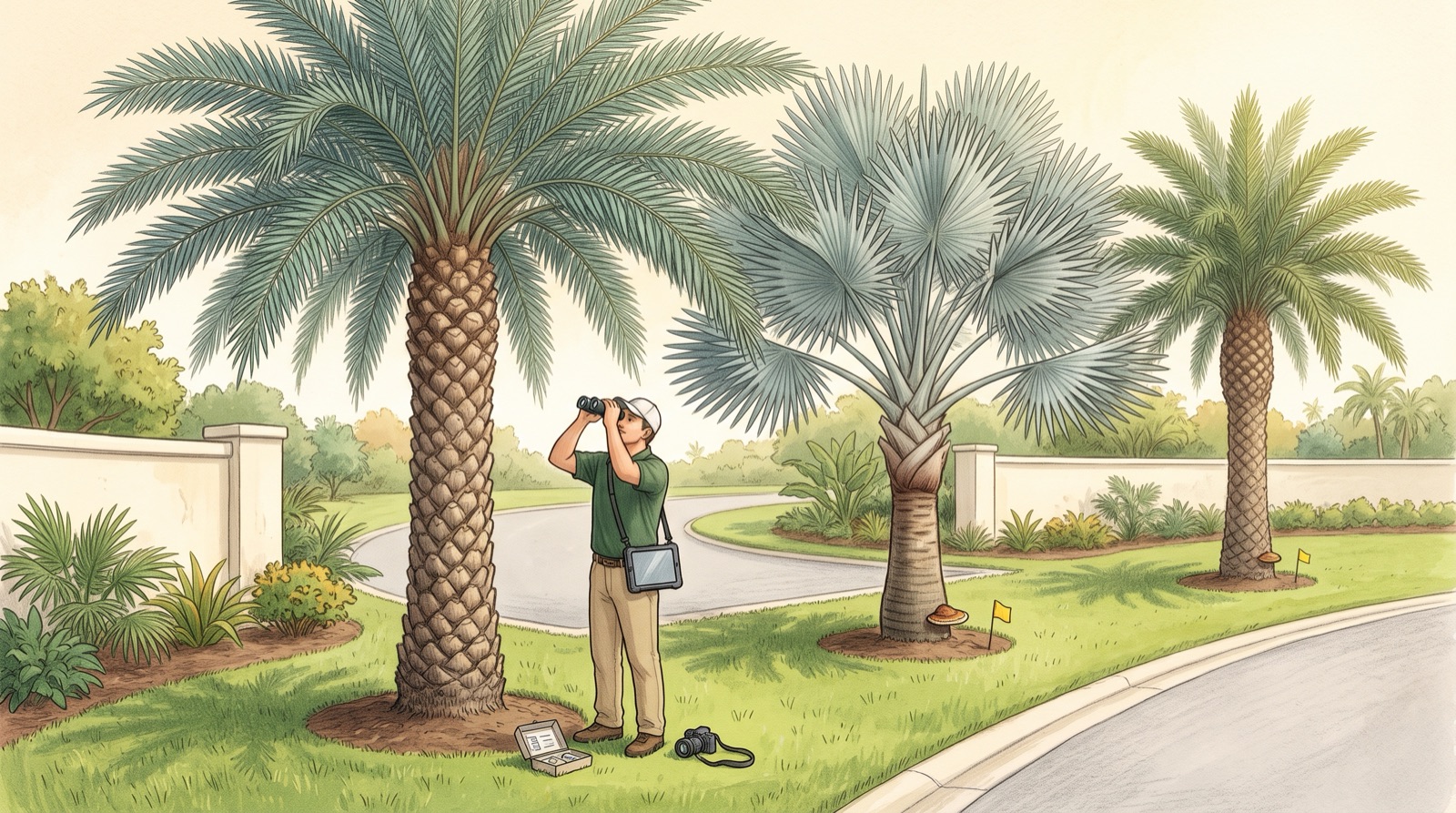
Every palm and tree inspected. Treatment where the risk is.
Every palm and tree is mapped and inspected on a schedule. On Standard and Advanced, every palm is graded and photographed at each visit. Treatments go where the species and the risk call for them, not across the board.
Visual inspections between full inspections. Trees get four a year: two visual, two full. Every finding is tied to a tree number on the map.
Fertilization and treatments on the species that need them, on a set schedule, with soil conditioning where the soil and water call for it.
Insect prevention and bud drenches on the palms most at risk. A lab test before any disease call, so no palm is removed on a guess.
| Species | Level of care | Inspections a year | Treatments a year |
|---|---|---|---|
| Sabal palm | Monitor | 4 visual | Watched for disease |
| Phoenix date palms (Sylvester, Canary, Medjool) | Advanced | 4 full | 4 to 6 |
| Bismarck palm | Advanced | 4 full | 4 |
| Royal, Foxtail and other treated palms | Standard | 4 full | 4 |
| Oaks | Standard | 4 (2 visual, 2 full) | On oaks graded Poor or Critical |
| Hardwoods other than oaks | Monitor | 4 (2 visual, 2 full) | On trees graded Poor or Critical |
| Pines | Looked at, not counted | On the same visits | Never fertilized. Pine bark beetle protocol, priced on its own |
An example from one community. Your schedule is set from your own inventory, and every elevation is our arborist’s call.
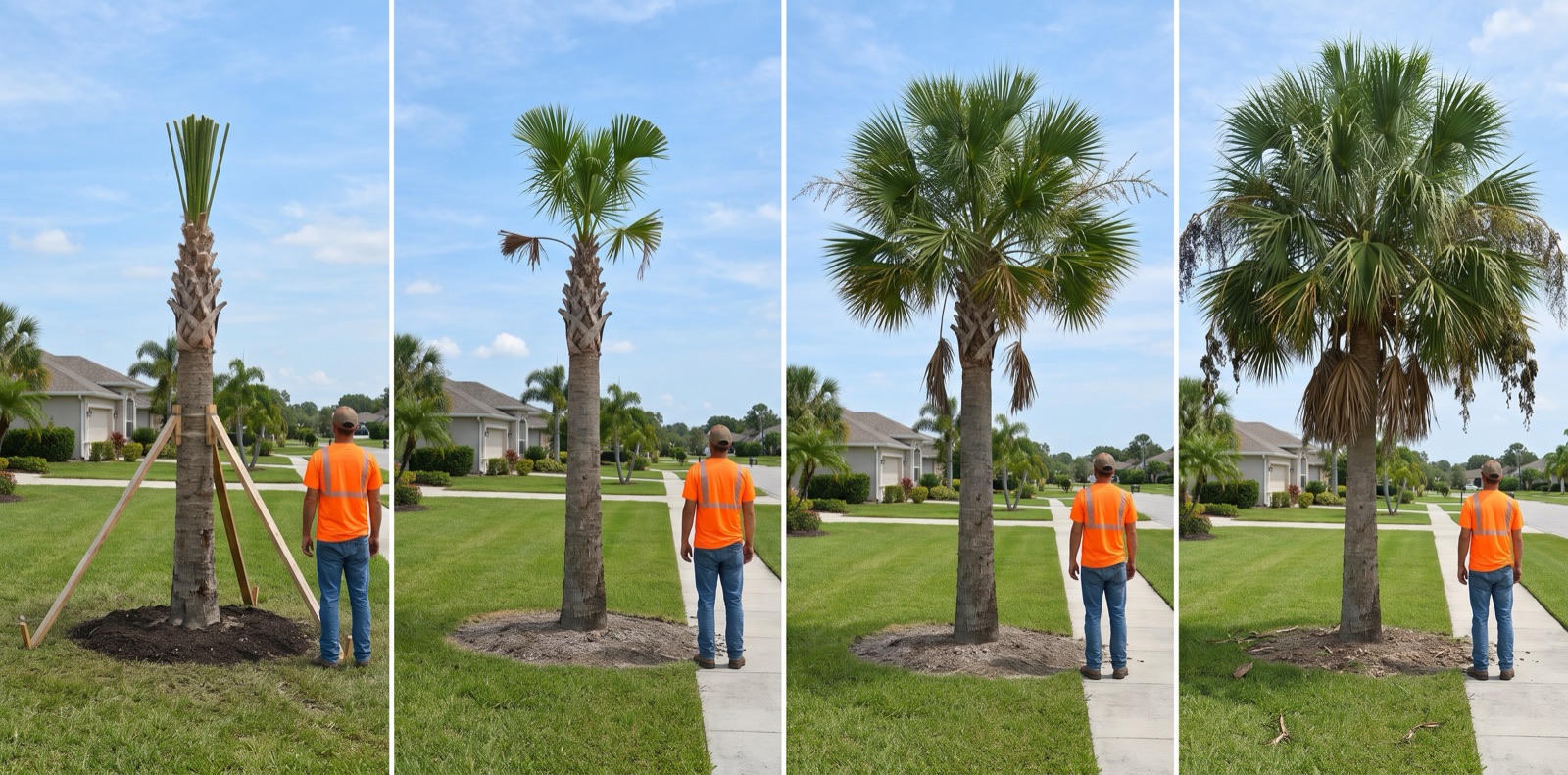
New plantings, carried for 2 years
Every new tree gets 2 years on the establishment schedule. On trees 8 in and up, we read the water every visit: the flow meters the arborist sets on the bubblers, the rain at that tree and the moisture in the root ball. When the soil water shows salt or the rain stops, our water trailer puts water on the ball. Smaller trees get 2 visits a year with fertilizer and MitoGrow. After the 2 years, each tree goes to regular monitoring.
The pruning plan
Trees pruned by size. Palms pruned to the 9-and-3.
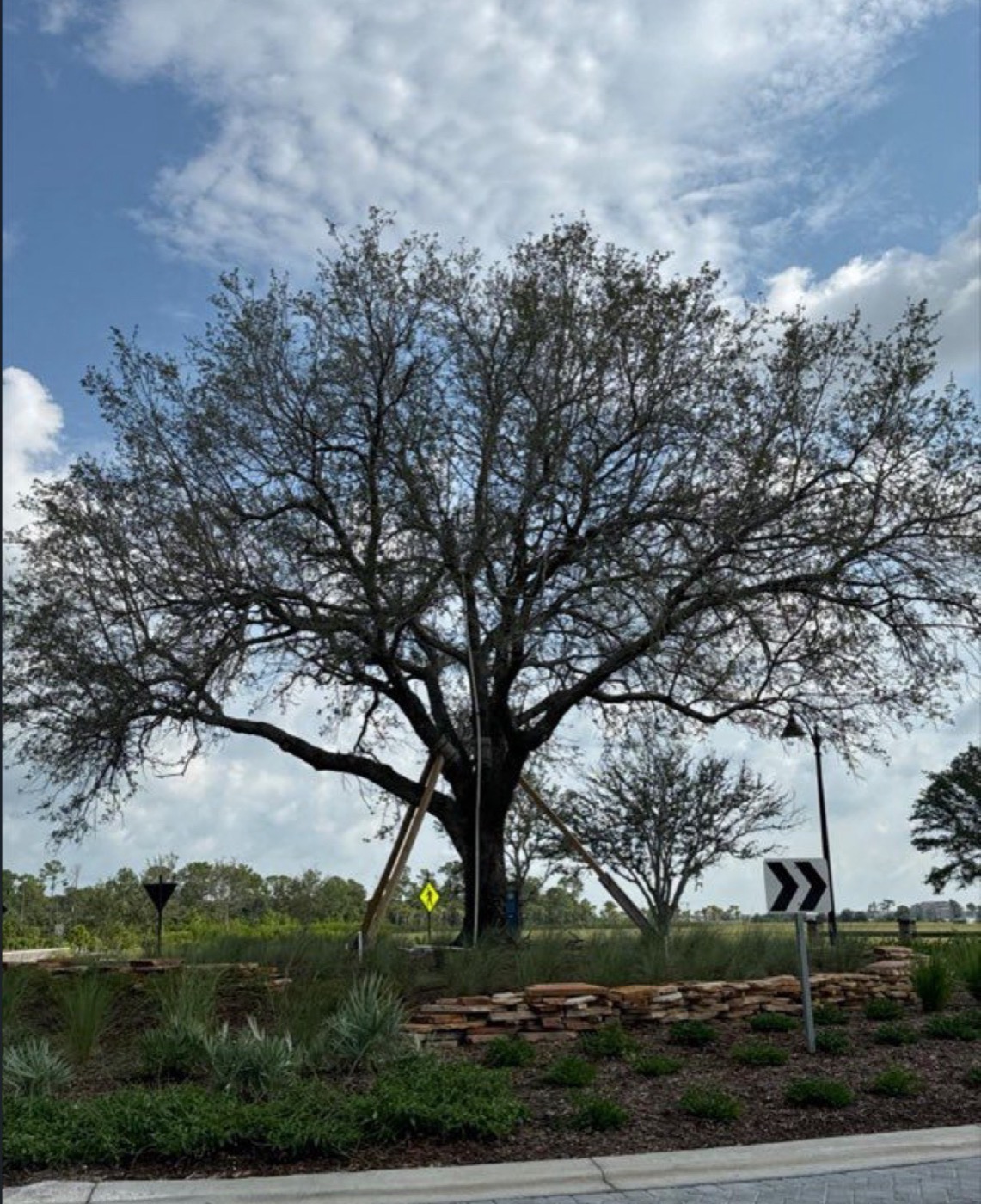
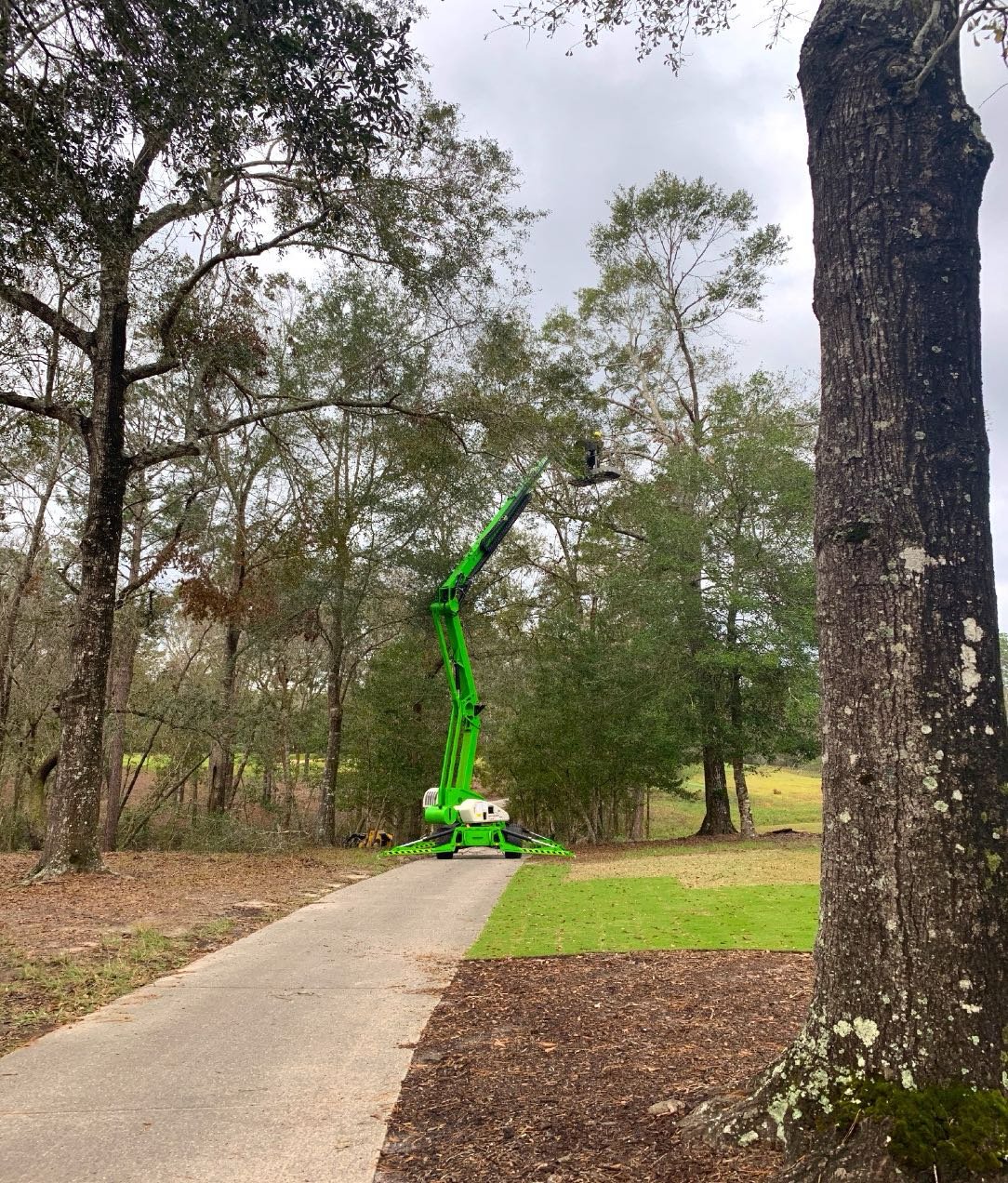
Tree pruning follows ANSI A300 and the Prescription Pruning Qualification method: every cut has a reason, a size and a location, and no more than about a quarter of the live crown comes off in one cycle.
| Tree size | Trunk | What it gets | How often |
|---|---|---|---|
| Young | Under 6 in trunk | Structural training: one central leader, no competing stems, scaffold branches spaced. The best value per dollar in the plan. | Every 2 to 3 years |
| Adolescent | 6 to 18 in | One heavier setup pass to finish structure and set the lowest permanent branch, then maintenance. | Once, then on cycle |
| Mature | Over 18 in | Maintenance: clearance where there is a target, deadwood over 2 in out, end weight reduced, hazard cuts. No thinning. | Every year |
Clearance, only where there is a target
- Roads and drive aisles: 14 ft
- Parking stalls: 10 ft
- Sidewalks and paths: 8 ft
- Buildings: 3 ft
- Lights, signs and sight lines: kept clear
The no-lift rule. Where there is no road, walk, building, light or sign beneath a tree, nobody raises the canopy. Lower limbs build trunk taper and feed the tree. The spec keeps lower limbs where they do their job and leaves interior growth in place.
Palm pruning
- Everything below the 9-and-3 line comes off, green or brown, with the dead fronds, spent stalks and pods. Nothing above the line is cut.
- One exception: in palmetto weevil season, about March through June or July, green fronds below the line wait on the palms most at risk for the weevil.
- Every palm, every level, to the 9-and-3 standard and never higher.
- Timed by level: at the floor, every palm once a year, November to March. At the higher levels, each palm in its best months: date palms April to May when the seed is out, Sabals August to October.
- Foxtails and the self-cleaning palms (Alexander, King, Christmas, solitaire, MacArthur) are pruned on the visit the property already has, never a trip of their own.
- On thorny date palms, the male and female palms are trimmed on the same visit.
- No climbing spikes on any palm that stays. A palm does not wall off a wound.
- Sterilized handsaws where Fusarium wilt is a risk, because a chainsaw cannot be cleaned between palms in the field.
- New installs get a light trim until they mature, and the budget follows the inventory every year.
How ten years play out
Adolescent trees get their structural setup, about a third each year. Young trees go on a 3-year rotation.
Setup done. Young and adolescent trees settle into maintenance; mature trees get clearance and deadwood only.
New trees and palms join the young tier and young trees grow into the next. The budget is rebuilt from the inventory, tier by tier.
How a pruning cycle runs, day to day
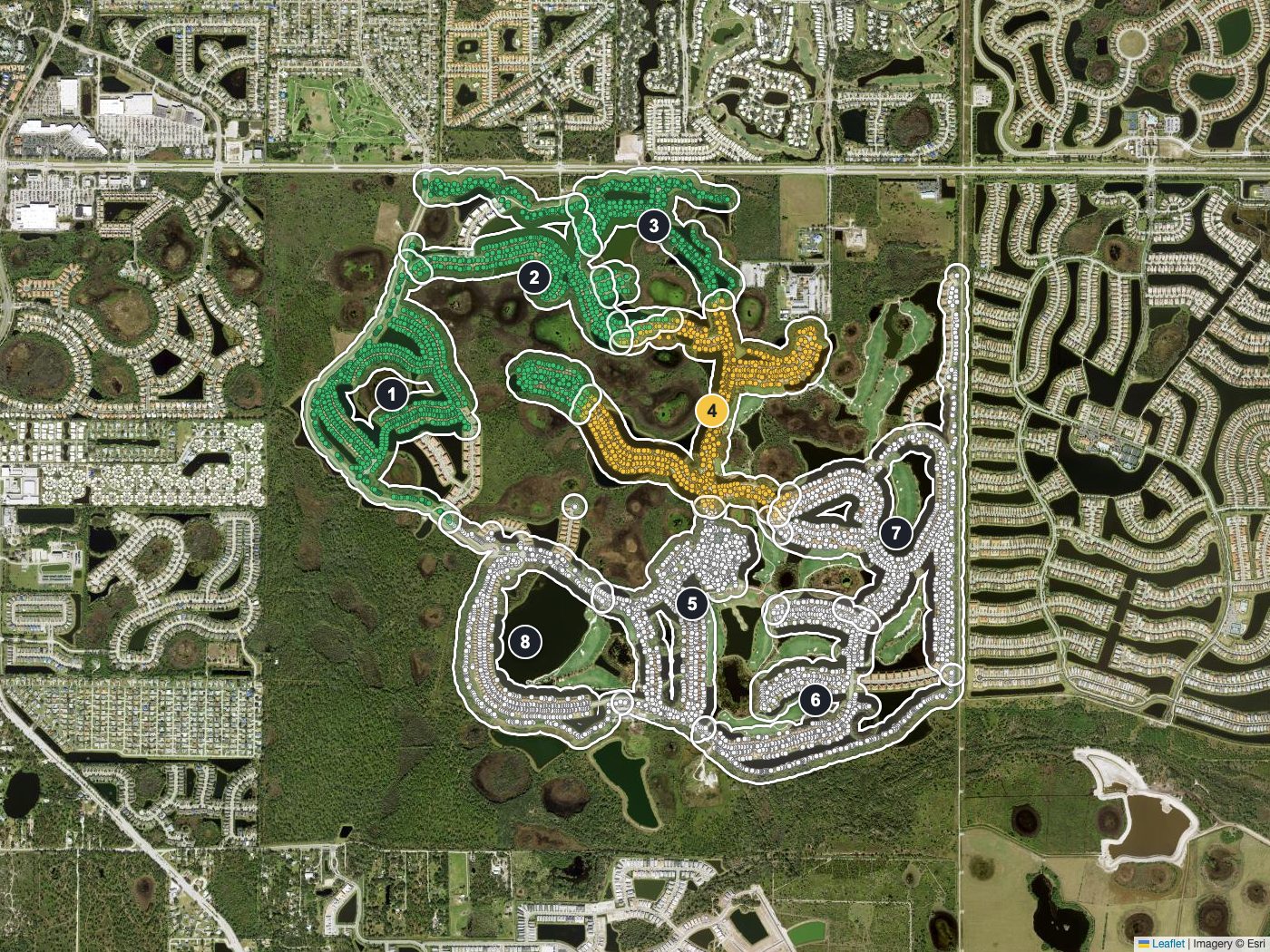
- Complete
- Sections 1 to 3 1,505 palms and 1,635 trees
- Today
- Section 4 Palm crew: day 2 of 4, about 160 palms. Tree crew: day 3 of 8, about 90 trees.
- Left in 4
- 295 palms, 440 trees Section 5 starts when section 4 closes, at the marked start point
- Opt-outs
- Skipped and marked on the map
- Notes
- Weather, gate access, and anything that needs the manager’s decision
Sent to the manager every working day the crews are on site.
- 01Map and section
Every palm and tree is in our GIS inventory. We split the community into sections and number them in the order crews will move.
- 02Count the crew days
Palms and trees in each section, divided by what a crew does in a day. That sets the calendar, section by section.
- 03Publish the schedule
Start dates and routes for each section, sent to the manager to share with residents. Opt-outs are collected and marked on the map.
- 04Daily update
Every working day, the map is recolored: done, today, next. Notes cover weather, access and anything the manager needs to know.
- 05Close out
Each palm and tree closed out in our GIS inventory, cleanup and haul-away done, and a final map that shows the whole community complete.
Also in the plan
Removals, new trees and palms and storms, on the same record.
No palm or tree comes out without a certified arborist’s written determination: the tree number, the reason and the date. Structurally sound storm-damaged palms get 6 months before anyone writes them off. Suspected disease is confirmed first: by the lab, or for Ganoderma, by its conk.
For Health Program clients: every new tree gets 2 years on the establishment schedule, at the level the plan sets, by trunk size and species. Every visit records the water delivered, the rain at that planting and the root ball moisture, with an arborist checking it against the target.
Every new install assessed against a written checklist and the findings reported, before or after the community accepts it, then each one tracked for decline and loss.
Before June 1: a priority map and a high-risk tree walk. After the storm: roads cleared, every tree assessed by number, then follow-ups at 30, 90 and 180 days.
Inside a plan, or billed as a visit
The same work, paid for two different ways.
The work behind each row costs the same every time it is done. What changes is whether it is planned and covered, or bought one call at a time.
| When this happens | Without a plan | On a plan |
|---|---|---|
| Inspections | When someone notices a problem. | Scheduled: 4 a year for communities and commercial sites, 6 for homes. |
| A question between visits (a conk at the base of a palm) | Billed as a field visit, every time. | Covered. The answer starts from the record, not from a new site visit. |
| Suspected disease | A proposal for the visit, then labor, then lab fees. | Field visit and investigation covered. Lab fees pass through at cost. |
| Pruning | Bid job by job. Scope changes with the vendor. | Scheduled cycles to a written standard, with the months named in writing. |
| Removals | An emergency, at the worst time of year. | Planned by size class, after an arborist’s written determination. |
| Storms | Whoever is available, after the fact. | An order of work written before June 1. Every tree assessed by number afterward. |
| New palms | Untreated until someone notices. | Added to the inventory and the program at the next visit. |
| Inventory and maps | None, or a rough estimate. | Included, and re-verified at renewal at no charge. |
| Board reports | An invoice. | A report after every visit, a quarterly program report and a yearly review. |
| Price changes | Whenever the vendor sends them. | Noticed in writing by August 1, effective January 1. |
Words, not prices. What is included depends on the plan and tier your board chooses; your agreement lists it. Lab fees always pass through at cost, with no markup. At Protect what matters and the full program, these come at no extra cost: assessments, taking samples, the palmetto weevil protocol, the Ganoderma inspection and removal call, and ordinary pest treatment. Lethal bronzing blanket treatments and sticky traps, pine bark beetles and a new pest are outside it. Treatment protocols for a confirmed threat, outbreak testing and added services are scoped by proposal, and nothing outside the plan goes ahead without your approval.
The production trap
The lowest bid buys production. A plan buys care.
On large projects, palm and tree work drifts toward production work and the lowest bidder: every palm cut the same way on the same day, whether it needs it or not, and nobody watching what happens next.
A plan spends the same kind of money differently. It puts the work that matters most first, and it watches the inventory between the cuts.
“Would I love to have a budget that’s two or three times what my budget is? Yes. But the realistic thing is that in communities, people are on a budget.” Jeff Kaulbars
“Typically, for just around a 20% increase, we can provide such a massive amount of increase in care. Sometimes it’s only 10%, sometimes 15%, sometimes 30%. It depends on what kind of service they had before.”
Jeff Kaulbars, on moving a community from a production contract to a plan
Budget season, in their words
“As we are now starting the 2026 Budgets yes please work with [our regional landscape director] who will work the [management] team to get this added as a separate line on the budgets.”
Community management director
“Currently we do not have any room in our landscaping budget to add new services. However, we would like to plan to have [it] our next fiscal year.”
Property manager
“We probably need to put this on an annual schedule so we get ahead of all the fruit drop.”
Regional landscape director
From emails our clients and prospects have sent us, word for word. Names, companies and places are removed.
Operating or reserve
A written plan separates the recurring work from the one-time projects.
Where each belongs is your board’s decision, made with your manager and your reserve specialist. The plan gives them the inputs: what recurs every year, what happens once, and when.
Recurring work
What usually sits in the operating budget.
- Scheduled inspections and health care.
- Pruning cycles, with the months named.
- Removals planned by size class.
- Reports and the yearly review.
One-time projects
What a board may plan for over several years.
- A structural pruning setup pass on young trees.
- Replanting after years of losses.
- Removing a group of declining trees.
- Storm recovery and replacement.
This is a planning conversation, not financial or legal advice. Florida condominium associations follow stricter reserve rules than homeowners’ associations; your manager and reserve specialist will know which apply to you.
The budget-season calendar
To get on next year’s budget, the plan has to arrive between May and September.
Builder-managed communities start budgets in June, golf courses work through July, and most HOA boards meet around mid-September. Districts run an October 1 fiscal year. Hurricane season sits right on top of all of it.
See what happens every month
Jan
Price changes noticed in August take effectCold damage assessed before anything is cutFeb
Dry season: water on new trees and palms checkedMar
Walk and count for next year’s planApr
Seed pods off thorny date palmsWalk and countMay
Plan in the manager’s hands (May to September)High-risk tree walk, stakes checkedThe Storm Plan signed, with storm pricing agreedJun
June 1: hurricane season startsCDD proposed budget to the board by June 15Builder-managed communities start budgetsJul
Golf course budgets in progressHurricane seasonAug
August 1: our price-change notice deadlineHurricane seasonSep
Managers start budget prepHOA boards meet around mid-SeptemberDistrict budgets adopted before October 1Oct
October 1: district fiscal year startsHurricane seasonNov
November 30: hurricane season endsStorm follow-ups at 30, 90 and 180 daysDec
Cold snaps: patience before cutting frondsJan
Price changes noticed in August take effectCold damage assessed before anything is cutFeb
Dry season: water on new trees and palms checkedMar
Walk and count for next year’s planApr
Seed pods off thorny date palmsWalk and countMay
Plan in the manager’s hands (May to September)High-risk tree walk, stakes checkedThe Storm Plan signed, with storm pricing agreedJun
June 1: hurricane season startsCDD proposed budget to the board by June 15Builder-managed communities start budgetsJul
Golf course budgets in progressHurricane seasonAug
August 1: our price-change notice deadlineHurricane seasonSep
Managers start budget prepHOA boards meet around mid-SeptemberDistrict budgets adopted before October 1Oct
October 1: district fiscal year startsHurricane seasonNov
November 30: hurricane season endsStorm follow-ups at 30, 90 and 180 daysDec
Cold snaps: patience before cutting fronds
Budget timing comes from our clients’ own calendars and, for Community Development Districts, s. 190.008, Florida Statutes. Your association’s fiscal year may differ. Hurricane season dates are the Atlantic season, June 1 to November 30.
The Ptolemy client portal
Coming
Your whole property, on one screen.
The same record our crews work from, opened up to you.
- The four threats, all clear or not
- Your budget, live
- Every palm on the map
- Proposals and requests
Palm health
- Normal9281%
- Fair1412%
- Poor54%
Budget
- Palm Health Program
- Palm pruning
- Tree pruning
- Lethal bronzing
- Fusarium wilt
- Ganoderma butt rot
- Thielaviopsis trunk rot
Questions
Questions boards ask about cost
How do you price a plan, and where does it sit?
We price from the counts after an assessment, because every property has a different mix of species, sizes and conditions. To show where we sit: Sabal palms (cabbage palms) are the palm we prune most, tens of thousands a year. Our sabal pruning averages about $27.50 a palm in HOA and master-planned communities, and about $34 a palm on golf courses. Palm health care typically runs about 2 to 3 percent of a community’s landscape maintenance budget. The Annual Program Investment is organized by section, so it drops into your budget the way your board reads it.
Can the plan start mid-year?
Yes. Many boards start at the next fiscal year, and we date the agreement to it. If a palm needs attention before then, we tell you in writing.
What is billed outside the plan?
Lab fees, at cost with no markup. Outbreak testing where many palms are sampled at once, treatment protocols for a confirmed threat, added services such as lightning protection, and storm response are scoped by proposal. Pruning and removals are planned in the plan with their own lines. Nothing outside the plan goes ahead without your approval.
Is the master plan a budget?
It is a tree plan first. We map and count every palm and tree, assess the risk, write the prescriptions and the standards, and then estimate what the work costs each year for 10 years. The estimate is rebuilt from the count every year, so the board sees the cost before it arrives.
Can we phase the work over several years?
Yes. That is the point of the plan. Heavy structural work is spread across the first years, and the budget is laid out year by year for 10 years, rebuilt from the inventory each year.
Does a plan replace our reserve study?
No. A reserve study is done by a reserve specialist. The plan gives that specialist better inputs: real counts, conditions, and which one-time projects are coming and when.
What happens after a hurricane?
The order of work is written before June 1. After the storm, roads are cleared first and every tree is assessed by number. Storm response is its own line, priced on time and materials, and nothing is removed without an arborist’s written determination.
Can we compare your scope with other bids?
Yes, and we encourage it. Our plans are written as specifications any crew can work to, so every bid covers the same scope and every invoice can be checked against it.
What do you need from us to build a budget?
A level for each part of the plan, which palms and trees matter most to you (entrances, amenity areas, specimen oaks), your fiscal year and budget dates, and one point of contact for palm and tree decisions.
Will our price go up every year?
Any change is noticed in writing by August 1 and takes effect January 1, so you know before you adopt your budget. Small count changes found in the field do not move the price in either direction.
Get the number before budget season
Written specs every crew works to. A budget built from counts.
We map every palm and tree, write the plan, and present it to your board.
Request the free master plan