
Facts for managers
What a manager needs to know to answer the board, fast.
Seventeen facts with sources, written for community association managers, district managers and commercial property managers. Short enough to scan, specific enough to quote in an email.
The facts
Short, sourced, and safe to repeat in a meeting.
The plan has to reach you between May and September.
Builder-managed communities start budgets in June, golf in July, and most HOA boards meet around mid-September. Districts run an October 1 fiscal year. A number that arrives after your budget closes waits a year.
Source: Our clients’ budget calendars; s. 190.008, F.S. for CDDsLethal bronzing trunk-core results take about 7 to 10 days.
We do not diagnose the killers from photos. An arborist samples on site, the lab confirms, and a written update follows with what it means for the palm and its neighbors.
Source: Ptolemy Lethal Bronzing Master ReferenceLab fees pass through at cost.
No markup, for clients and non-clients alike. And no palm is tested without the client’s authorization.
Source: Ptolemy agreement termsAnd 14 more, by topic
Money and budget (4)
The second-opinion visit is covered on a plan.
When a landscaper calls Ganoderma, a non-client pays for the field visit. A plan client gets an answer from the record, and a visit if one is needed, already covered.
Jeff Kaulbars: “These kinds of visits are not free, but they’re included in your management plan.”Sabal palm pruning averages about $27.50 a palm in communities.
Sabal palms (cabbage palms) are the palm we prune most, tens of thousands a year. Our sabal pruning averages about $27.50 a palm in HOA and master-planned communities, and about $34 a palm on golf courses. Your price comes from your own counts after an assessment.
Ptolemy pruning averages, 2026Palm health care is usually 2 to 3 percent of the landscape budget.
A palm health care program typically runs about 2 to 3 percent of a community’s landscape and lawn maintenance budget. That is where we usually fall.
Ptolemy program averagesSmall count changes do not move the price.
Normal attrition and replacement are absorbed both ways. A big change, such as a new phase or a storm loss, comes as a signed change order. The inventory is re-verified at renewal at no charge.
Ptolemy agreement termsRecords and lab results (4)
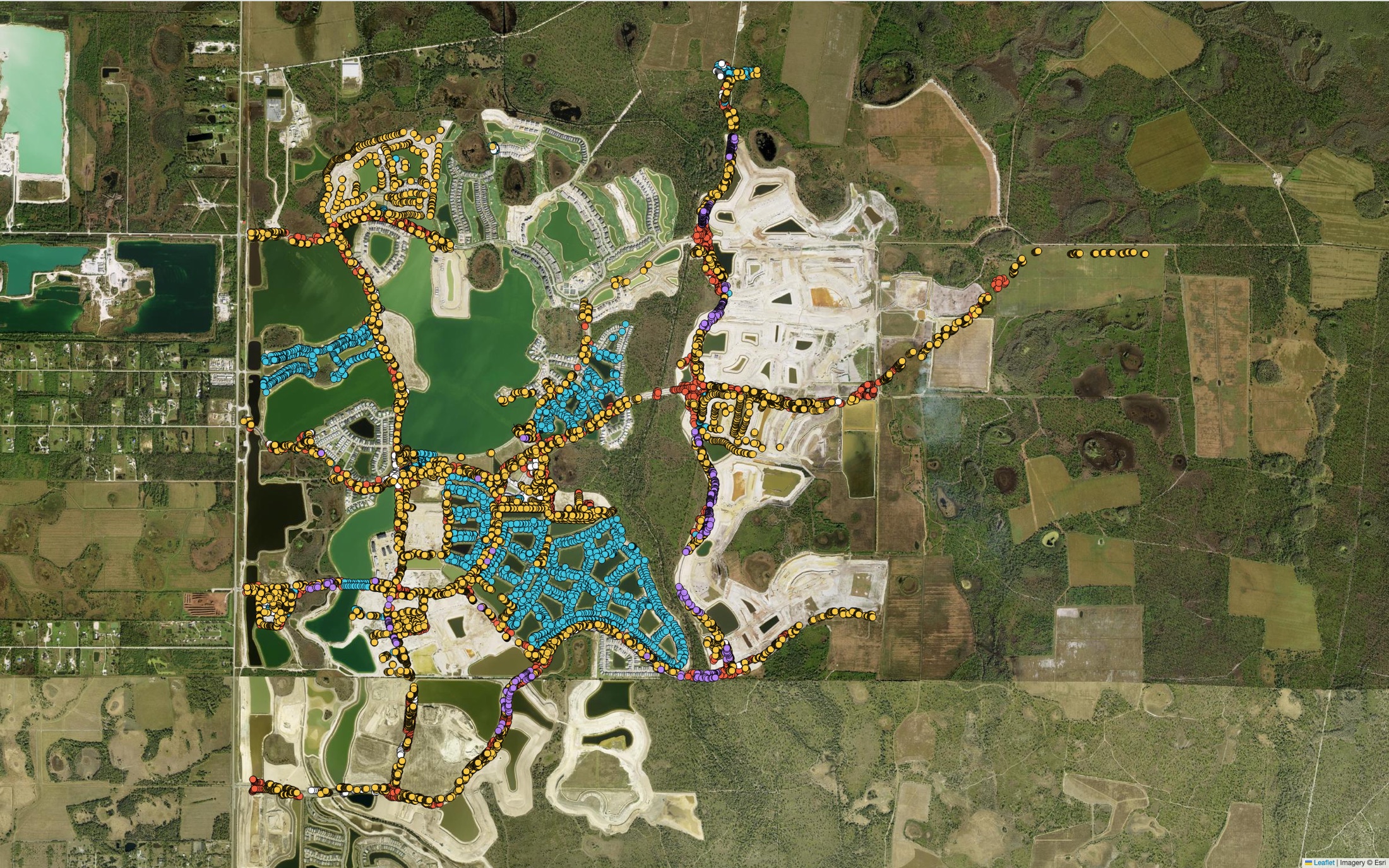
Every palm in a plan has its own record.
Species, location and history, with grades and photos where the plan includes them, updated at every visit. “Is this palm covered?” is answered from the record, not from a new site visit.
Ptolemy GIS inventoryA report follows every visit.
A field visit report after every Health Program visit, a quarterly program report, and a findings update whenever a lab result comes back. Each is written to forward to the board as is.
Ptolemy reporting standardTwo treatment programs on one palm can interfere.
Uncoordinated programs on the same plants can work against each other. One accountable provider keeps one record of what went into every palm.
Ptolemy program standardTreatments are body-cam verified.
Right product, right process, every visit. If the board wants to see exactly how a palm was treated, we can show it.
Ptolemy agreement termsField work and the law (6)
Palms are pruned to 9 and 3.
Crews prune to the 9 and 3 o’clock line. Everything below it comes off, green or brown, with dead fronds and spent stalks. Nothing above it is cut. Seed pods on thorny date palms come off in spring, before they drop.
Ptolemy pruning specificationSterilized tools on every palm is the ideal.
Ideally, yes, and for a homeowner with a few palms it is usually worth it. At community scale it is white-glove service, and the budget often does not allow it. It is recommended on the seven Fusarium host palms, highly on Canary Island date, Medjool and Sylvester, and wherever Fusarium has been lab-confirmed on or near the property. It is an add-on you elect.
Ptolemy pruning tool sterilization specificationA positive palm comes down after its neighbors are protected.
On a confirmed lethal bronzing positive, the palms nearby get an insect knockdown before the infected palm is removed, so the insect does not simply move next door.
Ptolemy lethal bronzing protocolA storm-damaged palm gets time.
A palm that is structurally sound after a storm gets at least six months before anyone calls it lost.
Ptolemy storm positionUtilities are called in before any digging.
A Sunshine 811 ticket is placed before stump grinding or root work.
Florida Sunshine 811There is a state approved CE course on palms for managers.
Jeff Kaulbars teaches “Practical Strategies for Preserving and Managing Urban Palms,” approved by the state for community association manager continuing education (course license #CRS10101, provider #PVD1206).
Florida DBPR, Regulatory Council of Community Association ManagersBefore you sign with anyone
What to ask any palm and tree vendor
Eight things to have in hand before a vendor works on your property. Ask us too.
- A certificate of insurance before any work.General liability and workers’ compensation, named the way your association requires. Ptolemy carries general liability, workers’ compensation and auto.
- The FDACS pest control license.Required for anyone spraying, drenching or injecting palms for pay.
- An ISA Certified Arborist you can name.And the number, so you can look it up.
- Reports after every service.Your board will match them to the payments. Ask to see a sample report before you sign.
- One point of contact.For health care, pruning and removals, so a dead palm is never three phone calls.
- Lab confirmation before a disease call.And the lab result sent to you, so you can file it.
- A written scope you can compare.Every bid against the same standard, or the comparison means nothing.
- Records that stay with the property.If the vendor or the manager changes, the history of every palm should not leave with them.
Questions
Questions managers ask
How fast can someone look at a tree?
For plan clients, we schedule a visit within days and meet the manager on site. For a storm or a safety issue, call (239) 467-0142.
Where do the reports go?
To the contact you name, written so you can file them and forward them to the board as is.
What do I tell a resident who asks about a brown palm?
That it is on the record and we are looking. Send us the photo or the location. We check the record and give you a plain answer you can pass on.
The association planted a new palm. Is it covered?
New palms are added to the inventory at the next visit and shown apart from the base program, so the board can see the growth.
Who pulls a tree removal permit?
The property owner or the association pulls it, using our written risk assessment.
What if the landscaper and you disagree?
We put our finding in writing, with the photos and the record. Our finding is written from the record and the lab, not from a replacement sale, and we coordinate with the landscaper directly.
Do you offer continuing education for managers?
Yes. Jeff Kaulbars teaches a state approved one-hour course for community association managers on preserving and managing urban palms. Ask us about the next session.


ISA Certified Arborist #FL-10118A · TRAQ · Prescription Pruning Qualified · Licensed Florida pest control business

The next step
Start with the free master plan.
We map every palm and tree, write the plan, and present it to your board.
Request the free master plan