
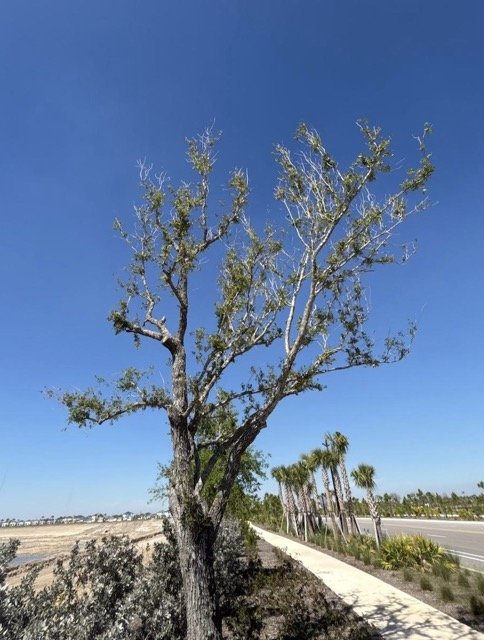
Tree protection during constructionProtect
Protect the trees you are keeping, before the first trench.
Root damage hides. The crown can look fine for years while the tree loses its footing underground. We set the zones, root prune ahead of digging and watch the site until the work is done.
- Zone
- 1 ft of radius per inch of trunk, or the dripline
- Visits
- Every 2 weeks during active work
- After
- 2 years of spring and fall checks
- Utilities
- 811 before any dig
What we see in the field
The damage is done in the zone nobody fenced.
A trench cut along the street. Fill pushed against a trunk. Equipment parked under the canopy. Concrete washed out in the root zone. Each one cuts or smothers roots the tree needs to stand.
The crown often looks fine for years. Cut the anchoring roots and the tree is set up to fall in the next storm. By then the contractor is gone and the community owns the tree.
The time to protect a tree is before construction starts. The barriers stay up until it is complete.
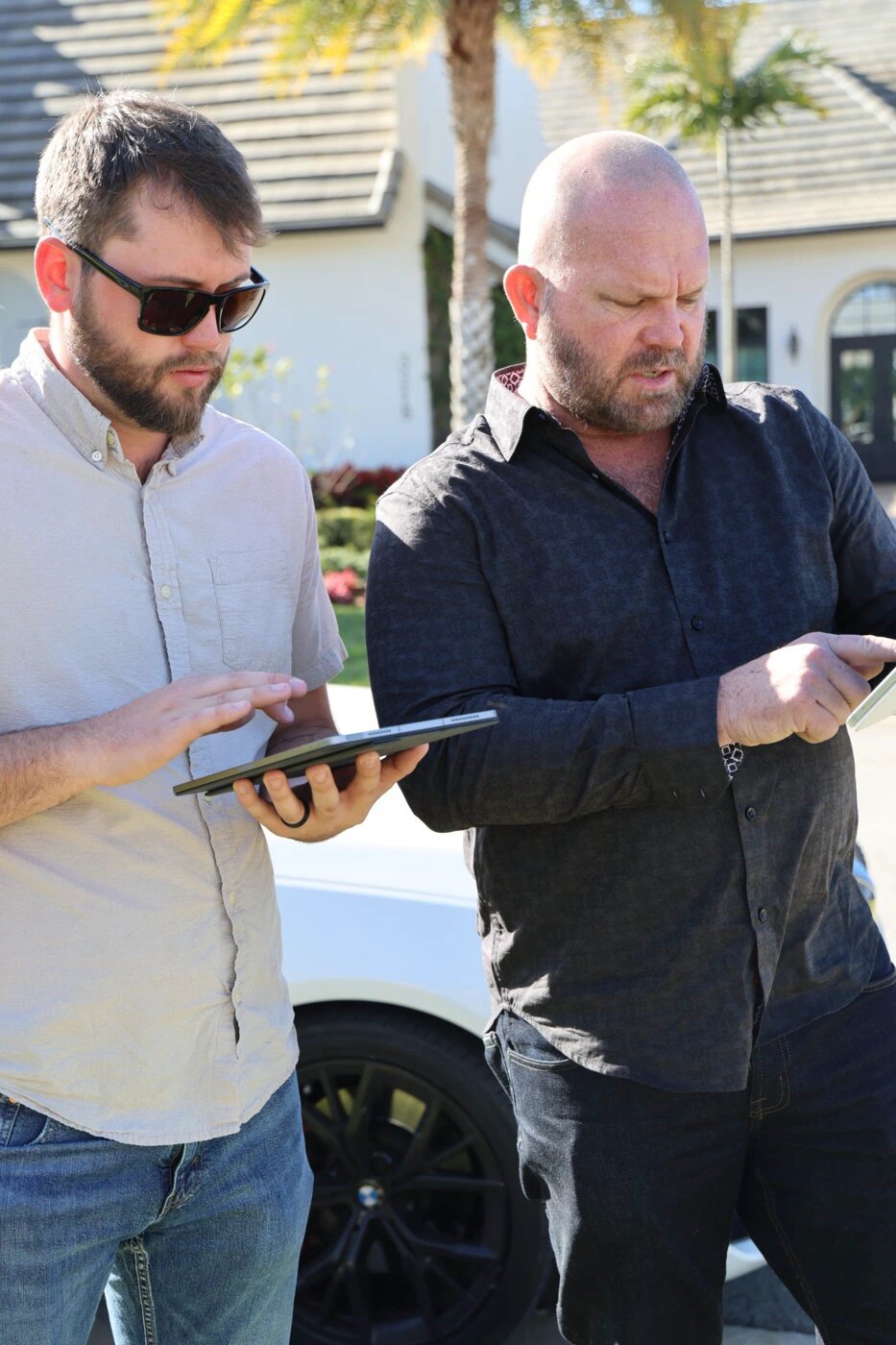
How we do it
Four phases, one record.
- Before
Map and baseline every kept tree. Recommend the zones and the barrier line in writing. Root prune ahead of any digging.
- During
Visits every 2 weeks. Any barrier down, or any work, storage or fill inside a zone, is photographed and reported to you in writing the same day.
- If damage happens
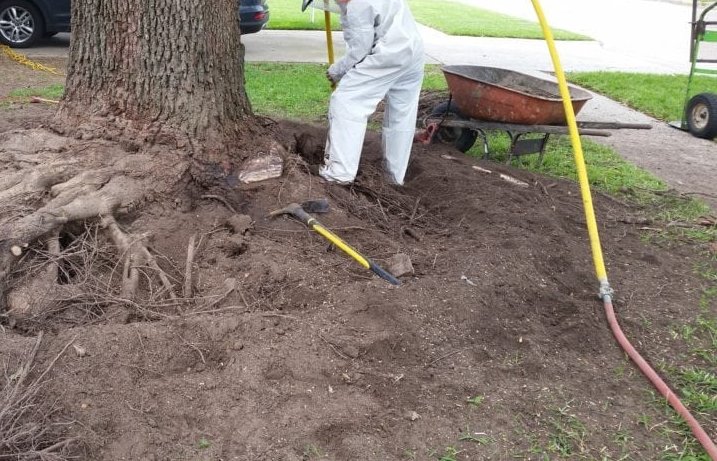
Roots exposed and documented, each one photographed and measured before the soil goes back. The arborist rules on stability and care.
- After
A post-construction assessment of every kept tree against its baseline, then two years of spring and fall condition checks.
What is included
Before, during and after.
Baseline
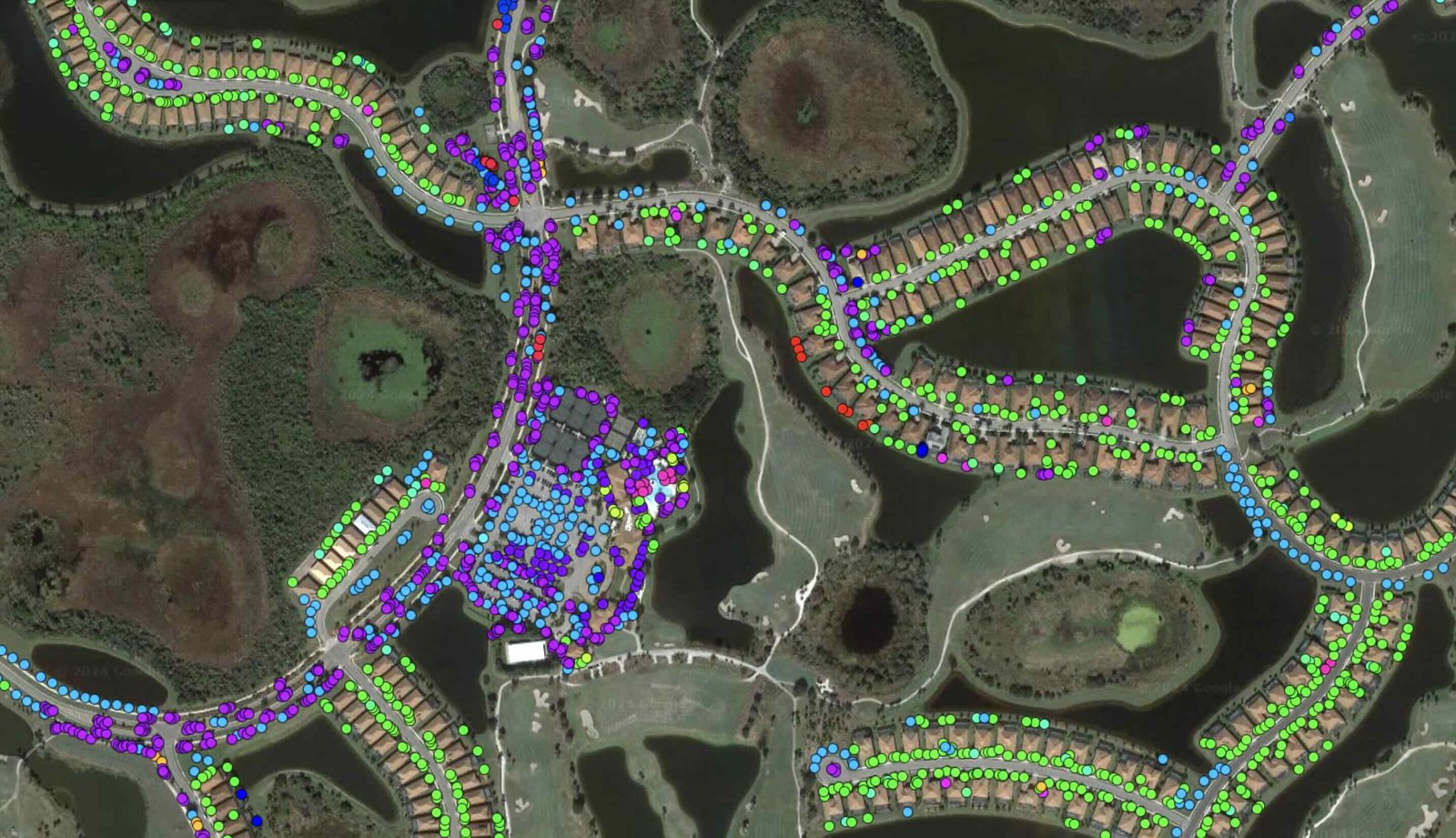
We walk the trees to be kept with you, map them, and record condition, trunk diameter, defects and fixed-point photos for each one.
Zone recommendation
Protection zones and the barrier line recommended in writing. Palms get a zone too, sized by the arborist on site.
Root pruning ahead of digging
Where digging comes near a kept tree, we root prune first, to our root work standard, so roots are cut clean instead of torn.
Monitoring visits
Every 2 weeks during active work near protected trees, plus a visit before any digging in a zone. Barriers checked, photos taken.
Damage investigation
Roots exposed by air spade or hand to find torn, cut or buried roots and fill against the trunk. Penetrometer readings for compaction.
Post-construction assessment
Every kept tree assessed against its baseline, with construction impacts named. Then two years of spring and fall checks.
Priced on its own lineInstalling or maintaining barriers (the contractor's), watering, private utility locating, permits, engineering, and removal or stump work.
Request a protection planbuild it into a 10-year Master Plan
Standards we work to
What the zone rules come from.
Our lines
- Nothing inside the zone: no driving, parking, dumping, digging, fill, storage or concrete cleanout.
- No fill or soil against a trunk.
- No root cut closer than 5 times the trunk diameter. Consider boring under the roots before trenching.
- Mulch in the zone 3 to 4 in deep, kept off the trunk.
- No root pruning or decompaction during drought unless the tree will be irrigated.
- We promise the protection work, not that a kept tree survives the construction.
1 ft of radius per inch of trunk diameter, fenced at that radius or the dripline, whichever is larger. The arborist may adjust on site.
Where Collier code applies, existing trees count toward the landscape requirement only if barriers go up before construction and stay until it is complete. Check current rules with the county.
Soil piled against a trunk can kill a tree.
The company that digs places the ticket, at least two full business days ahead.
Sources: Ptolemy Tree Protection During Construction and Root Work specs; our positions on the 811 ticket and outcomes; Collier County General Landscape Requirements; UF/FDOT Guide for Tree and Palm Maintenance Along Florida Roadsides.
Who does what
Clear roles, so nothing falls between the contractor and the board.
| Party | Does |
|---|---|
| Contractor | Installs the barriers and keeps them up for the whole job. Stays out of the zones. Places 811 for its own digging. Reports any root it hits. |
| Owner or board | Names the trees to keep. Marks private lines. Holds the contractor to the zones and decides whether to stop work. Pulls any tree permit. |
| Ptolemy | Baseline, mapping, zone recommendation, root pruning ahead of digging, monitoring visits and photos, damage investigation, post-construction assessment and reports. |
On the job
Tree protection during construction, in the field.
Who it is for
Written for the people who answer for the trees.
- CDD and ISD boardsNew phases built next to mature trees, with a record a public board can stand behind.
- Master-planned communitiesConstruction that runs for years beside the trees residents already love.
- Commercial property managersRenovations and parking lot work around existing trees.
- Golf course superintendentsClubhouse, cart path and course projects near specimen trees.
Inside a plan
Tree protection is a Protect service.
On a Palm and Tree Master Plan, tree protection sits with the oversight and records specs, alongside new planting assessment and dead and declining tracking. New developments lean on it. It is priced per job by proposal.
Questions
Questions managers and boards ask.
Still have a question? Call (239) 467-0142 or send a request.
How big should the protection zone be?
Who puts up the fence?
The trench is already dug. Is it too late?
Does the county require protection?
Will you water the trees after root loss?
Next step
Construction coming near your trees?
Call before the first trench. We map the trees you are keeping and put the zones in writing.