The water
A controller schedule is not proof of water.
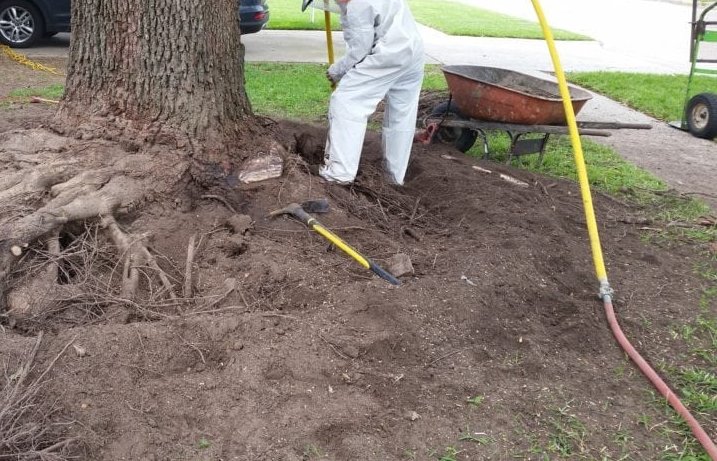
Of everything working against a new planting, water is usually the one we can actually change, and it matters most. A zone can run on time and still miss the root ball. So we measure the water at the plant, test what it carries, and read the plant, not the controller.
Water received
We measure. We do not assume.
Every visit puts a number on the water each tree received since the last one, and checks it against that tree’s target for its size and phase. A gap is reported within 24 hours.
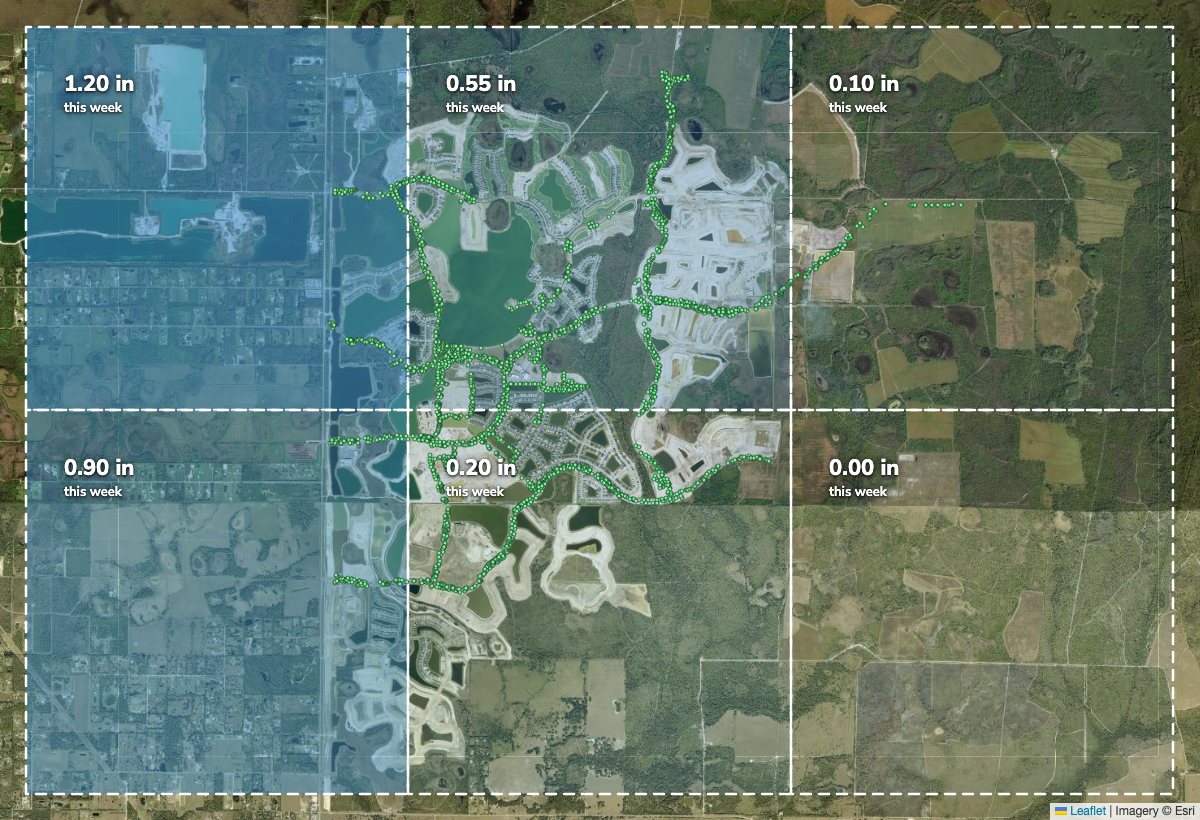
The radar rainfall record for the block each tree sits in, every day since the last visit. A rain gauge on site, to the hundredth of an inch.
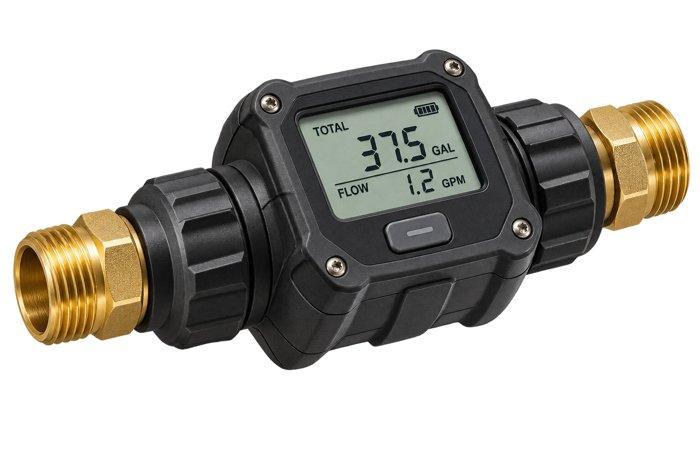
Flow meters on the bubblers, where the arborist sets them. Total gallons and the current flow, read at the plant every visit, so a failed zone or a clogged bubbler shows up as a number.
Our water trailer brings hydrant water when a zone falls short or the rain stops, logged by date and gallons. Installer truck water is added when they log it.
Checked against the target. Short means a call that day, not a note in next quarter’s report.
“Consistent irrigation remains the single most important factor in successful tree establishment, and interruptions during this critical period can have lasting impacts on tree health.”
A district landscape director, in an email to usRain, by the block
Every tree gets its own rain record.
Summer rain in Southwest Florida is patchy. A storm can soak one side of a community and miss the other. So we do not use one number for the whole property.
- Blocks about 2.5 miles on a side. The rain record blends weather radar with ground rain gauges, updates hourly, and reports the rain over a grid of blocks, each roughly 3,500 acres.
- Matched by GPS. Every tree in our GIS inventory has a GPS point, so we read the block that tree sits in.
- Read for what it is good at. It is very reliable on whether it rained at all. When a block reads zero, the tree got nothing that matters. Seven-day and monthly totals are the most reliable; one storm day at one tree can run higher or lower.
- Checked on the ground. A rain gauge on site, read to the hundredth of an inch.
How we manage the water
A target for every tree, and a plan for when the rain stops.
Every tree gets a water target from its trunk size and how long it has been in the ground. Rain plus bubbler gallons plus trailer and truck water is checked against that target at every visit. When it comes up short, you hear from us within 24 hours.
Daily water on the root ball.
Every other day.
Weekly, adjusted for rain, until the tree is established.
2 to 3 gallons per inch of trunk caliper per watering, on the root ball. A planning baseline the arborist adjusts tree by tree.
Watering frequency and gallons follow the UF/IFAS planting specifications for trees over 4 in (10 cm) caliper. The irrigation system or contractor runs the schedule; we measure what arrives.
When the rain stops
10 dry days in the dry season. Every bubbler and meter checked, every root ball checked by hand. Water trailer on standby.
14 dry days, moderate drought or a dry root ball. Each tree steps back a watering phase. The water trailer covers any zone irrigation cannot reach.
21 dry days, severe drought or wilting. Daily water for every tree under 2 years in the ground. Weekly visits. A written plan within 24 hours.
Two weeks of regular rain. Step down one level at a time, never straight back.
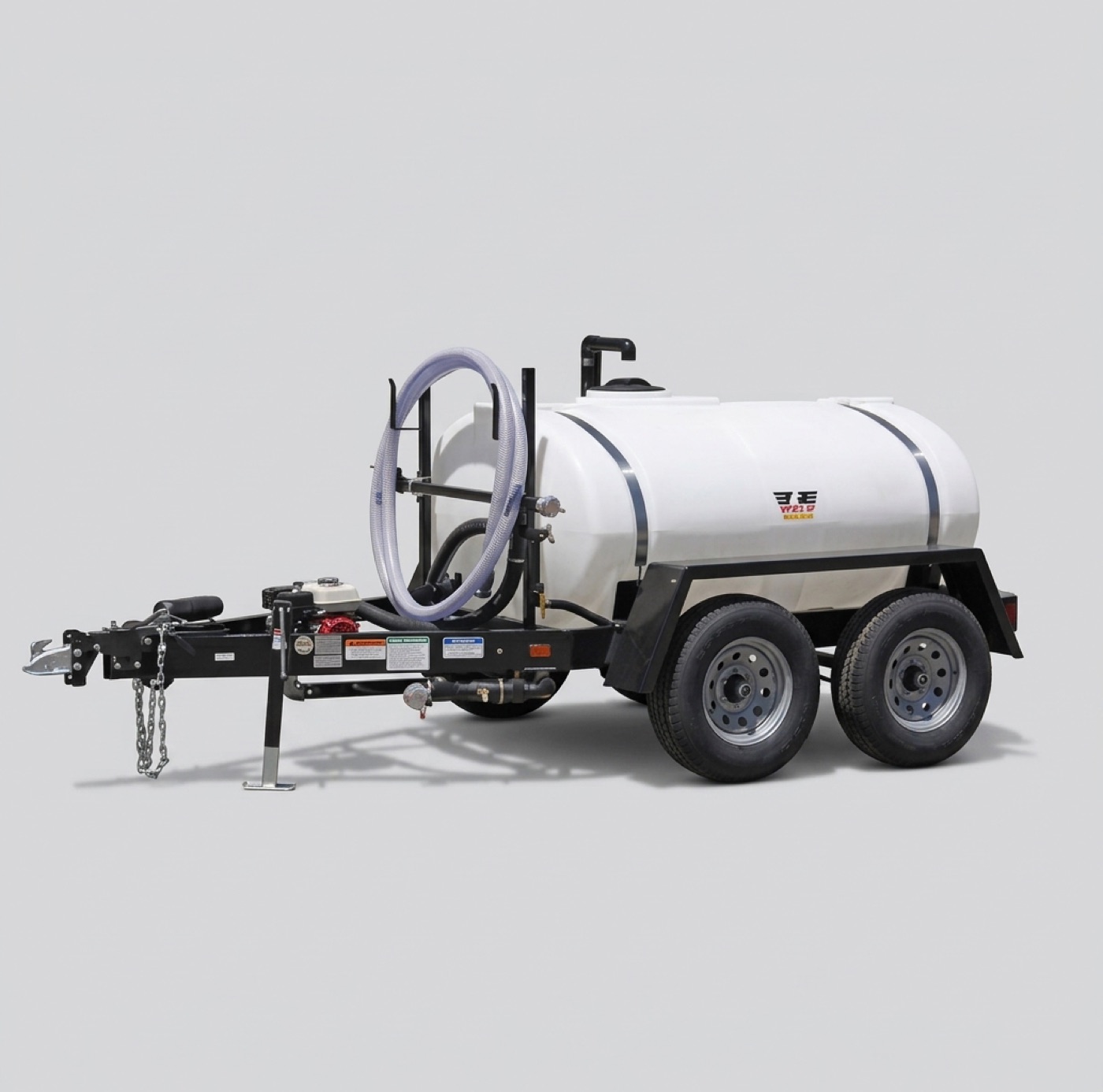
Our water trailer. When the system cannot reach a tree, we bring the water: hydrant water from our 800-gallon trailer, never the irrigation lake. It covers a zone that fails, a tree the bubblers miss, and the dry spells. Every load is logged by date and gallons, so it counts toward each tree’s total like rain and bubbler water do.
The flush
Rain washes the root ball clean. In a dry spell, we put the rain back.
Hard irrigation water leaves salt behind every time it dries. Rain rinses it out. When the rain stops, a measured flush of clean hydrant water does the same job on the trees that need it.
- Only when it is needed. A soil water test shows salt has built up, and the root ball drains.
- 2 inches on the ball only, inside the berm, by hose in pulses over 2 to 3 hours. Never sprayed over the canopy.
- Clean water. Hydrant water from our water trailer, never the irrigation lake.
Flush as planned.
Smaller pulses, less water. Let the rainy season do most of the leaching.
No flush. More water is a risk. Loosening the soil is the next question.
Rain and irrigation
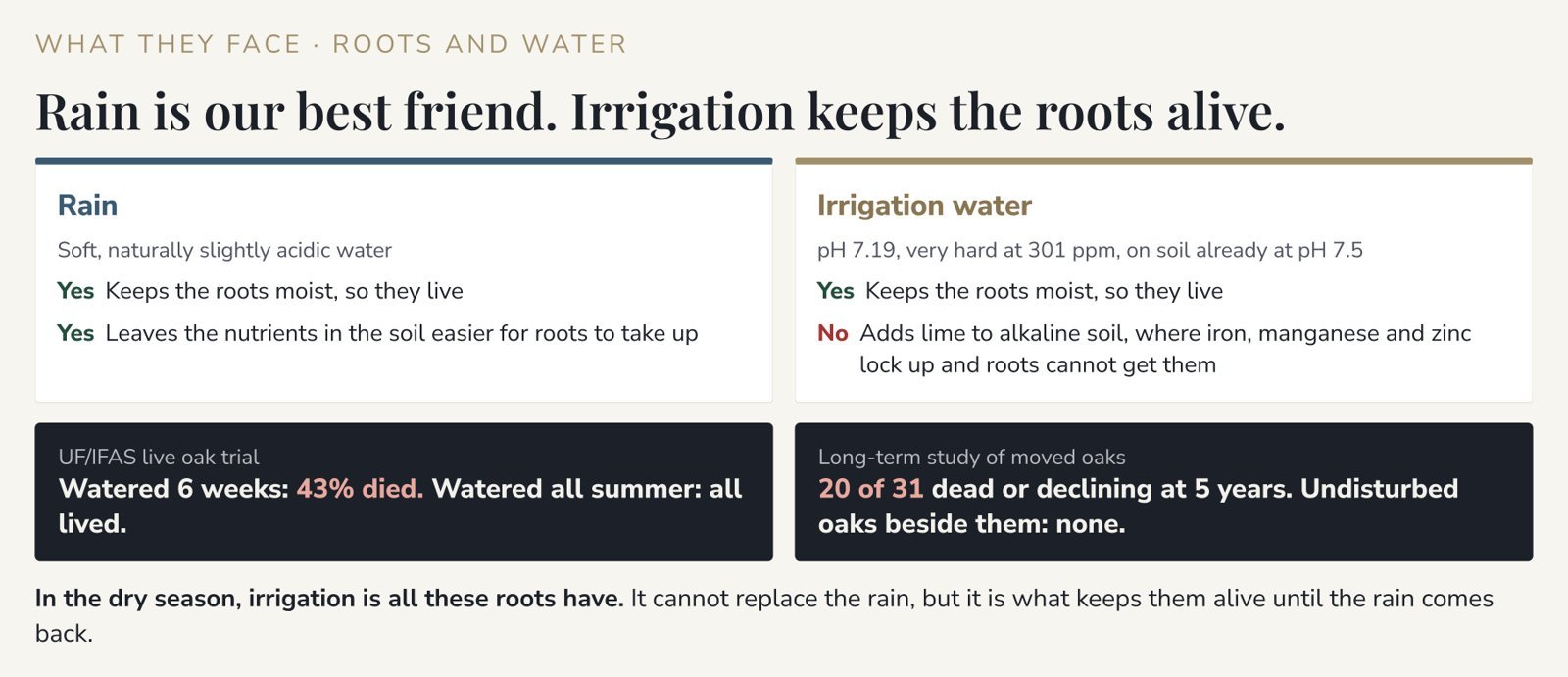
Rain is our best friend. Irrigation keeps the roots alive.
Rain is soft and slightly acidic. It wets the roots and flushes the soil clean. Irrigation water here is often hard and alkaline. It keeps roots alive through the dry months, but every cycle leaves lime and salt behind.
Irrigation water quality
Every watering leaves something behind.
Most communities water with lake, pond, reclaimed or hard well water. On a limestone aquifer it runs hard and alkaline. One watering does no harm. Hundreds a year on the same root ball add up. Here is one irrigation lake at a large special district we manage, tested by the UF/IFAS lab.
Estimates, not measurements. The water volume follows the UF/IFAS watering specs for a transplanted oak. Salt, chloride and lime are worked out from that volume and the lake water test below.
| Irrigation lake | Result | What it means |
|---|---|---|
| pH | 7.19 | Alkaline water on soil already near pH 7.5. |
| Hardness | 301 mg/L | Very hard. The line is 170. |
| Bicarbonate | about 199 ppm | The water’s liming potential. It slowly raises soil pH. |
| Chloride | 311 ppm | Hydrant water on the same site: 125. |
| Dissolved salt | 900 ppm | Hydrant water: 318. About a third of the lake’s salt. |
| Sodium | 129 ppm | Read against calcium to judge risk to soil structure. |
- Lime. Hard water leaves a little each time the soil dries. It pushes pH up and scales bubblers, so less water gets through than the controller says.
- Salt. Rain washes most of it out. A long dry season does not. Salt around the roots pulls water away from them even when the ball is wet. New roots feel it first.
- Chloride. Moves up with the water and burns leaf tips. On a new planting it looks a lot like tip dieback from too little water.
- Sodium. At high levels it breaks down soil structure and packs it tighter.
One sample, UF/IFAS lab, May to June 2024. We retest the source before acting on it.
Soil water extraction
We test the water the roots actually sit in.
Testing the lake tells you what goes on. It does not tell you what stays. Small samplers stay in the root zone, and we draw water out of the soil around the roots. It can be far saltier than the water going on.
When salt builds up, the test, not the calendar, decides when to flush the root ball with cleaner water. When a palm on a full program is not responding, we check soil pH and water before anyone adds more fertilizer. The problem may not be the dose. It may be access.
Too much water is real, too
- Signs of too much. Ground that never dries, algae, a flush of dollarweed or sedge, mushrooms.
- Signs of too little. Wilting, a blue-gray cast, footprints that stay in the turf. New installs show it first.
- Palms do not swim. Roots need oxygen. Waterlogged roots invite root rot and potassium deficiency, and wash manganese out of the soil.
- Treat planters like potted plants. A palm in a paved box gets its water and nutrients differently from one in open ground.
- Suspect the zone first. When plants decline together in one area, look at that irrigation zone before you look for a disease.
Chapter takeawayA controller schedule is not proof of water.