
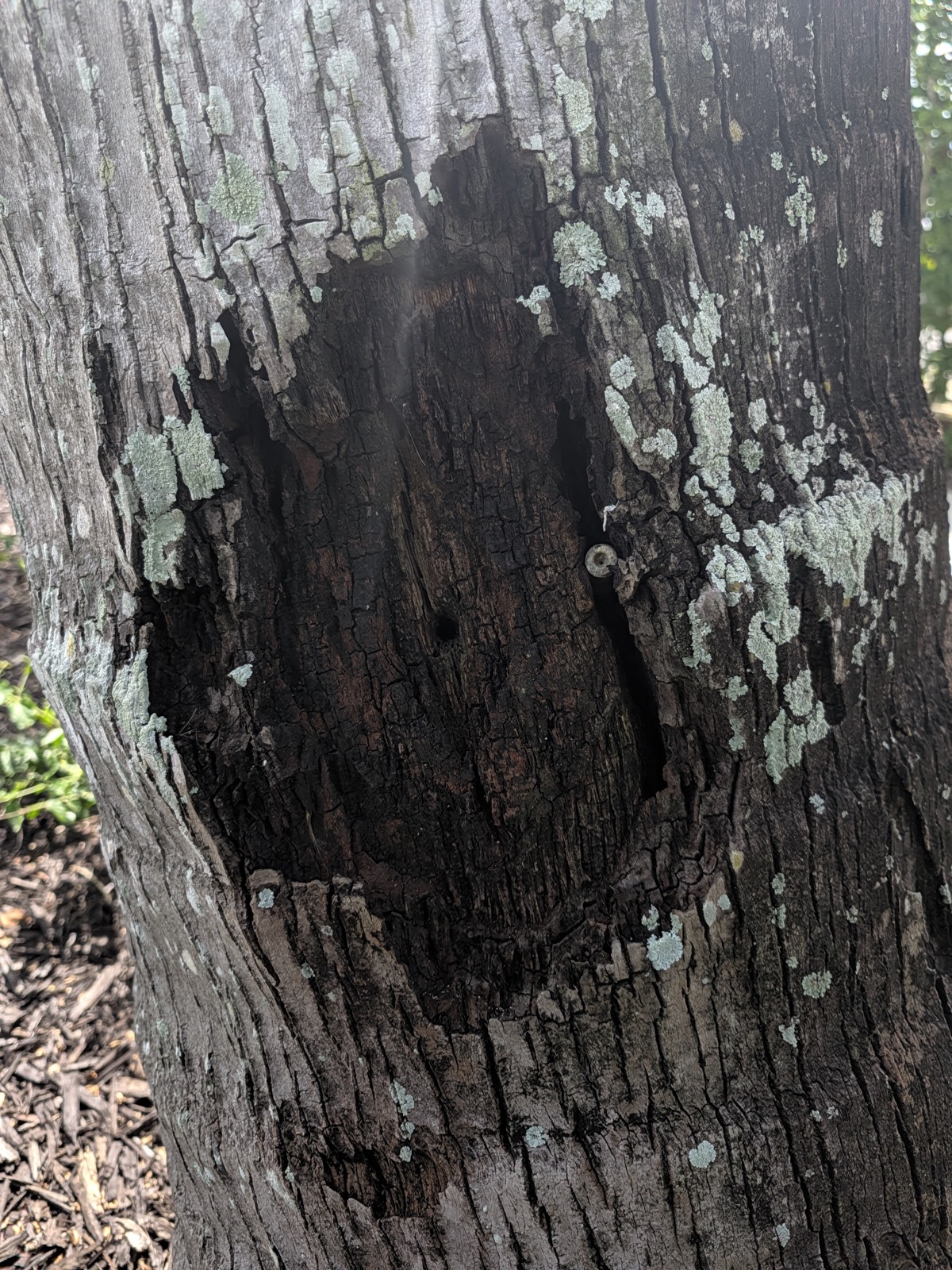
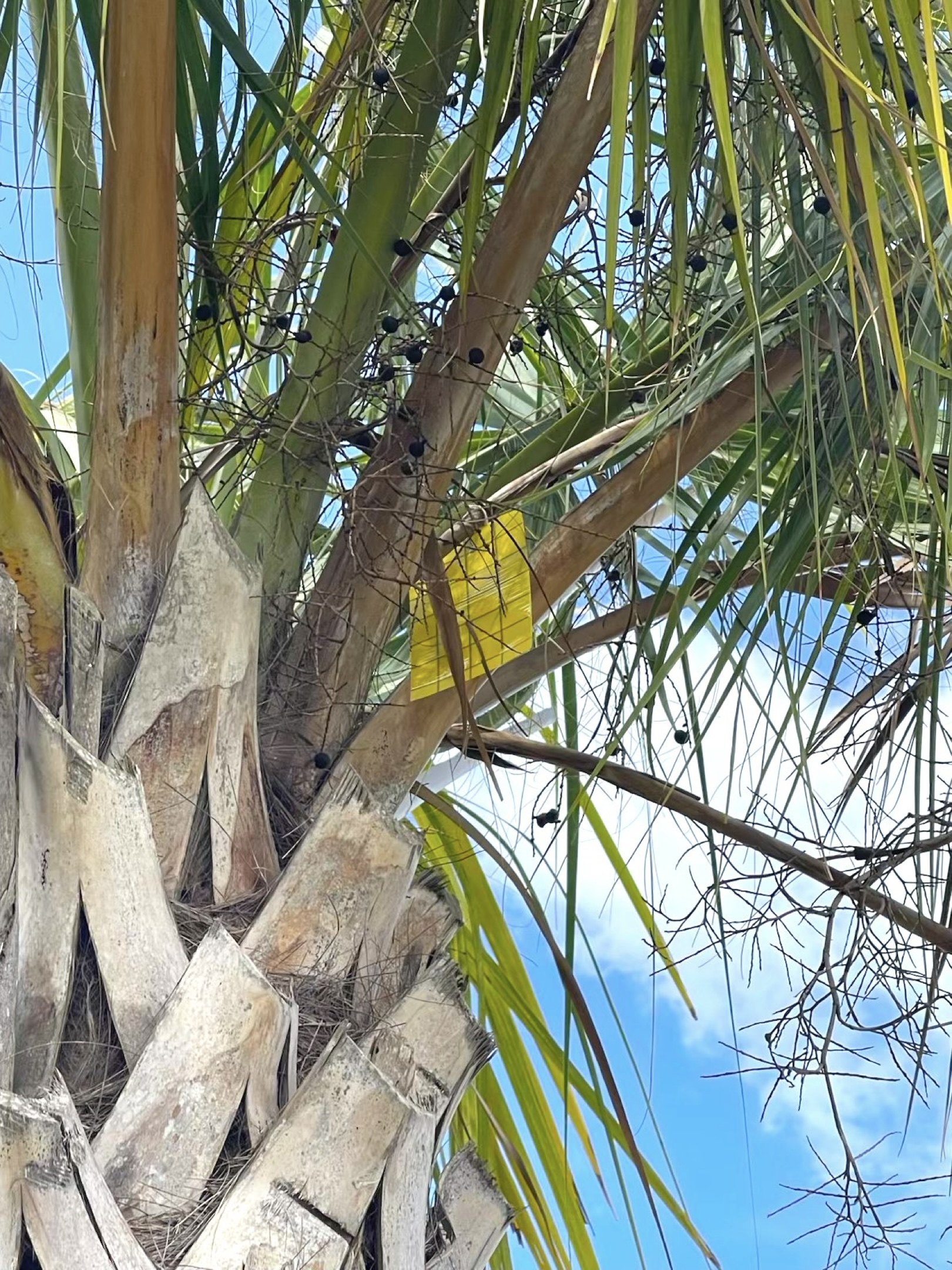
What injections leave behindDamage around old injection sites. Every hole stays with the palm.
OTC and trunk injectionsProtect
A last resort, not a program.
We do not recommend OTC treatments. We put palms on our Palm Health Program instead. Injection stays a last resort.
- Our position
- A last resort
- What comes first
- The Palm Health Program
- Before any disease call
- A lab test
- Every hole in a palm
- Permanent
Why we inject last
Four reasons we do not run blanket OTC.
A common pitch in Southwest Florida is to inject every palm with an antibiotic every few months. We do not recommend OTC treatments. We put palms on our Palm Health Program instead: monitoring, nutrition, and on the Advanced tier, a protective soil drench. Injection stays a last resort.
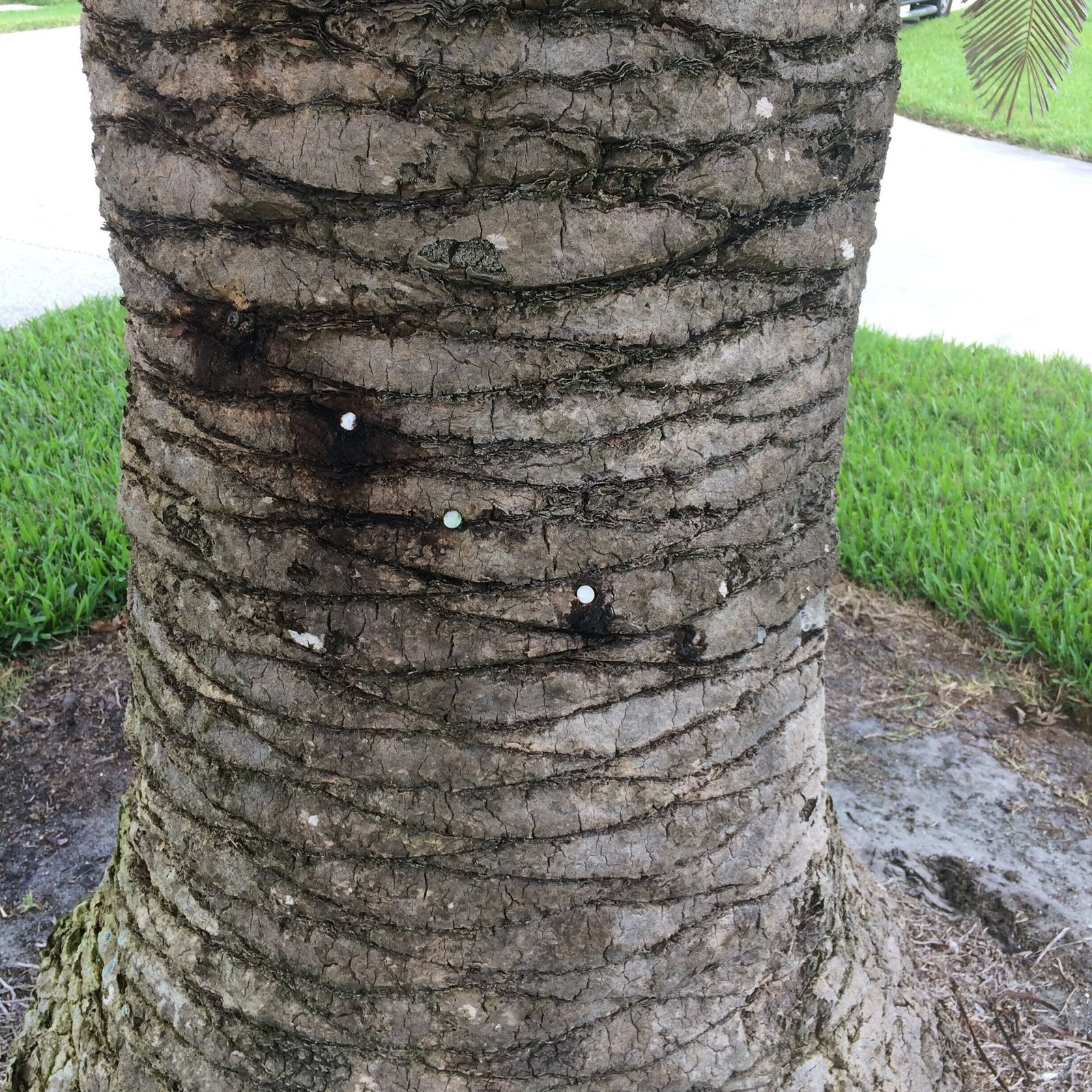
Every hole is permanent.
A tree walls off a wound. A palm does not. The wounded area hardens, but the damage stays for the life of the palm. Quarterly plug injections come to about 40 holes in 10 years.
- 02OTC slows lethal bronzing. It does not cure it.
Oxytetracycline (OTC) is an antibiotic that suppresses the phytoplasma behind lethal bronzing. It does not remove it, and an infected palm is still lost.
- 03Most injected palms do not have the disease
Lethal bronzing is hard to call by eye, and blanket programs inject palms that were never infected. We test before we act.
- 04The budget does more at the cause
The money a blanket program spends on holes does more on nutrition and on controlling the insect that carries the disease.
From the field
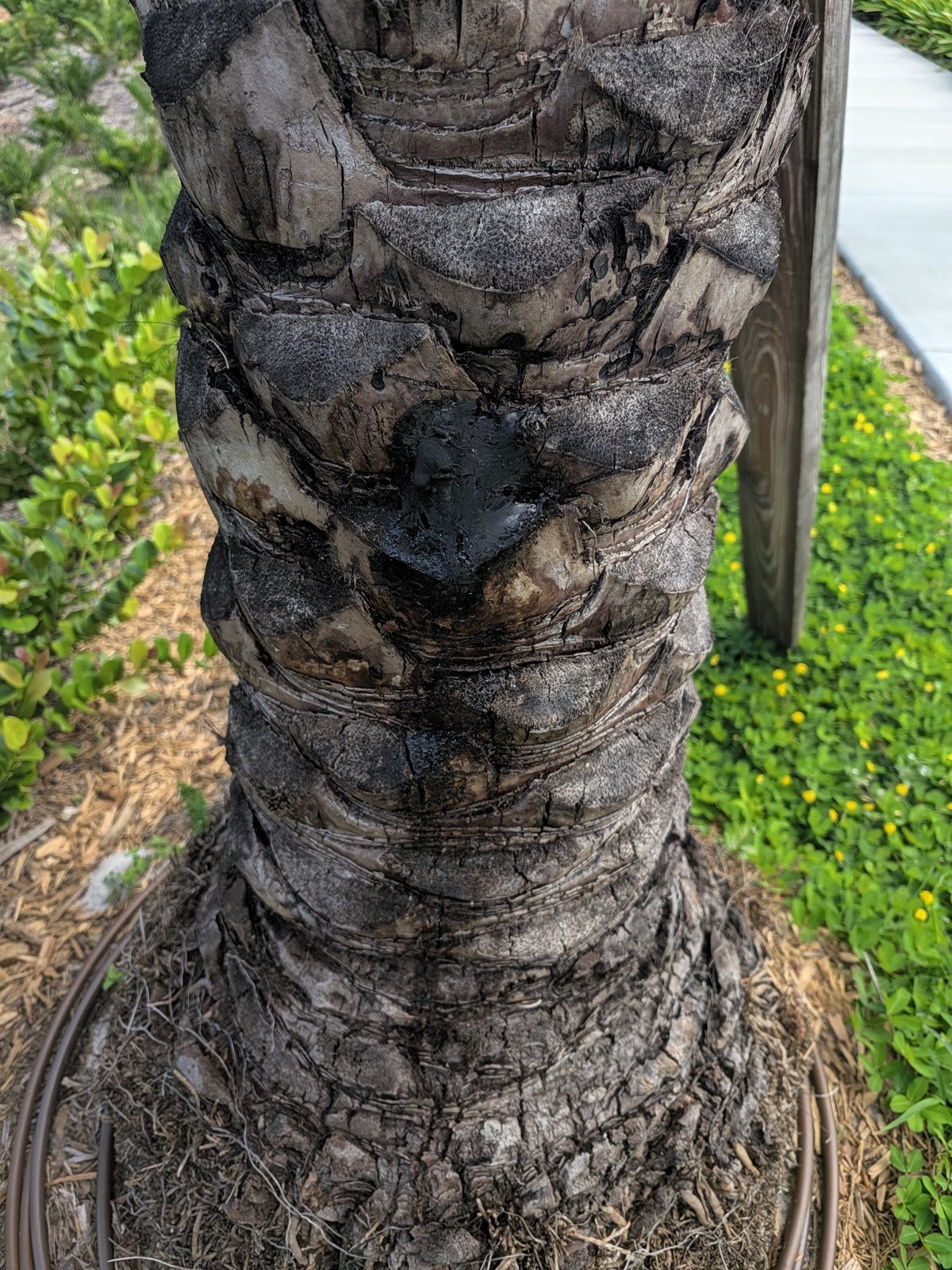
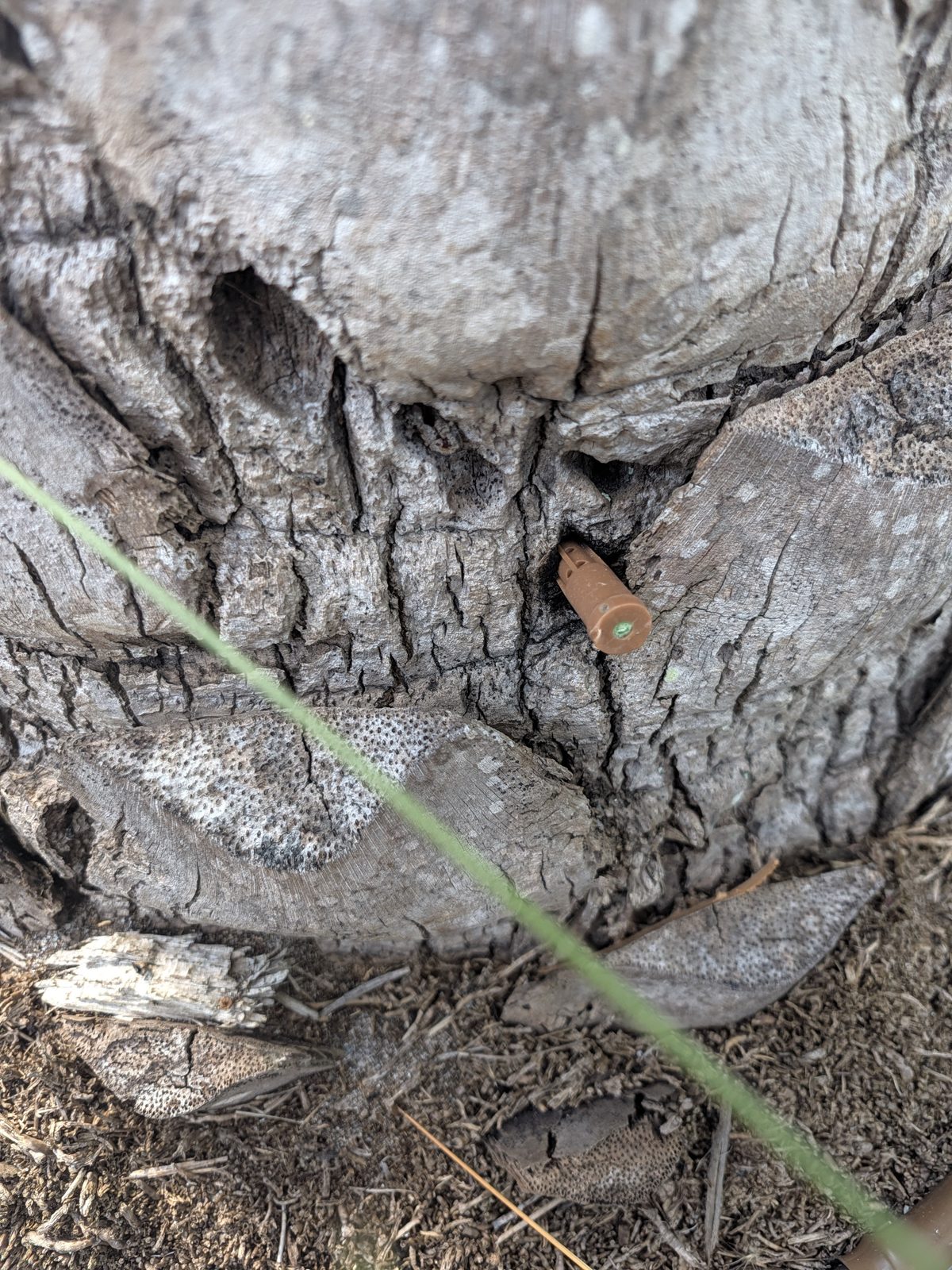
What we find at injection sites.
Patience over shortcuts
An injection greens a palm fast. The holes stay for decades.
Many communities trust their palm health care to their landscaper, and many landscapers turn to injections: fertilizer, phosphite and OTC, pushed as the solution. We do not recommend it.
An injection will green up a palm fast. The problem is the number of holes. Keep injecting for a decade or two and a palm carries anywhere from 40 to 80 injection sites.
The soil in new communities is often poor, and that is where most decline starts. Built soil cannot simply be fixed. What works is soil amendments, steady nutrition and time, and in most cases the palms turn around. Palm and tree care takes patience. Shortcuts cost more later.
What we do first
Address the cause before the symptom.
Before anyone talks about a drill, we start here.
- Monitoring at every visit, looking for threats early.
- A lab test before any lethal bronzing call. Visual symptoms are not lab confirmation.
- Vector control where the risk calls for it: a protective soil drench against the lethal bronzing insect and palmetto weevil, with turf, canopy and cultural work around it.
- Nutrition built for each palm’s deficiencies.
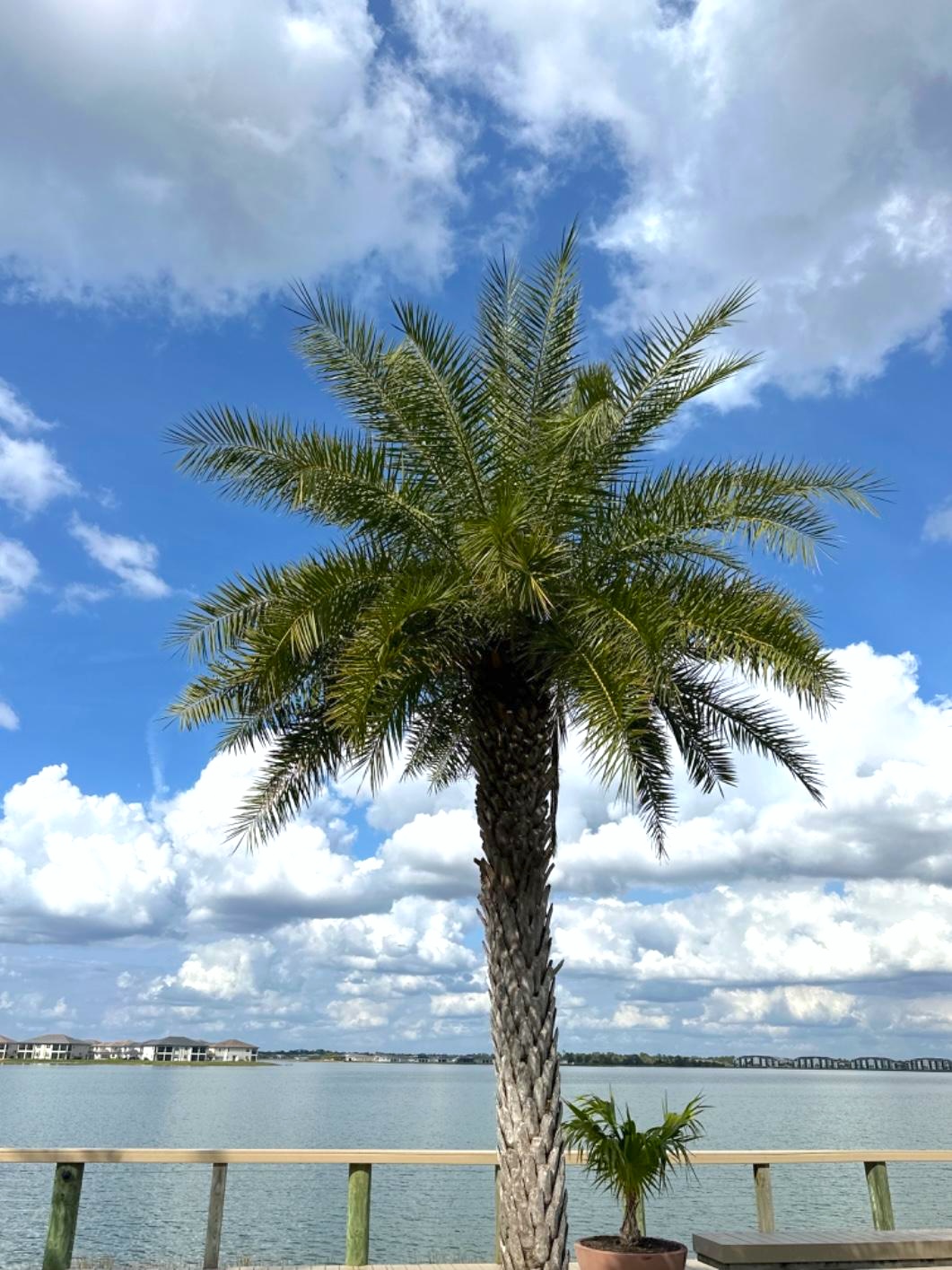
When we do inject
High-value specimens, and only on these terms.
We do not recommend OTC. Our answer is the Palm Health Program. OTC stays a last resort, and only on these terms.
- An extremely high-value or hard-to-replace palm: set in hardscape, elevated, or needing a crane to reach or replace.
- No symptoms, in an area where lethal bronzing is active.
- A lab test on its trunk core that came back Not Detected.
- Your decision, made with the trade-offs in writing.
- Port injection only, so one port is reused instead of drilling a new hole every few months.
- Recorded on body camera, with the sites delivered checked against the sites planned.
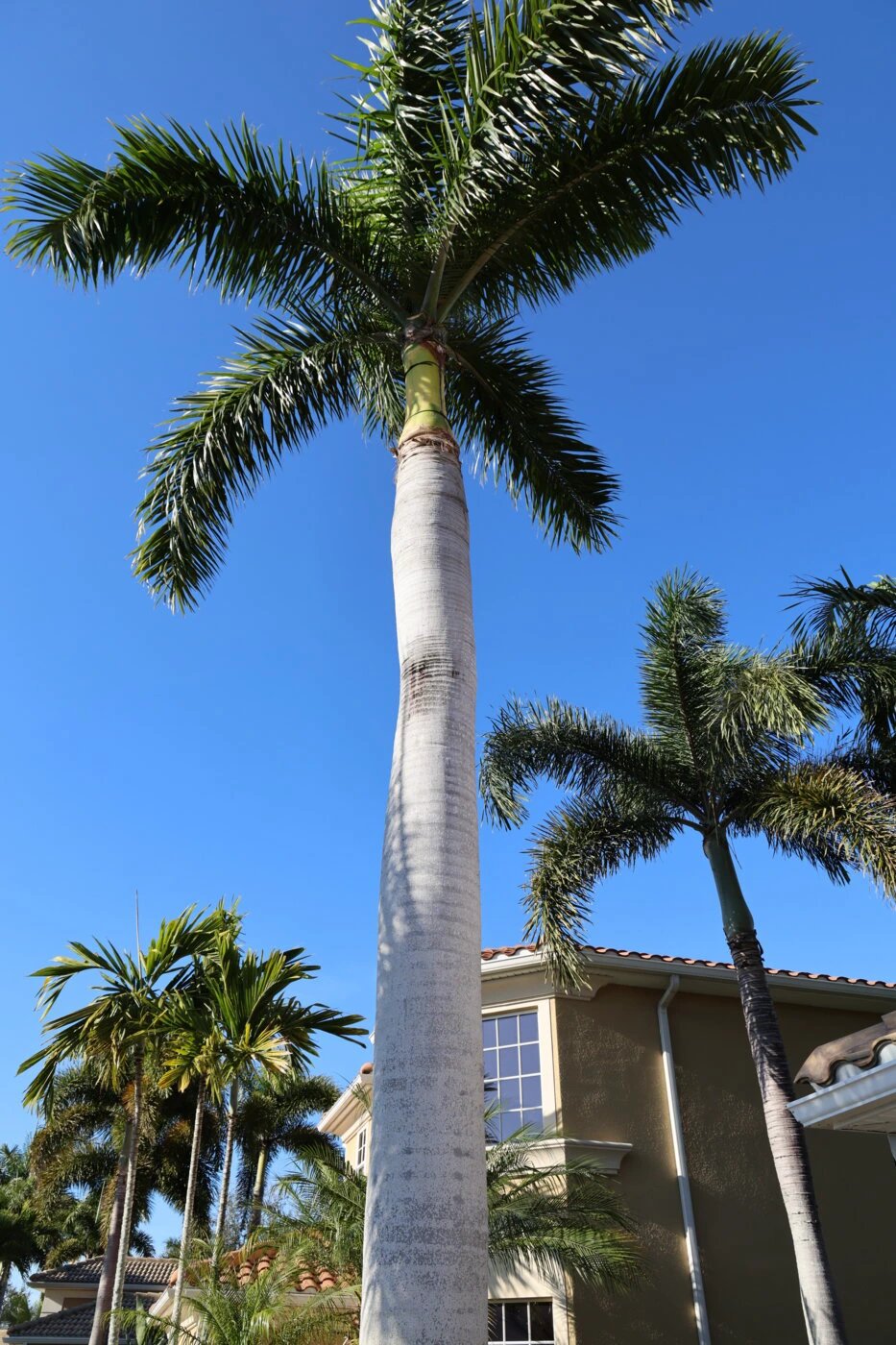
Test before you treat
Think your palm has lethal bronzing?
We sample it, send it to the lab, and tell you what came back and what it means for the palms around it.