
How we rate a palm
The Ptolemy condition scale
There is no widely used, detailed standard for rating an individual palm's condition. Most care calls a palm healthy or unhealthy and stops there. We grade two things separately, Color and Fullness, each on a percent basis, and the lower of the two sets the grade. Every palm on Standard or Advanced care is rated the same way, on five tiers from Normal to Dead.
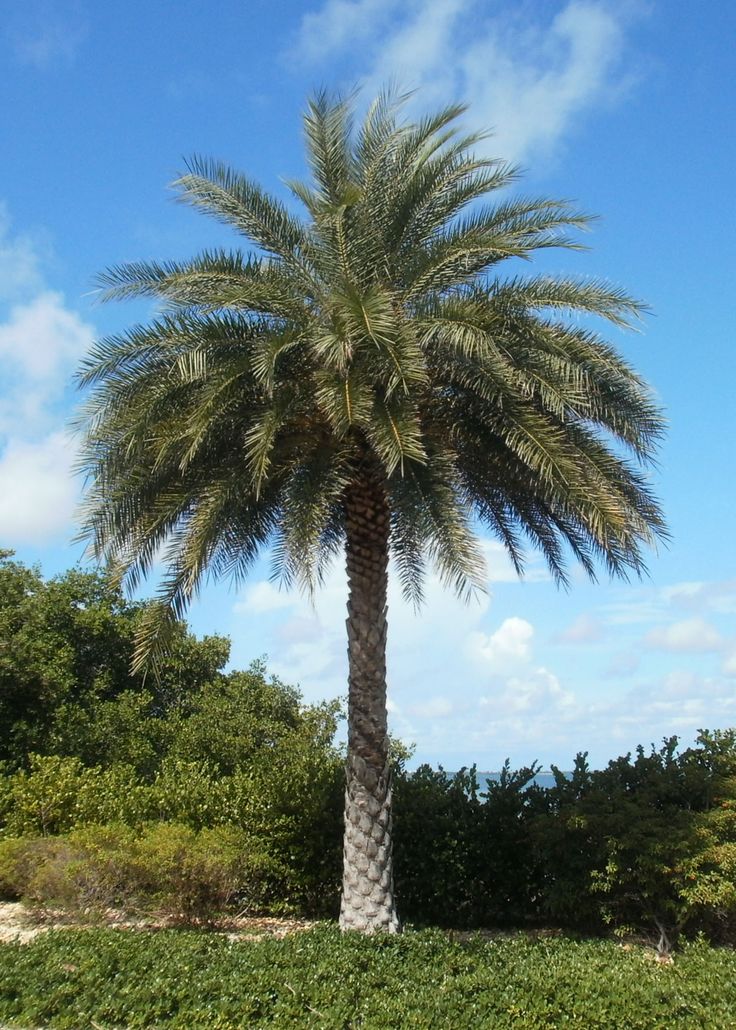
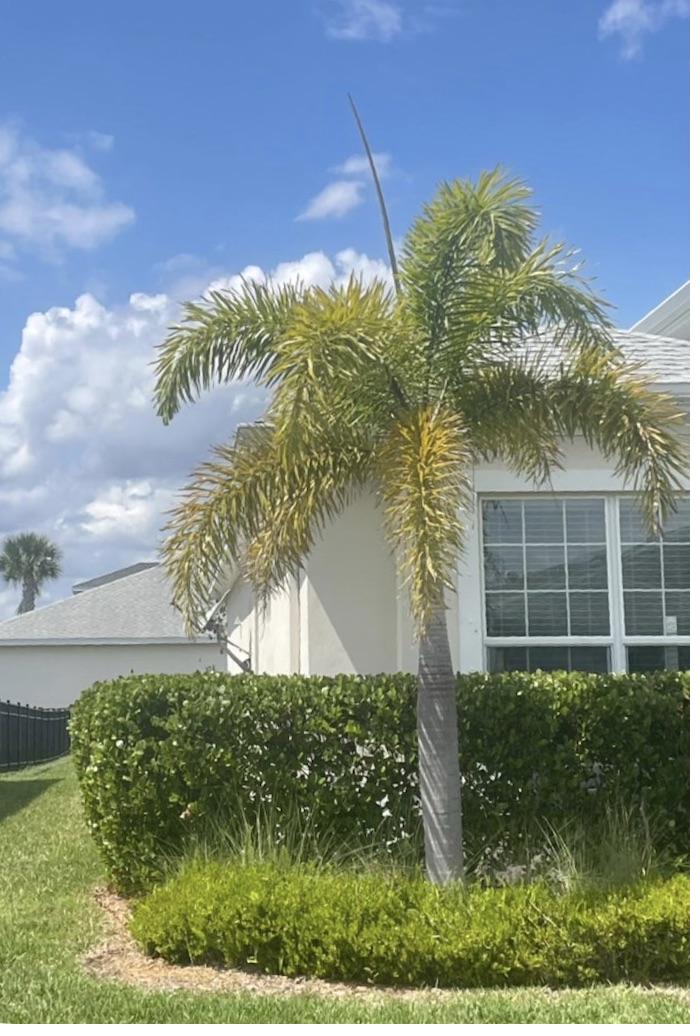
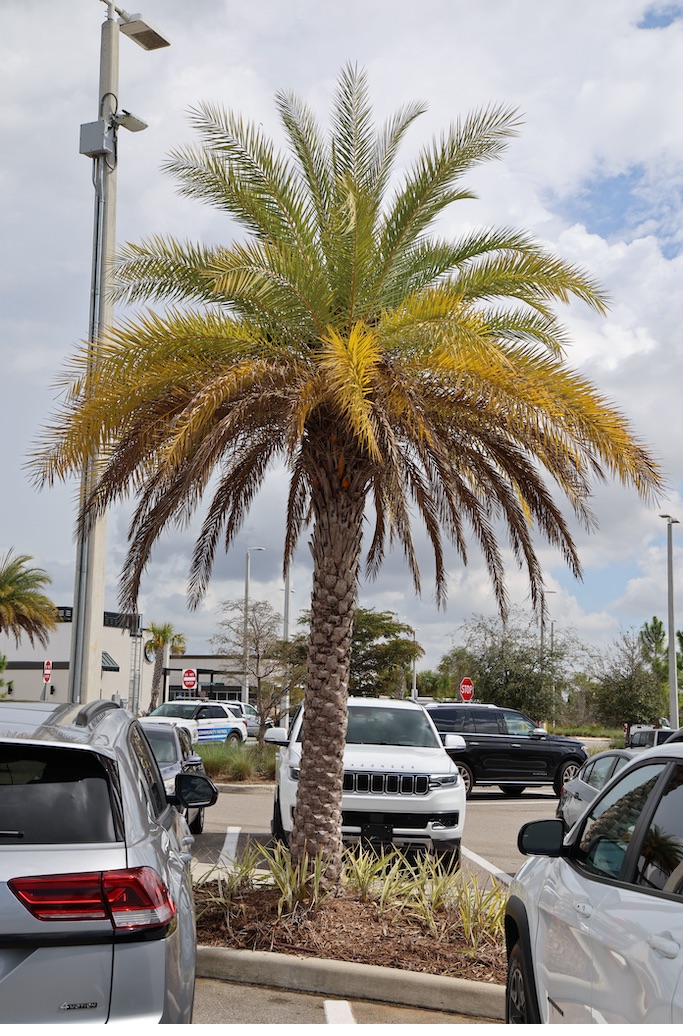
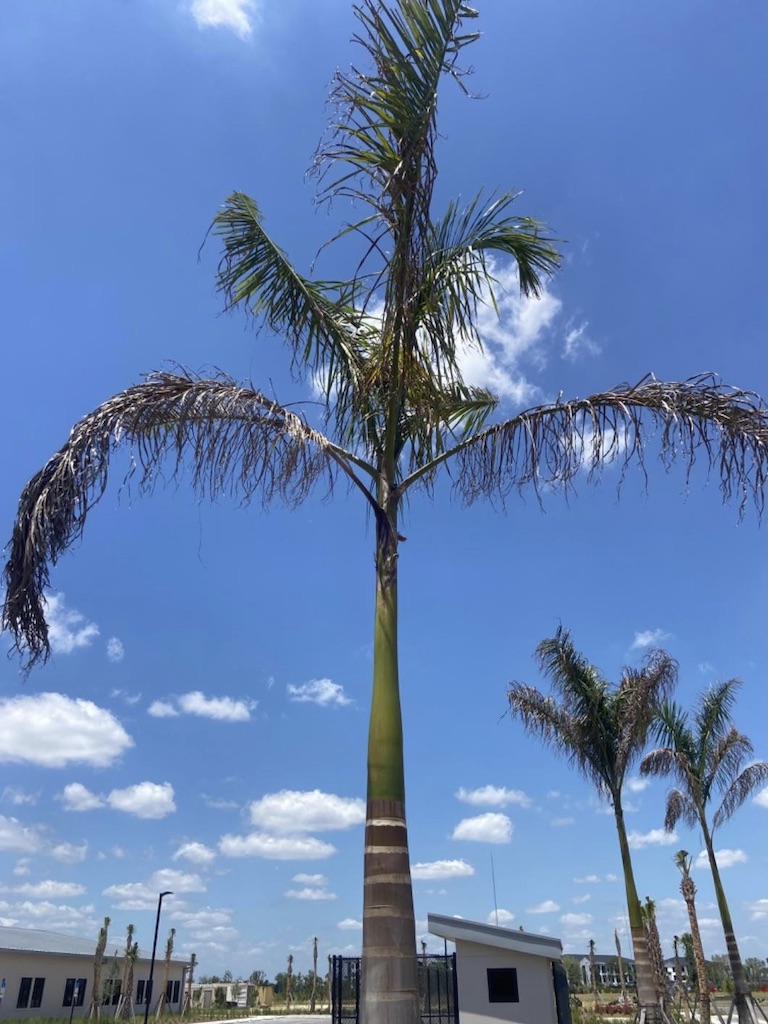
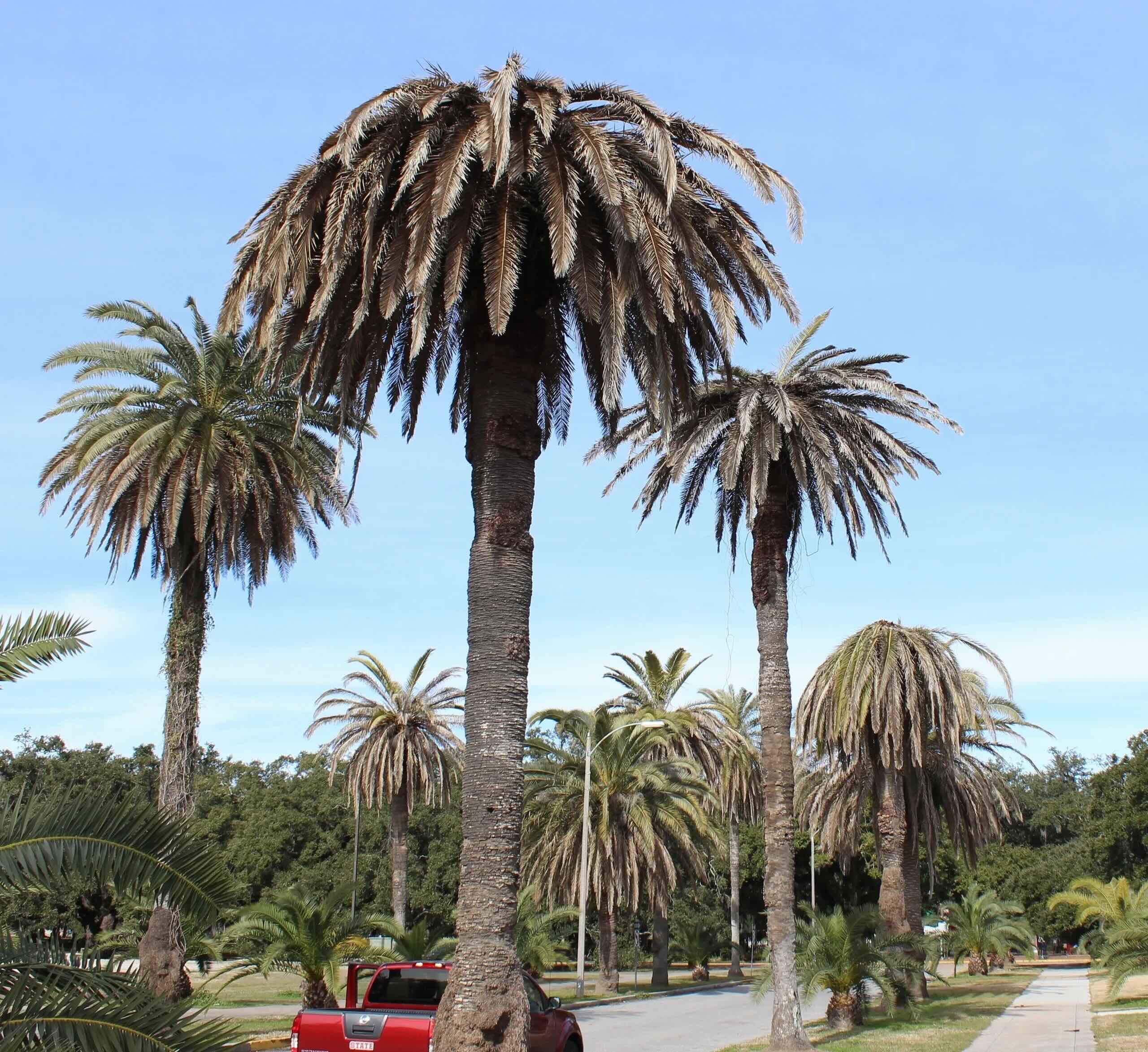
Normal is the goal, not a perfect score
The basis is percent of canopy. Normal is the goal state at 80 percent and above, a deliberate target: pushing higher adds cost for diminishing visible gain. Good and Excellent are not used.
Dead
0%Non-viable, no active growth.
Critical
1 to 39%Severe decline.
Poor
40 to 59%Clearly compromised.
Fair
60 to 79%Below Normal, recovering or mildly stressed.
Normal
80%+Doing what a palm should.
Photographs are illustrative of each band, not exact measurements.
Two axes, take the lowest
A palm can hold deep green color but have lost most of its canopy, or be full but badly discolored. So we grade two things independently and let the worse one govern, because the limiting factor is what the palm is actually contending with.
The percent of the canopy free from chlorosis (yellowing), necrosis (dead tissue), and undersized foliage. Scored on percent green, functional canopy. Old, lower-frond discoloration (potassium, magnesium) routes here.
How much living canopy the palm carries, the size of its new fronds, and whether new growth forms normally. A composite of three sub-factors, scored take-the-worst. Thin canopies and deformed new growth route here.
Fullness is three things, not one
Rate each sub-factor on the same five tiers, and the Fullness grade is the worst of the three. This is where thin canopies, undersized fronds, and deformed new growth get captured.
The percent of a full canopy present, judged against that palm's own potential, not a fixed frond count. As a canopy thins, the lowest living fronds rise from the 9-and-3 line toward 11-and-1. The angle is a cue, not the verdict.
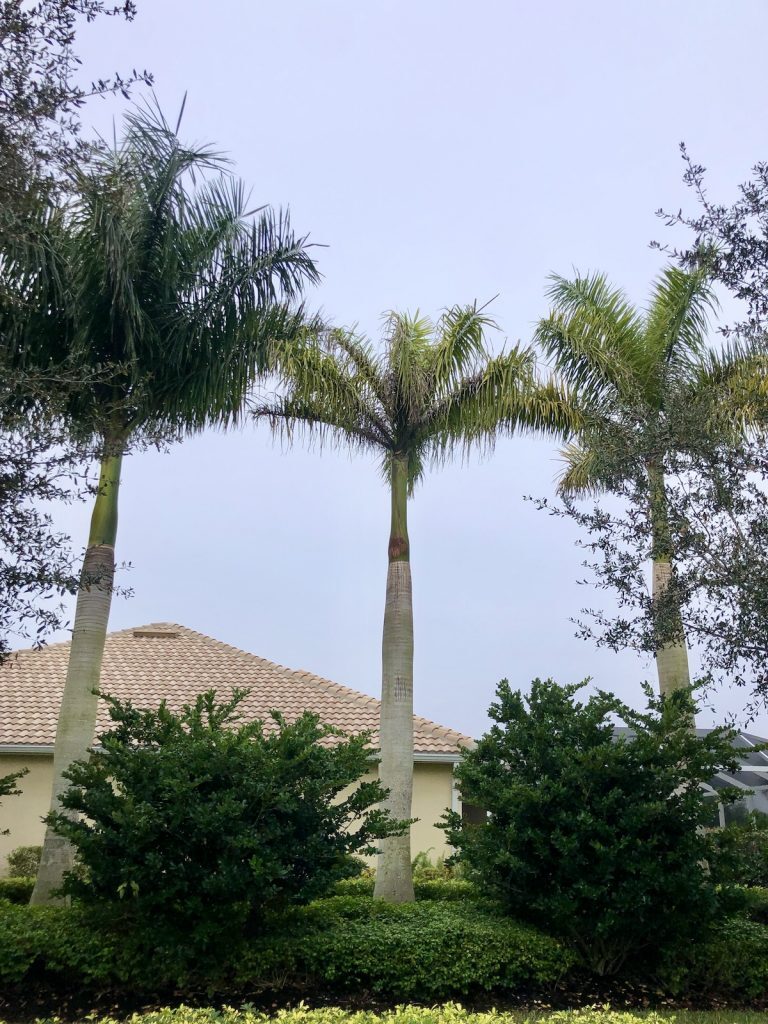
Are the newest fronds full length for the species, or stunted? New fronds coming in smaller than the last generation, the narrowing or pencil-pointing trend, is a stress signal judged against the species norm.
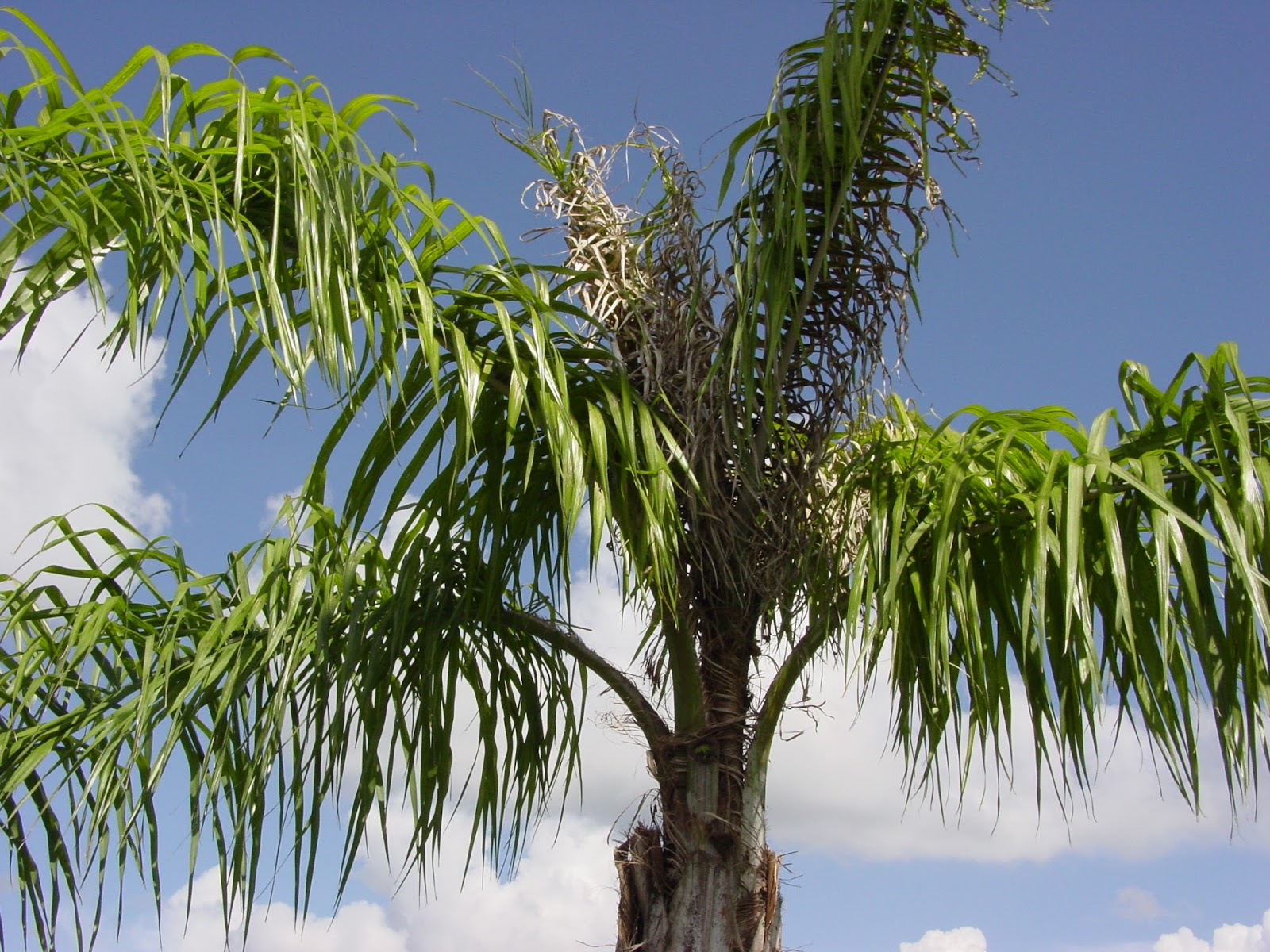
Is the spear and newest growth forming normally, or deformed? Frizzletop (manganese), hookleaf or a fused spear (boron), or a stalled spear. A stalled or dead spear is terminal regardless of the rest of the canopy.
Where a symptom appears tells you which axis it belongs to. A thin or missing canopy routes to Fullness. Discoloration on the old, lower fronds routes to Color. Small, deformed, or unopened new growth routes to Fullness. No symptom is counted twice.
The lowest-of rule, in action
The watchlist overlay
A palm can grade Normal and still be watched.
After the two-axis grade, we run a watchlist check for a sign, a structural concern, or a declining trend.
What puts a palm on the watchlist
- A Ganoderma conk
- Lethal bronzing indicators
- Palmetto weevil signs
- Stem cracks or char
- A grade dropping visit over visit
Grade, tier and target
Three different things. One scale grades every palm.
The palm's condition
Normal, Fair, Poor, Critical or Dead, from the lower of Color and Fullness.
The work performed
Monitor, Standard or Advanced. Compare the tiers.
The goal set with the client
80 percent (Normal) is our default. Some clients set a higher target of 90 percent and pay for it. A target is a management target, never a guarantee.
A grade carries no automatic response. An over-pruned palm can read Critical and need only the program it is already on. A palm can read Normal and be terminal because of a Ganoderma conk.
Method and sources
The proportion (live-frond-ratio) method draws on palm visual-health research (Blair et al. 2019) and the percent-crown-missing method in the broader arborist standard (i-Tree). New-growth diagnostics follow UF/IFAS (Broschat, EP264 Boron and EP267 Manganese). The five-tier scale is Ptolemy's written condition standard. The numeric cuts are a license-bound judgment signed by an ISA Certified Arborist. See our resources and references.
Start with the free master plan
See the palms on your property rated this way.
Our trained field team maps and grades every palm. An ISA Certified Arborist reviews the findings and writes one plan for 10 years.
Request the free master plan