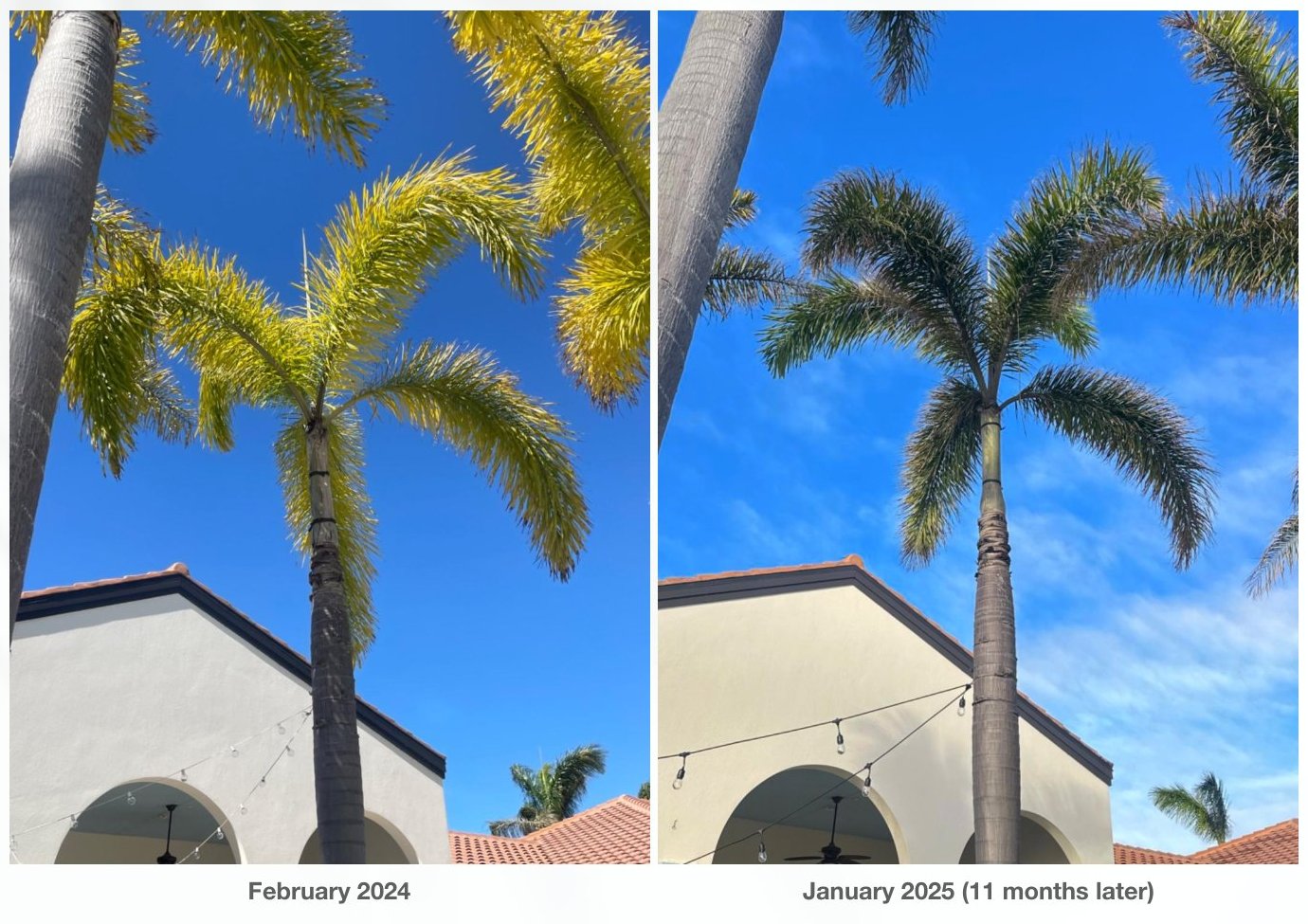
Root flares and planting depth
The flare tells the story before the canopy does.
A buried flare, a girdling root or a mulch volcano can hide for years before the crown shows it. When a palm or tree declines and nothing above ground explains it, we look at the base before anyone writes a nutrient or disease diagnosis.
Planting depth
How deep it sits decides whether we fix it or replace it.
A palm grows every root from one zone at the base of the trunk, and new roots never thicken. That zone belongs at grade to about 1 in below. Buried deeper, the roots run short of oxygen and iron and manganese deficiency follow. Even 1 in too deep in a container can start chronic iron deficiency.
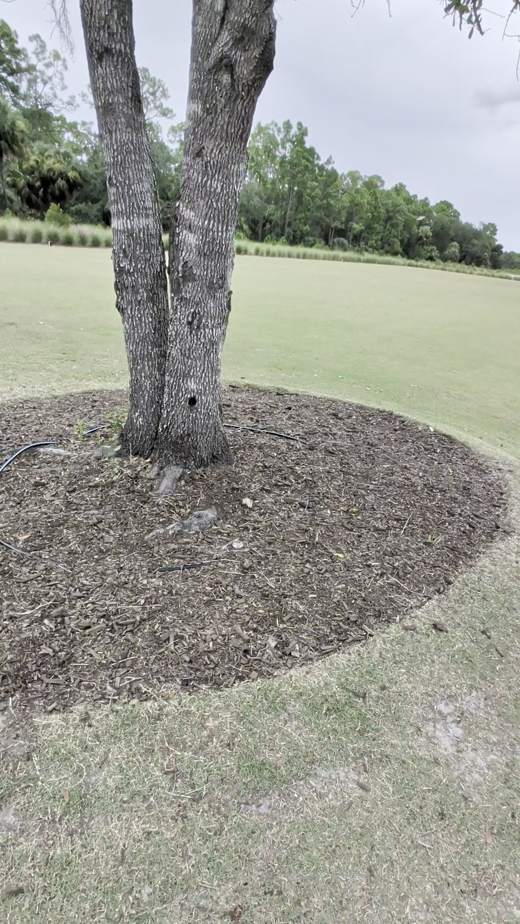
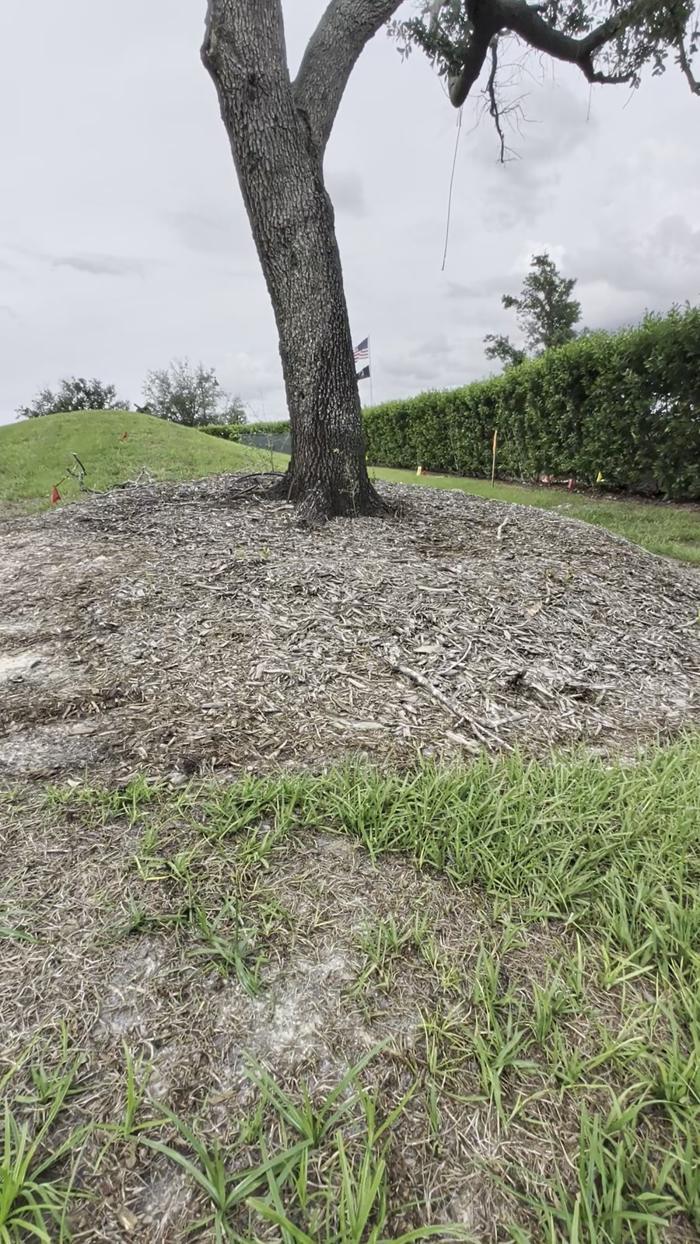
A palm planted too deep looks like a telephone pole going into the ground, with no swelling at the base. A tree’s root flare belongs at or just above grade. If you cannot see the flare, the tree is too deep. On a new install, we report a buried flare to the installer the same day.
| Palm root zone | Grade | What it means |
|---|---|---|
| At grade to about 1 in (2.5 cm) | Normal | Correct depth. |
| 1 to 2 in (2.5 to 5 cm) too deep | Fair | Excavate the backfill or reset the palm. |
| 2 to 4 in (5 to 10 cm) too deep | Poor | Concerning, still correctable. |
| 4 to 6 in (10 to 15 cm) too deep | Poor | Correct urgently. |
| More than 6 in (15 cm) too deep | Critical | The palm cannot root up to the new grade. Plan to replace it. |
Root collar work
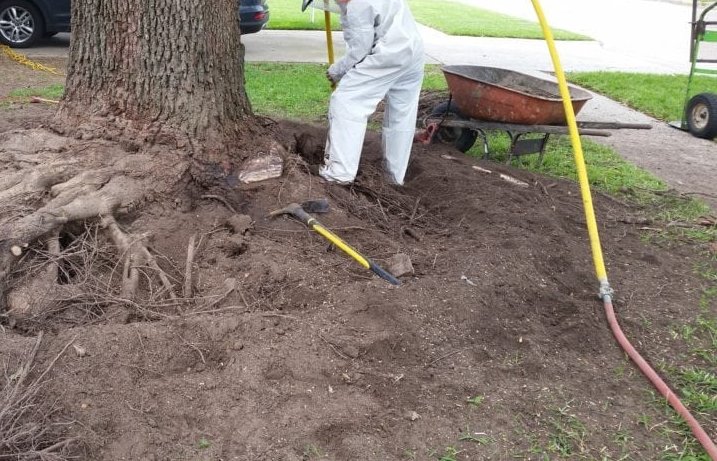
Air, not shovels, around the roots.
Excess mulch and soil piled against a trunk keeps the bark wet and starves the roots of oxygen. An air spade blows the soil away without cutting roots. We expose the flare, remove girdling roots, and correct the mulch.
Every dig starts with a Sunshine 811 ticket, placed by the company doing the digging at least two full business days ahead. You never make that call. 811 marks public lines only, so private lines such as irrigation and landscape lighting are the owner’s to mark.
In the ground
What we do below grade.
Hand tools or an air spade take the soil off the flare and upper roots without tearing them. We read planting depth, girdling roots and collar rot, then bring a buried flare back to grade and correct the mulch.
A palm buried up to 6 in (15 cm) gets the backfill dug off its root zone, or it is reset. Deeper than that is a replacement conversation.
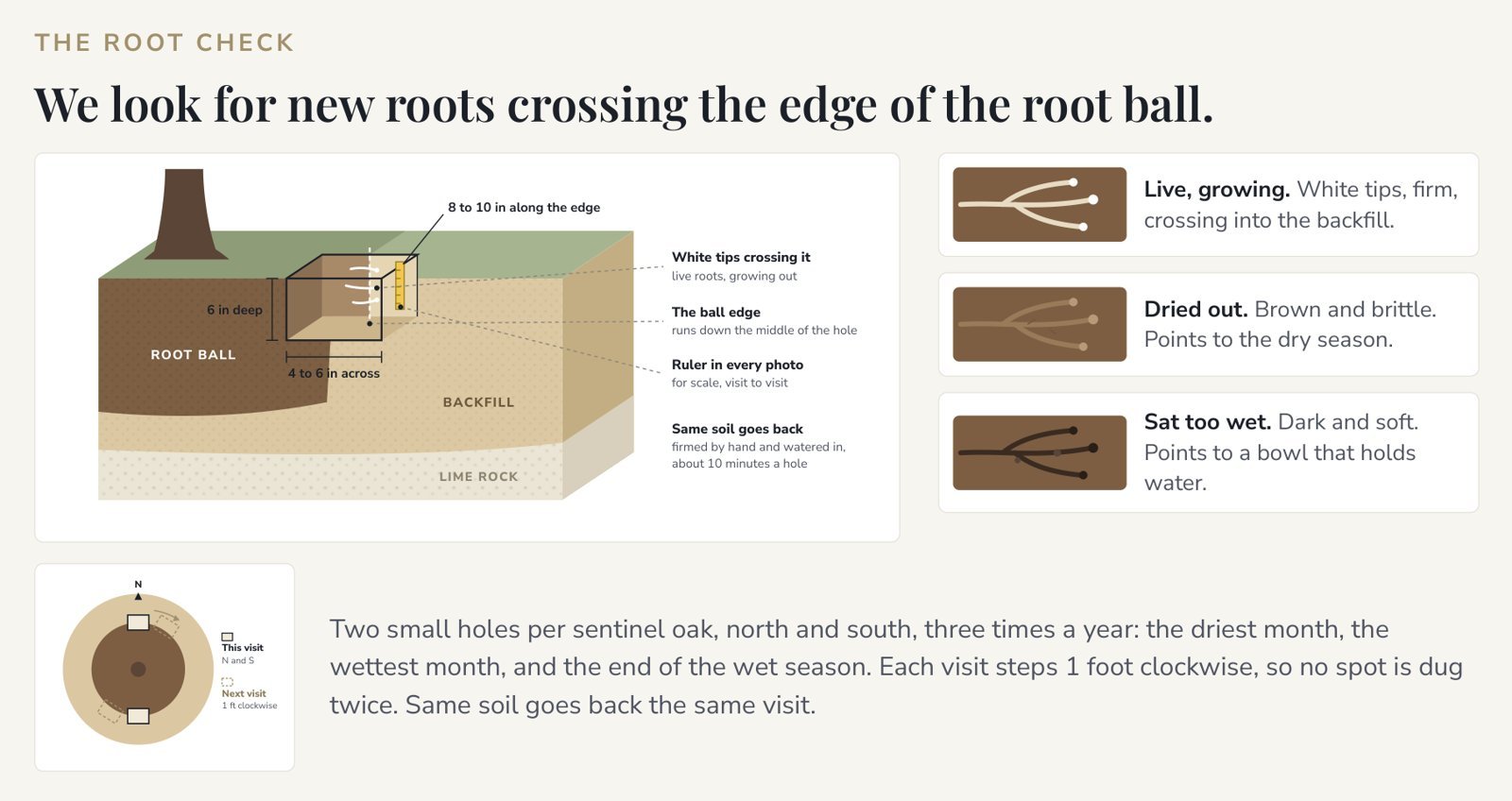
Where the penetrometer reads over 300 psi at the ball edge and 3 ft (0.9 m) out, we loosen the ground beyond the ball with an air spade. After an 811 ticket. Never during a drought.
Roots exposed by air, water or hand and cut clean with a saw or lopper. No chain trencher or excavator. No cut closer than 5 times the trunk diameter, and a risk assessment comes before any structural cut.
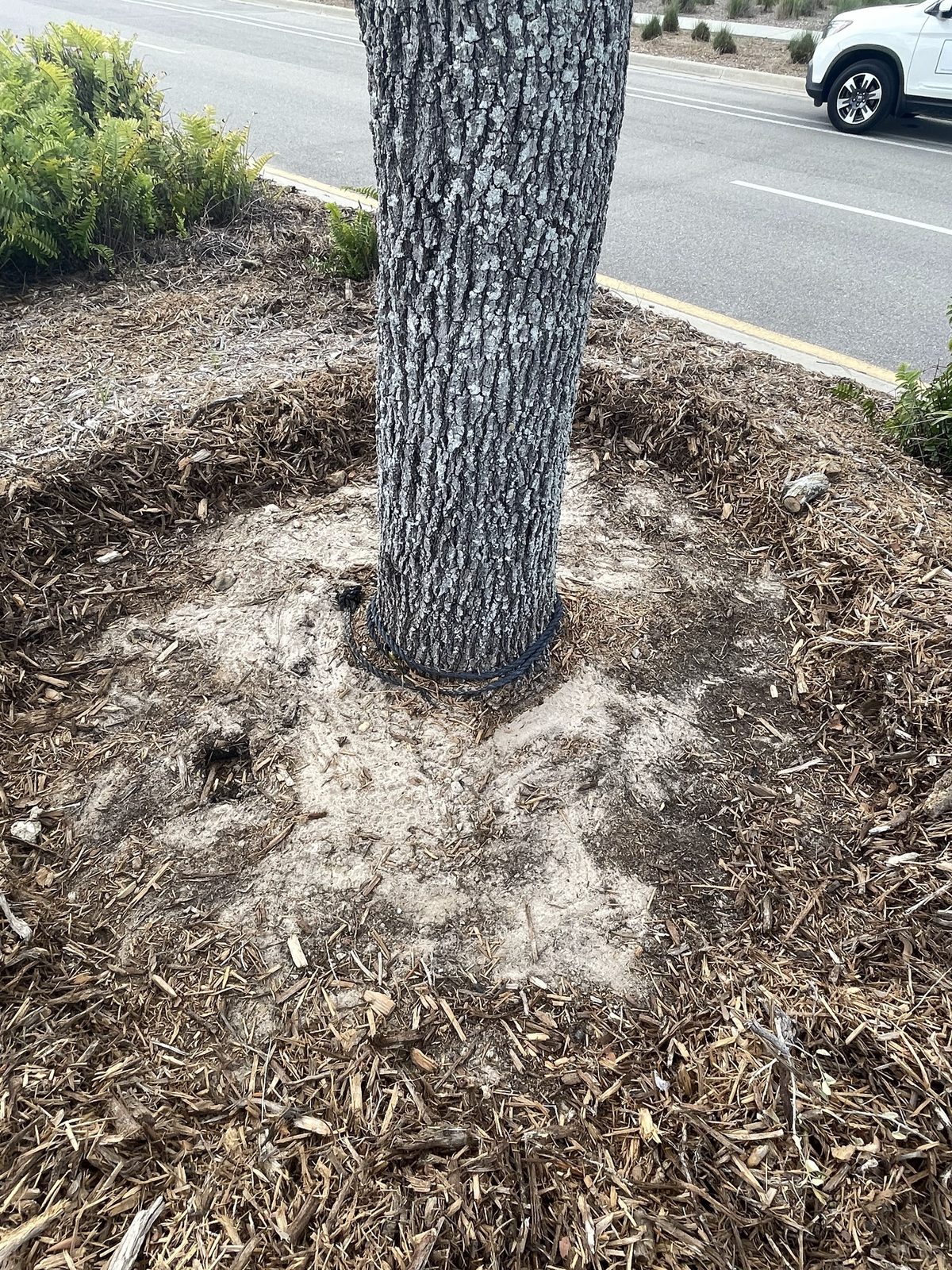
Chapter takeawayIf you cannot see the flare, the tree is too deep.