
Lightning protectionProtect
Lightning protection for high-value trees.
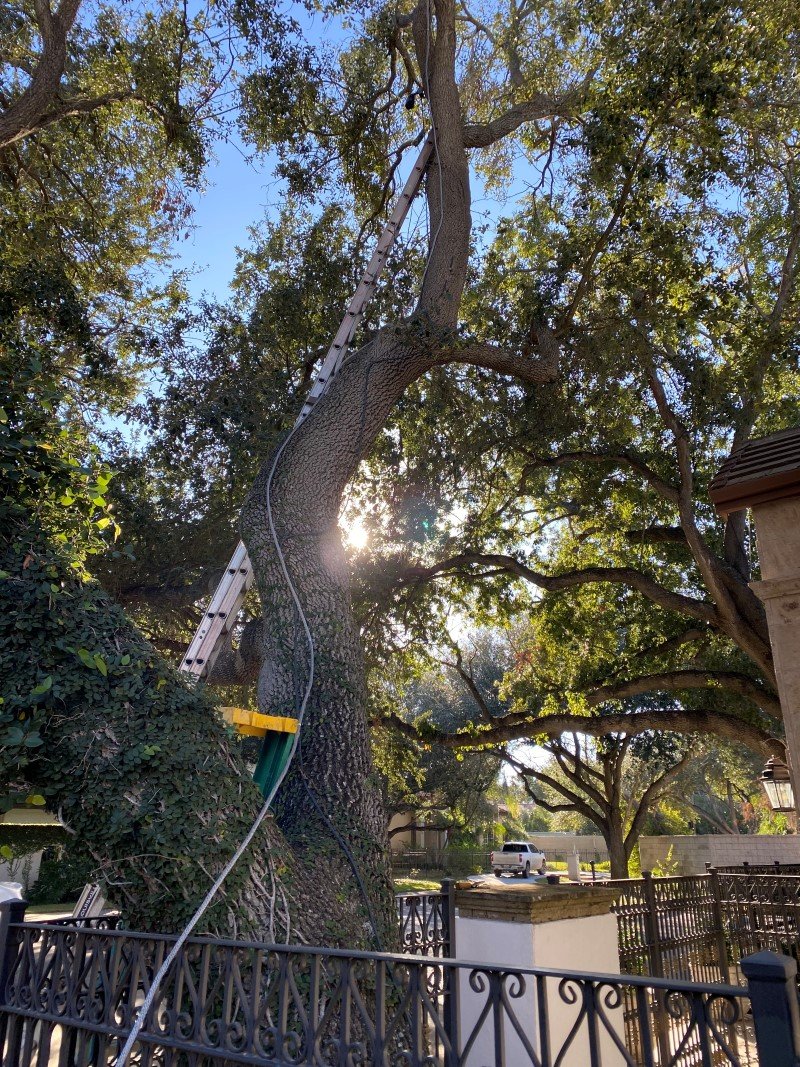
A conductor system gives a strike a preferred path to ground, so it is less likely to damage the tree, flash to a nearby building or throw debris.
- Standard
- ANSI A300 Part 4
- Candidates
- Trees within 10 ft of a structure
- Conductors
- Copper, bronze or stainless
- First
- A basic (Level 2) risk assessment
What we see in the field
Tall, isolated, and close to the building.
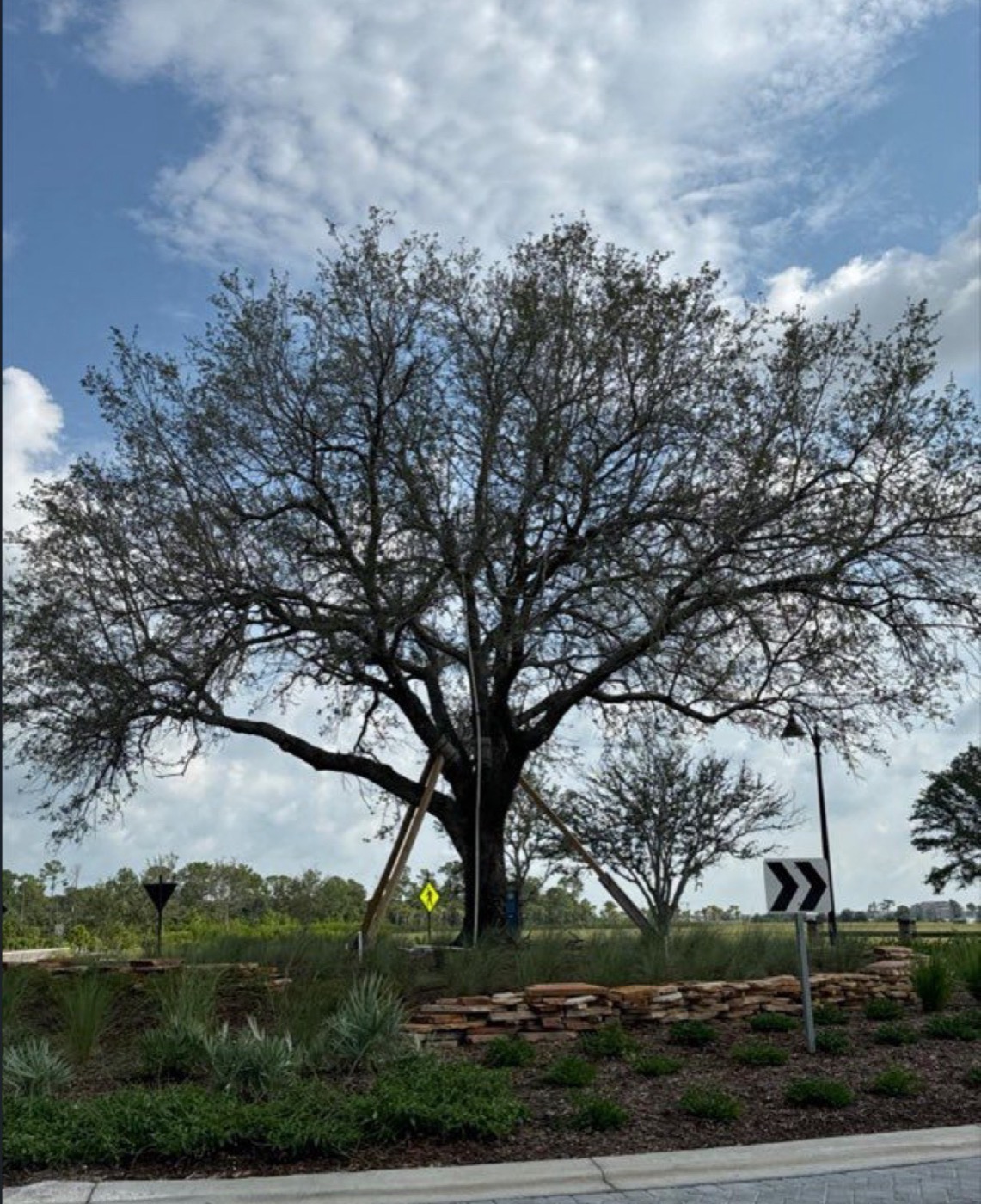
Strike risk rises with height and isolation. The trees we look at: trees within 10 ft of a structure, trees of historical interest or unusual value, tall trees in parks and recreation areas, and isolated trees on open ground or a golf course. In published susceptibility tables, oak rates high, pine and maple moderate.
A system is for a tree in sound health that is worth protecting. A tree that fails its risk assessment, or is in poor health, does not get one.
How we do it
Assess, specify, install, maintain.
- Assess the tree
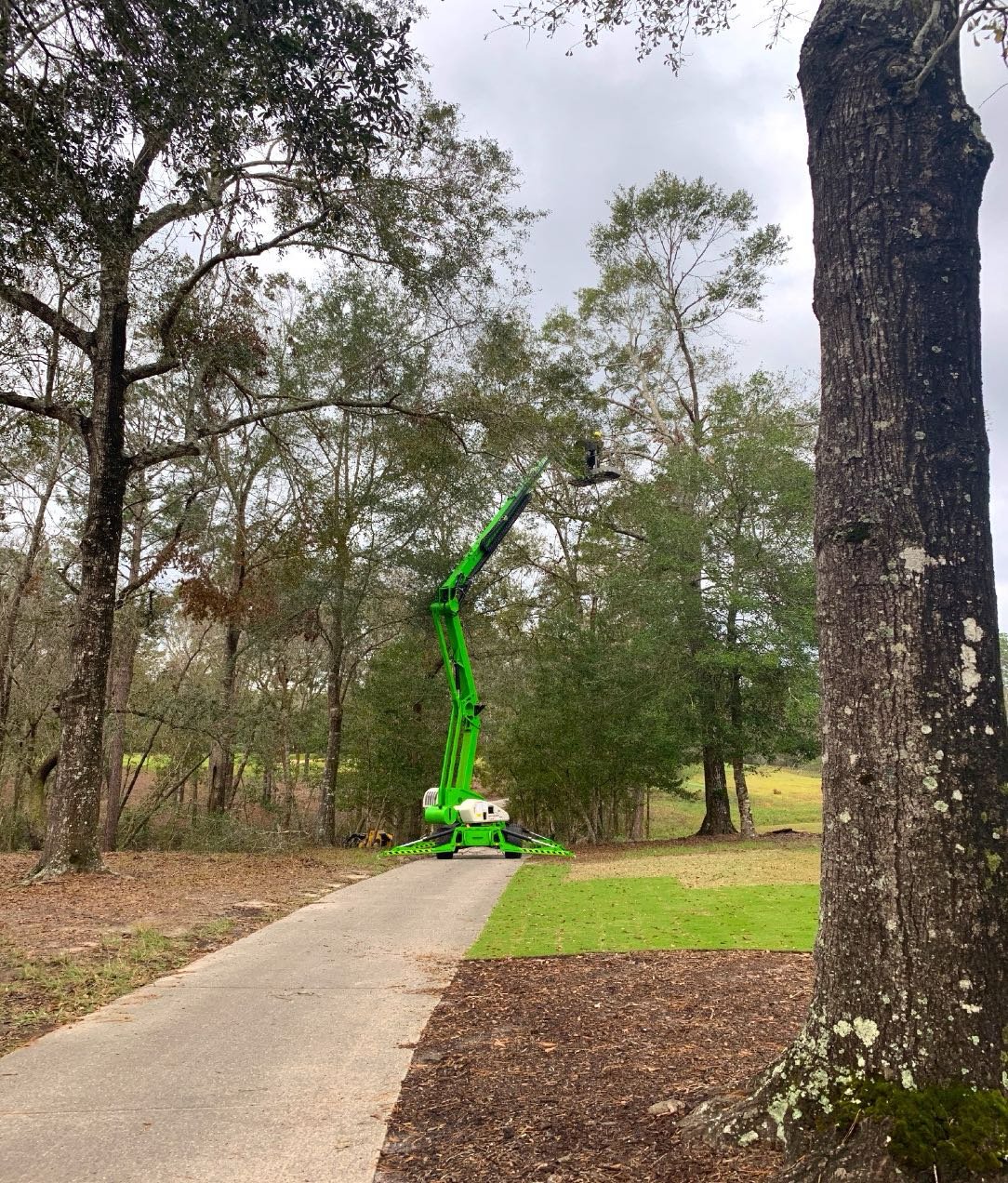
Height, isolation, value, distance to structures, and a Level 2 risk assessment of its health and structure.
- Specify the system
Primary conductor top to ground, branch conductors to major leaders, bonding to any metal in the tree, and grounding.
- Install to A300 Part 4
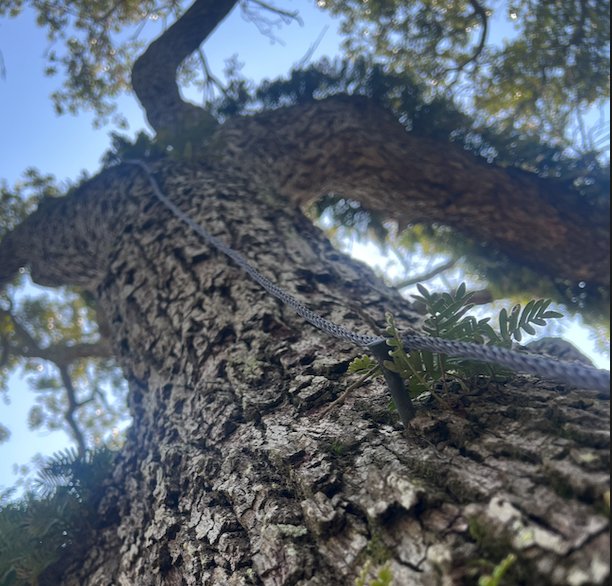
Components made for tree systems. Standoffs into sound wood. Connectors with 1 to 1.5 in of overlap; clamp-type within 3 ft of the soil.
- Bond and check
Support hardware bonded before the system is called complete.
- Inspect over time
Conductors can last over 50 years, but the system is checked and extended as the tree grows.
What is included
What a lightning system covers.
Assessment first
A basic (Level 2) tree risk assessment, so the system goes only on a tree in sound health.
A specified system
An ISA Certified Arborist specifies the system for the tree, its position and the structures around it.
Air terminal and conductors
A manufactured blunt terminal preferred. Copper conductors of at least 0.022 sq in total cross-section, top to ground, with branch conductors as needed.
Bonding
Every metal object in the tree, such as a support cable, is bonded to the system. Copper never touches galvanized steel.
Grounding
Ground rods at least 1/2 in by 8 ft (5/8 in preferred in hard soil), or a copper ground plate, clamped with at least two bolts.
Periodic inspection
Deteriorated parts replaced, overgrown fasteners reset, and the system extended upward as the tree grows.
Request a lightning assessmentbuild it into a 10-year Master Plan
Standards we work to
Built to the national tree standard.
Our lines
- Not installed on a tree that fails its risk assessment or is in poor health.
- No aluminum or unclad steel in the working system.
- Support hardware in the tree is bonded before the system is called complete.
- A protected tree is not a safe place to stand in a storm. The system protects the tree and nearby structures, not people.
- It does not protect irrigation controllers, lighting, cameras, well pumps or electronics in buildings.
The standard for tree lightning systems: materials, conductors, connectors, grounding.
The national lightning protection standard, cited with A300 Part 4 for trees within 10 ft of a structure.
Tree Lightning Protection Systems, part one: the reference behind our materials and bonding rules.
Sources: Ptolemy Lightning Protection spec; Smiley, Graham and Cullen, Tree Lightning Protection Systems (part one), ISA Arborist News, 2015; ANSI A300 Part 4; NFPA 780.
On the job
Lightning protection, in the field.
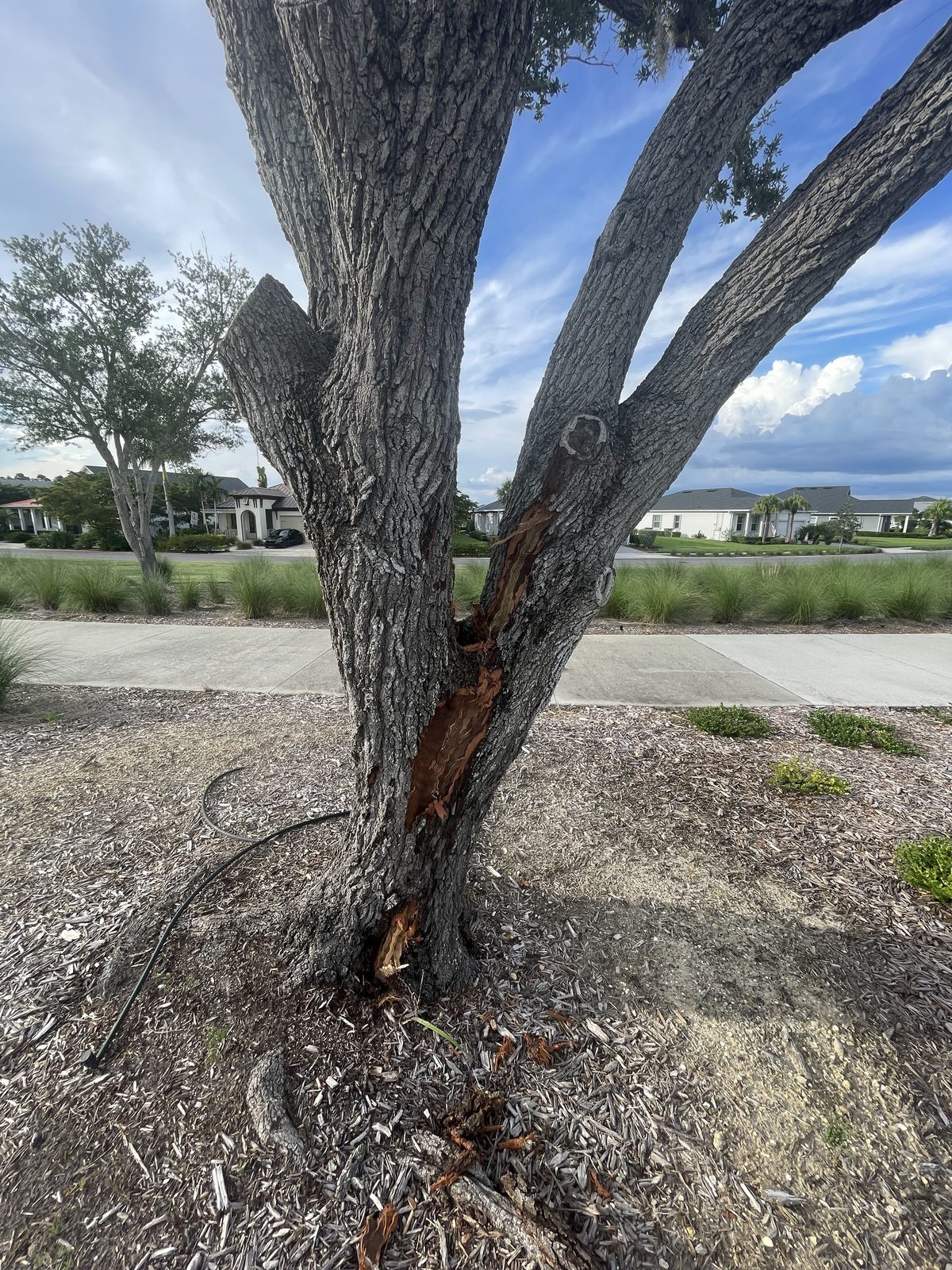
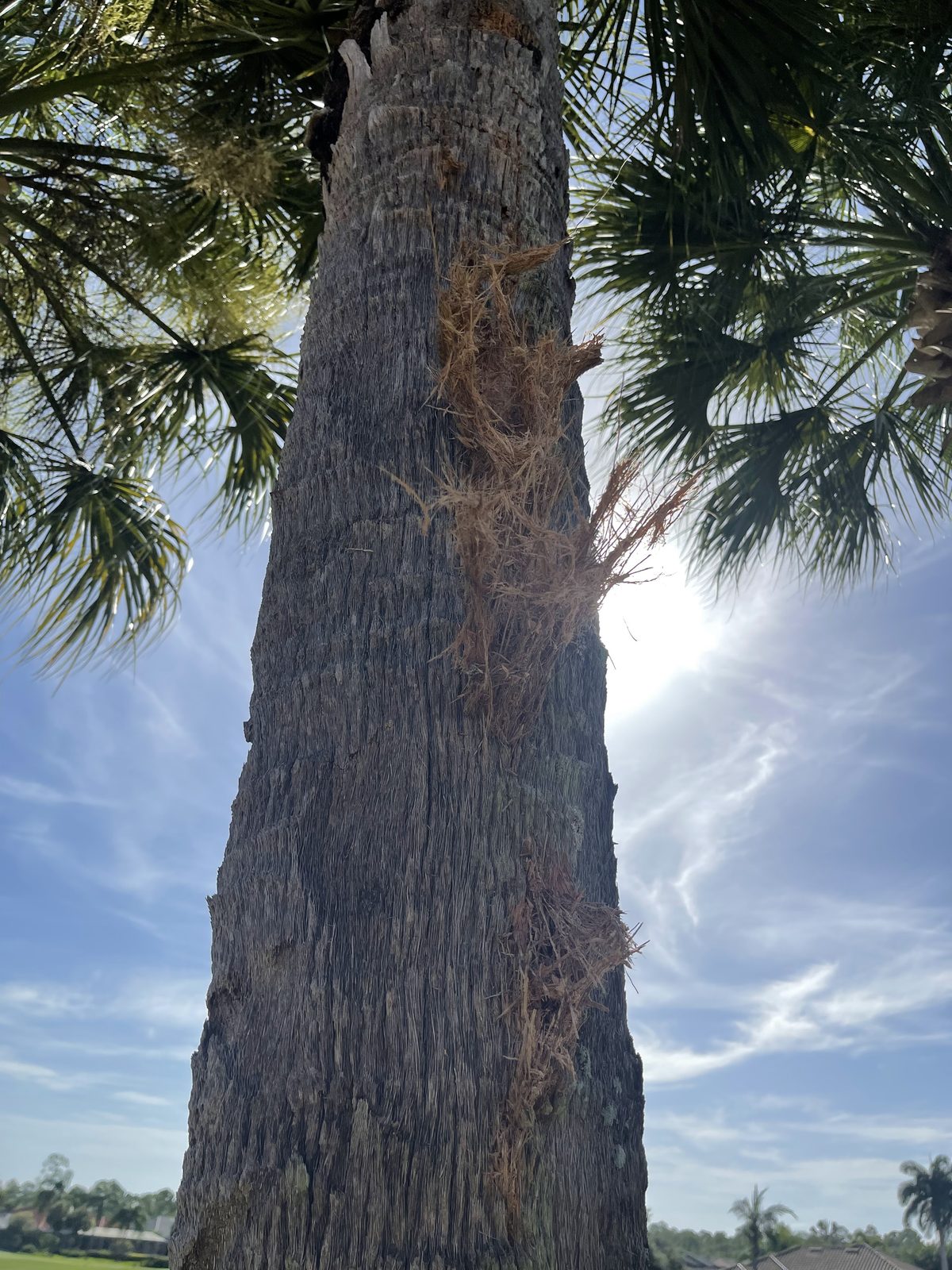
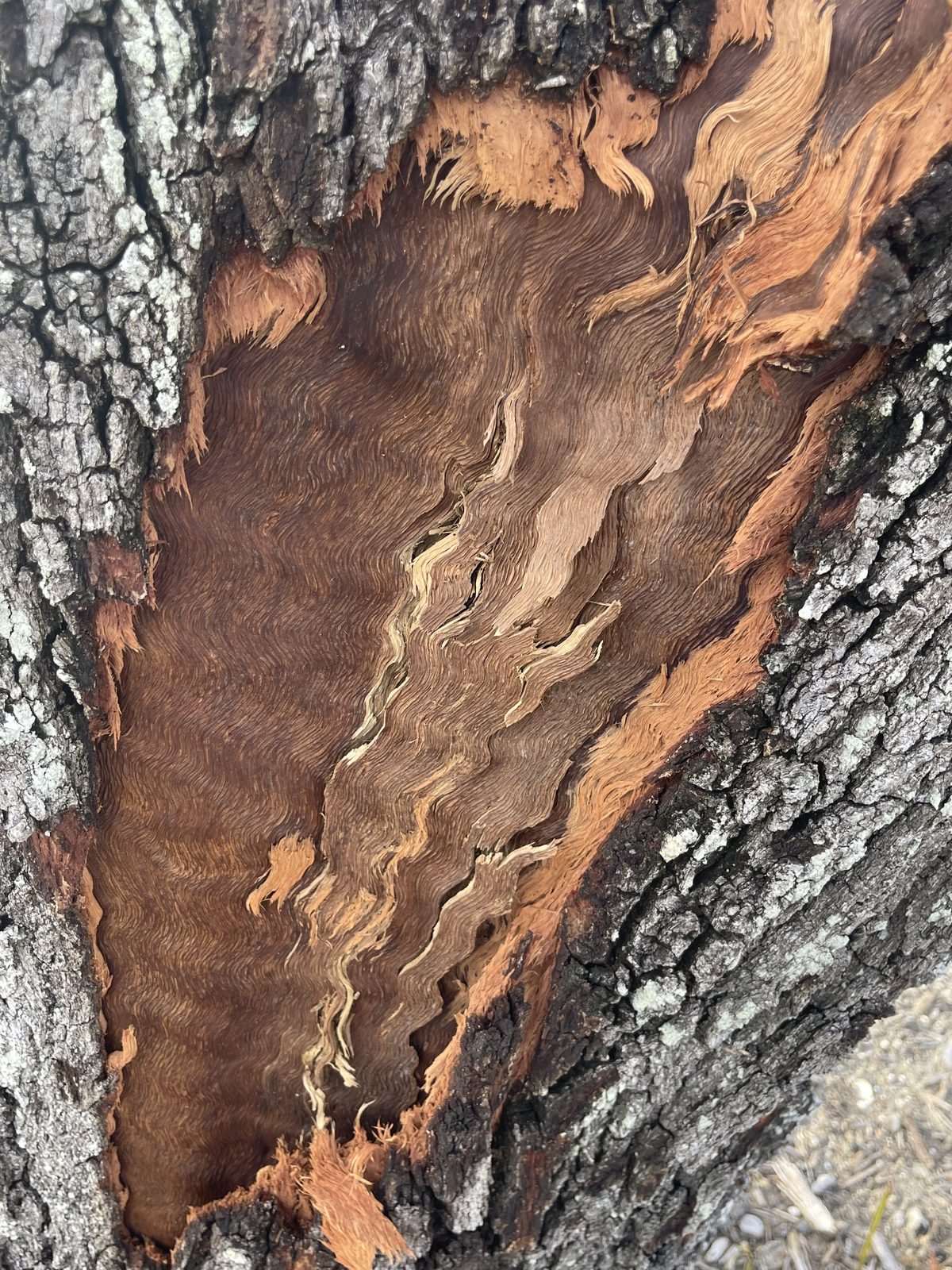
Strike damage
What a lightning strike leaves behind.
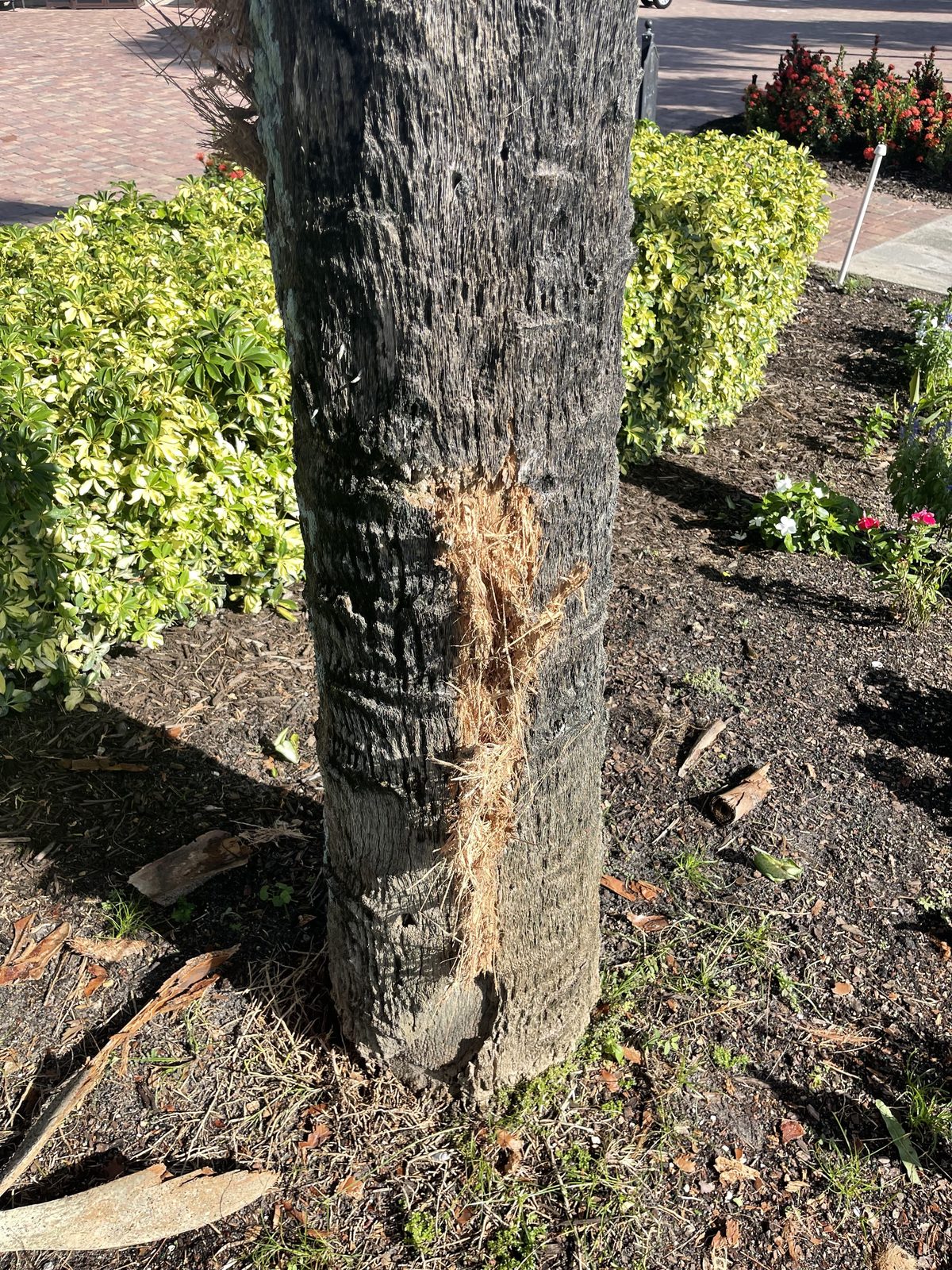
Field condition first. On a palm, the trunk splits along its length. On an oak, a long strip of bark is blown off on the way to the ground. Damage inside the trunk and roots can be worse than what shows.
Who it is for
Written for the people who answer for the trees.
Inside a plan
Lightning protection is a Protect service.
On a Palm and Tree Master Plan, lightning protection is added per job and priced by proposal. The protected trees are flagged in our GIS inventory, so their inspections stay on the calendar.
Questions
Questions managers and boards ask.
Still have a question? Call (239) 467-0142 or send a request.
Which trees should have lightning protection?
Does it make it safe to stand under the tree in a storm?
How long does a system last?
Our tree already has a support cable. Is that a problem?
Next step
Protect the tree you can never replace.
We assess the tree first, then specify a system to the national standard.