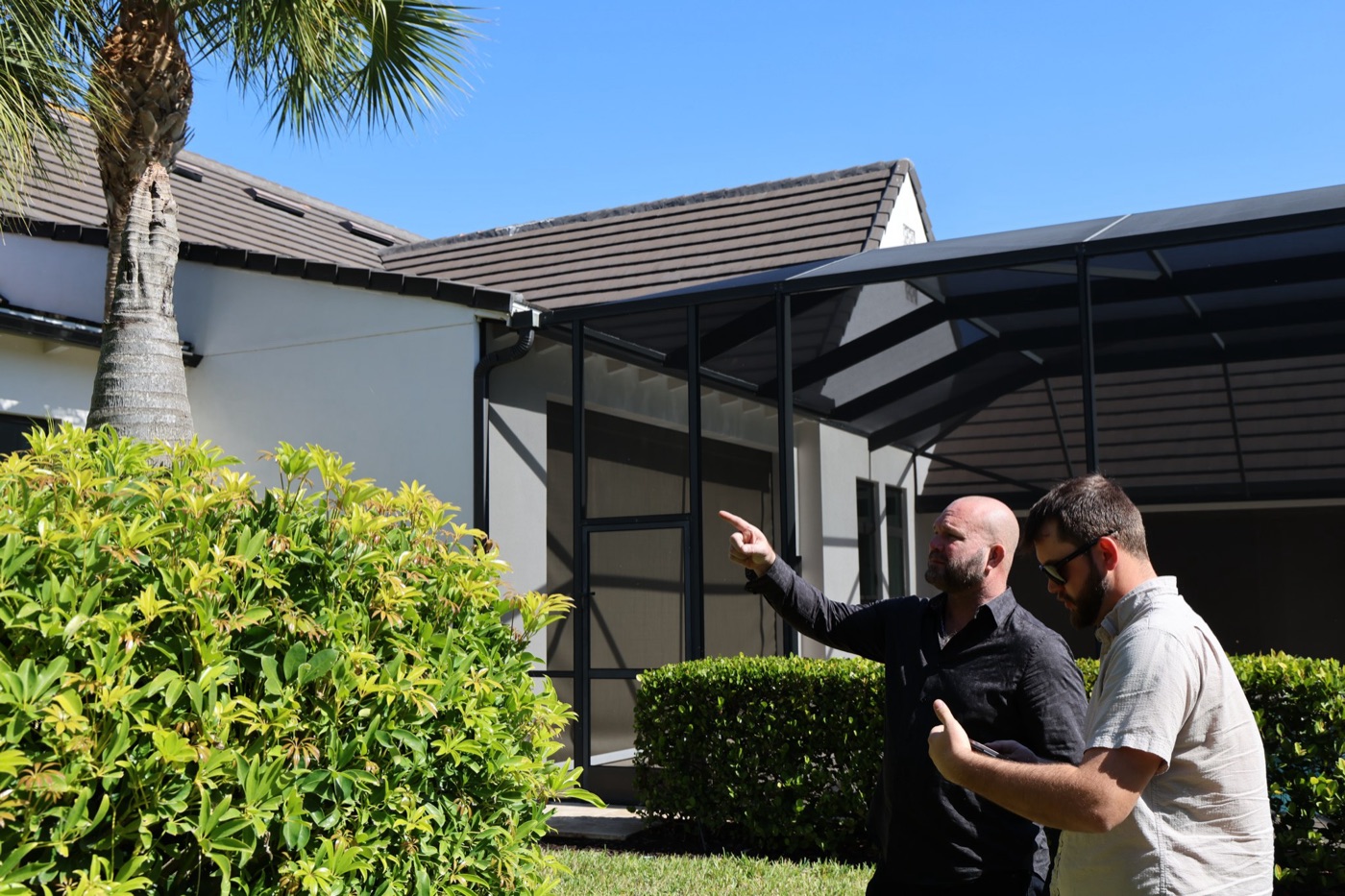
Tested on site
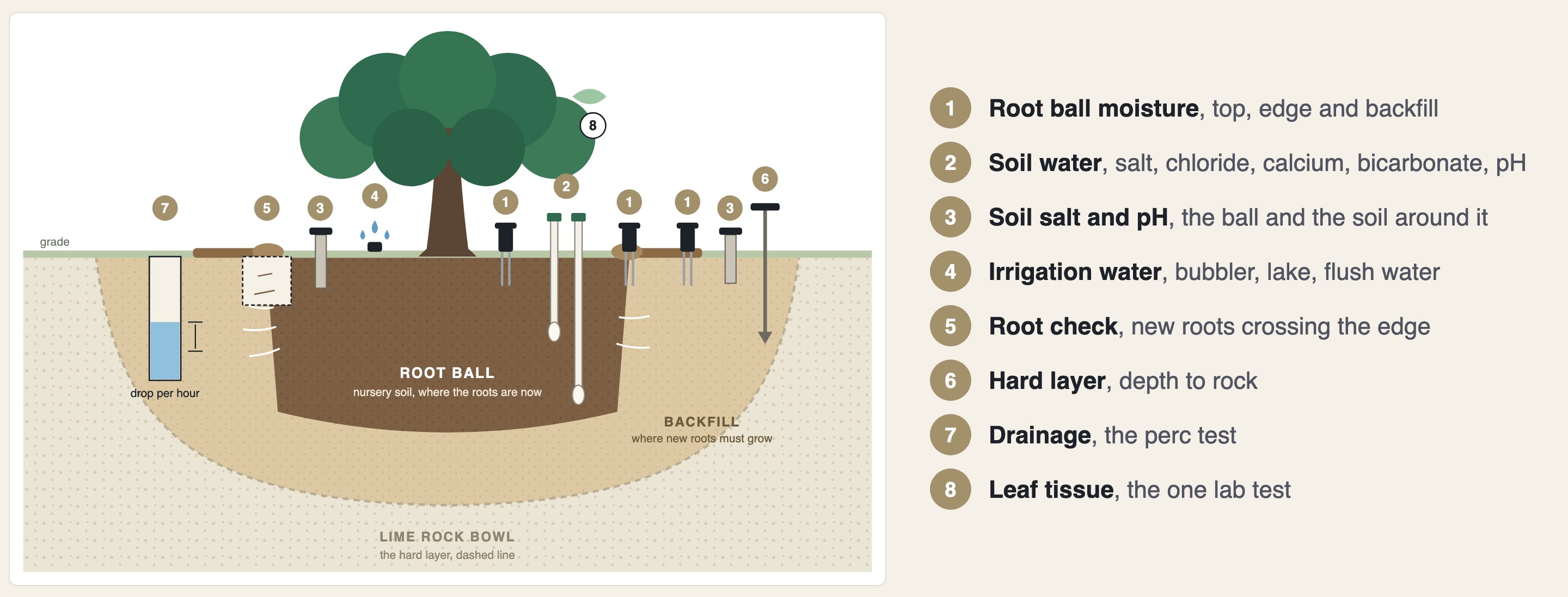
Eight tests we can run, and where each one happens.
From the root ball to the backfill to the hard layer underneath. Not every site needs all eight. The arborist picks the ones the case calls for. Seven are read in the field the same day. One goes to the lab.
A moisture probe at three spots: the top of the ball, its edge, and a foot into the backfill.
Samplers in the root zone pull out the water the roots live in and test salt, chloride, calcium, bicarbonate and pH.
The root ball and the soil around it read separately. They are rarely the same.
Lake, bubbler and flush source. A lake gets saltier as it drops in a drought.
Small holes at the ball edge show whether new roots are growing out, drying back or rotting.
A penetrometer reads how deep the soil goes before it hits 300 psi.
A hole down to the hard layer, filled and timed. Water standing the next day means it does not drain.
The one lab test in the set. It shows what the plant is actually taking up.
Chapter takeawaySeven are read in the field the same day. One goes to the lab.