
Soil, water and lab testing
What we test, and why.
Most palm and tree problems start where you cannot see them: inside the trunk, in the soil, and in the water. We look first, then test to confirm. An ISA Certified Arborist reads every result.
How we use a test
Look first. Test to confirm.
The field call comes first. It decides which test to run and what to sample. The lab then confirms it or corrects it. A lab can only test what it is sent, so the wrong sample gives the wrong answer.
“Everyone would feel better knowing if we have a contagious disease on our hands, or not.”
A landscape installer on a builder site, in an email to us- The palm or tree. Is a disease or pest behind the decline? Lab tests
- The soil. Can the roots grow, drain and reach the nutrients? Soil tests
- The irrigation water. What does every watering leave behind? Water tests
- Around a new or moved tree. Eight tests, from the ball to the hard layer. The eight tests
Inside the palm
A lab test before any disease call.
Several palm diseases look alike, and some look like a nutrient problem or plain stress. Testing is how no palm gets treated or removed on a guess.
Every result is reported as Positive, Not Detected or Undetermined. On a Master Plan at Protect what matters or the full program, assessments and taking samples come at no extra cost. Lab fees pass through at cost, with no markup.
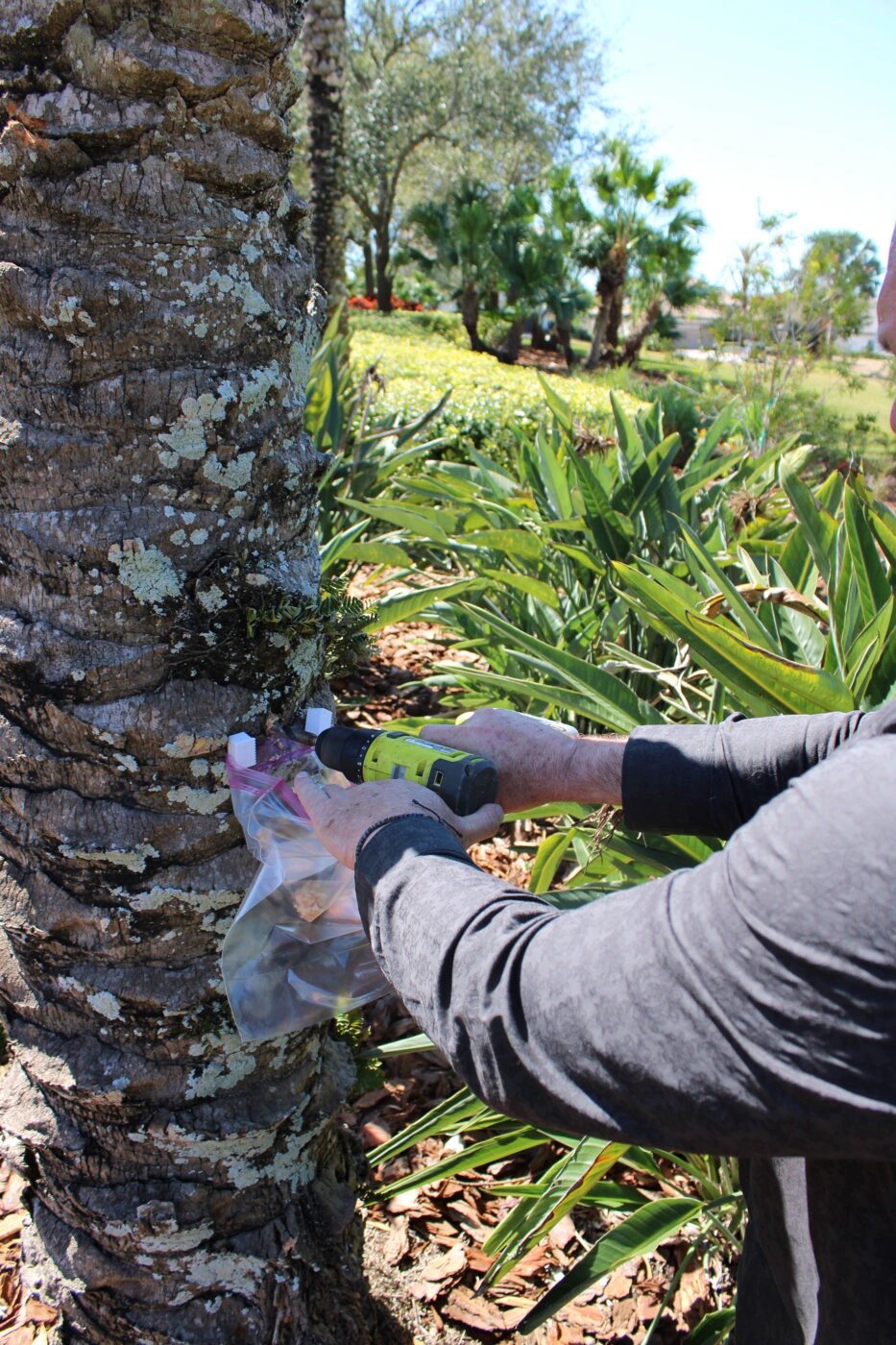
A core from the living trunk, tested by PCR at a UF/IFAS lab. We do not call lethal bronzing on looks alone.
Lethal bronzing guideIt looks the same as rachis blight. One is fatal, the other is not. Only a lab culture of the frond stem tells them apart.
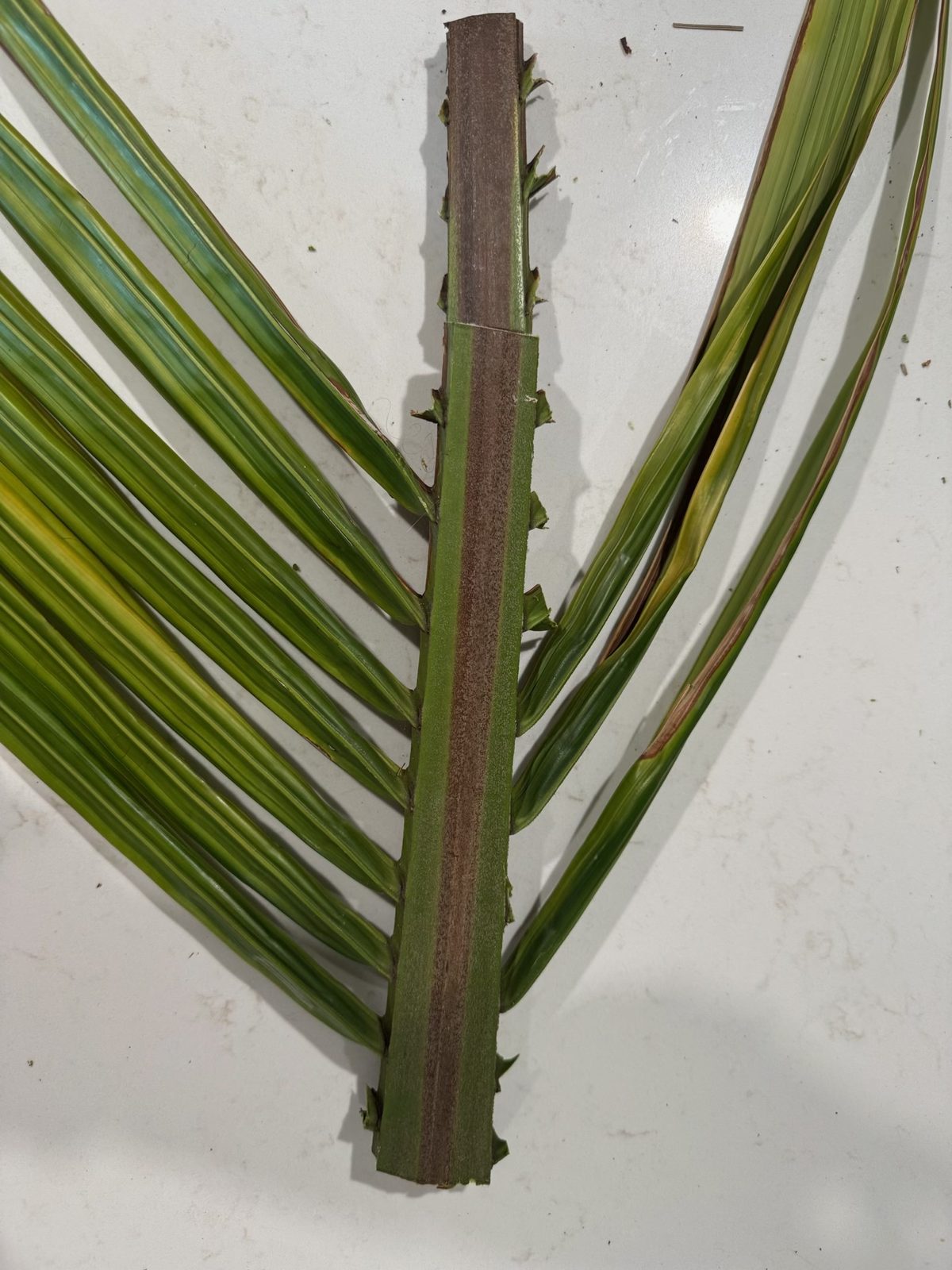
Fusarium wilt in the libraryA conk confirms it, so no sample is needed. With no conk and rot suspected, sawdust drilled near the soil line goes to the lab. The bit is sterilized between palms.
Ganoderma butt rot in the libraryA culture from the edge of the rot. A collapsing base is a safety call we make in the field, without waiting for the lab.
Thielaviopsis in the libraryUsually read by eye, from which fronds show it and how. A leaf tissue test when two deficiencies overlap.
Specimens identified by the UF/IFAS lab. Sticky traps in the canopy to catch the planthopper that spreads lethal bronzing.
Our written protocols“Can you send the [lab] Test Results directly to me so I can document?”
A commercial property manager. Yes: lab reports go to you with our written update, ready to file.What the lab told us
Four palms. Four different answers.
Each of these looked serious from the ground. The lab is what told us which ones were lethal and which were not.
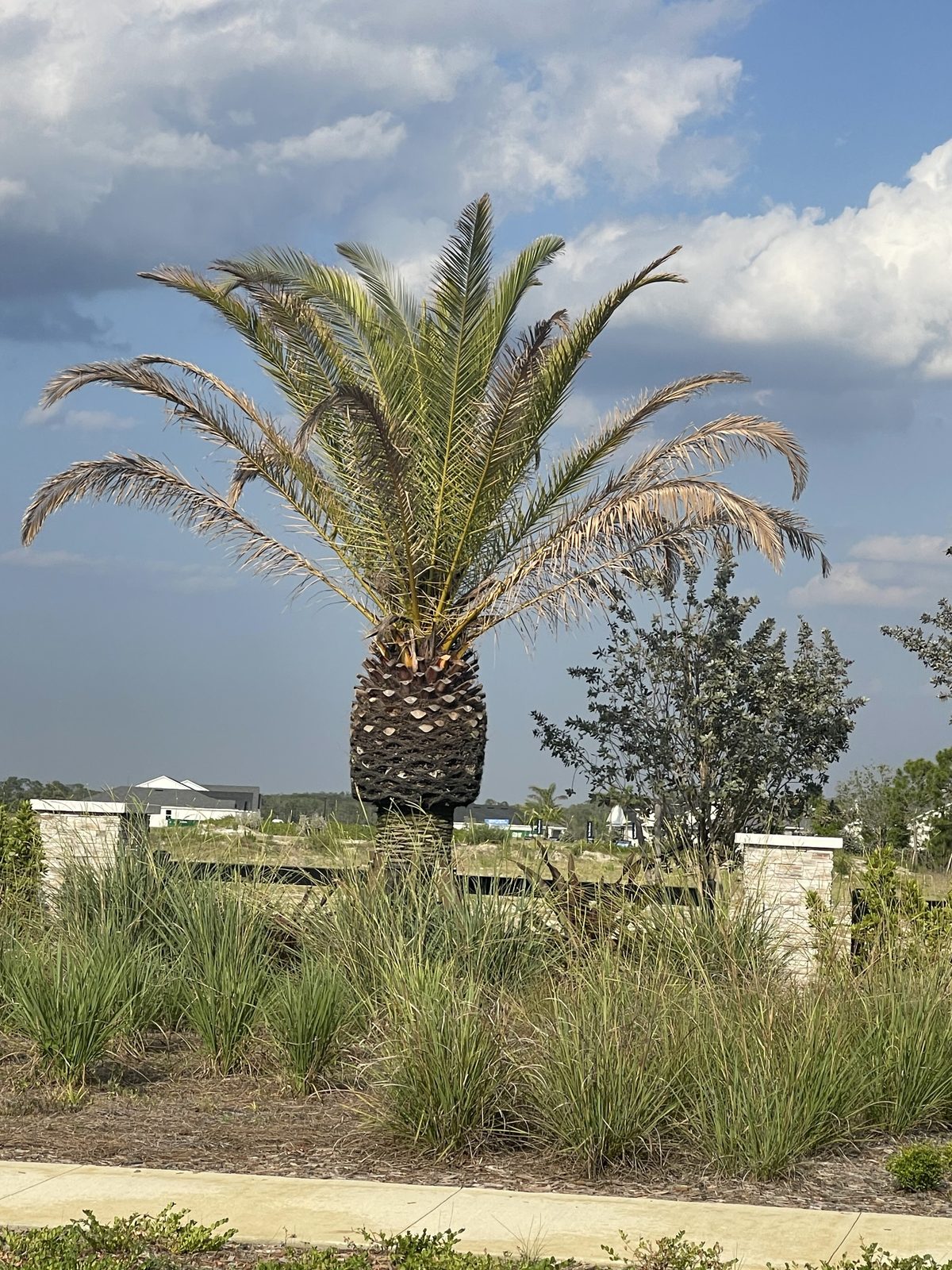
Canary Island date palm
- What we saw
- Browning lower fronds on a palm at a community entrance. The crew caring for it thought it needed water.
- What the lab found
- Positive for lethal bronzing, by PCR at a UF/IFAS lab.
- Why it matters
- Water would not have helped. A positive palm feeds the insect that spreads the disease to the palms around it.
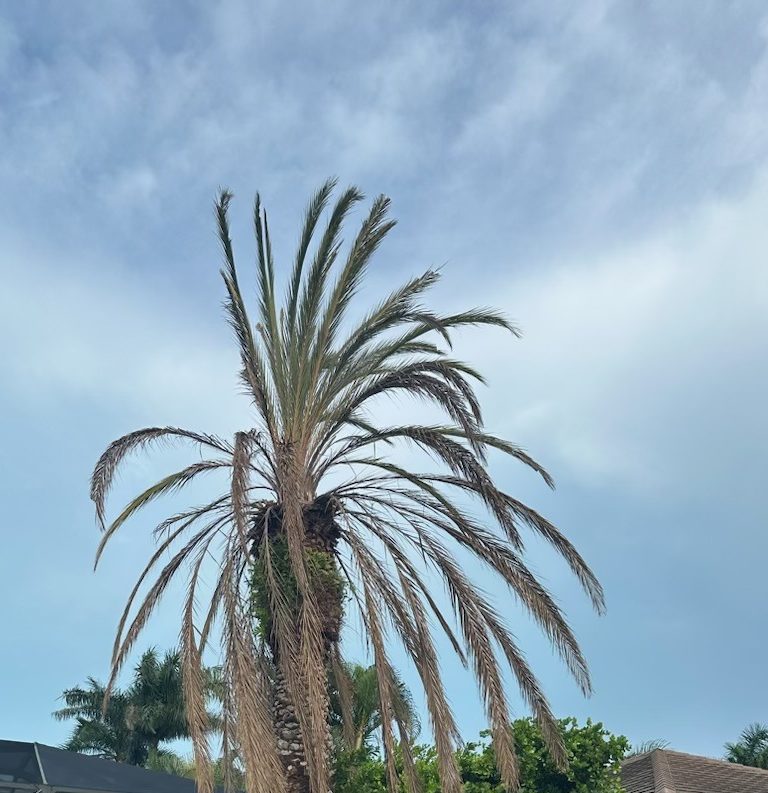
Date palm at a home
- What we saw
- A thin, drooping canopy on a date palm at a client’s home.
- What the lab found
- A sawdust sample came back Not Detected for Ganoderma, Fusarium and Thielaviopsis, and for lethal bronzing. A petiole sample then came back Positive for the pink rot fungus.
- Why it matters
- The first test found none of the killers in that sample. The second found the cause.
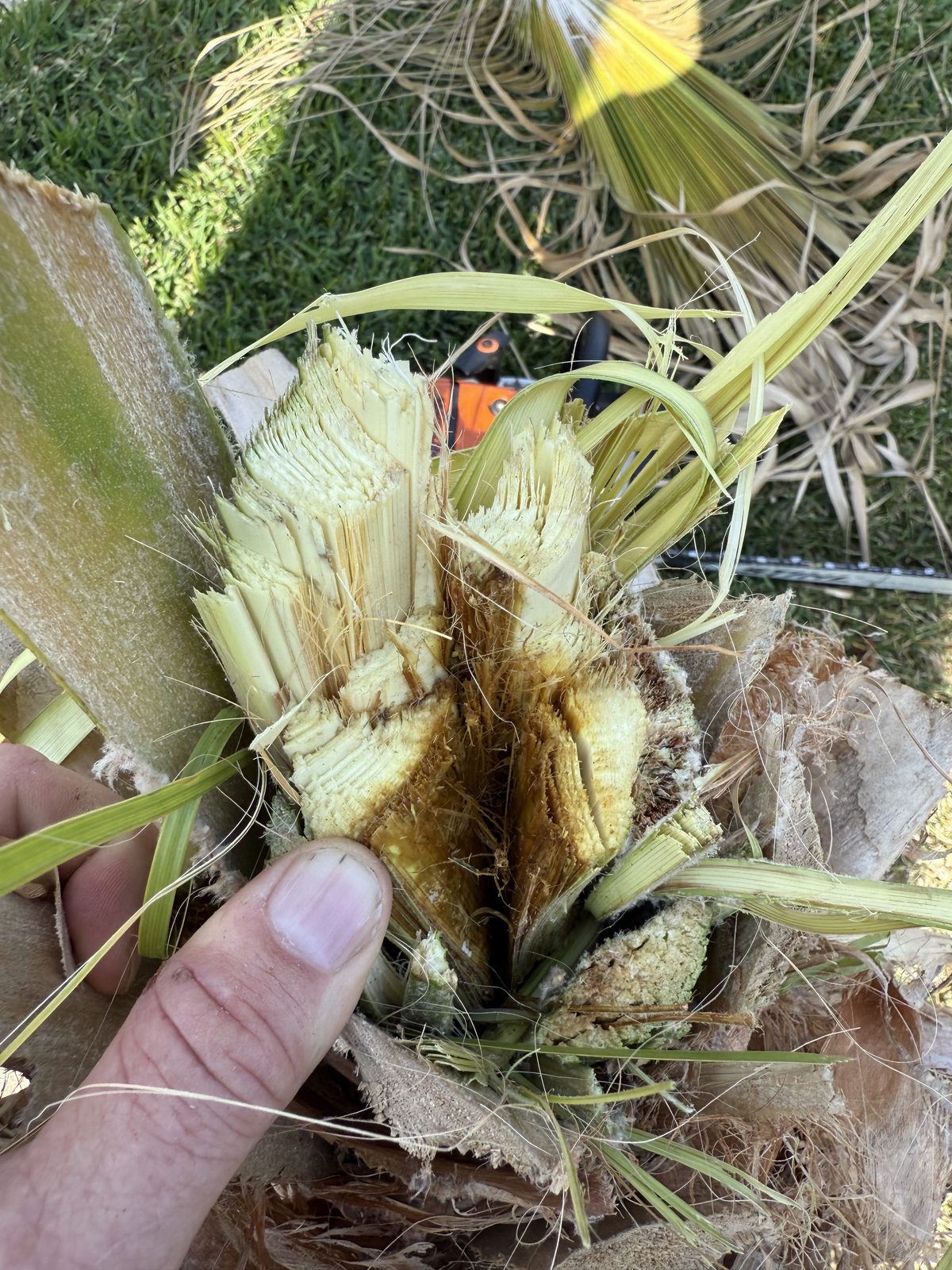
Washingtonia palms
- What we saw
- Two declining palms with dark, dead tissue in the bud and the trunk.
- What the lab found
- Pestalotia rachis blight, a leaf-stem fungus, on one palm. Lethal bronzing, Fusarium wilt and Thielaviopsis trunk rot were not detected on either.
- Why it matters
- The lab notes this fungus often follows other stress, especially wind damage.
Satake palm
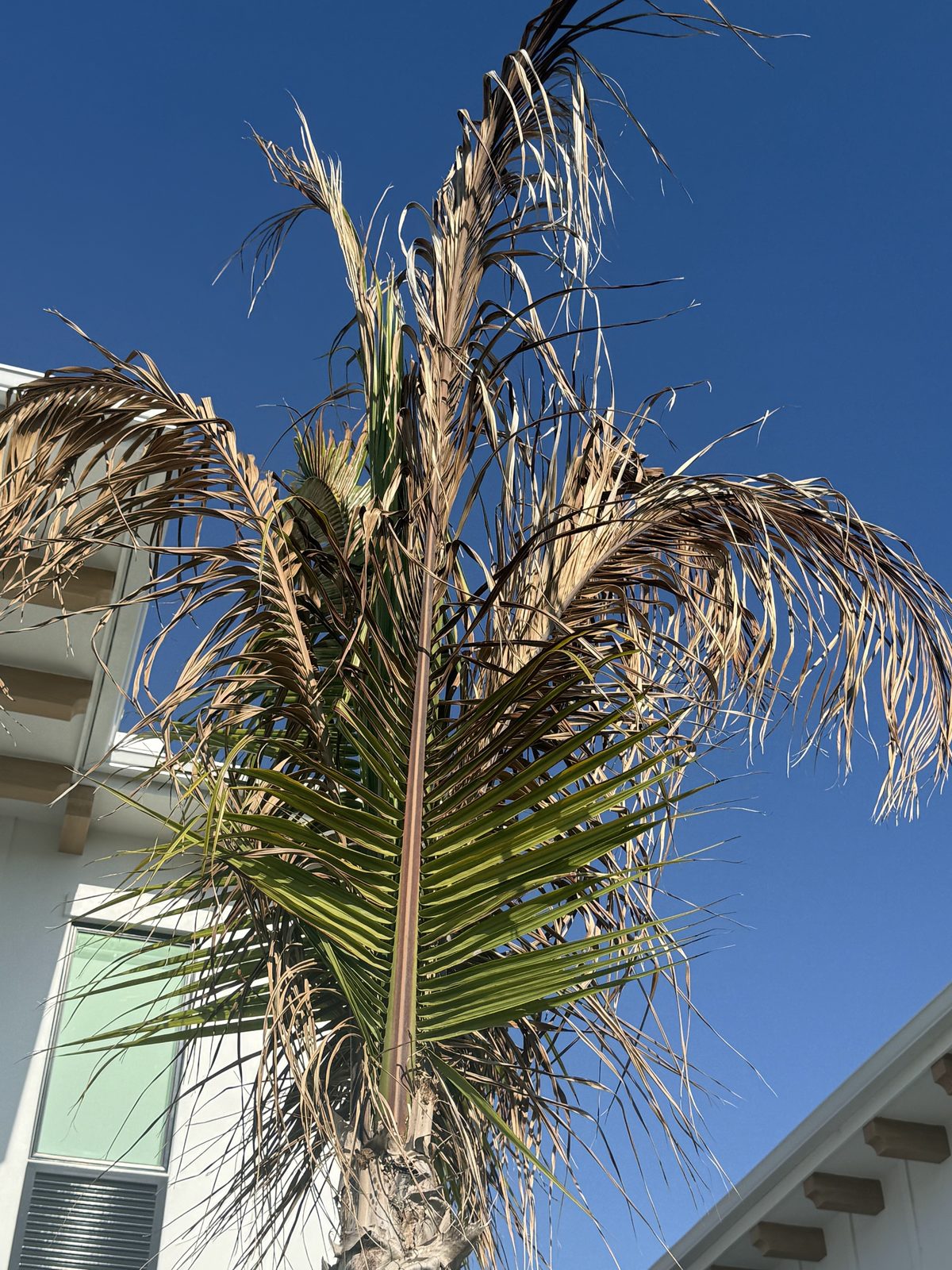
- What we saw
- A thin, browning canopy and dark tissue in the leaf stems.
- What the lab found
- Diplodia rachis rot, a secondary leaf-stem fungus. Lethal bronzing, Fusarium wilt and Thielaviopsis were not detected.
- Why it matters
- The lab noted the tissue was dark and degraded, which can make a pathogen harder to detect. Sampling early gives the clearest answer.
Results from UF/IFAS lab reports on file. Clients stay anonymous.
See it done
Sampling, start to finish.
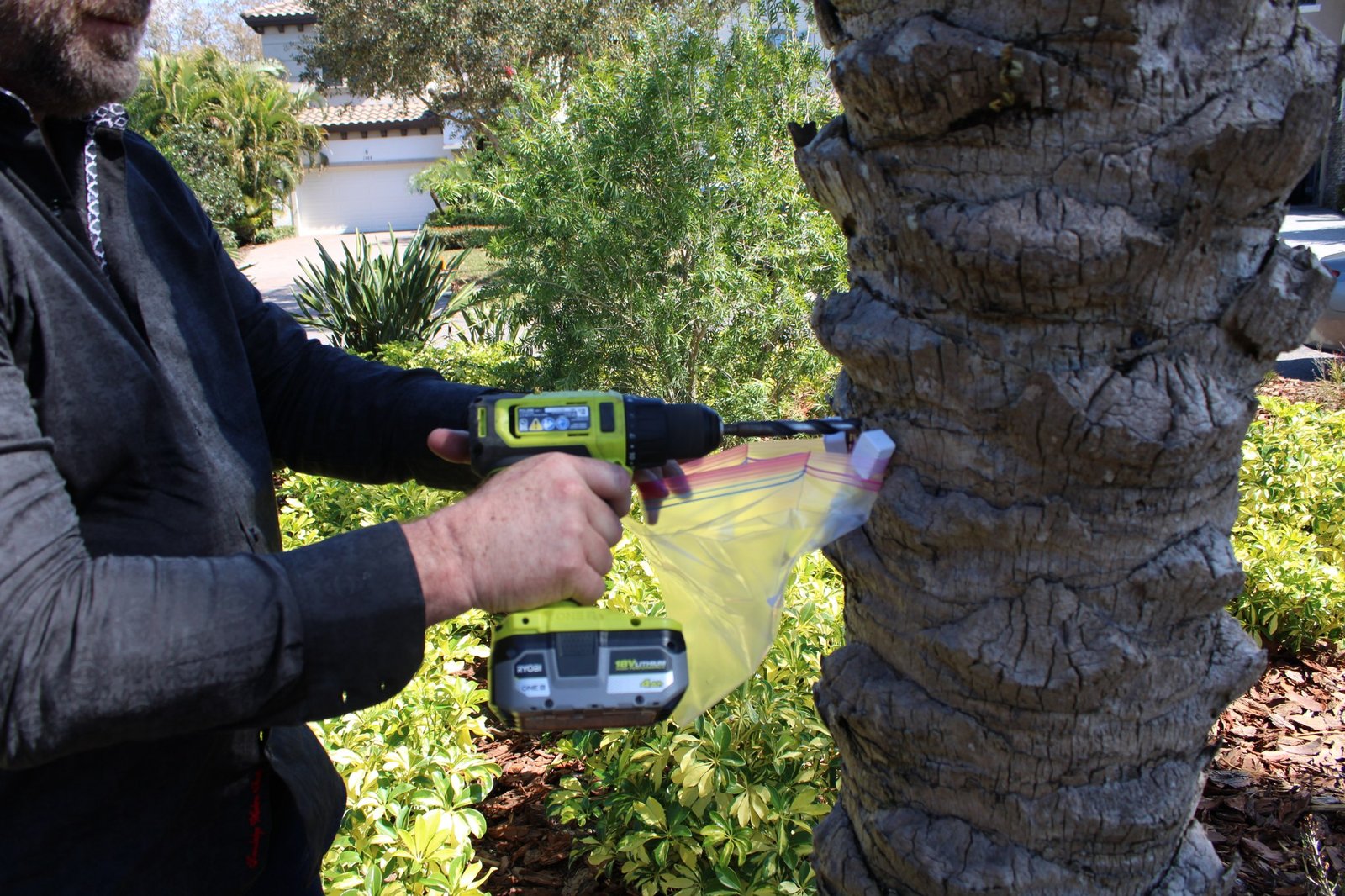
- SampleA clean plug from the trunk, or leaflet tissue from the crown.
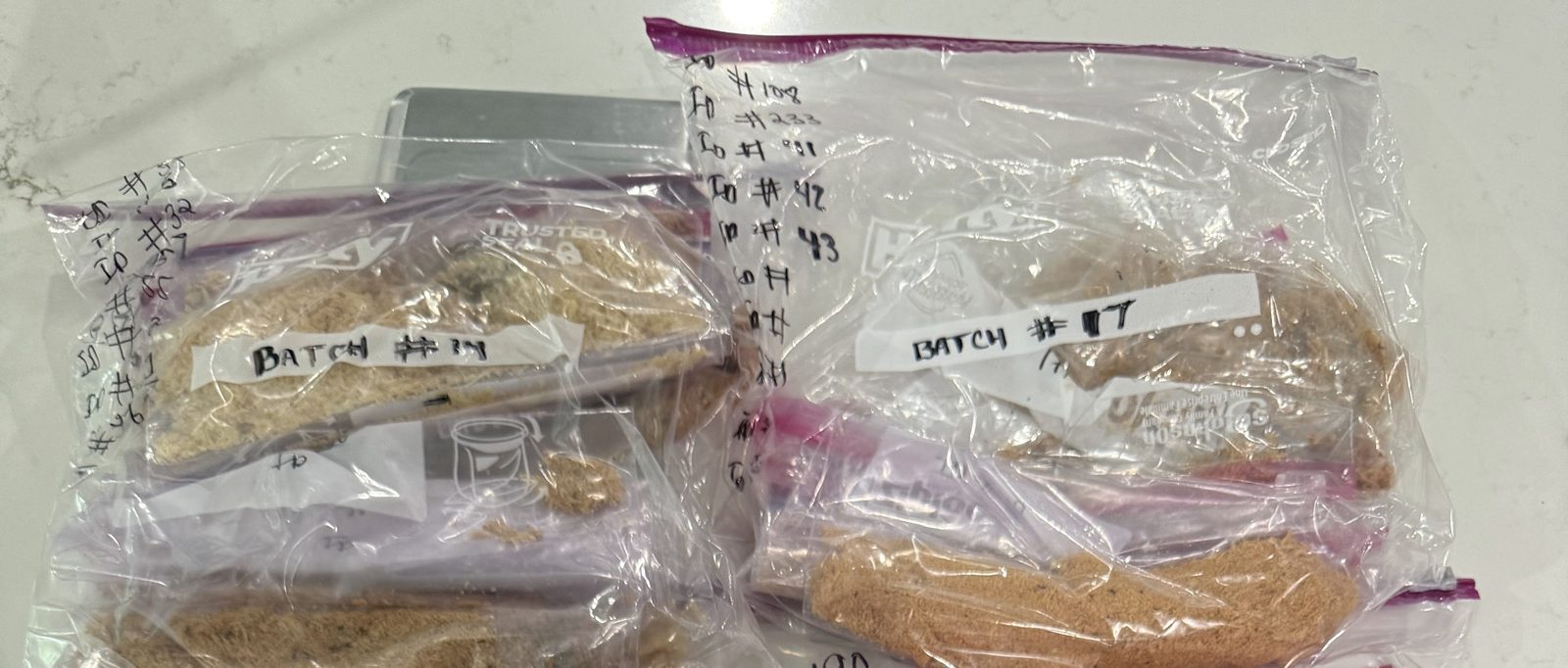
- LabelBagged, labeled and tied to that one palm’s record.
- LabThe sample goes to a Florida lab. Results usually take about 7 to 10 days.
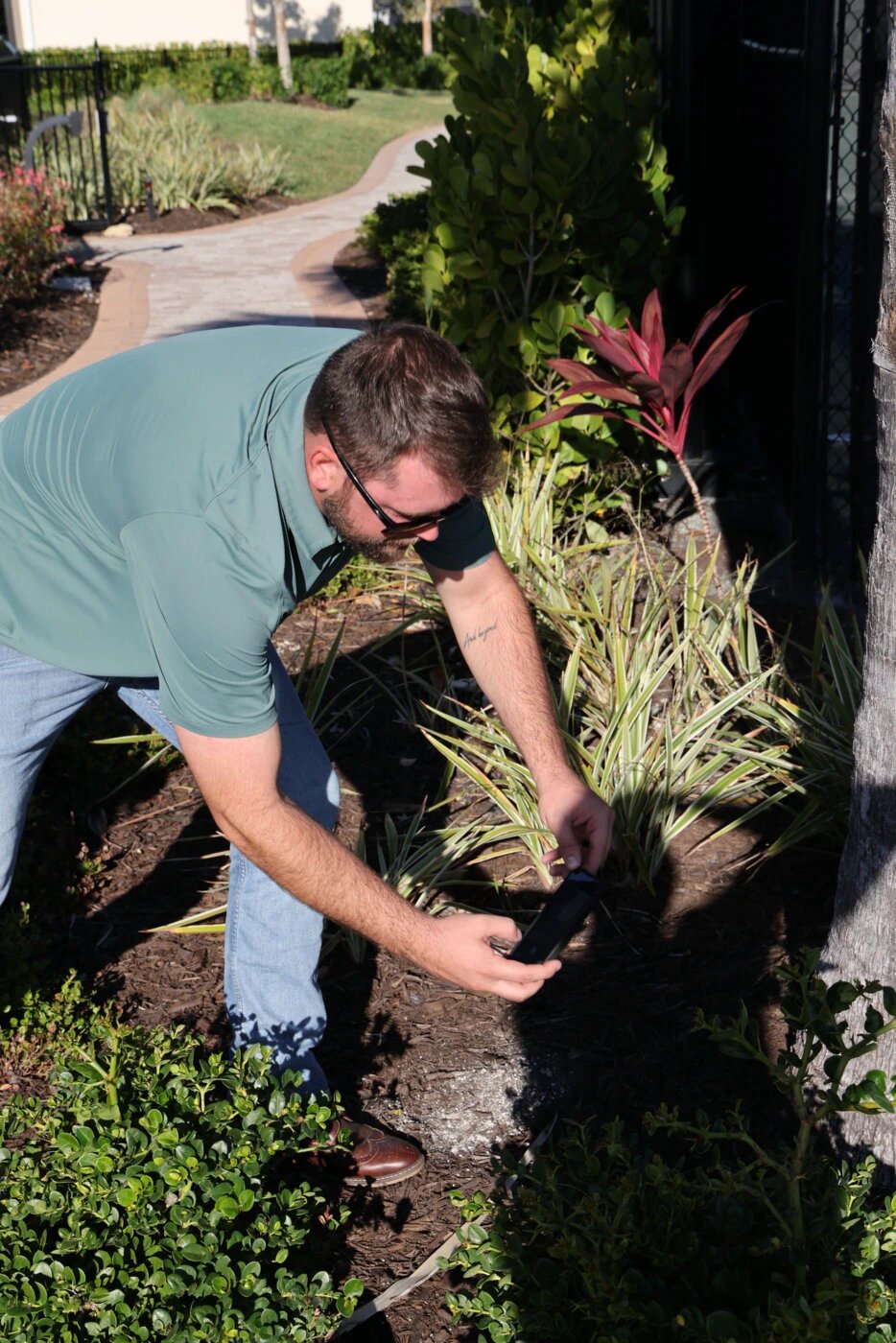
- ReportA written update after, with the lab report, ready to file.
The soil
The new ground is starved.
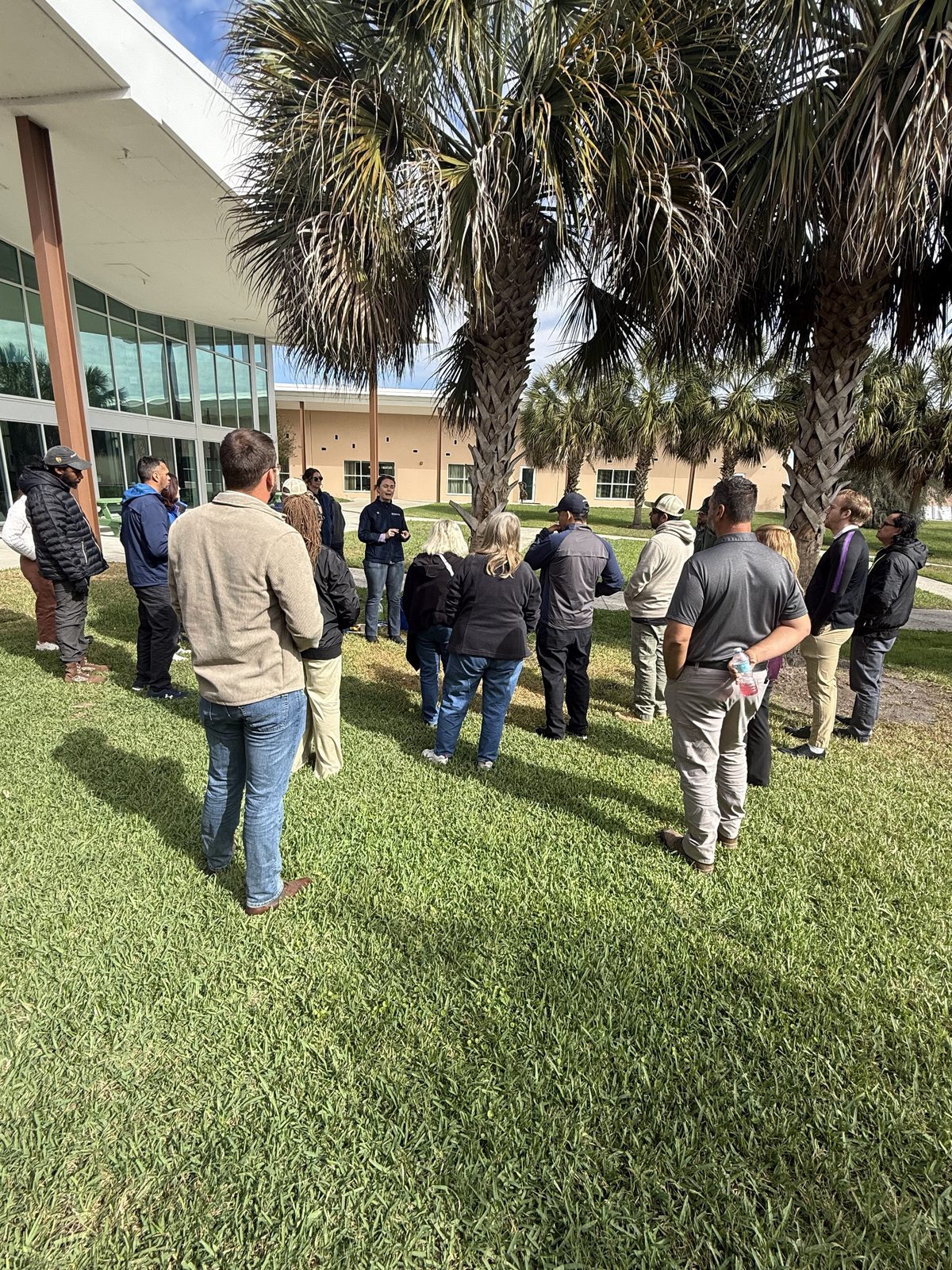
We compared two grounds in one community: the first phase of the development, where the oaks have been growing for years, and a newly built phase on the same property. Soil from both went to the UF/IFAS Extension Soil Testing Lab. Phosphorus, potassium, manganese and zinc were all very low in the new phase, where the first phase was not. Both read calcareous. Oaks do best near pH 6.0 to 7.0.
One master-planned special district
What we test in the soil
- The hard layer: penetrometer depth to 300 psi at the ball edge and the drip line, in moist soil.
- Drainage: a hole down to the hard layer, filled and timed.
- Soil pH and salt, with the root ball and the soil around it read separately.
- Nutrients and organic matter, through a UF/IFAS soil test when the case calls for it.
| Soil test | First phase | New phase |
|---|---|---|
| pH | 7.5 | 7.6 |
| Phosphorus | 60 | 2 |
| Potassium | 257 | 16 |
| Magnesium | 157 | 56 |
| Calcium | 1,109 | 682 |
| Manganese | 7.9 | 0.2 |
| Zinc | 6.1 | 0.2 |
| Copper | 1.9 | 0.4 |
| Boron | 0.3 | 0.1 |
UF/IFAS Extension Soil Testing Lab, May 2024. Nutrients in mg/kg. Red marks the four nutrients that read very low in the new phase.
The irrigation water
Tested at the source, and where the roots sit.
Lake, pond and reclaimed water is not clean water. It carries lime and salt. One watering does no harm. Hundreds a year, on the same root ball, add up.
Testing the water at the source
pH, bicarbonate, hardness, salt, chloride and sodium, taken at the lake or pond and at the bubbler. In a drought we test more often, because the source gets saltier as it drops.
Testing the water the roots sit in
Soil water extraction. Small samplers stay in the root zone, and we pull water out of the soil around the roots. It shows what the roots actually live in, which can be far saltier than the water going on. When salt builds, the test, not the calendar, decides when to flush the root ball with cleaner water.
Around a new or moved tree
Eight tests, from the ball to the hard layer.
Seven are read on site the same day. Leaf tissue is the one that goes to the lab.
Who fixes what
The soil and the water are yours. The answers are ours to find.
Your irrigation system and your soil belong to you and your contractors. We do not test them on every visit. We test them when a palm or tree is declining and nothing else explains it, when new trees and palms are struggling, or when you want to improve conditions.
We report what we found and what we recommend. If you treat the water or amend the soil, the test guides that work. If you do not, it tells us how to adjust care for the site you have.
Next step
Pick the door that fits.
We assess on site and collect samples. We do not diagnose from photos.
Report a declining palmNew trees and palms strugglingSoil and irrigationCompaction, water received, root flares and the establishment program.
Read the soil pagePlanning the budgetPut testing in the planFold testing into a written plan, so the results arrive before the budget meeting, not after.
Ask about a Master PlanAfter the resultWhat we do about itEvery palm disease has a written protocol, from the first sample to the palms around it.
Read our protocols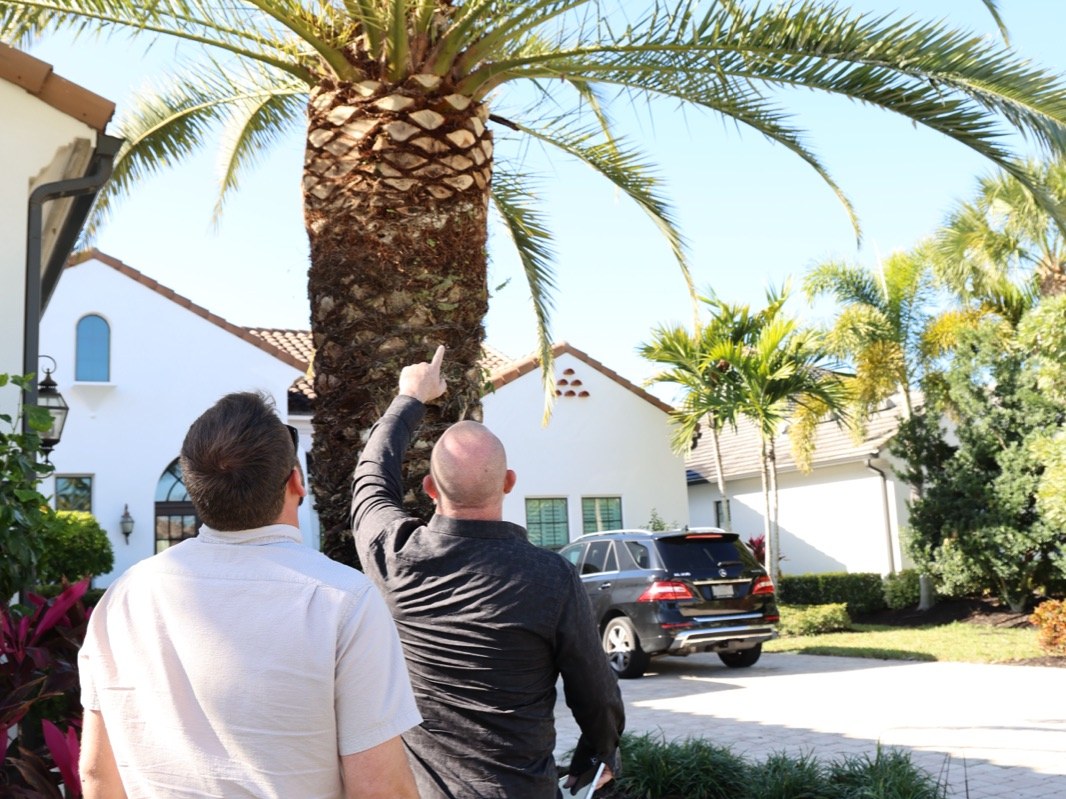
Start with what we see
Something declining that nobody can explain?
We walk the property, rate the palms and trees, and test where the field call needs proof.
Request testing


ISA Certified Arborist #FL-10118A · TRAQ · Licensed Florida pest control business