
Palm and tree removalManage
Removals, only after a written determination.
No palm or tree comes out until an ISA Certified Arborist writes down why. Then the crew takes it down safely, hauls the debris the same day unless weather or a site holdup stops it, and logs it.
Storm or emergency: (239) 467-0142- Before any cut
- A written arborist determination
- Access
- Climbers, rigging and lifts
- Storm-damaged palms
- Wait at least 6 months if intact
- Record
- In our GIS inventory the same week
What we see in the field
A removal is the most expensive call on a property. It should be the most careful one.
A palm marked for removal two weeks after a hurricane. A stressed tree written off when the cause was water. A "diseased" palm that never saw a lab. Removal calls made too early cost a community palms that would have recovered, and then the replacements.
So the order is fixed. An arborist visits. Where the cause is a disease, it is confirmed first: lethal bronzing and Fusarium wilt by the lab, Ganoderma by its conk, or by the lab when there is no conk. The determination is written down with the inventory ID, the reason and the date. You decide. Then the crew cuts.
While a palm with a confirmed terminal sign stands, every report carries the removal recommendation in writing. The decision stays yours.
How we do it
Determine, decide, then cut.
- Arborist visit
Field condition first: what is wrong, and how sure are we. Suspected lethal bronzing or Fusarium goes to an independent lab before the call. Ganoderma is confirmed by its conk, or by the lab when there is no conk.
- Written determination
Inventory ID, reason and date, signed. A palm with a confirmed terminal sign carries the recommendation on every report until you decide.
- Plan the site
Access, targets, rigging points. A Sunshine 811 locate before any grinding or digging. Private lines located with the owner.
- Take it down
Climb, cut and lower in pieces. Climbing spikes are allowed on a removal. Never on a palm or tree that is staying.
- Clean up and record
Debris out the same day. Status, date, and before and after photos in our GIS inventory that week.
Immediate hazardsA tree or palm that is an immediate hazard is made safe first. The written determination follows within 2 business days.
What is included
What a removal covers.
The written determination
Signed by an ISA Certified Arborist, naming the inventory ID, the reason and the date. No determination, no cut.
Climb, cut and piece-down
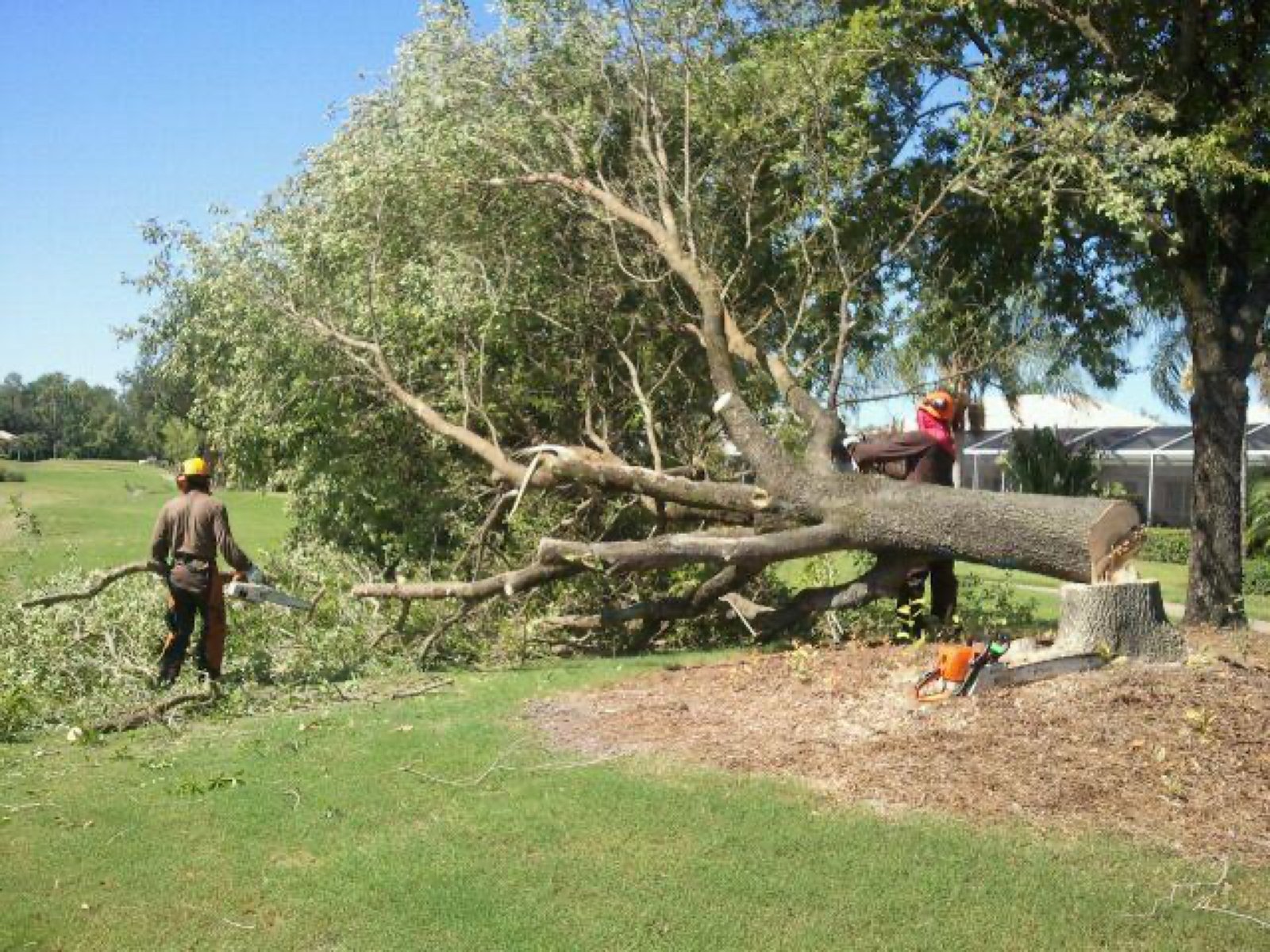
Trained climbers, rigging, aerial lifts and a wheel loader near structures, so the tree comes down in controlled pieces.
Flush cut
The stump is cut flush, 1 to 2 in above grade. Grinding is its own line, chosen by what comes next in that spot.
Same-day cleanup
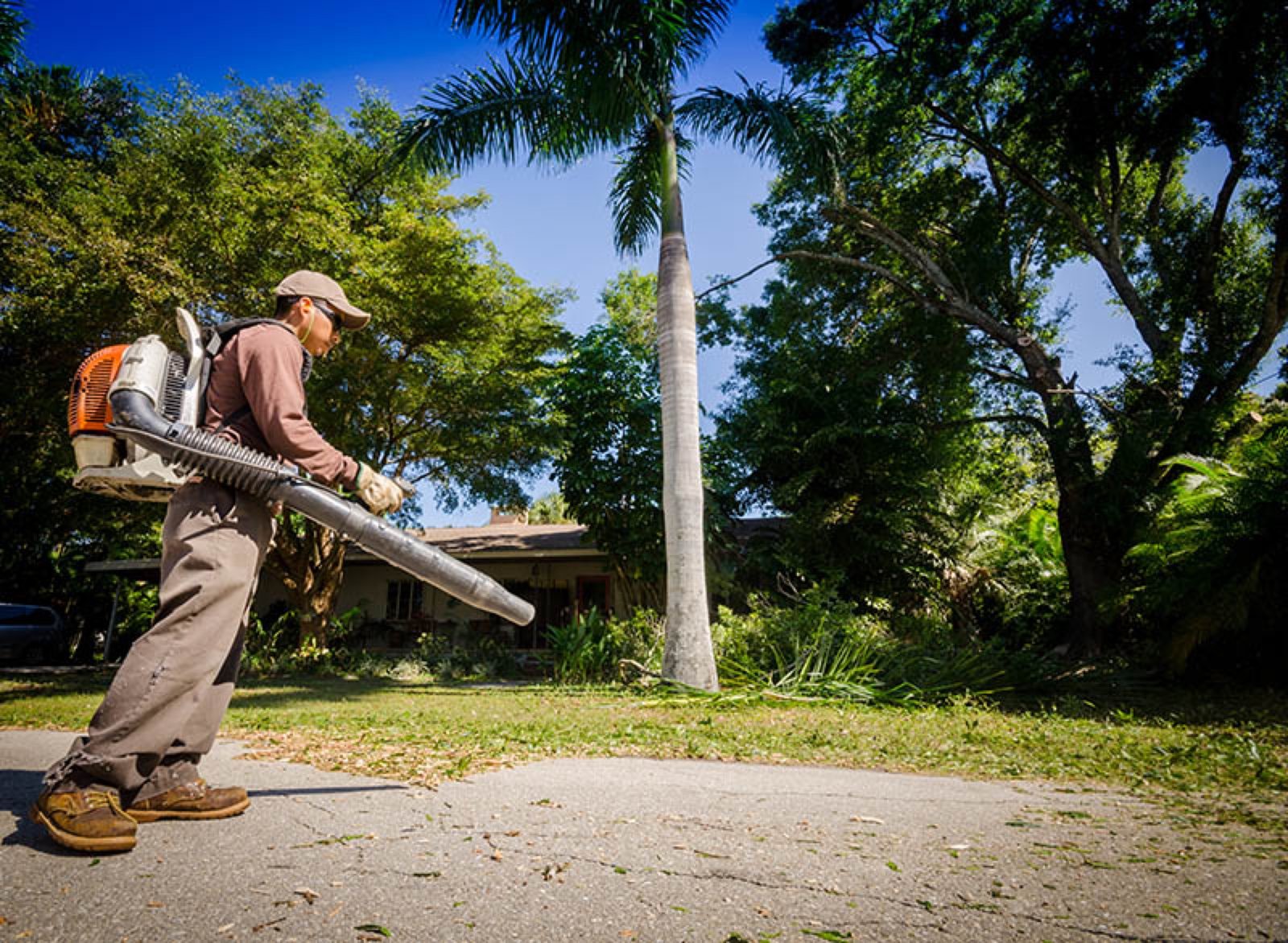
Debris is hauled the same day the work is done, unless weather or a site holdup stops it. Hardscape blown clean, turf ruts repaired.
Disease removals
Hauled away, and tools sterilized between palms.
Permit support and records
Tree removal permits belong to the owner or association. Our written determination goes with the application. Every removal is logged with before and after photos.
Priced on its own lineStump grinding, deep grinding and excavation, and haul-away of grindings, topsoil and sod.
Standards we work to
A removal you can explain to residents.
Our lines
- No signed determination: no cut.
- Storm-damaged palm that is structurally intact: wait at least 6 months. The wait does not apply to a split trunk, a root ball out of the ground, or disease confirmed apart from the storm.
- Suspected disease with no determination: the arborist evaluates first.
- A palm flagged for Ganoderma or Thielaviopsis gets no ladder. It can collapse.
- Replanting at a Ganoderma site carries risk. We disclose it, record it and you decide. At a confirmed Fusarium site, no susceptible palm goes back in.
When a tree comes out for risk, the call follows one method: likelihood of failure, likelihood of impact, consequences. Written and defensible.
The national standard behind a written risk rating.
At least 6 months before writing off a hurricane-damaged palm that is structurally intact.
The safety standard for the takedown, and the Sunshine 811 law for any digging after it.
Sources: Ptolemy Removals and Stump Grinding specs; our positions on post-hurricane timing, terminal signs and the 811 ticket; UF/IFAS EP465; ANSI A300 Part 9; ANSI Z133; Florida Statutes Chapter 556.
On the job
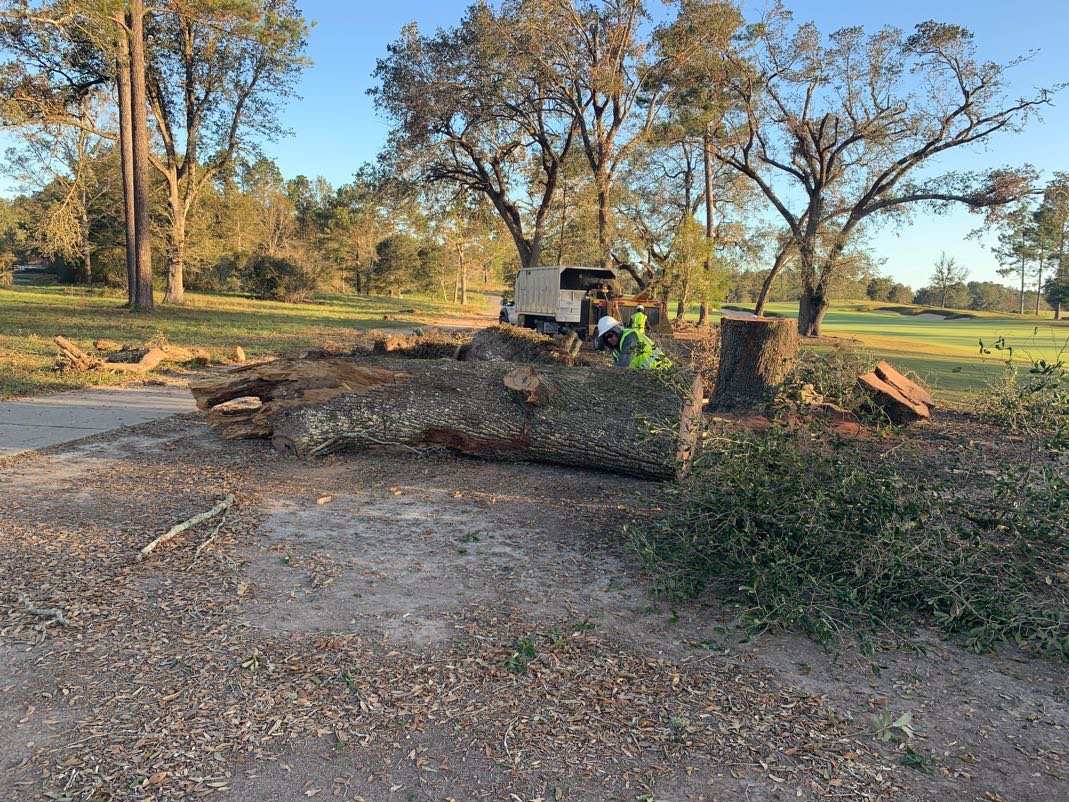
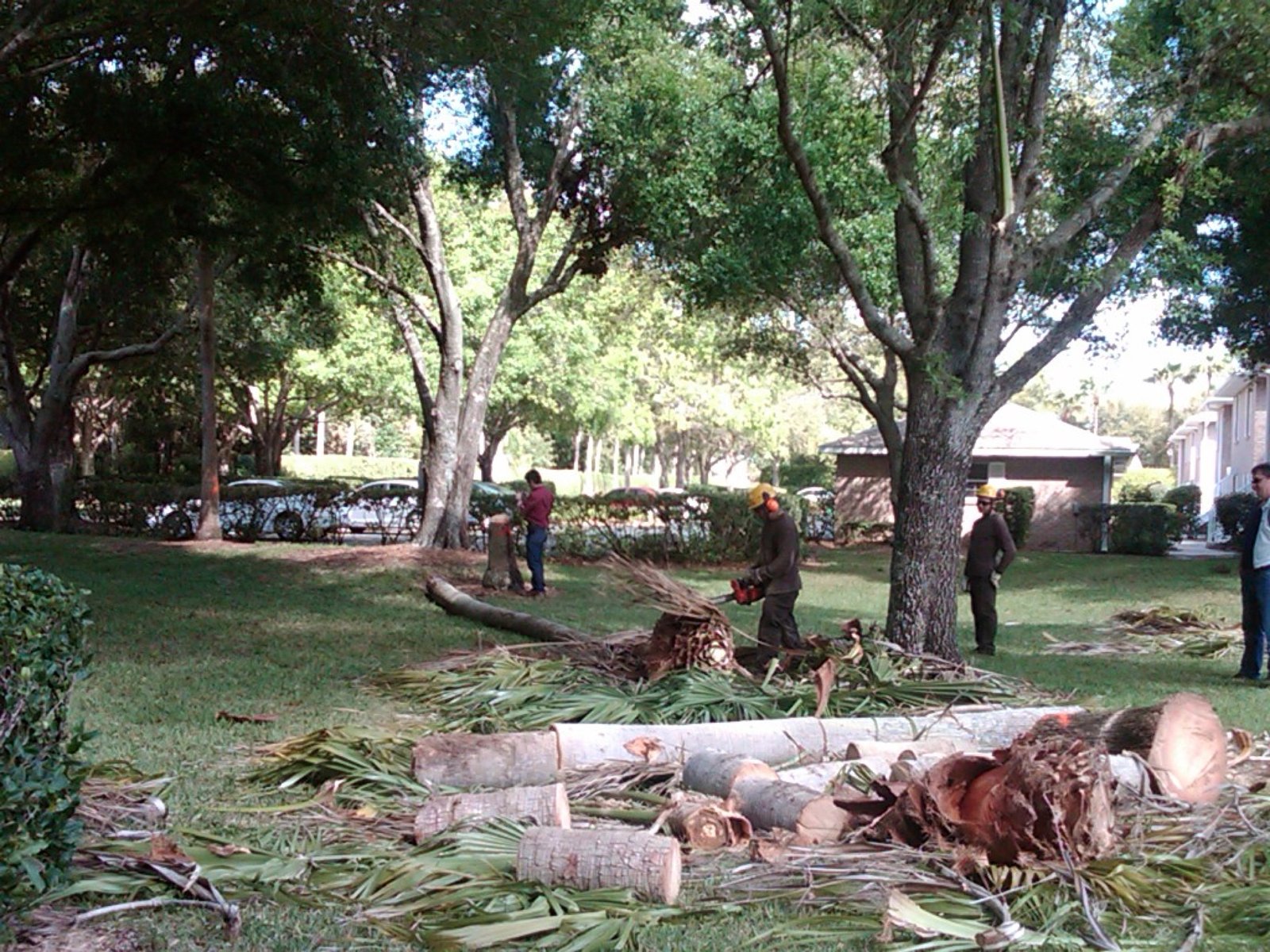
Palm and tree removal, in the field.
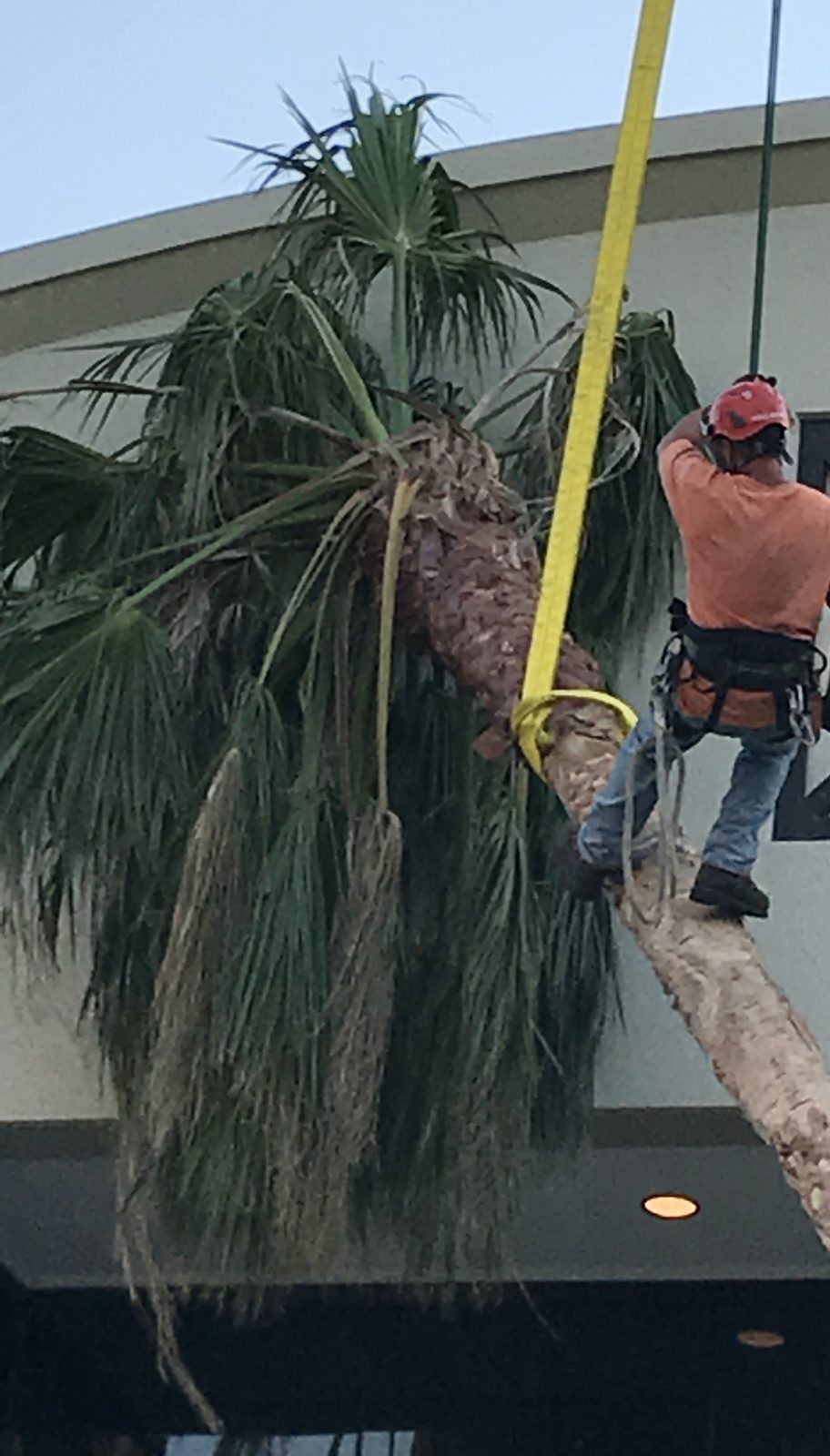
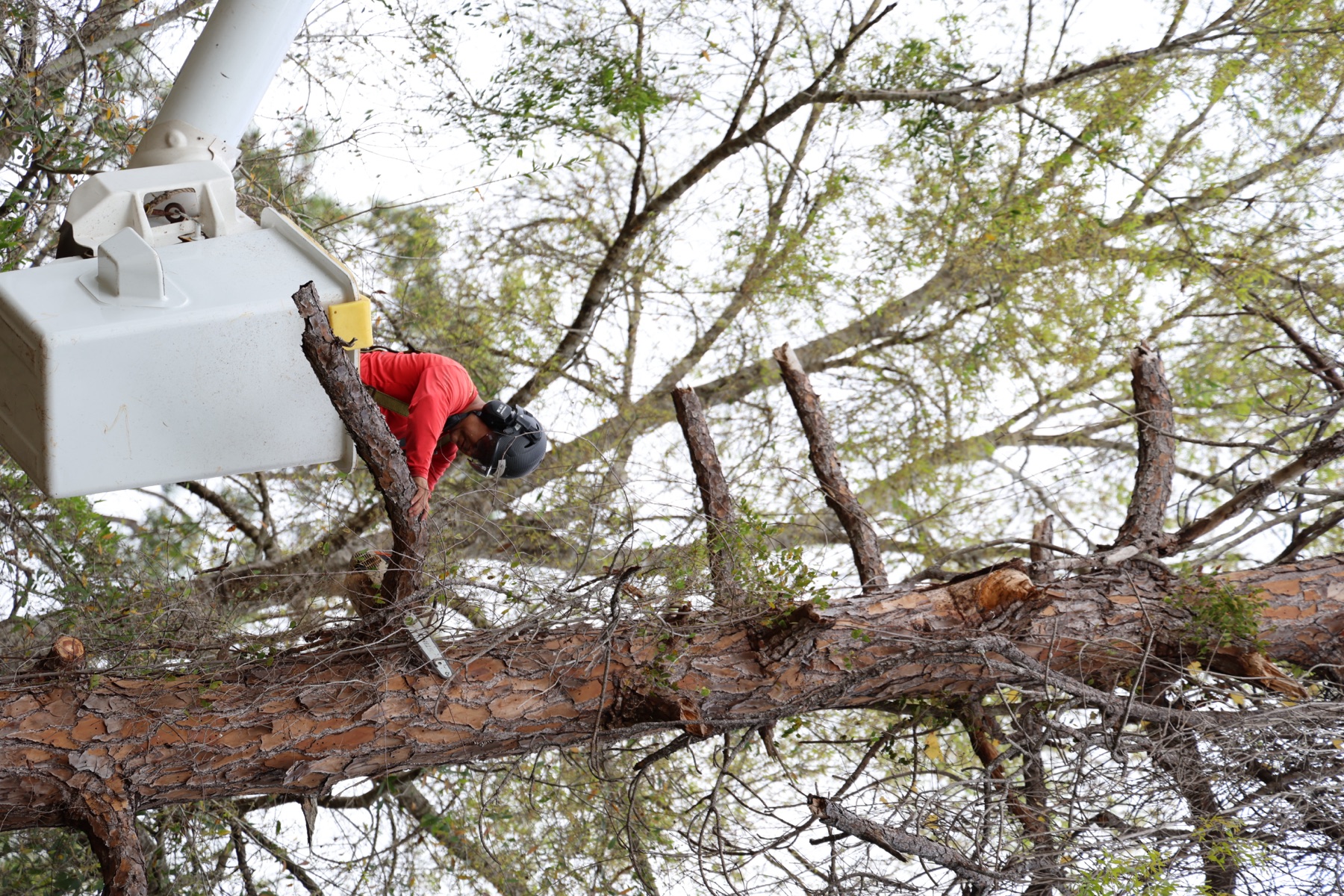
From the job file
Removals, start to finish.
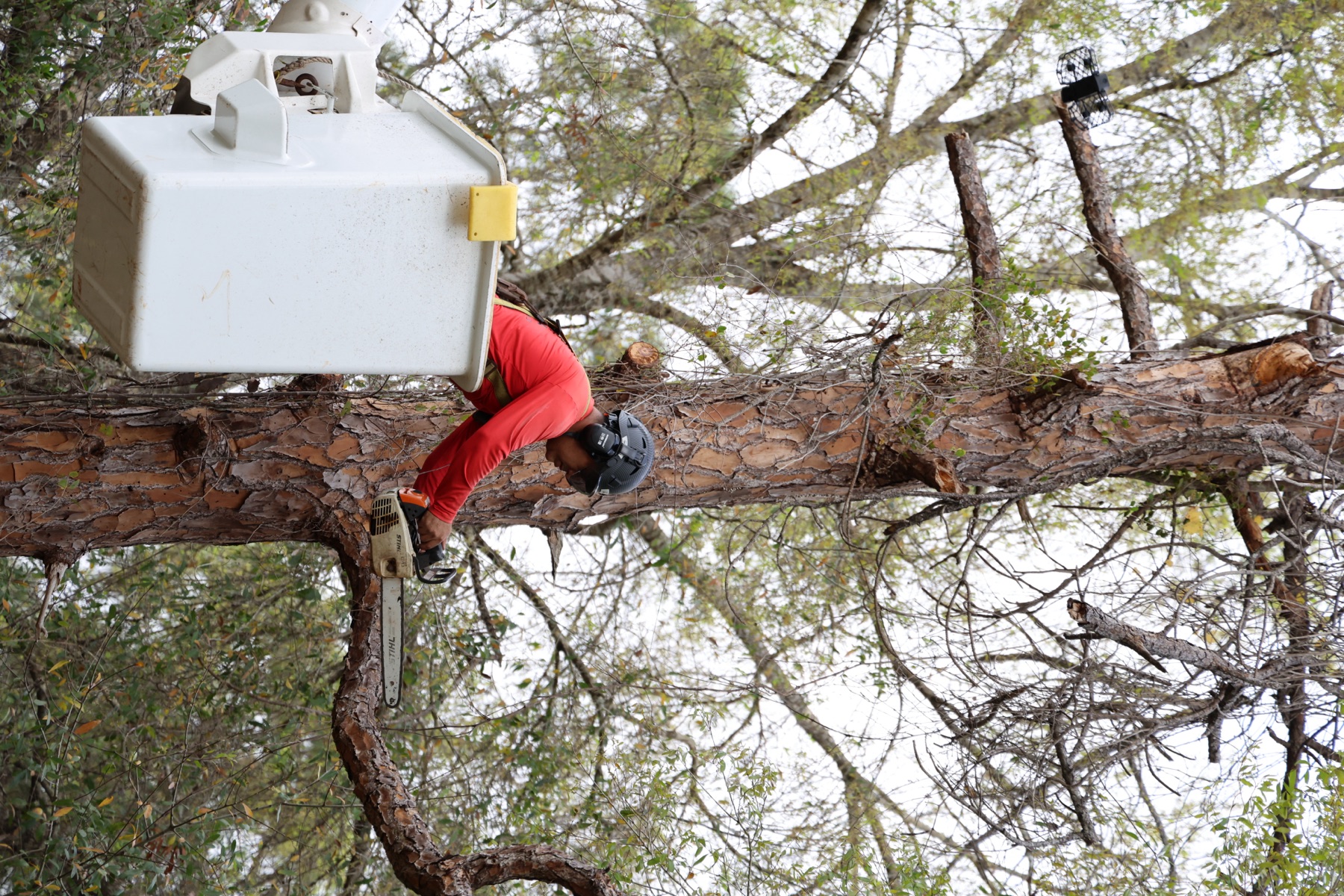
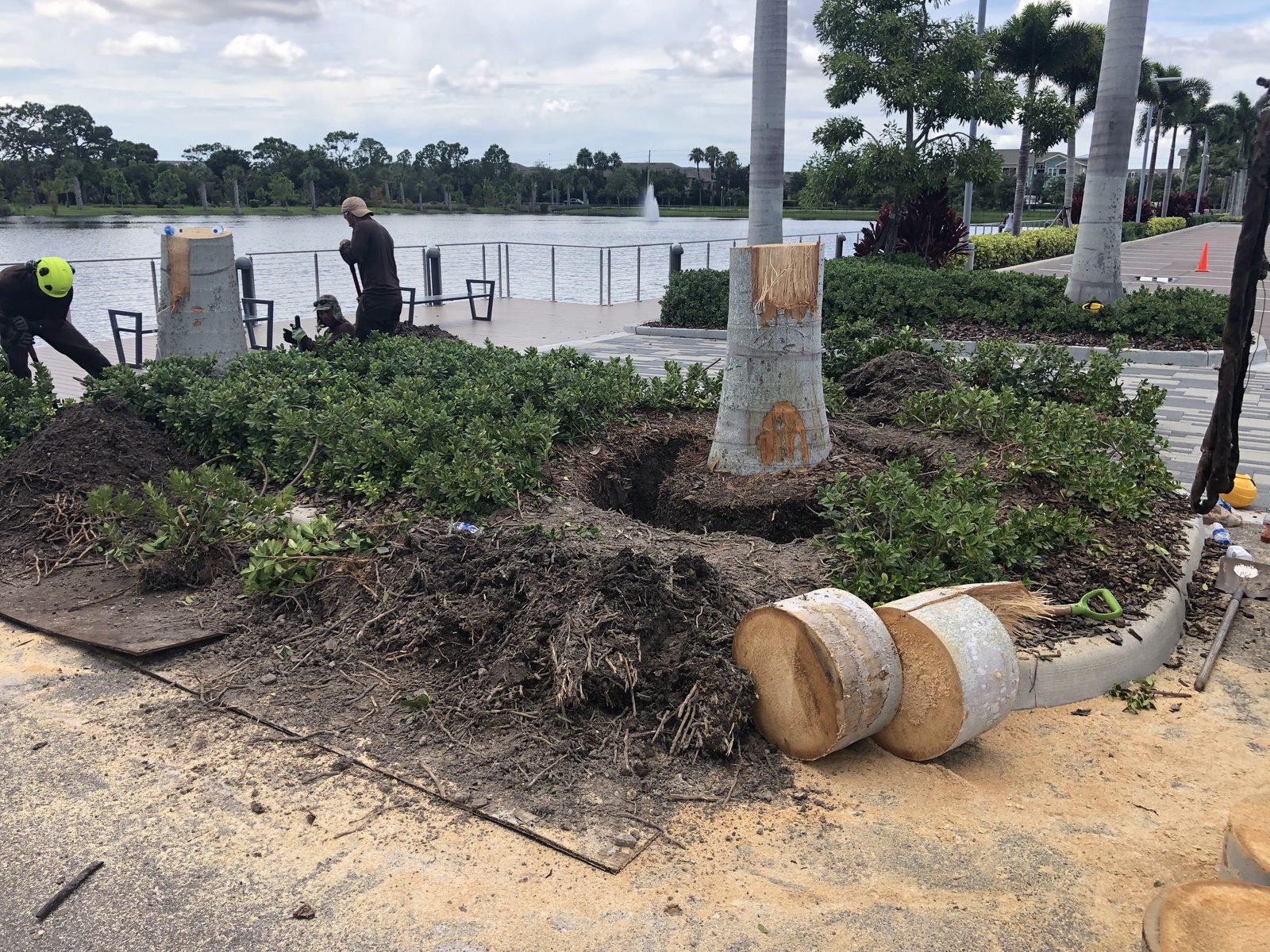
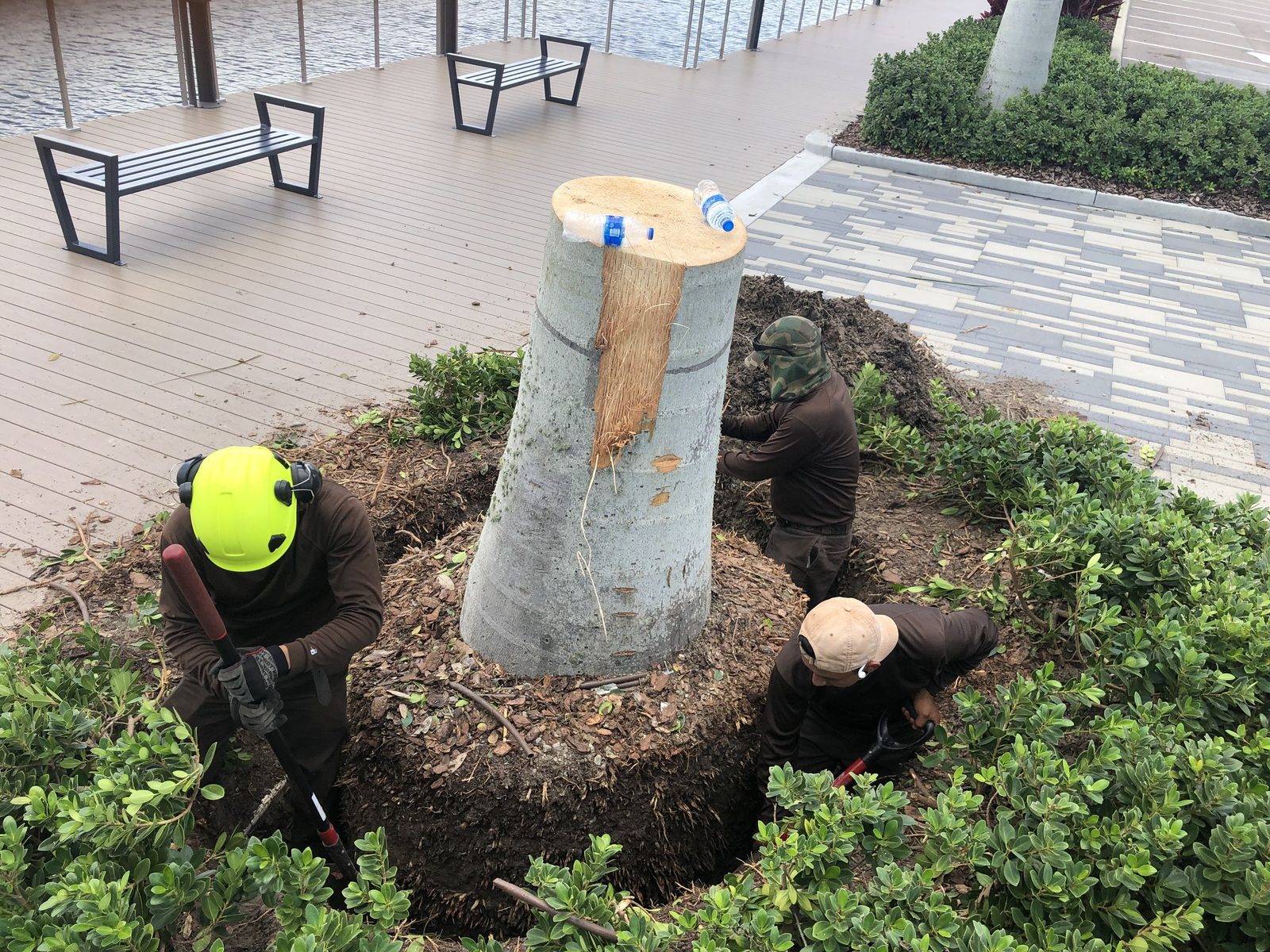
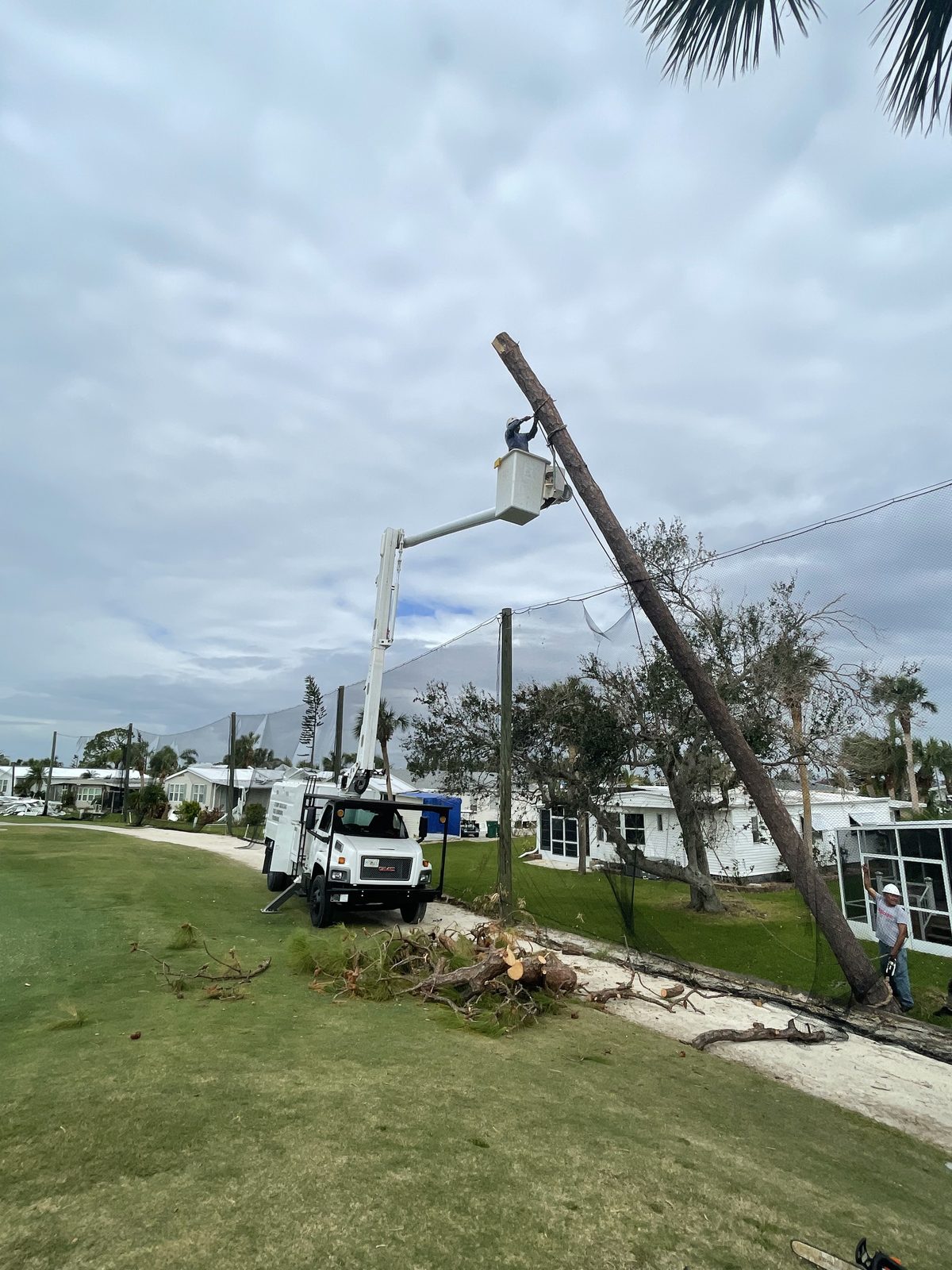
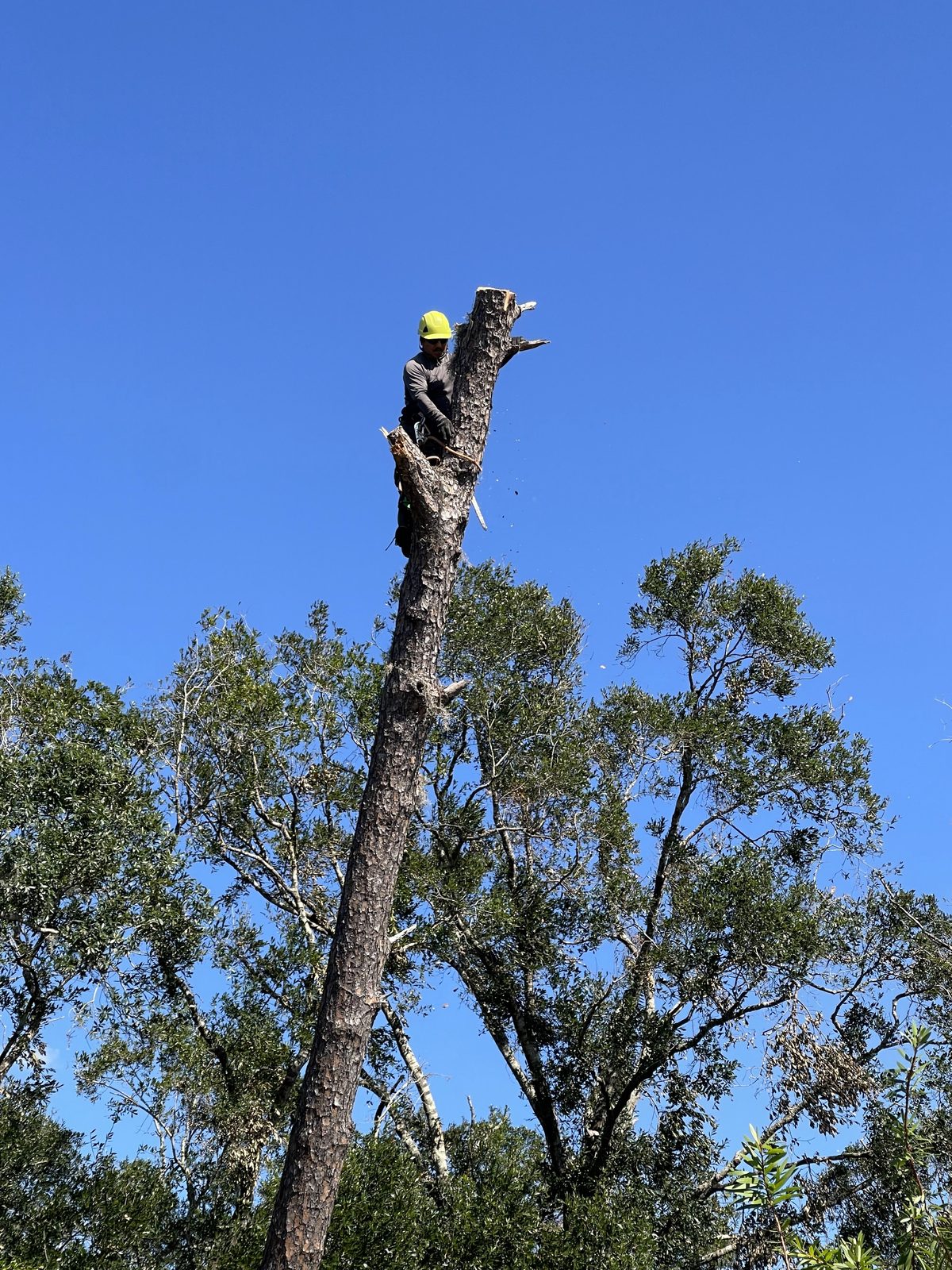
The method follows the site: a crane beside a building, a bucket truck on a leaning pine, a climber at the top of a pine, a crew digging out root balls by hand.
Who it is for
Written for the people who answer for the trees.
- HOA and POA boardsA written reason for every removal, so the board can answer the resident who asks why.
- Community association managersDetermination, permit support, takedown and cleanup handled as one job.
- CDD and ISD boardsRemovals budgeted by size class from the inventory, not discovered mid-year.
- Golf course superintendentsTakedowns scheduled around play, debris off the course the same day.
Inside a plan
Removals sit under Manage.
On a Palm and Tree Master Plan, removals are the same at every level: by size class, after a certified arborist's written determination. Because the inventory carries every tree's size, a removal is a line the board planned for, not a surprise.
Lab fees for a disease confirmation pass through at cost, with no markup.
Questions
Questions managers and boards ask.
Still have a question? Call (239) 467-0142 or send a request.
Why do you need a written determination before a removal?
A hurricane damaged our palms. Should they come out?
What if a tree is about to fall?
Is stump grinding included?
Who pulls the tree removal permit?
Can we replant in the same spot?
Next step
Have a palm or tree you are unsure about?
Start with the determination. An arborist looks first, and you decide with the reason in writing.