
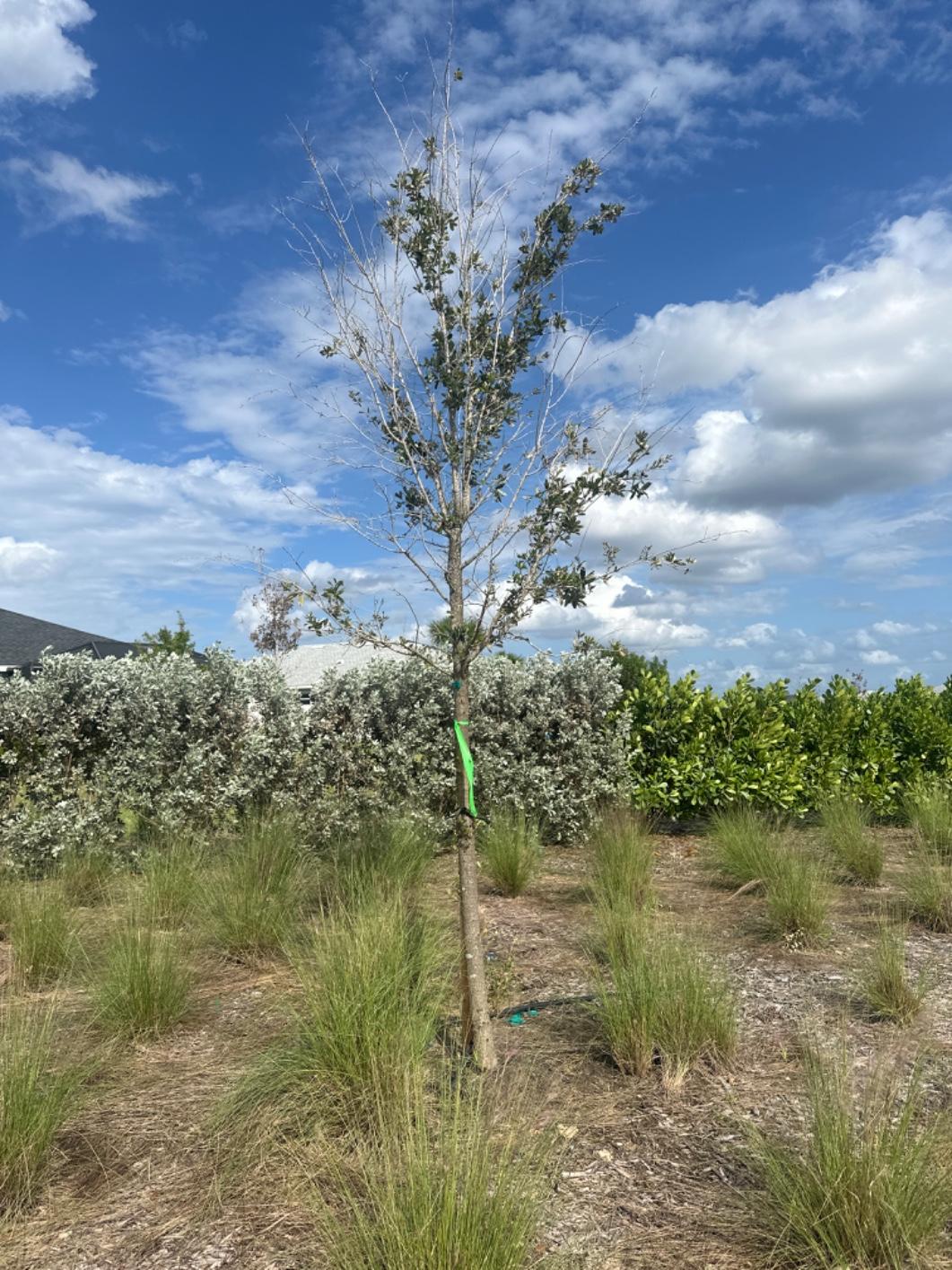
Reading general decline
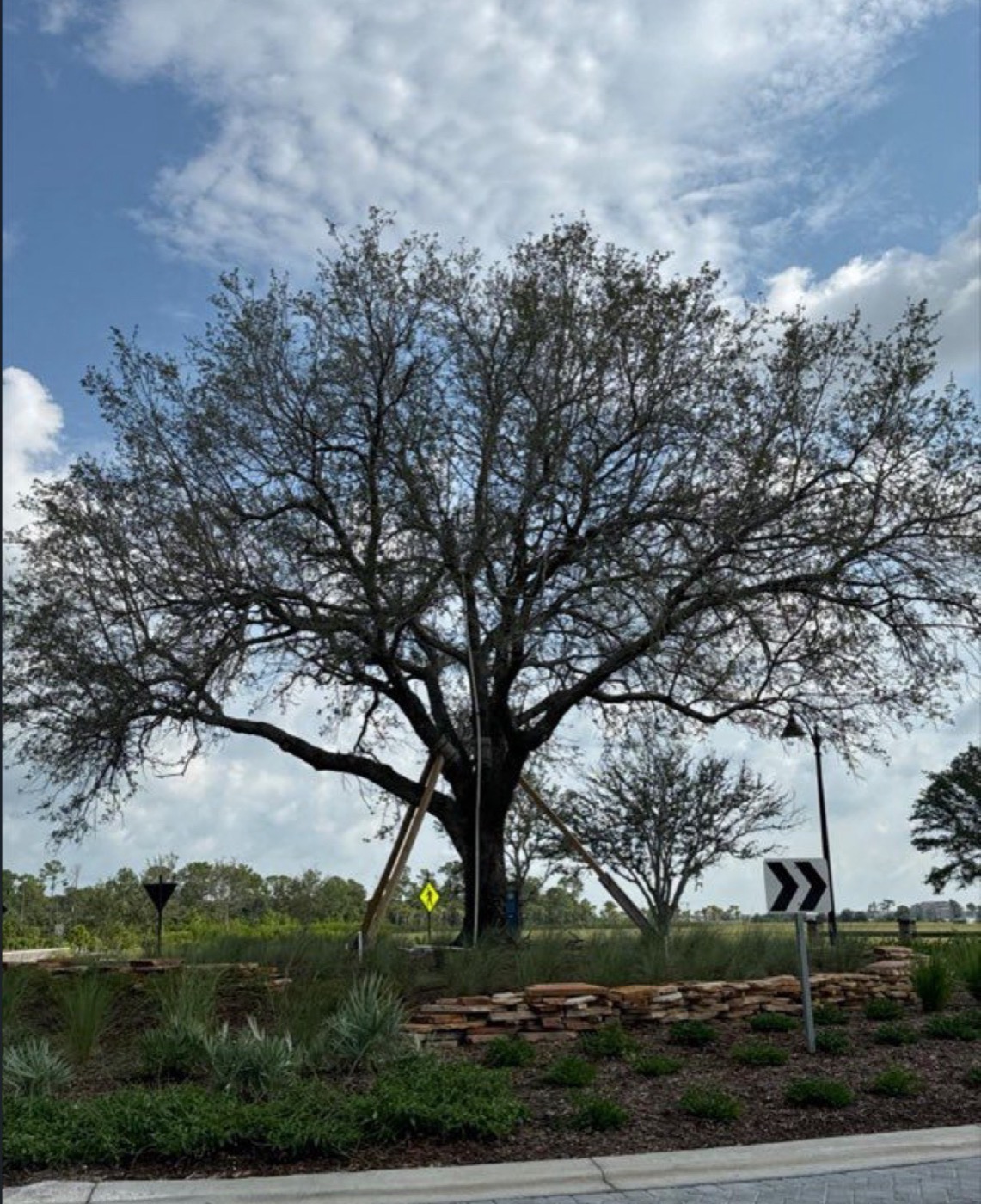
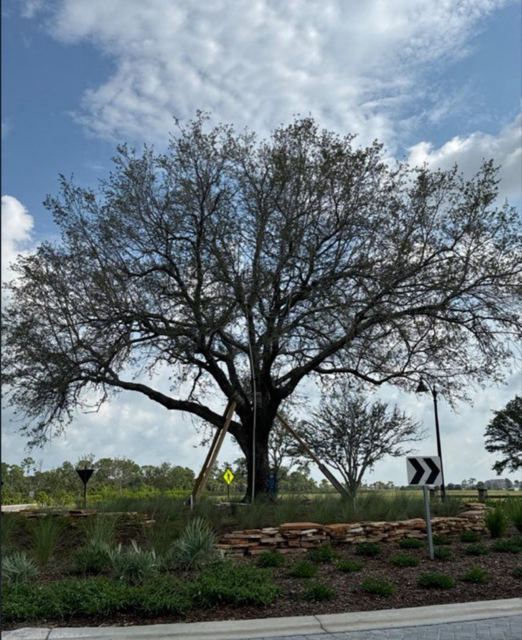
Decline is a symptom, not a diagnosis. Watch for a canopy thinner than the same tree last year, undersized or off-color leaves, dead branch tips working inward, and more deadwood than the season before. One thin year can be weather. A tree that loses ground three years running is telling you something. The most useful thing you can capture is the same tree, same angle, year over year.
Deadwood and hangers
Deadwood is normal in small amounts. A growing share of it points to stress. A hanger, a broken branch caught in the limbs above, is loose weight overhead that comes down on its own schedule. Targets decide urgency. A dead branch over open turf can wait for a scheduled visit. The same branch over a sidewalk, parking, or a pool deck cannot.
Trunk and structure trouble
Two trunks of similar size rising in a tight, narrow V, with bark pinched or folded inward at the union, is a known failure point called included bark. The stems never fused into solid wood, and under wind load the union can split with no warning. A vertical crack, an open cavity, or a wound with soft, dark wood beneath also reduce the strength a tree has to hold itself up. A fresh crack you can watch open over days is a call-now sign.
Root and base trouble
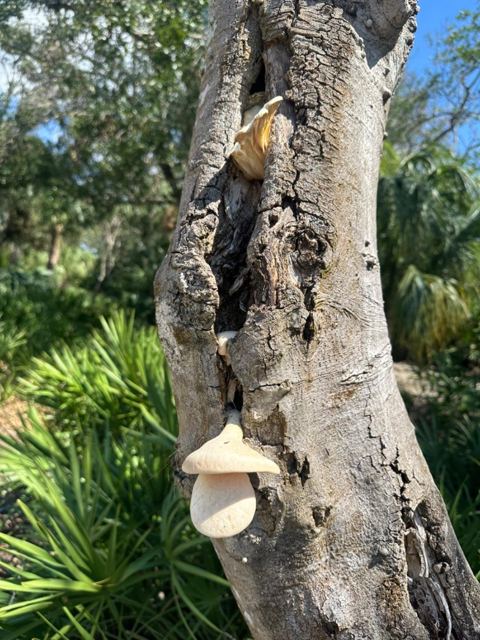
Look at the base. Roots circling across the trunk flare (girdling roots) slowly choke the tree, often tracing back to how it was planted. A buried root flare, with no visible flare where trunk meets ground, drives slow decline for years. A mushroom or shelf conk at the base means wood-decay fungi are inside the structural base. Soil lifted, cracked, or mounded on one side means the root plate is moving, which is the ground equivalent of a tree starting to let go.
Storm-damage signs
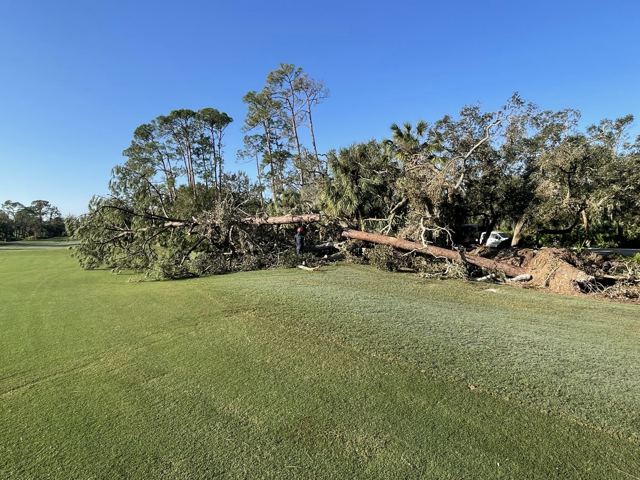
After a hurricane, trees can look far worse than they are. Torn canopy, snapped minor limbs, and stripped leaves are dramatic and often survivable. Ptolemy's position is a minimum six-month assessment window after a hurricane before any removal is considered, because many trees recover and heavy canopy loss alone does not mean a tree is finished. The window does not apply when structural failure is already confirmed: a split or fractured trunk, or a root ball lifted out of the ground. A new lean, a fresh crack, or a hanger over a walkway is a call-now sign.
A bare tree in winter is not a dead tree
Florida's deciduous trees drop their leaves in the cooler months. A leafless maple in January is dormant, not dead. In our assessments that gets a seasonal note, not an alarm. If you are unsure whether a bare tree is dormant or failed, send a photo.
What you should do
Three things, in order. Flag immediate safety hazards fast: a lean, a fresh crack, a hanger over a target. Track change over time on everything else, and photos make that reliable. Then let a certified arborist assess the rest. A removal or treatment call is never a snap decision. It is a licensed arborist's professional assessment.