
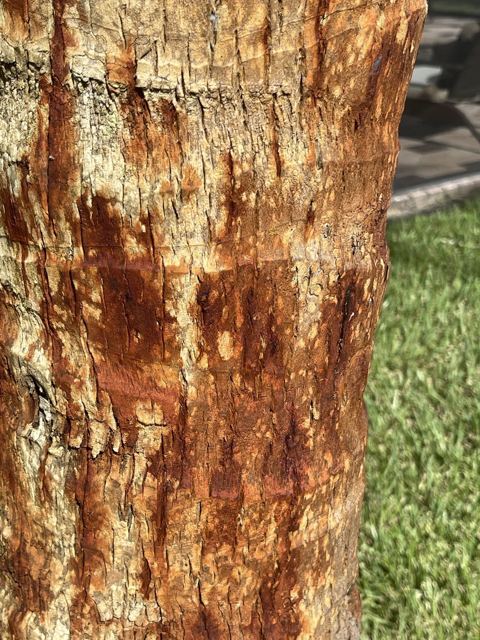
The one that kills: palmetto weevil
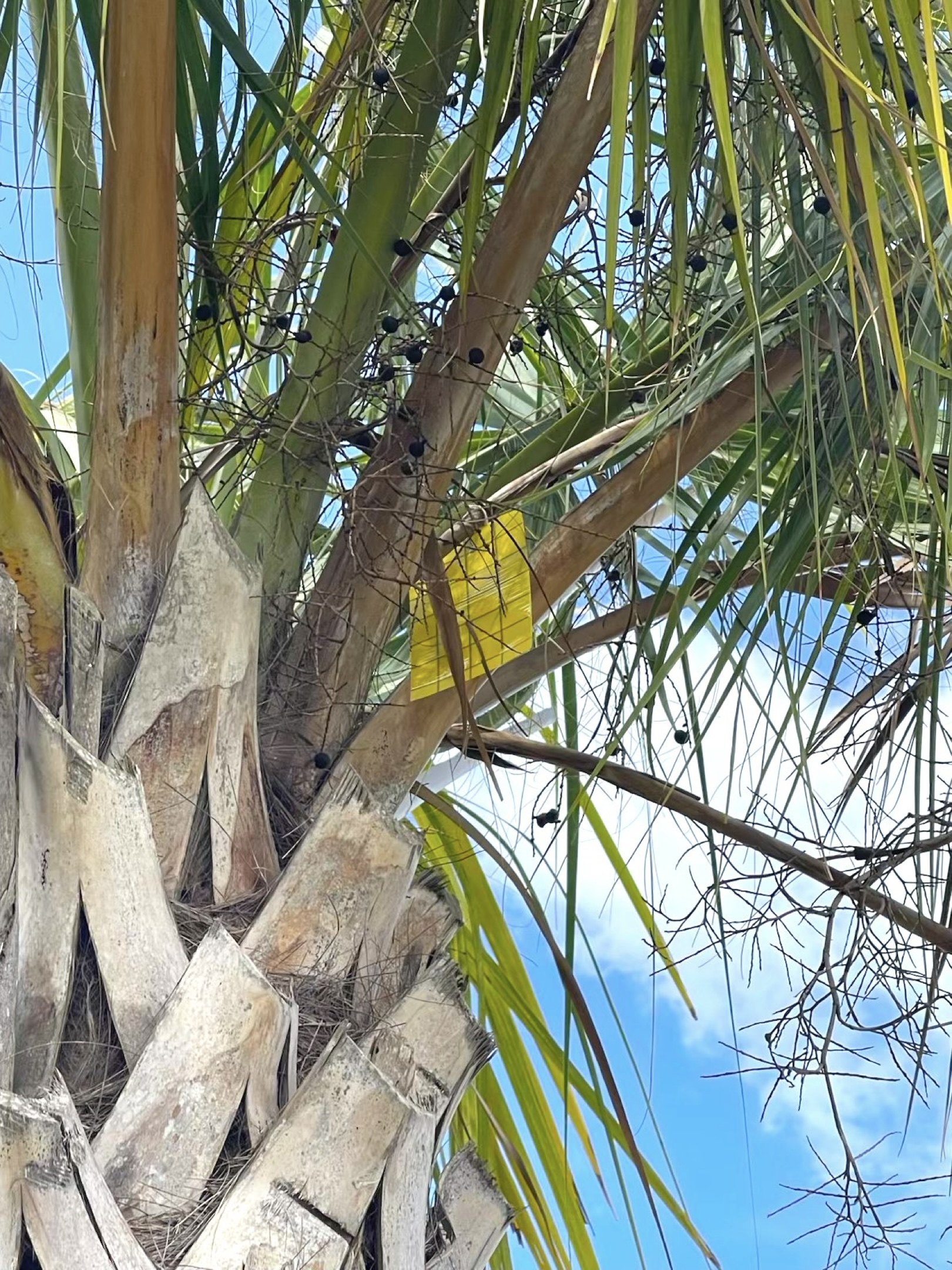
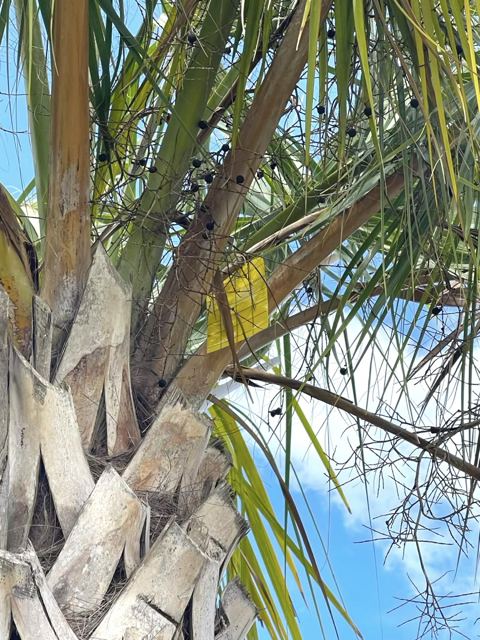
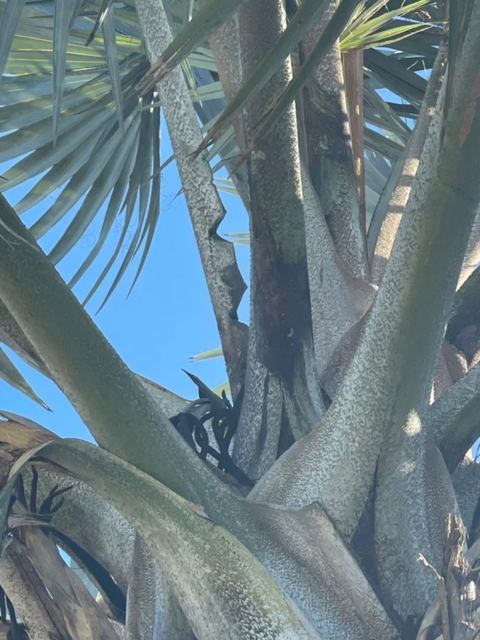
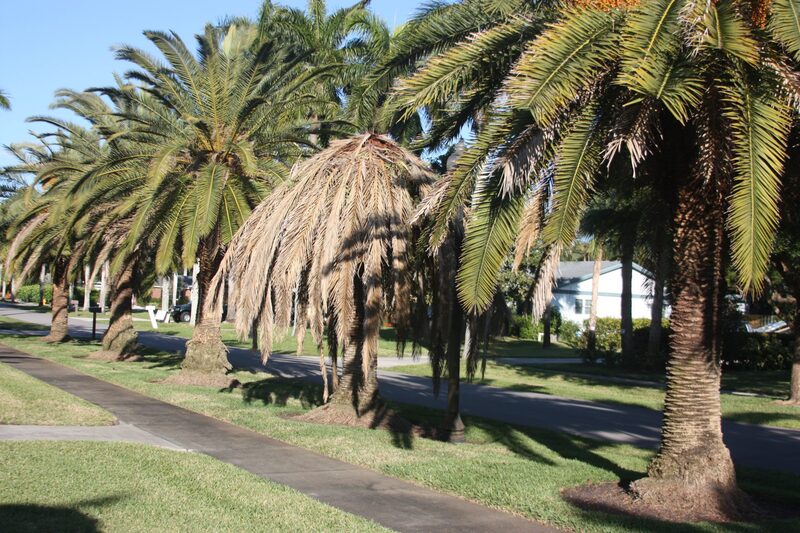
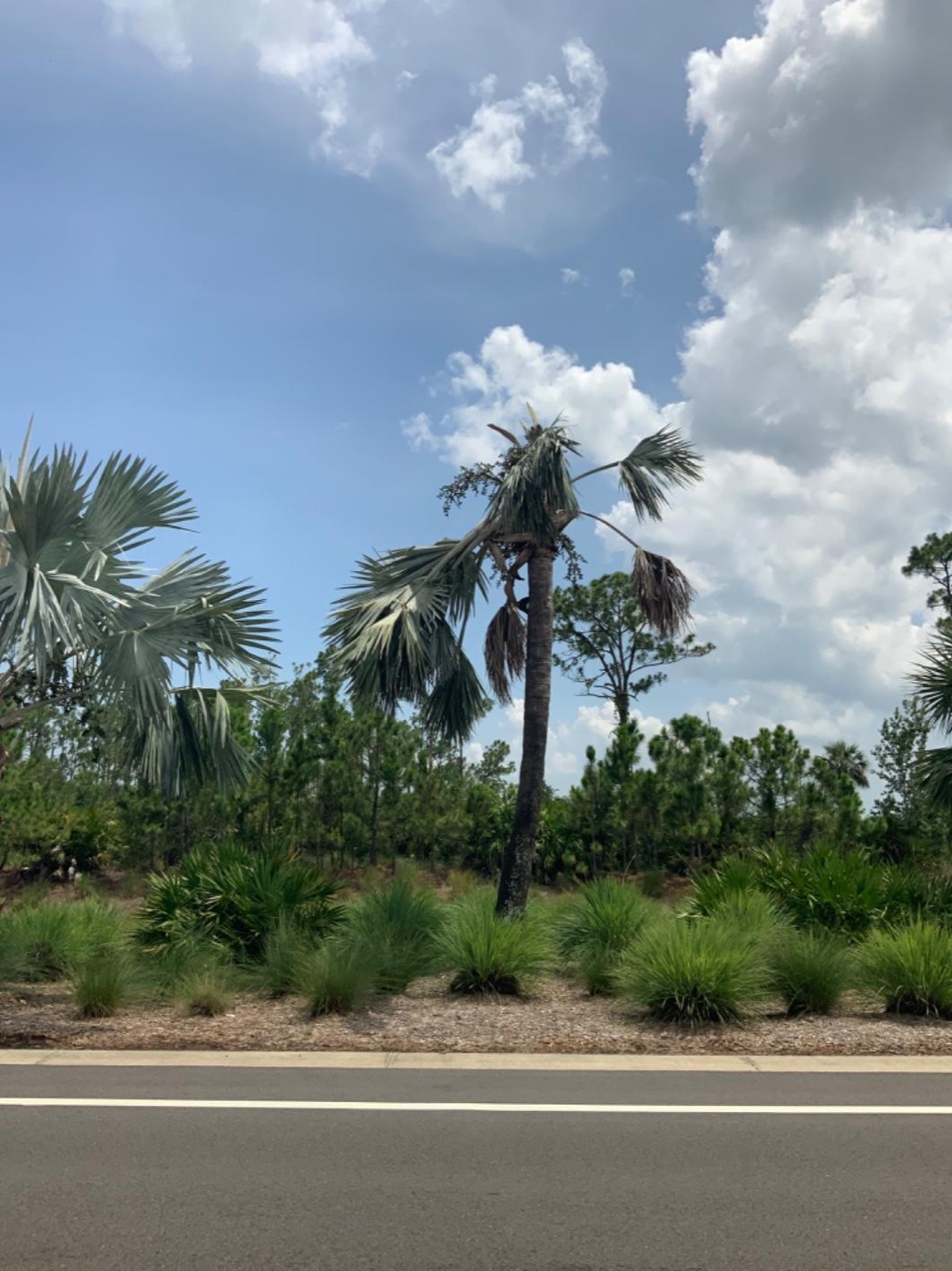
The palmetto weevil is the most destructive insect pest of palms in Florida. The grubs feed inside the crown, around the growing point, out of sight. The first sign you can see is often the canopy folding or the whole crown loosening and collapsing to one side, and by then treatment may be too late. It is closely tied to Sabal palm and also hits Canary Island date and Bismarck palms. The pattern that matters: it goes after palms that are stressed, wounded, recently transplanted, or over-pruned. A freshly installed or storm-damaged palm is a target. A healthy, properly pruned palm is far less attractive to it.
Scales, aphids, and whitefly (the sap-feeders)
These three pierce the palm and feed on its juices, leaving a sticky shine called honeydew, which then grows a black coating called sooty mold. The mold sits on the surface and blocks light, so it is cosmetic, and it wipes off. Scale shows as small bumps or specks on fronds and stems. Aphids cluster on tender new growth. Whitefly lifts off in a small cloud when you disturb the palm. On an established palm, all three are usually cosmetic. A heavy, sustained infestation spreading across several palms with a thinning canopy is worth reporting.
Royal palm bug and mites
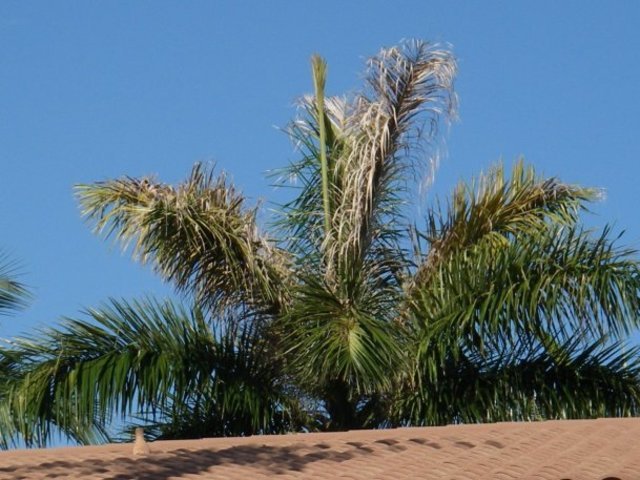
The royal palm bug feeds only on royal palms, and only on the new frond as it opens, so the frond comes in stippled and scorched while older fronds look fine. It shows up worst in spring. Spider mites and false spider mites rasp at the leaf and pull color out, leaving fine pale stippling or a dull, bronzed cast, worst in hot, dry stretches. Most established palms tolerate the cosmetic damage. The red palm mite is an invasive species we want to know about, so report bronzing that spreads quickly.
Caterpillars
Caterpillars chew fronds down to the veins (skeletonized) or web fronds and flower stalks together, leaving sawdust-like droppings called frass. On Sabal palms you may find them clustered on the bloom spikes. It can look dramatic on a single frond, but on an established palm it is almost always cosmetic and the palm grows past it.
Ambrosia beetle: a sign of a palm already in trouble
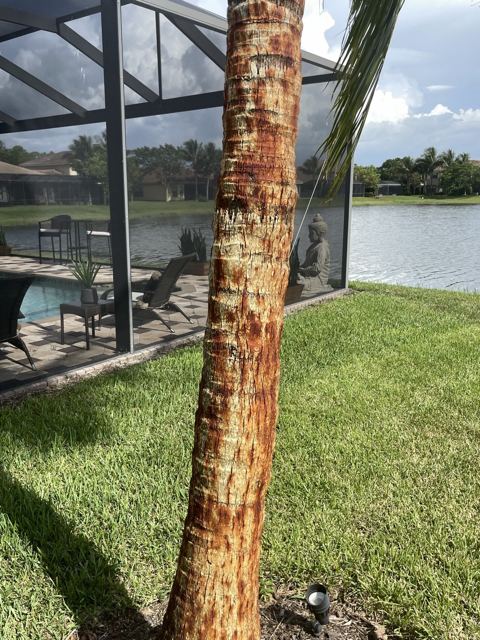
Tiny round holes in the trunk, fine sawdust hanging in little toothpicks of frass, and sometimes sap weeping down the trunk point to ambrosia beetles. They bore into palms that are already stressed or dying, so the beetle is usually a symptom, not the first cause. When you see the holes and dust, the real question is what stressed the palm first: transplant shock, root problems, a disease, or weevil damage above.
The pattern to remember
The alarming damage is usually the harmless kind, and the harmless-looking palm with a loosening crown is the one to worry about. Keeping palms healthy and properly pruned takes away what the weevil is hunting for. Whether a pest needs treatment, and what that treatment is, comes from an assessment, not a photo. These pages help you recognize and report.