
Palm pest
Palm Caterpillars
Moth larvae that feed on palms. The cabbage palm caterpillar strips cabbage palm blooms, and the saddleback caterpillar stings anyone who brushes it. On a healthy palm the damage is usually cosmetic, and natural enemies keep most populations in check.
Palms it affects: Cabbage palm (Sabal) blooms, Saw palmetto, Dwarf palmetto, Saddleback: many palms, shrubs and trees
- Affects
- Cabbage palm (Sabal) blooms, Saw palmetto, Dwarf palmetto, Saddleback: many palms, shrubs and trees
- When it shows
- The cabbage palm caterpillar runs with the cabbage palm bloom, spring into summer. The saddleback peaks summer through fall.
- What we do first
- Confirm live larvae. Old droppings and webbing alone do not call for treatment.
What you see
Signs in the field
- Webbed shelters of frass (droppings) on cabbage palm bloom stalks
- Blooms stripped bare, with no seed set
- Pinkish caterpillars about 1.5 inches (38 mm) long with a shiny black head and long white hairs on black bumps (cabbage palm caterpillar)
- Cocoons of dry palm fiber at the frond bases
- In outbreak years, caterpillars wandering into buildings within about 100 to 150 feet (30 to 46 m) of the palms
- A stocky caterpillar about 1 inch (25 mm) long, brown with a bright green saddle and spiny horns at both ends (saddleback)
Why it is usually cosmetic
The cabbage palm caterpillar feeds on bloom tissue, not mature fronds. Losing a season of blooms does not hurt a healthy palm.
The concern rises when a palm is already stressed, or when the same palm is hit hard visit after visit.
The saddleback is a safety call
Its spines are venomous. A brush causes sharp pain and a local reaction, and a sensitive person can react severely. When crews have to work fronds where one is found, that alone is a reason to act.
Natural enemies do most of the work
Calendar sprays of broad-spectrum insecticide kill the wasps, flies and predators that hold caterpillars down, and can raise pressure over time. Most years, nature handles it.
The most common caterpillar sign on Southwest Florida fronds is the palm leaf skeletonizer, which has its own page.
What we do
How Ptolemy handles it
Field condition first, then the recommendation. Treatment, removal and diagnosis calls are made by an ISA Certified Arborist, and the serious ones are confirmed in a lab.
- Check frond undersides and bloom stalks at every visit, and tell active feeding from old frass.
- Leave damaged but green fronds on the palm. They still make food for it.
- Keep palms on complete nutrition and the 9-and-3 pruning standard, so they carry an infestation without a setback.
- When treatment is warranted: remove heavily infested fronds first, then a Bt spray that targets only caterpillars and spares their natural enemies.
- A stronger product only when that is not enough, and only on our certified arborist’s call.
Next step
Seeing palm caterpillars on your property?
FAQ
Questions about palm caterpillars
Do caterpillars kill palms?
Rarely. On a healthy palm the damage is cosmetic. Heavy or repeated feeding on a palm already under stress is what we watch.
Should we spray on a schedule?
No. Calendar sprays kill the natural enemies that keep caterpillars in check. We treat only active, heavy infestations, and start with the most selective option.
Is the saddleback dangerous?
Its spines sting, and some people react strongly. Do not handle it. Tell us where you saw it so the crew can plan around it.
Built on
Our own field records, our written specs, and these public references:
- UF/IFAS EDIS IN252, Cabbage Palm Caterpillar
Keep reading
More palm pests
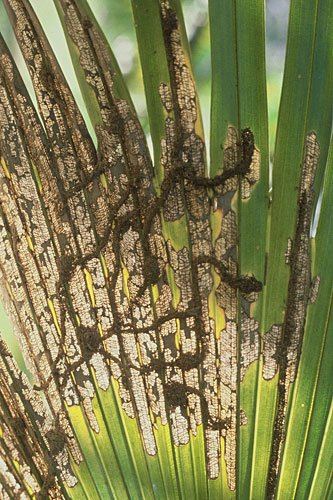 Mostly cosmetic
A small caterpillar that feeds under a mat of silk and droppings on the underside of fronds.
Signs and what we do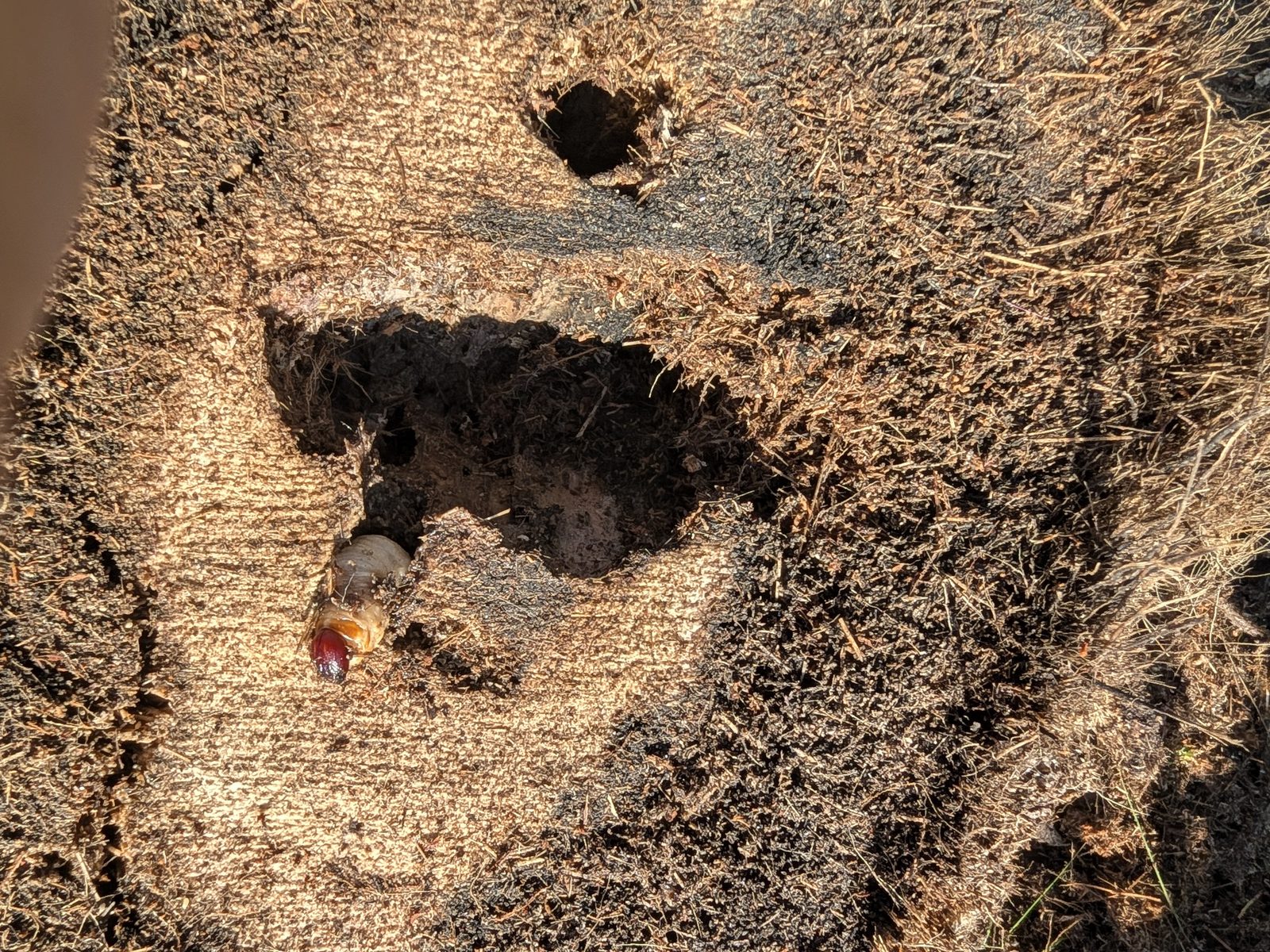 Serious
North America's largest weevil and the most lethal insect pest of palms in Florida.
Signs and what we do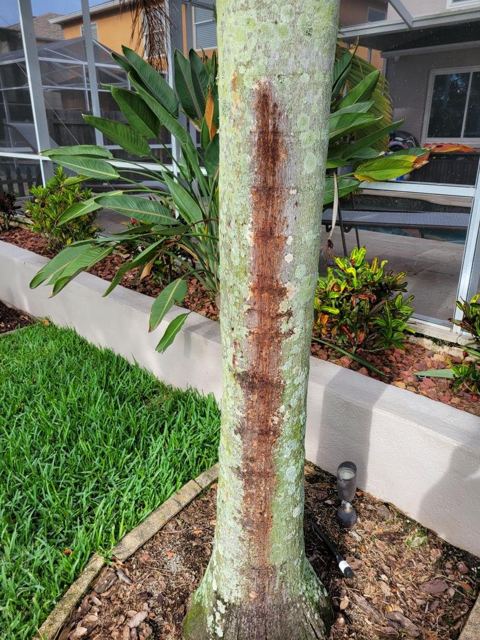 Serious
Tiny wood-boring beetles that attack palms and trees already under stress.
Signs and what we do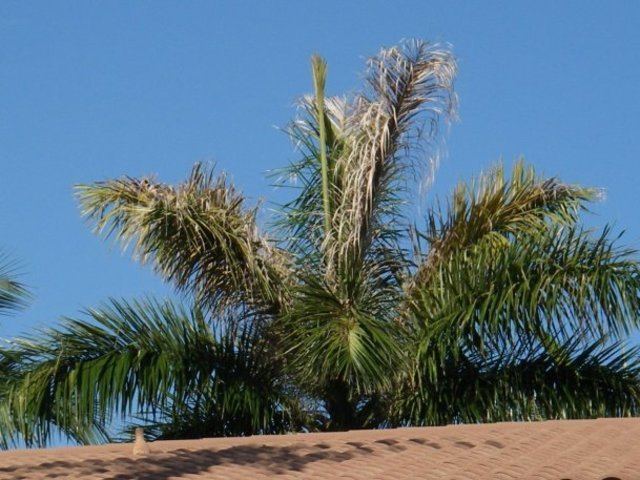 Mostly cosmetic
A tiny bug that feeds only on royal palms.
Signs and what we do