
Palm pest
Ambrosia Beetles
Tiny wood-boring beetles that attack palms and trees already under stress. Finding them usually means the host was in trouble before they arrived.
Palms it affects: Any stressed palm, Coconut palm, Royal palm, Queen palm, Canary Island date palm, Foxtail palm
- Affects
- Any stressed palm, Coconut palm, Royal palm, Queen palm and more
- When it shows
- Spring flight peaks about February through May, and after hurricanes, drought, cold and transplanting.
- What we do first
- Find the stress that drew them in.
What you see
Signs in the field
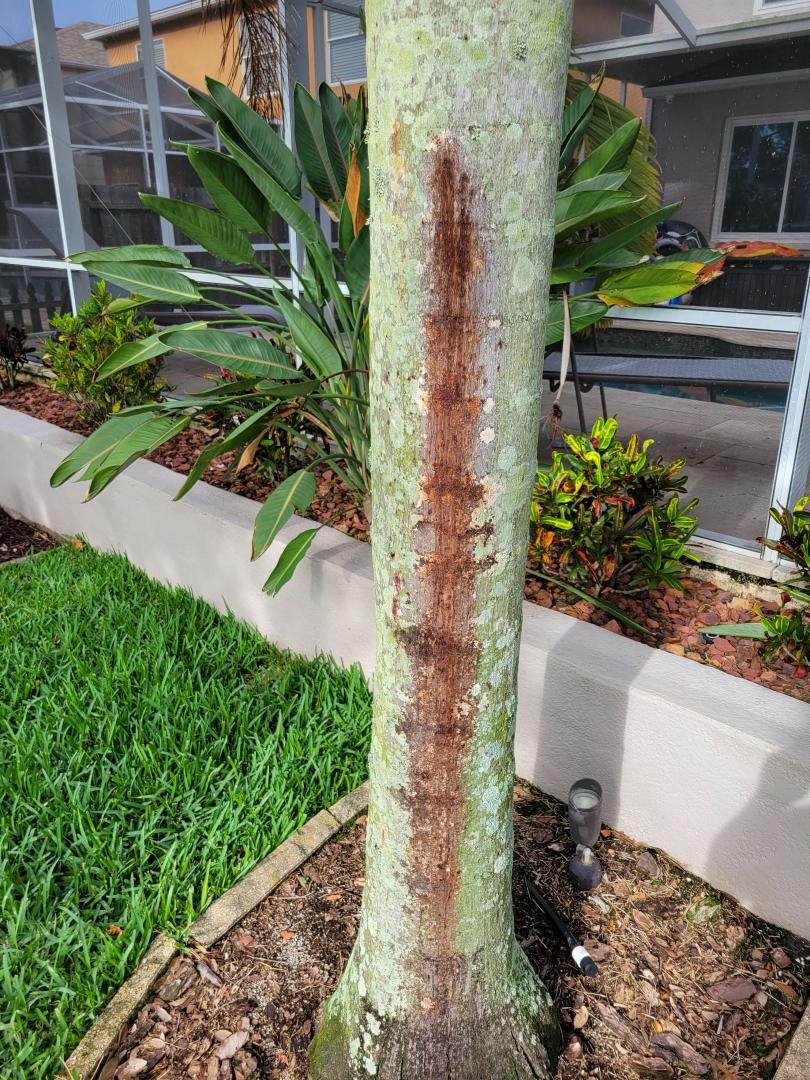
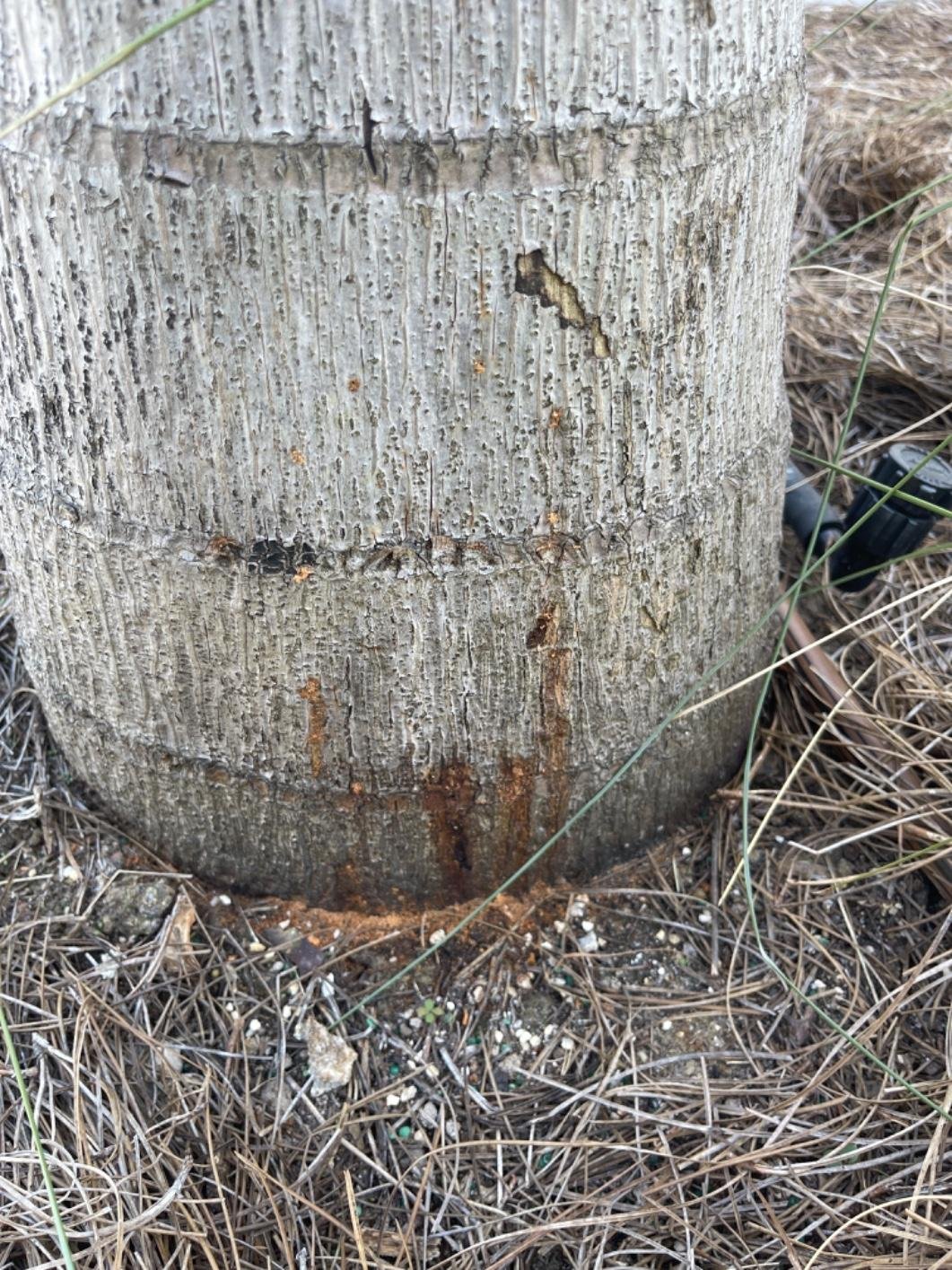
- Thin tubes of packed sawdust sticking out of the trunk like toothpicks
- Fine, flour-like boring dust in bark crevices, leaf bases and on the ground below
- Clusters of pinhead-sized holes, often weeping sap or fermented fluid
- Narrow, dark-stained tunnels when an attacked trunk is cut
- A thinning, paler canopy and wilting as the attack builds
From the field · 1 of 3
The detail
What else to know
A sign of stress
Ambrosia beetles are secondary pests. Females fly to hosts that give off the scent of decline: drought, flooding, cold injury, lightning, root damage, fresh wounds or a recent transplant.
The more important question is what stressed the host in the first place.
Why it matters
The beetles do not eat the wood. They farm a fungus inside their tunnels, and the fungus spreads into the surrounding tissue. In a palm, the tunnels cut water-conducting bundles that cannot be rerouted, and a palm does not wall off the damage the way a tree does.
Light activity in a recovering host may not be fatal. Heavy tunneling in a palm trunk usually is. Beetle wounds can also let in Thielaviopsis trunk rot.
When we see it
Spring flight peaks from about February through May in Southwest Florida, and activity continues year-round in warm years. Pressure is highest after hurricanes, drought, cold events and transplant cycles, and in newer communities with many recent plantings.
What we do
How Ptolemy handles it
Field condition first, then the recommendation. Treatment, removal and diagnosis calls are made by an ISA Certified Arborist, and the serious ones are confirmed in a lab.
- Treat a beetle find as a stress workup first: roots, irrigation, nutrition and physical damage.
- Our certified arborist judges how far the tunneling has gone. Most heavily infested hosts end in a removal recommendation.
- On a high-value palm or tree the client wants to keep, or one caught early, a preventive bark spray is an arborist call, not a default.
- Removed wood is destroyed, not chipped and spread on site, and the stump is ground. Removal is timed before the next brood flies.
- No injection as a default route on palms. A palm cannot wall off an injection wound.
Next step
Seeing ambrosia beetles on your property?
Keep reading
More palm pests
 Serious
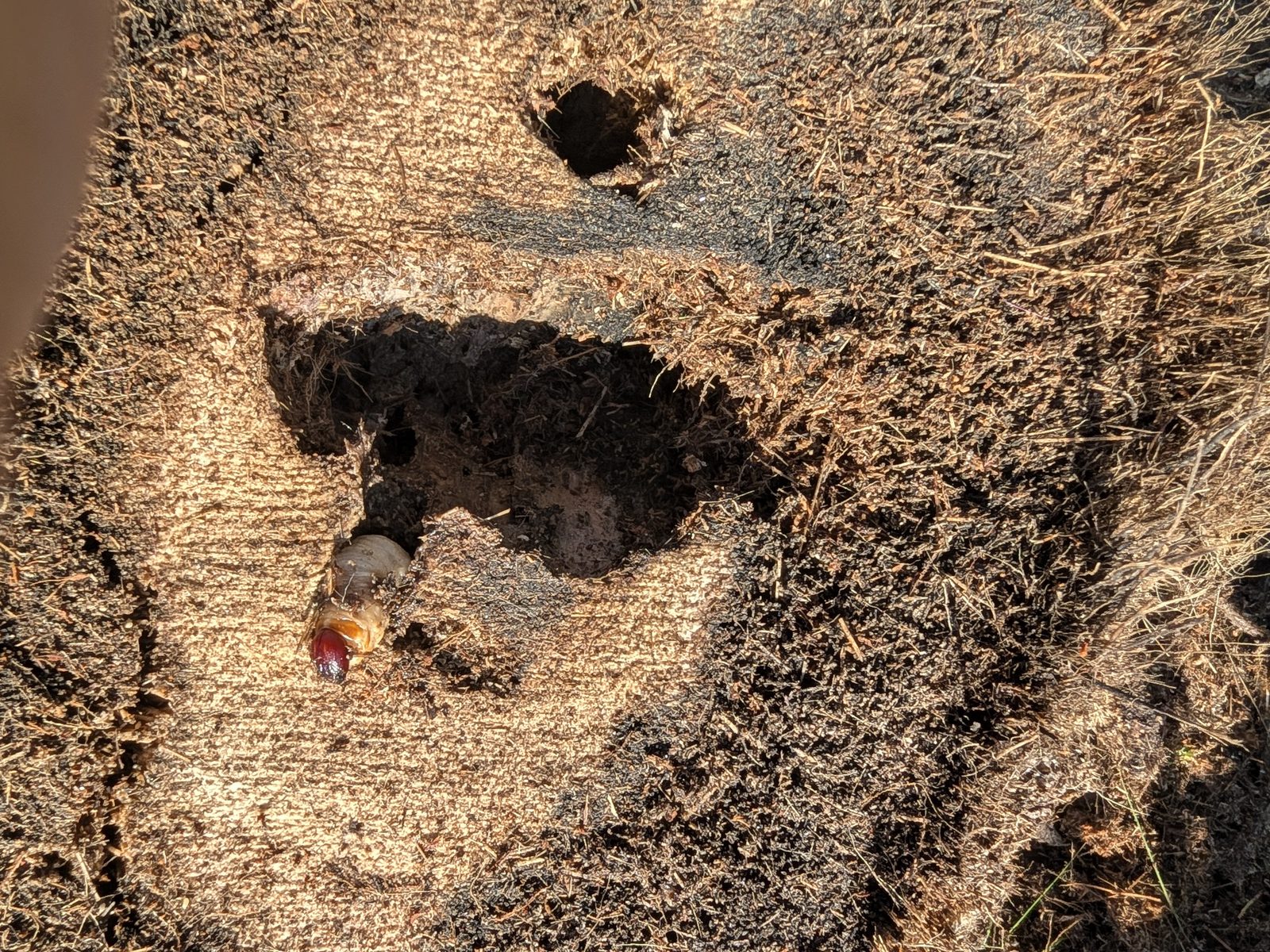
North America's largest weevil and the most lethal insect pest of palms in Florida.
Signs and what we do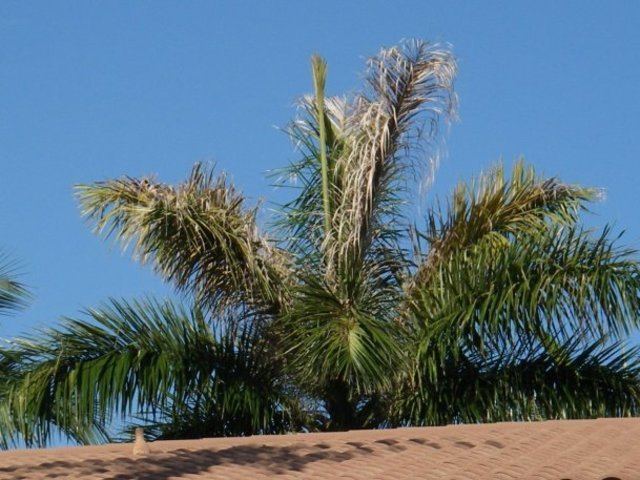 Mostly cosmetic
A tiny bug that feeds only on royal palms.
Signs and what we do Mostly cosmetic
A small caterpillar that feeds under a mat of silk and droppings on the underside of fronds.
Signs and what we do Manageable
Rugose spiraling whitefly is mostly a cosmetic problem on palms: sticky honeydew and black sooty mold.
Signs and what we do