
Palm pest
Palm Leaf Skeletonizer
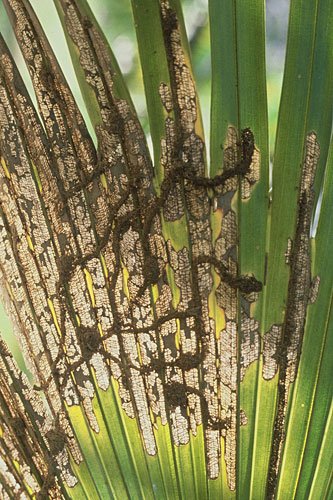
A small caterpillar that feeds under a mat of silk and droppings on the underside of fronds. Damage is usually cosmetic on a healthy palm, but heavy or repeated feeding adds stress.
Palms it affects: Cabbage palm (Sabal), Queen palm, Sylvester palm, Canary Island date palm, Royal palm, Coconut palm, Most planted palms (78 or more documented hosts)
- Affects
- Cabbage palm (Sabal), Queen palm, Sylvester palm, Canary Island date palm and more
- When it shows
- Year-round, with peak pressure March through November.
- What we do first
- Confirm live larvae inside the frass tubes.
What you see
Signs in the field
- Dark brown tubes of silk and droppings matted along the underside of fronds
- Leaflets eaten between the veins, leaving a see-through skeleton
- Translucent tan leaflets that dry to a bleached, papery look
- Brown frond tips and discoloration starting on the lower, outer fronds
- Caterpillars up to about 0.5 inch (12 mm) hidden inside the tubes
How serious is it
On a healthy, well-fed palm, a single moderate infestation is mostly cosmetic. Concern rises when several fronds are heavily affected, or when the same palm is hit cycle after cycle.
A palm that cannot replace damaged fronds before the next round will slowly lose condition.
When we see it
It is active year-round in South Florida, with peak pressure from March through November. It shows most on the lower and outer fronds. Natural enemies keep most populations in check most years.
Active or old damage
The silk tubes can stay on a frond for months after the caterpillars are gone. Live caterpillars and fresh, translucent feeding mean an active infestation. Empty tubes and fully bleached leaflets mean it has already run its course.
What we do
How Ptolemy handles it
Field condition first, then the recommendation. Treatment, removal and diagnosis calls are made by an ISA Certified Arborist, and the serious ones are confirmed in a lab.
- Check frond undersides at every visit and separate active infestations from old damage.
- Tolerate light feeding. Act on heavy defoliation, repeat infestations, or a measurable drop in palm condition.
- Remove heavily infested fronds that are already declining, so a treatment can reach the caterpillars. Fronds above the 9-and-3 line stay on the palm.
- Lead with Bt, a caterpillar-specific biological insecticide that spares beneficial insects. Stronger products are an escalation our certified arborist calls, not a first step.
- No calendar-based broad-spectrum spraying, which kills the wasps and predators that keep this pest down.
Next step
Seeing palm leaf skeletonizer on your property?
Keep reading
More palm pests
 Serious
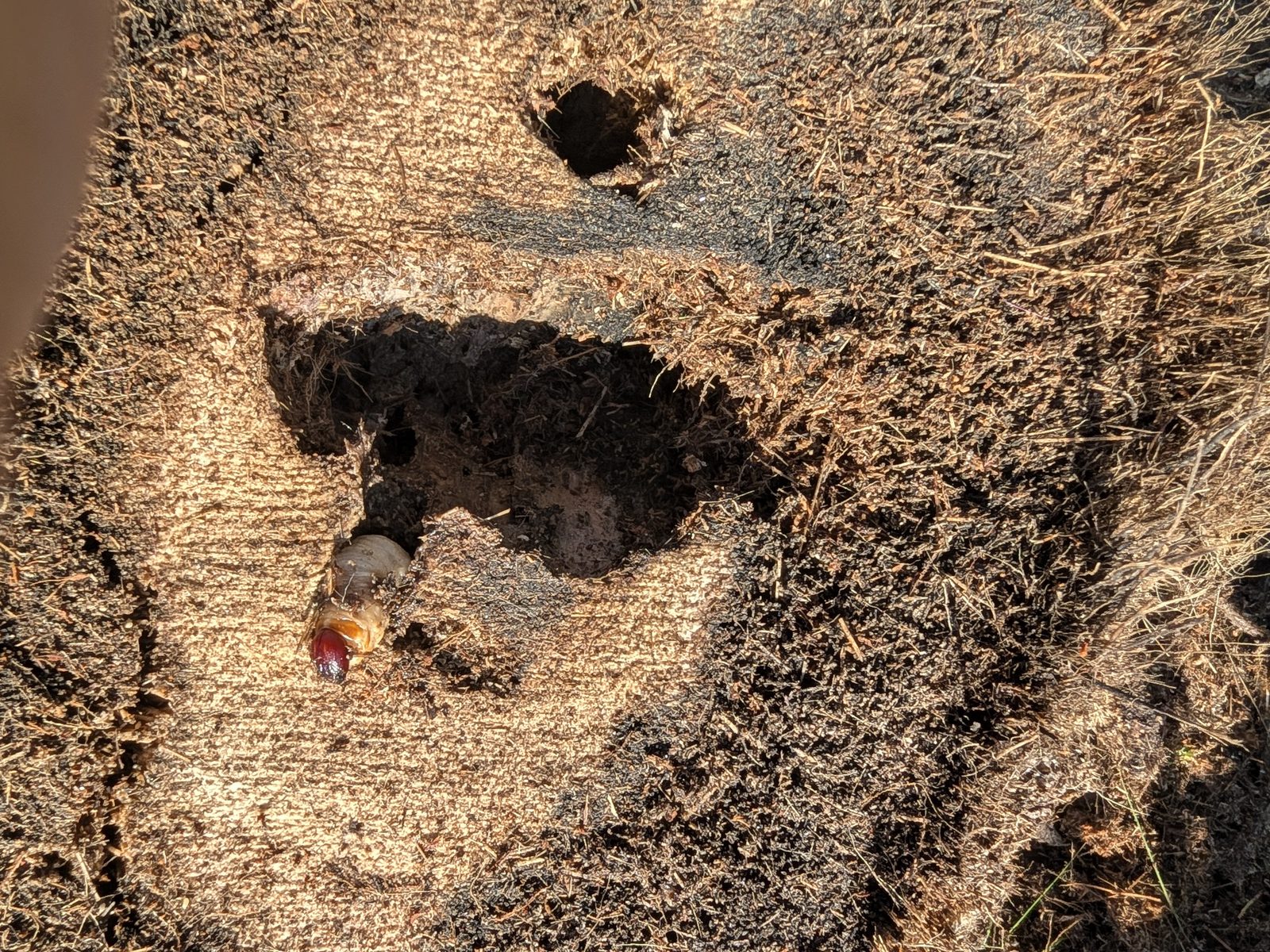
North America's largest weevil and the most lethal insect pest of palms in Florida.
Signs and what we do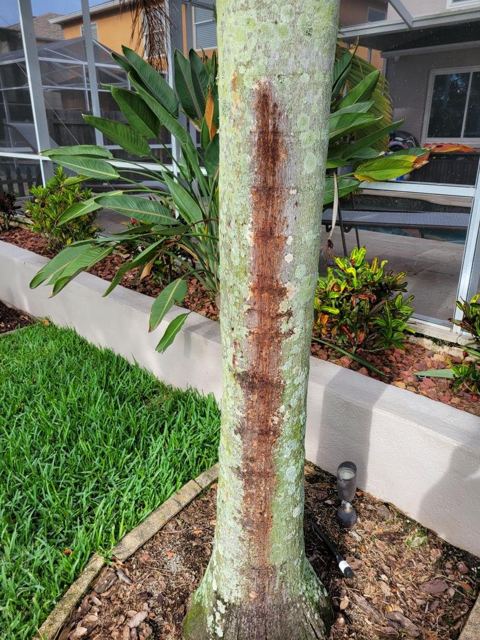 Serious
Tiny wood-boring beetles that attack palms and trees already under stress.
Signs and what we do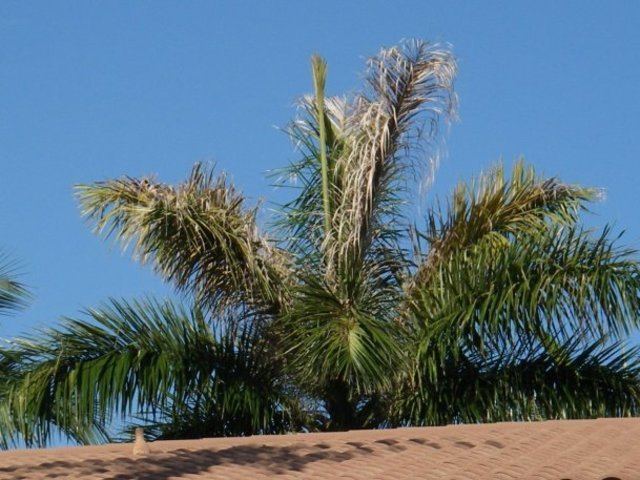 Mostly cosmetic
A tiny bug that feeds only on royal palms.
Signs and what we do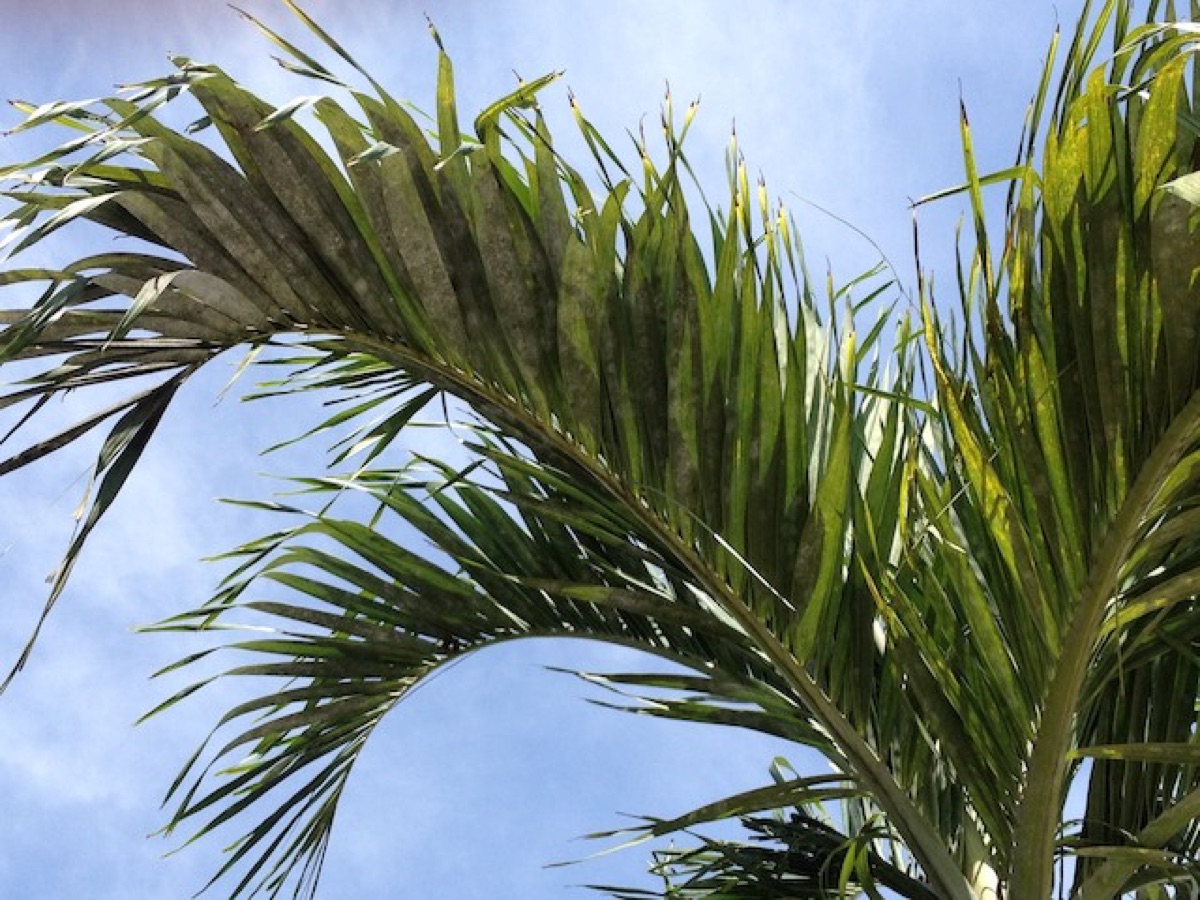 Manageable
Rugose spiraling whitefly is mostly a cosmetic problem on palms: sticky honeydew and black sooty mold.
Signs and what we do