
Palm pest
Silky Cane Weevil
A smaller weevil that follows stress. It moves into palms that a wound, a transplant, cold or another pest has already opened. It rarely kills a palm on its own, but a find is a warning: the same stress invites the palmetto weevil, which palms do not survive.
Palms it affects: Canary Island date palm, Royal palm, Majesty palm, Spindle palm, MacArthur palm, Mexican fan palm (Washingtonia)
- Affects
- Canary Island date palm, Royal palm, Majesty palm, Spindle palm and more
- When it shows
- Adults build through spring, summer and early fall. That is when fresh wounds get found.
- What we do first
- Find the wound or stress that let it in, and rule out the palmetto weevil.
What you see
Signs in the field
- Amber, gummy sap bleeding from the trunk, the crownshaft or the bases of the leaf stems
- Boring tunnels under the sap, through leaf stems and trunk
- Leaf stems weakening or breaking
- Legless cream to yellow grubs with a reddish-brown head, and fiber cocoons inside the leaf stems
- Adults 9 to 14 mm (about 0.35 to 0.55 inch) long, red to orange and black, tucked in fronds and leaf litter
A stress follower
This weevil does not open healthy palms. Adults find damaged or decaying tissue and lay eggs there. The grubs tunnel from the dead tissue into sound leaf stems, crownshaft and trunk.
It was first found in Florida in 1984, in Miami-Dade County, and is now present through South Florida.
Why a find matters
The damage is mostly structural and cosmetic. The real risk is what comes next. The stress that drew it in also draws the palmetto weevil, and on a Canary Island date palm that follow-on attack is the lethal event.
Telling the two weevils apart
Size settles most cases. The silky cane weevil runs 9 to 14 mm (about 0.35 to 0.55 inch). The palmetto weevil runs 19 to 30 mm (about 0.75 to 1.2 inches). Anything larger or redder than expected gets escalated.
Why a single spray does not hold
Egg to adult takes roughly two to three months, and the grubs feed for about seven weeks inside the palm, out of reach of one application. The durable fix is removing the wound and the stress.
What we do
How Ptolemy handles it
Field condition first, then the recommendation. Treatment, removal and diagnosis calls are made by an ISA Certified Arborist, and the serious ones are confirmed in a lab.
Written down before it is neededThis is covered by our palmetto weevil protocol (crown checks).
- Fix the cause first: the transplant, irrigation, nutrition, storm or cold damage that opened the palm.
- No green-frond pruning and no fresh wounds on at-risk palms from spring through early fall.
- Crown and trunk checks on recently transplanted and stressed host palms at every visit, looking for the palmetto weevil too.
- On a confirmed, high-value infestation, a targeted soil drench chosen by our certified arborist and repeated through the cycle. It is suppression, not a one-time fix.
- Heavily infested tissue or palms removed and destroyed, so the borer is not moved to other palms.
- We do not trap this weevil.
Next step
Seeing silky cane weevil on your property?
FAQ
Questions about silky cane weevil
Will the silky cane weevil kill my palm?
Rarely on its own. It mostly damages leaf stems and trunk tissue. The risk is that the same stress invites the palmetto weevil, which is lethal. That is why we look for both.
Why not just spray it?
The grubs live inside the palm for weeks, out of reach of a single application. Spraying without fixing the wound or stress that drew them in does not hold. A targeted drench is used only on confirmed, high-value cases.
Do you set traps?
No. Traps catch few of these weevils in Florida palm settings. Crown checks and wound prevention do more.
Built on
Our own field records, our written specs, and these public references:
- UF/IFAS EDIS IN210, Silky Cane Weevil
Keep reading
More palm pests
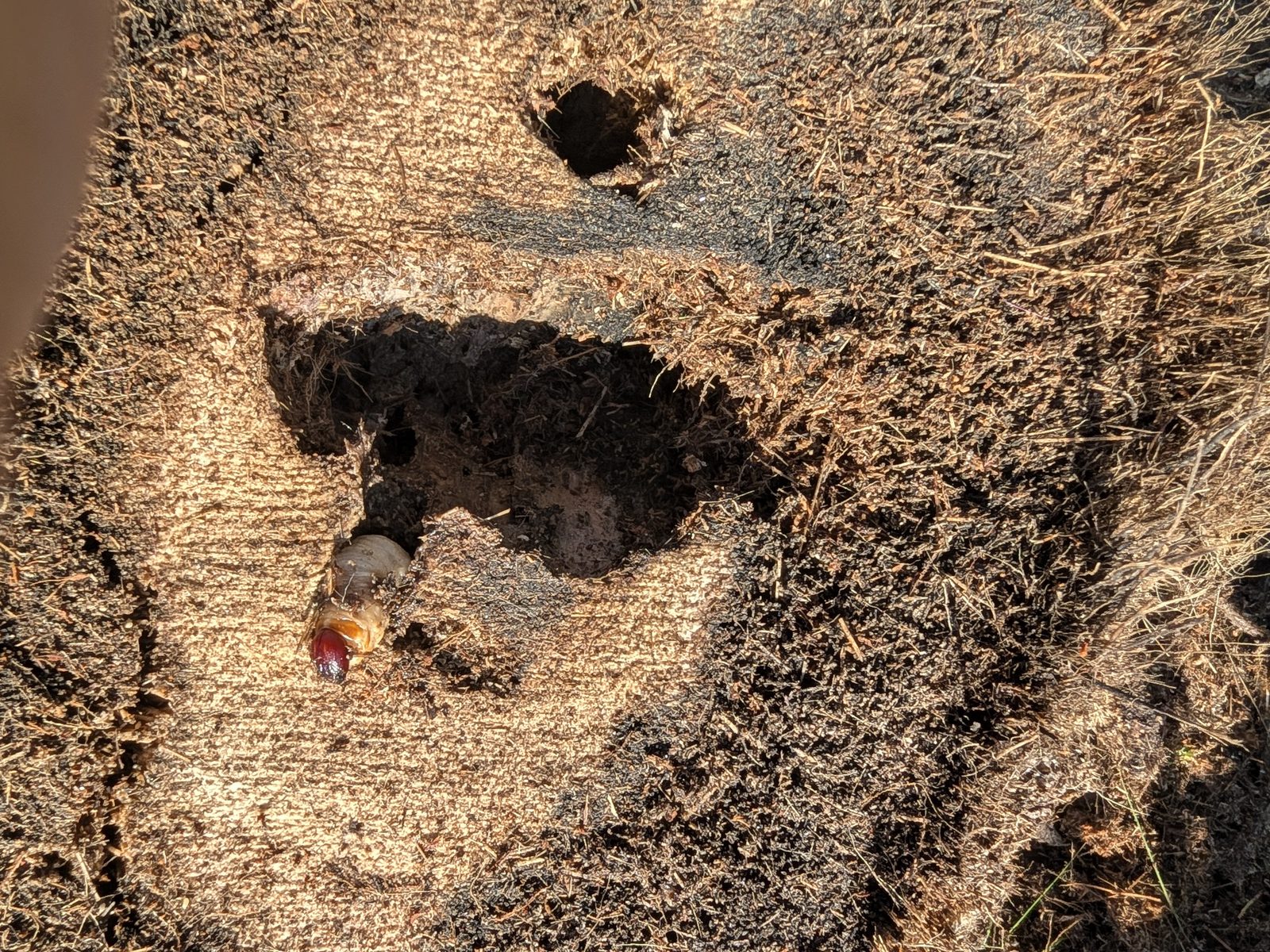 Serious
North America's largest weevil and the most lethal insect pest of palms in Florida.
Signs and what we do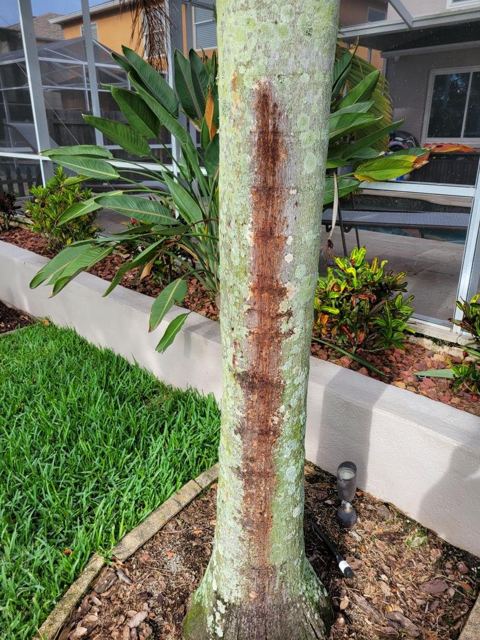 Serious
Tiny wood-boring beetles that attack palms and trees already under stress.
Signs and what we do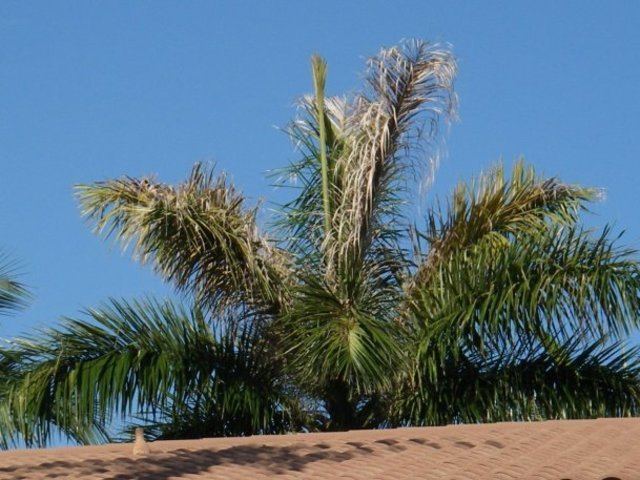 Mostly cosmetic
A tiny bug that feeds only on royal palms.
Signs and what we do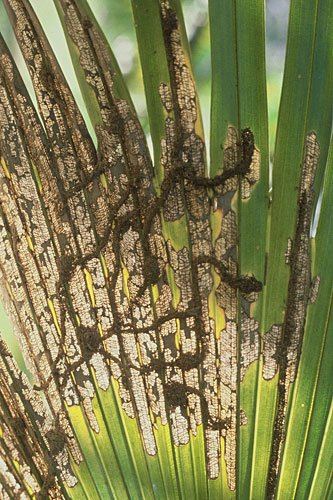 Mostly cosmetic
A small caterpillar that feeds under a mat of silk and droppings on the underside of fronds.
Signs and what we do