
Palm disorder
Cold Damage
Chilling, frost and hard freezes burn fronds and can kill the bud. The full damage takes days to weeks to show, and the weeks after a freeze are when rot moves into cold-killed tissue. Whether the bud survives is the one question that decides recovery.
Palms most affected: Coconut palm, Christmas palm (Adonidia), Royal palm, Foxtail palm, Pygmy date palm, Queen palm (more tolerant), Cabbage palm (the most cold-hardy)
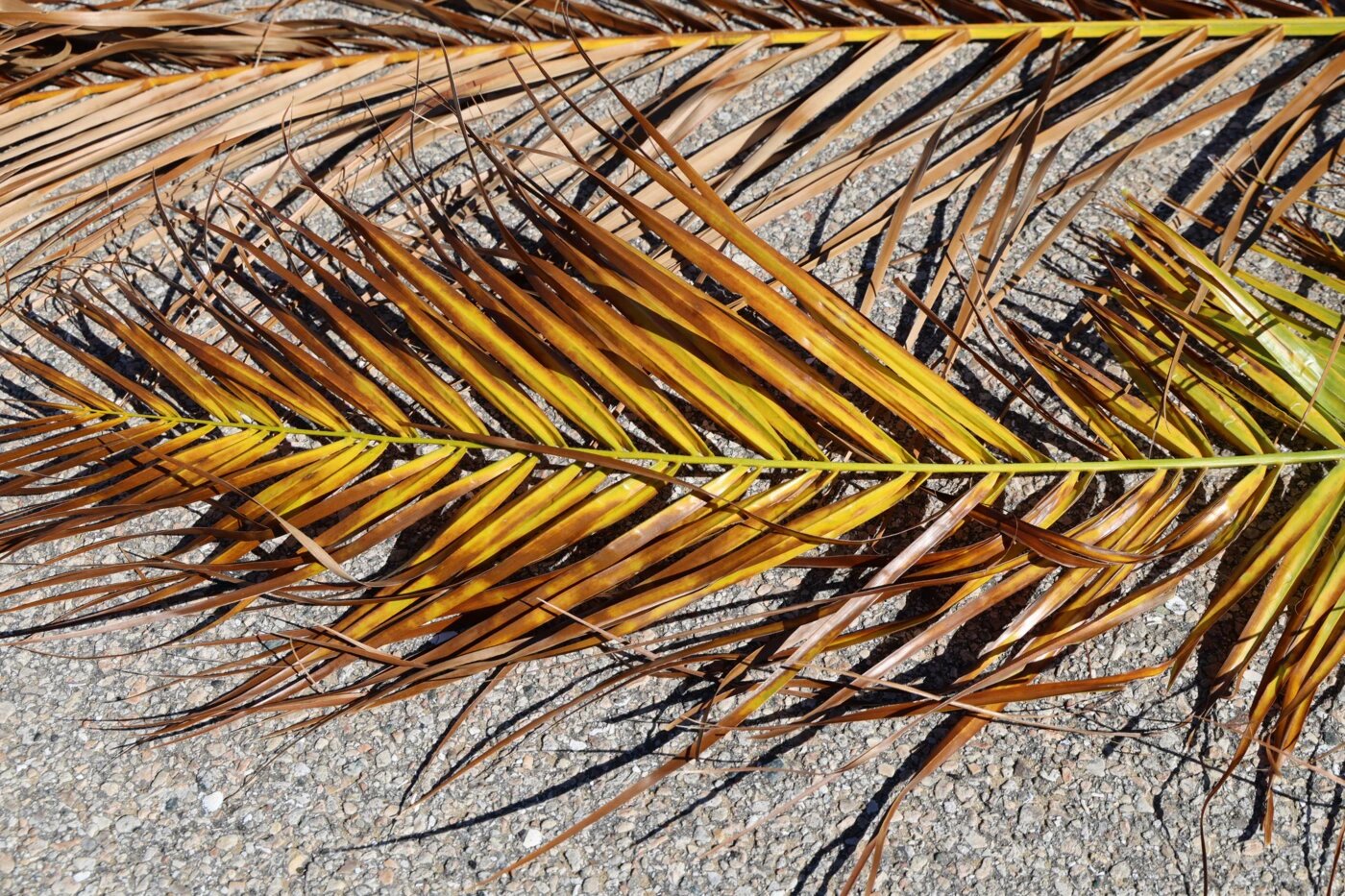
- Affects
- Coconut palm, Christmas palm (Adonidia), Royal palm, Foxtail palm and more
- When it shows
- Winter cold fronts, November through February. Secondary rot peaks 2 to 6 weeks after the freeze.
- What we do first
- The spear test: a firm pull on the spear leaf, checking resistance and odor.
What you see
Signs in the field
- Frond tips browning first, then inward along the leaflets, often with a sharp line between dead and living tissue
- The same browning on many palms, on the same exposure, after a known cold night
- A discolored or wilted spear leaf, the first sign the bud is involved
- On royal, king and Christmas palms, a soft or shrinking crownshaft where it meets the trunk
- A spear that pulls out easily with a soft, foul-smelling base, meaning rot has set in
- Clear to reddish fluid running down the trunk, or a crown with every frond hanging down: survival is unlikely
From the field · 1 of 4
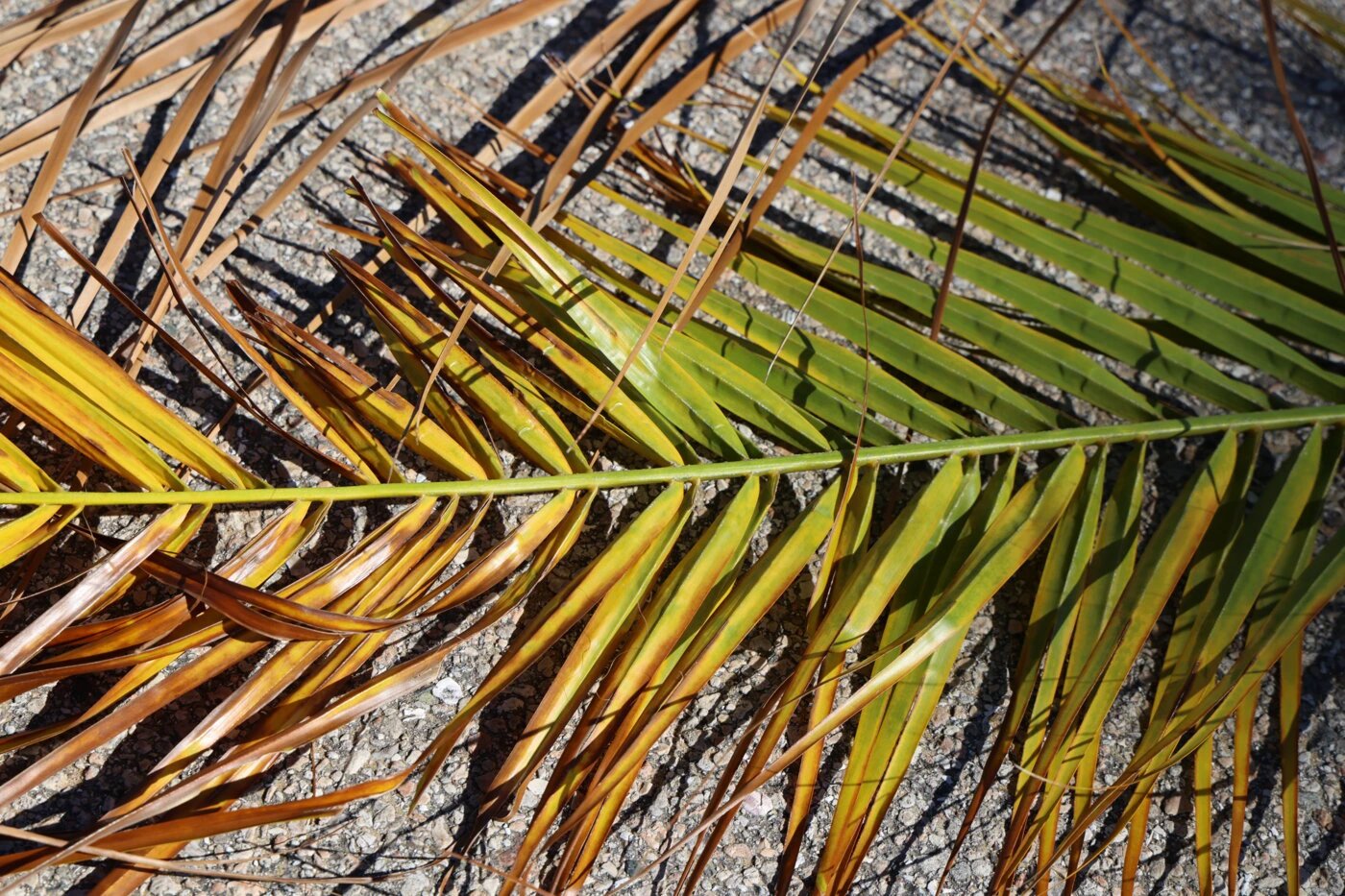
The detail
What else to know
Three kinds of cold injury
Chilling. The most tropical palms, coconut and Christmas palm, are injured by long spells below about 50°F (10°C), even without frost.
Frost. At 32°F (0°C) on the leaf surface, ice forms inside the tissue and ruptures cells.
Hard freeze. Hours below freezing can kill the spear and the bud. A palm has one growing point, so a dead bud is fatal, even if the canopy stays green for weeks.
The damage shows late
Chilled tissue can look normal for one to two weeks before it browns, and spear trouble may not show for a week or more. A palm that looks fine the morning after is not cleared.
The weeks after are the danger
As it warms back up, fungi and bacteria move into the cold-killed tissue at the bud. That is the classic post-freeze bud rot. Flies drawn to the rotting smell can lay eggs in the crown, and their larvae add to the damage.
Recovery takes months
Tip burn only: 3 to 6 months for new fronds to replace the burned ones. Heavy frond damage with a firm spear: 6 to 12 months. Most fronds dead and the spear compromised: 12 to 24 months if the bud survives, and many do not.
No new growth 60 to 90 days after the freeze means the bud is almost certainly dead.
What we do
How Ptolemy handles it
Field condition first, then the recommendation. Treatment, removal and diagnosis calls are made by an ISA Certified Arborist, and the serious ones are confirmed in a lab.
- When a forecast drops below 50°F (10°C), we reach out first with a proposal for a protective soil drench, copper included.
- After the cold, the spear test on at-risk palms, with the low temperature and its duration recorded.
- Copper on the bud area where the spear is pulling or the bud looks compromised, no more than two applications. An insecticide drench is added if flies or larvae are already in the crown, on our certified arborist’s call.
- No cleanup pruning until the cold season passes, usually late February or March. Then the palm is pruned to the 9-and-3 line, and nothing above the line is cut.
- Year-round nutrition, potassium above all, because a well-fed palm handles cold better. Fertilizing pauses only around an active cold event, not all winter.
Next step
Seeing cold damage on your property?
FAQ
Questions about cold damage
Should we cut off the brown fronds right away?
No. Burned fronds still shade the bud, and fronds with any green still feed the palm. Our standard is to wait until the cold season passes, then prune to the 9-and-3 line and cut nothing above it.
How do we know if the palm will make it?
The spear tells us. A firm spear that resists a pull usually means a living bud. A spear that slides out soft and foul-smelling means the bud is in trouble. No new growth after 60 to 90 days means it is almost certainly dead.
Which palms are most at risk here?
Coconut and Christmas palms first, then royal, foxtail and pygmy date palms. Cabbage palms are the most cold-hardy palm in common use.
Can anything be done before a cold night?
Yes. When temperatures are forecast below 50°F (10°C), we offer a protective drench ahead of the event. Year-round nutrition also builds cold tolerance.
Built on
Our own field records, our written specs, and these public references:
- UF/IFAS ENH-92/MG318, Cold Damage on Palms
- UF/IFAS EDIS PP144, Bud Rot of Palm
Keep reading
More palm disorders
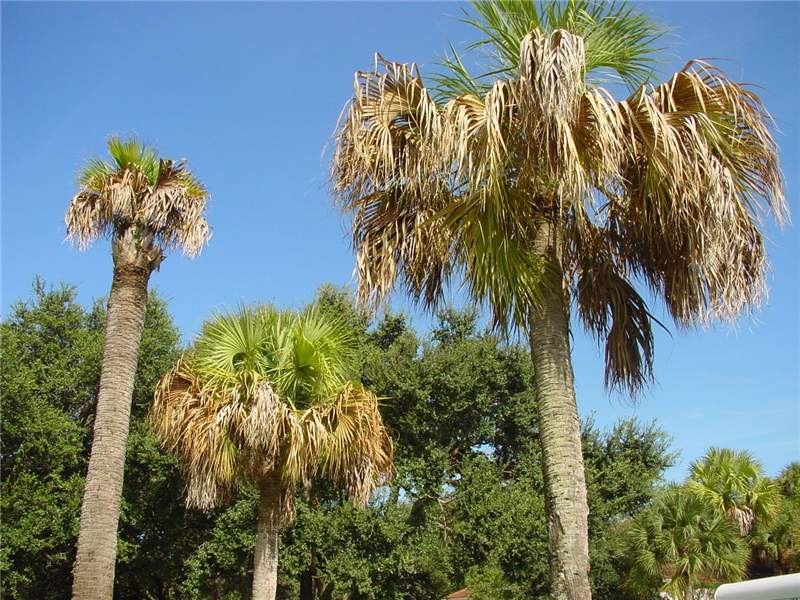 Manageable
The most common nutrient problem in Southwest Florida palms, and the one with the highest stakes.
Signs and what we do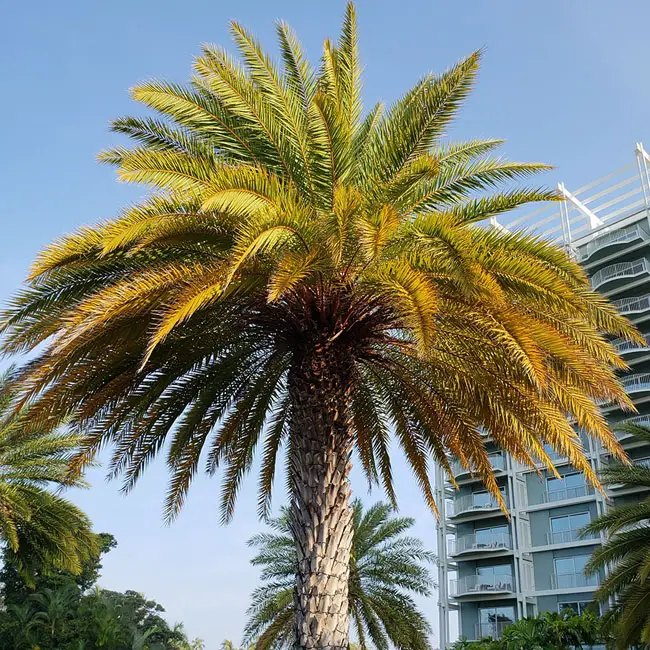 Manageable
Broad yellow bands on the oldest fronds, with a green stripe left down the center.
Signs and what we do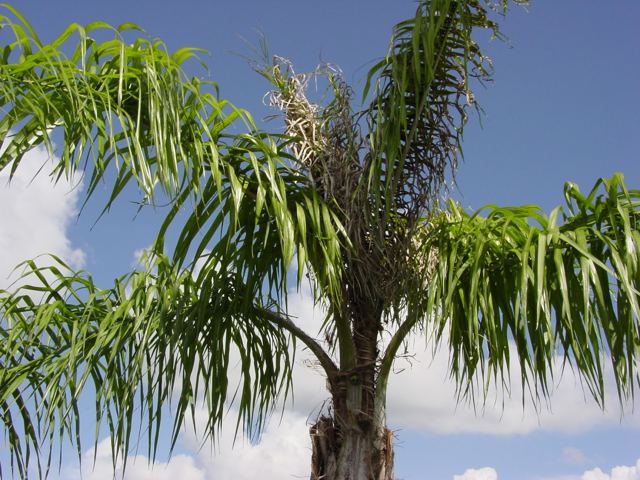 Serious
New fronds come out yellow, streaked and frizzled, curled tight around the stem.
Signs and what we do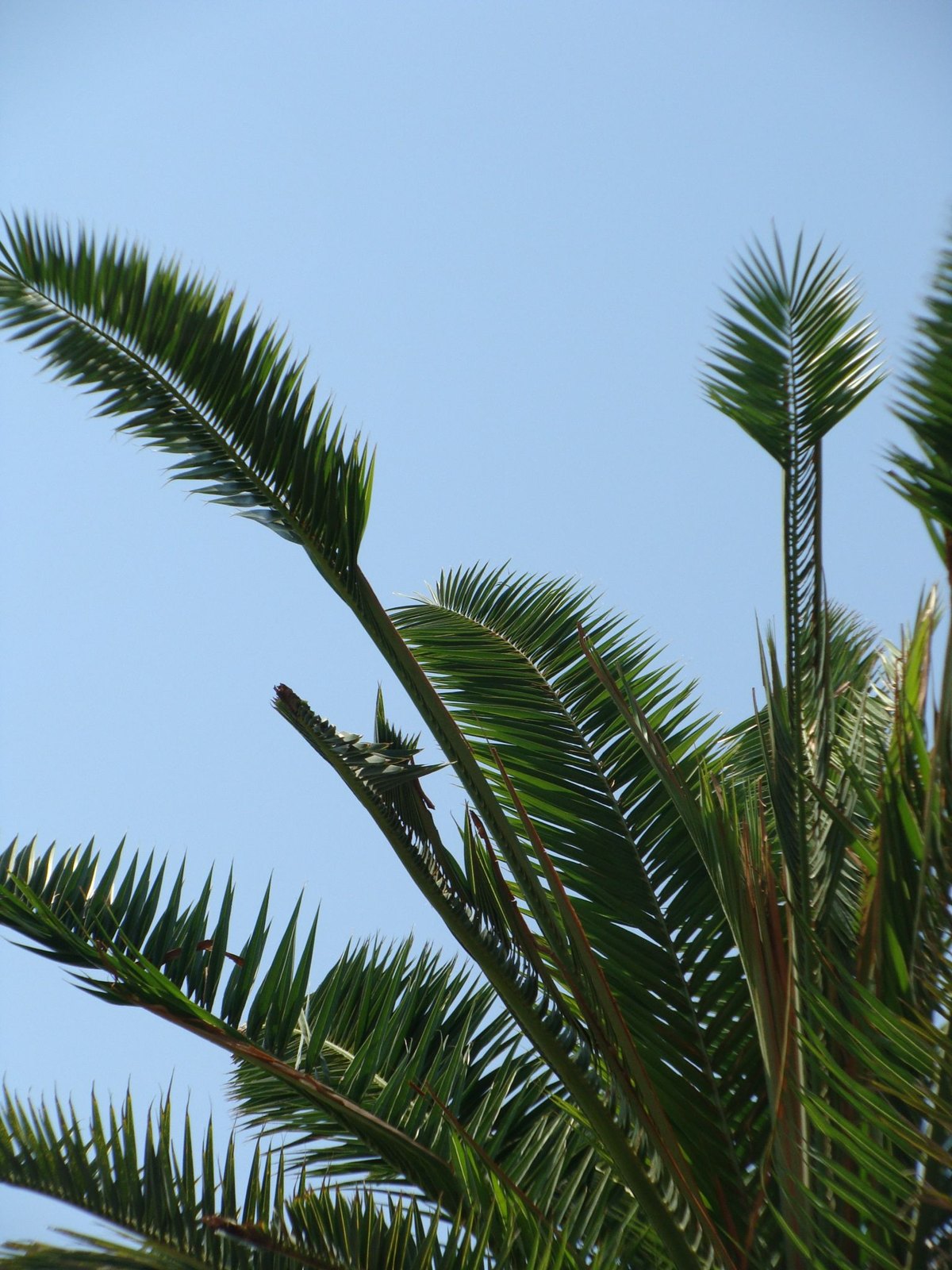 Manageable
Deformed new growth: bent leaflet tips, spears that will not open, crumpled accordion leaves, crowns that bend to one side.
Signs and what we do