
Palm disease
Pink Rot
An opportunistic fungus that gets into palms through wounds and tissue weakened by cold or drought. Pink to salmon spore masses are the giveaway, and fixing the stress matters more than any fungicide.
Palms it affects: Queen palm, Washingtonia, Canary Island date palm, Sylvester palm, Areca palm, Archontophoenix, Chamaedorea, Chamaerops, Howea, Trachycarpus
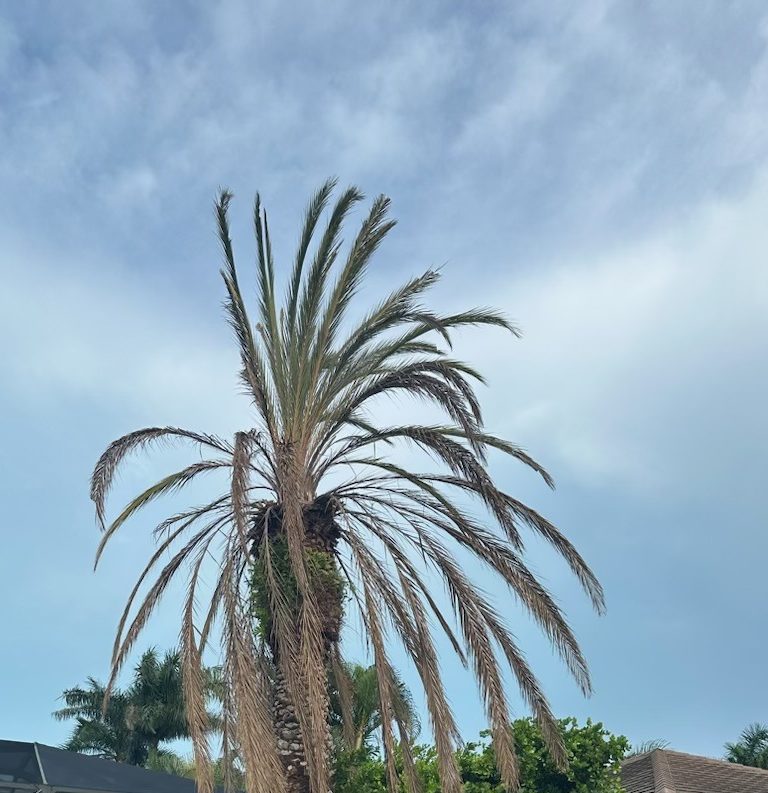
- Affects
- Queen palm, Washingtonia, Canary Island date palm, Sylvester palm and more
- When it shows
- Spikes in winter and early spring after cold events.
- What we do first
- Find and relieve the stress: cold, nutrition, wounds.
What you see
Signs in the field
- Pink, salmon or orange-pink spore masses on leaf bases, cut surfaces or cankers
- Leaf spots and rotting leaf bases
- A canker with a water-soaked margin on green trunk tissue
- Soft, rotting tissue, and bud rot on small palms
What lets it in
Pink rot needs a way in: a wound from pruning, a mower, a trimmer, a vehicle or insects, or tissue weakened by cold or drought.
It is believed to be worse in cooler weather, and the fungus does not grow above about 91 F (33 C).
How serious is it
At the mild end it causes leaf spots and leaf base rot. At the severe end, a trunk canker can work inward until the stem fails. If the bud is reached, a single-trunk palm is likely lost.
A caution on queen palms
Trunk rot on queen palms is often blamed on pink rot, but that link is unproven, and the spore mass is rarely seen on queen trunks. We do not call it pink rot without the spore mass or a lab result.
Our experience
Our field experience with pink rot is limited, so each case is handled on its own.
What we do
How Ptolemy handles it
Field condition first, then the recommendation. Treatment, removal and diagnosis calls are made by an ISA Certified Arborist, and the serious ones are confirmed in a lab.
- Find and correct the underlying stress first: cold damage, transplant shock, poor drainage, nutrition or over-pruning.
- Remove infected tissue, bag it and take it off site, with tools sanitized between cuts.
- A protectant fungicide to support the palm while the stress is corrected, as our certified arborist directs. Fungicide alone does not hold the disease.
- Leave cold-damaged fronds until the cold season passes, then prune to the 9-and-3 line. Nothing above the line is cut.
- Recommend removal when the bud is involved, the stress cannot be corrected, or the crown or trunk is a structural hazard.
Next step
Seeing pink rot on your property?
Keep reading
More palm diseases
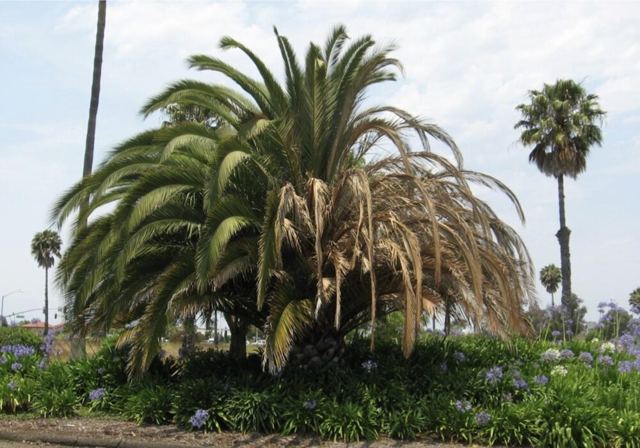 Killer
A fatal fungal wilt that plugs a palm's water-conducting tissue.
Signs and what we do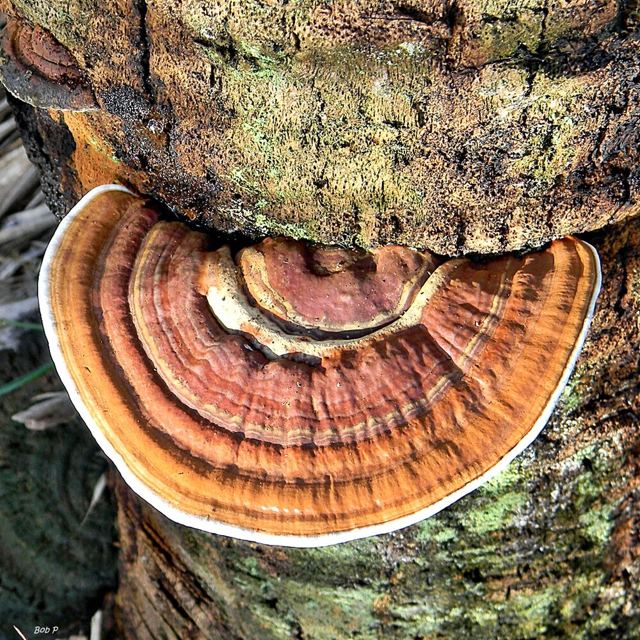 Killer
A wood-decay fungus that rots the base of the trunk and the roots.
Signs and what we do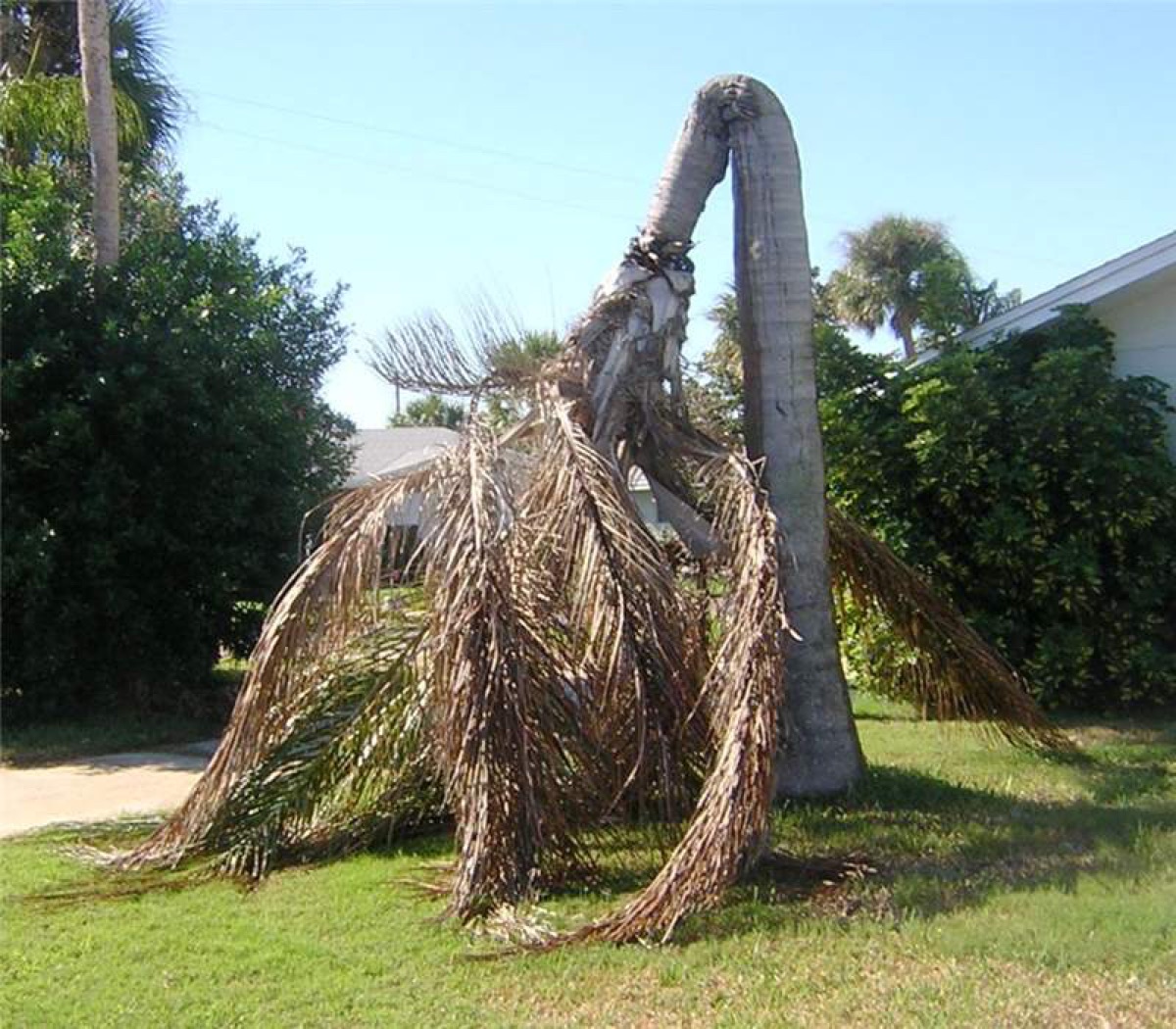 Killer
A fungus that enters through fresh trunk wounds and rots the trunk from one side inward.
Signs and what we do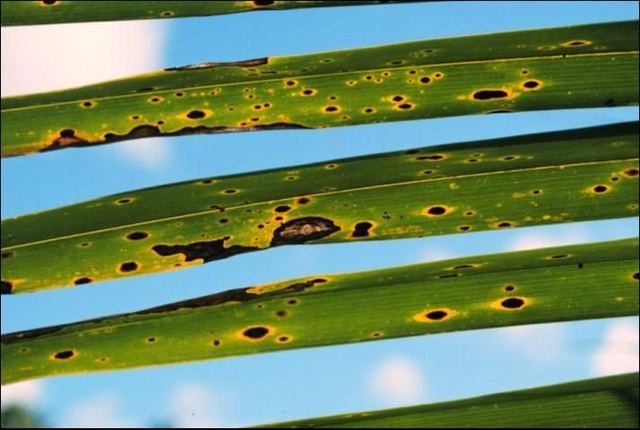 Mostly cosmetic
A group of fungal diseases that spot and blight palm fronds.
Signs and what we do