
Skip to content
ComingThe Ptolemy client portal: your map, reports, schedule and spending in one place.Portal coming:See what’s insideClient sign-in
Ptolemy(239) 467-0142Request the free master planFree master plan

Guide

Palm diseases in Florida

The short answer

Some palm diseases are fatal with no treatment, like Ganoderma butt rot, Fusarium wilt, Thielaviopsis trunk rot, and bud rot. Many leaf diseases are only cosmetic on a healthy palm. And much of what looks like disease is really a missing nutrient in Florida's sandy soil, which is fixable. The pattern tells you which is which.

Reviewed by an ISA-certified arborist, Jeff Kaulbars, FL-10118A, Ptolemy Inc.

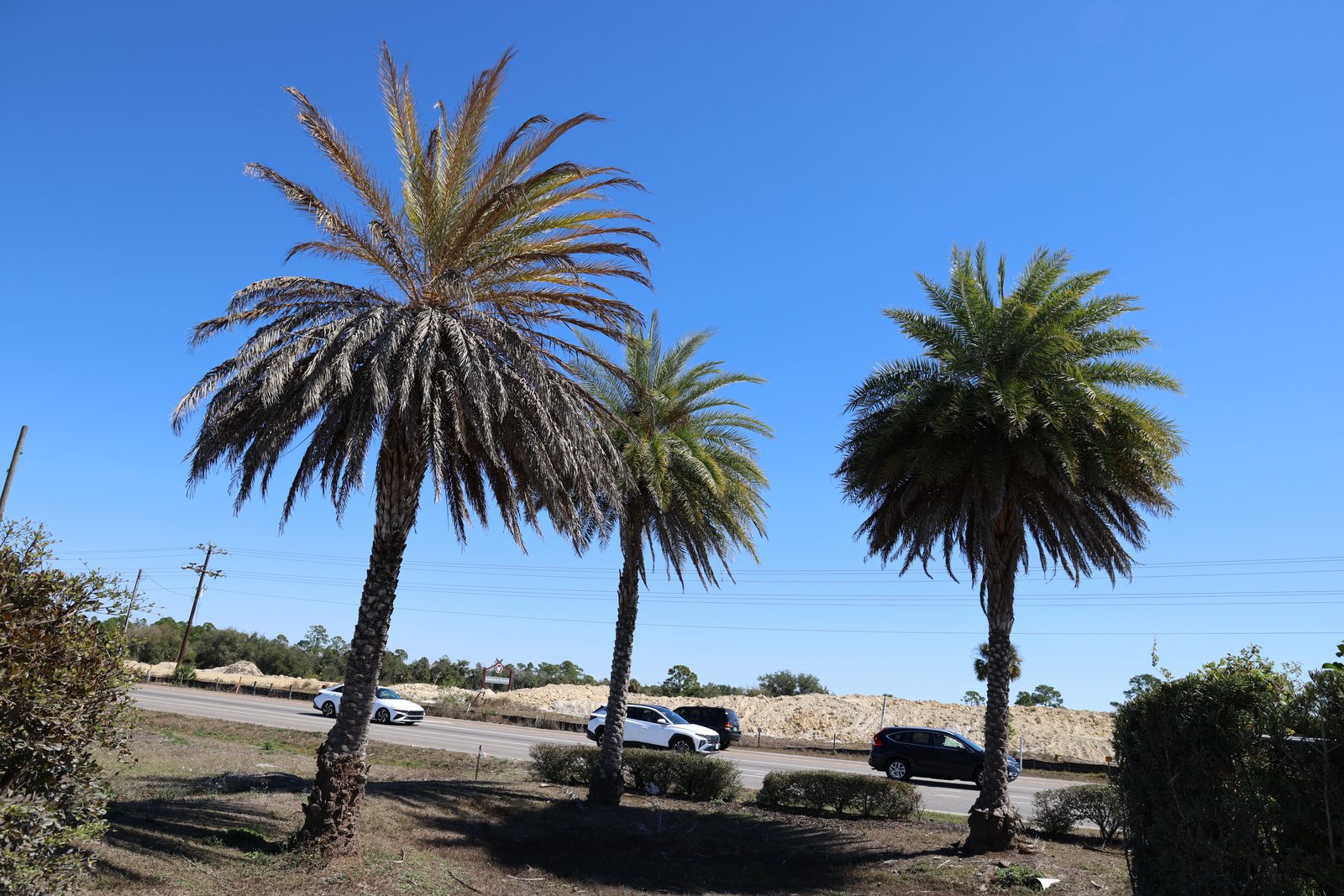
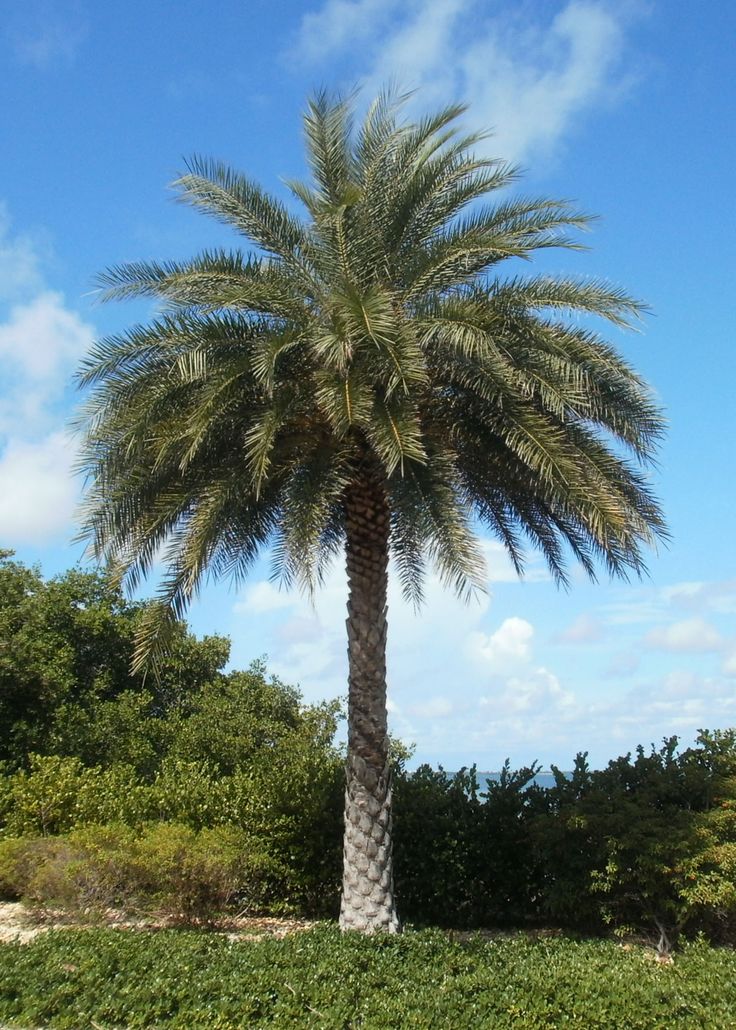
A declining Sylvester date palm beside healthy date palms. Its thin, browning crown suggests late-stage lethal bronzing: the kind of decline that tells us to test. Only the lab confirms.
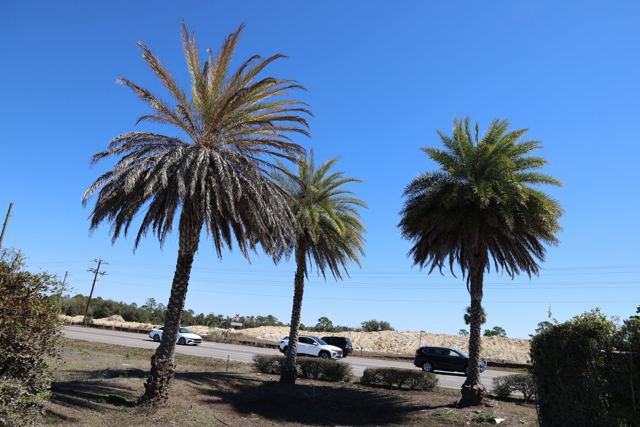
One of three Sylvester date palms the owner removed, with late-stage lethal bronzing symptoms. It was never tested.
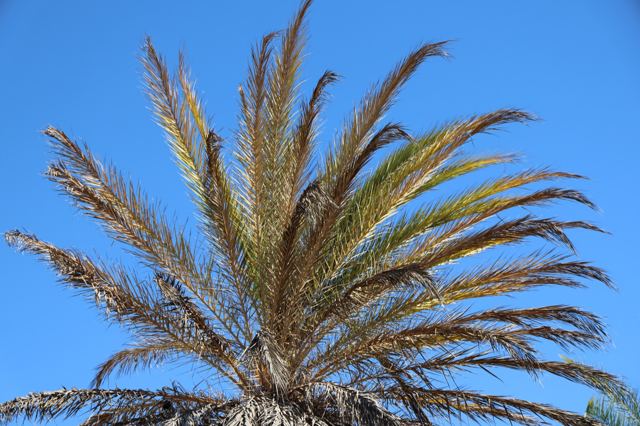
A close look at a Medjool date palm with lab-confirmed lethal bronzing.

The fatal palm diseases

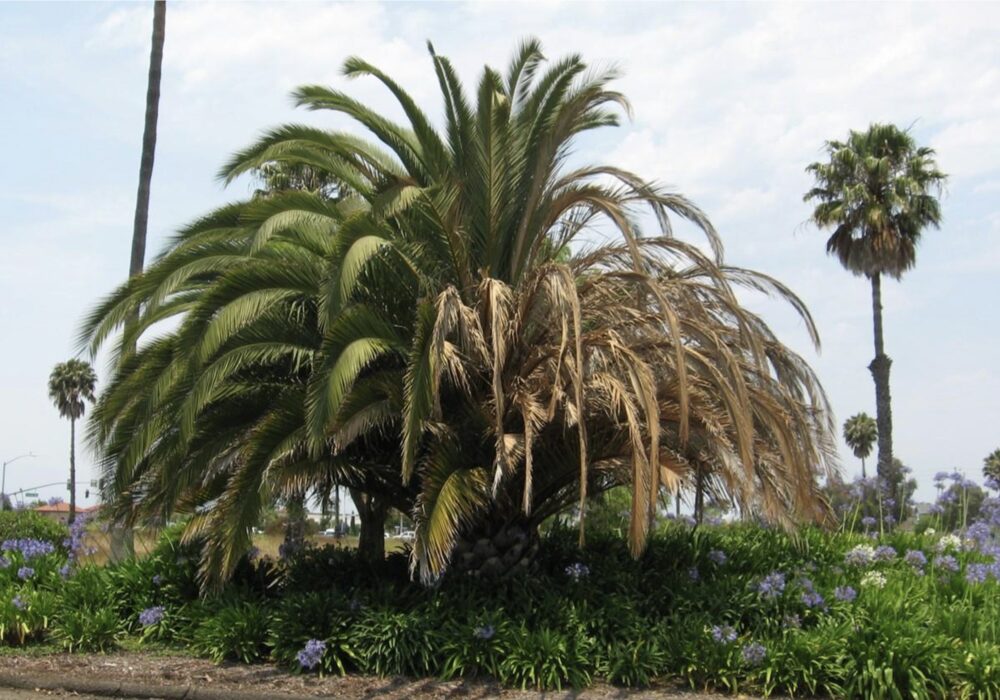
Four diseases here kill the palm, and there is no treatment that brings it back. Ganoderma butt rot shows as a shelf-shaped conk on the lower trunk; by the time it appears, the base is already rotting inside and the palm is lost. Fusarium wilt kills fronds one side at a time, often with a reddish-brown streak down the petiole, and hits Canary Island date palms hardest. Thielaviopsis trunk rot rots the trunk from inside and can cause sudden failure, sometimes the whole crown dropping. Bud rot rots the single growing point at the center; the spear leaf and youngest leaves wilt and the crown collapses, often after heavy rain or a storm.
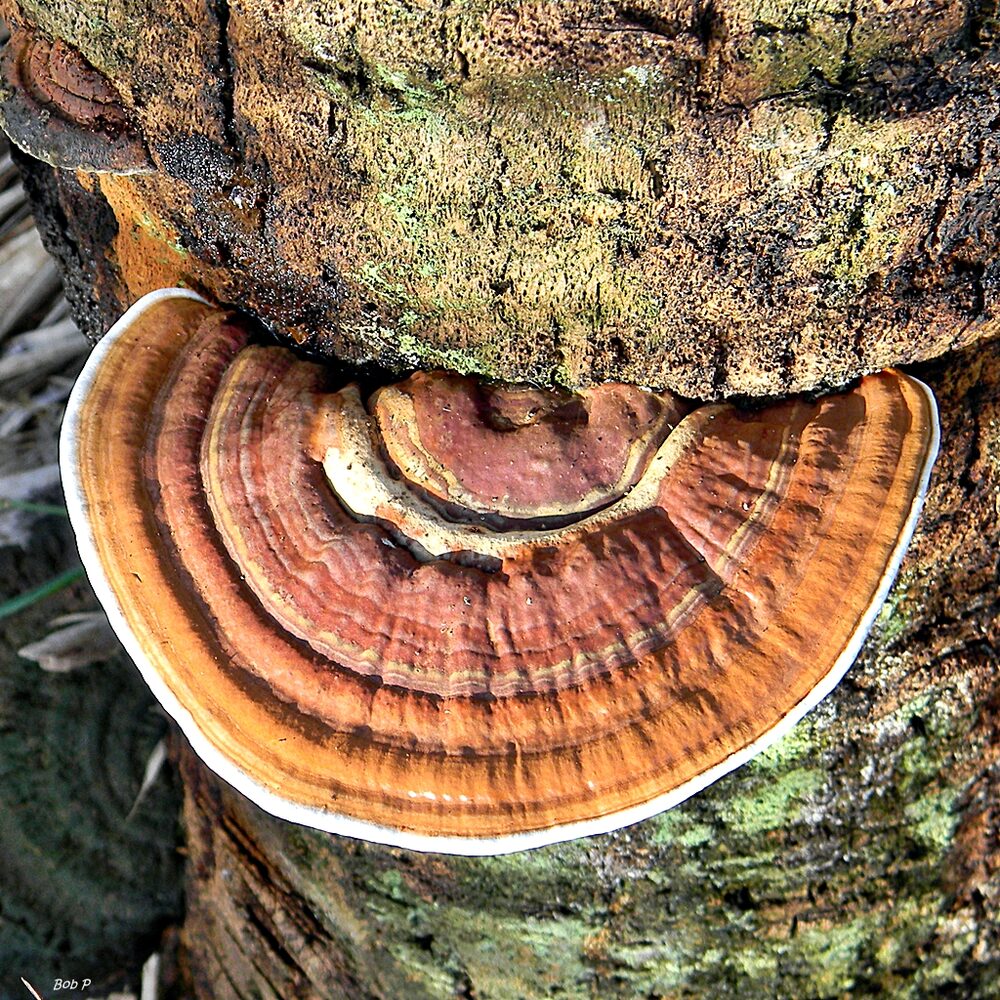
A Ganoderma conk, or butt rot, at the base of a palm trunk
Ganoderma butt rot. The conk means decay is already inside the trunk.
Fusarium wilt on a Canary Island date palm, killing fronds one side at a time
Fusarium wilt on a Canary Island date palm.

Do not knock off a Ganoderma conk

If you see a conk at the base of a palm, leave it. Knocking it off changes nothing about the disease, and it removes the evidence an arborist needs to assess the palm. Photograph it and report it. Whether anything can be replanted in that spot afterward is a question for a licensed arborist, decided site by site.

Fusarium spreads on pruning tools

Fusarium wilt moves palm to palm on contaminated pruning tools, which is why tool sterilization matters on date palms. The most reliable version uses a dedicated or hand-sanitized handsaw between palms, because a chainsaw cannot be fully cleaned in the field. At a site where Fusarium has been lab-confirmed, Ptolemy does not replant a susceptible palm (any Phoenix or queen palm) in that spot. The fungus survives in the soil for years with no safe waiting period, so the right move is a non-host species or a new location.
How Fusarium moves palm to palm
An infected Canary Island date palm
Infected palm
→
Contaminated saw
carries the fungus
→
A healthy date palm with a full canopy, graded Normal
Next palm infected
One cut moves it. The fungus rides the blade to the next palm, which is why sterilizing between every palm matters. A handsaw can be cleaned in the field. A chainsaw cannot, so we do not use one on susceptible date palms.
Our pruning protocol for Fusarium-susceptible palms
Handsaw only, with a disinfectant soak between every palm. We do not rely on chainsaw sterilization, because a chainsaw cannot be verified clean in the field.
The protocol is required wherever Fusarium is lab-confirmed, and available as a precaution on high-value date palms.
At a lab-confirmed Fusarium site, we do not replant a susceptible palm in that spot. The fungus survives in the soil for years, so the right move is a non-host species or a new location.
Most at riskCanary Island DateSylvesterTrue DateQueen

The leaf diseases are usually cosmetic

Spots, blotches, and blights on fronds come from many different fungi, and from the ground you cannot tell one from another. On a healthy, well-fed palm they are mostly an appearance issue. Most follow wet fronds and overhead irrigation. The one thing that changes the picture is when a leaf disease reaches the bud on an already weak palm. One trap: do not let a crew strip spotted older fronds to tidy a palm, especially one that may be short on potassium, because removing those fronds makes things worse.

Looks like disease, but it is nutrition

Most yellowing and browning on palms here is not a pathogen. It is a missing nutrient in this sandy, leached soil, and it follows a readable pattern. Potassium deficiency shows translucent yellow-orange spotting and frizzled dead tips on the older lower fronds. Manganese deficiency (frizzletop) shows in the new central growth, which comes in weak, streaked, and scorched. Magnesium deficiency shows broad yellow bands along the edges of older fronds while the center stays green. The good news: deficiencies are fixable on a proper fertilization program.

For the full pattern by frond age, see the Palm Fertilizing and Nutrition guide.

When the picture does not fit

A lot of declining palms do not have one tidy disease. The cause is often nutrition, root damage, planting too deep, or a water problem. When symptoms do not match anything above, that is exactly the case to send us a photo. Read any of these signs as consistent with, not a finished diagnosis. A certified arborist confirms, and a lab test settles it.

Frequently asked
Is yellowing always a disease?

No. Most palm yellowing in Southwest Florida is a nutrient deficiency, not a pathogen, and it follows a pattern by frond age. It is often fixable on a fertilization program.

Can a palm with Ganoderma be treated?

No. There is no treatment for Ganoderma butt rot. A conk at the base means decay is already inside the trunk, and the removal call belongs to a licensed arborist.

What is the difference between potassium and manganese deficiency?

Potassium shows on the older lower fronds first. Manganese shows in the new central growth. Where the symptom appears points to the cause.

SourcesUF/IFAS EDIS: PP139 (Fusarium wilt), PP143 (Thielaviopsis trunk rot), PP144 (bud rot), PP142 (leaf spots and blights). Diagnosis and treatment calls are made by an ISA-certified arborist. Full references

Not sure what you are looking at?

Send it to an ISA-certified arborist. We confirm before we treat. Start with the free master plan: we map every palm and tree and write one plan for 10 years.

Request the free master plan