
Palm disease
Lethal Yellowing
A fatal palm disease and the close cousin of lethal bronzing. The same insect spreads it, but it is a different strain and it centers on coconut palms. It is rare in Southwest Florida today, and only a lab can confirm it.
Palms it affects: Coconut palm (tall types most of all), Canary Island date palm, Date and pygmy date palms, Christmas palm, Chinese fan palm, Spindle palm, Fishtail palm, Pritchardia
- Affects
- Coconut palm (tall types most of all), Canary Island date palm, Date and pygmy date palms, Christmas palm and more
- When it shows
- Year-round. A palm can carry it 3 to 9 months before the first symptom.
- What we do first
- A trunk-tissue sample to the lab, with strain typing on date palms.
What you see
Signs in the field
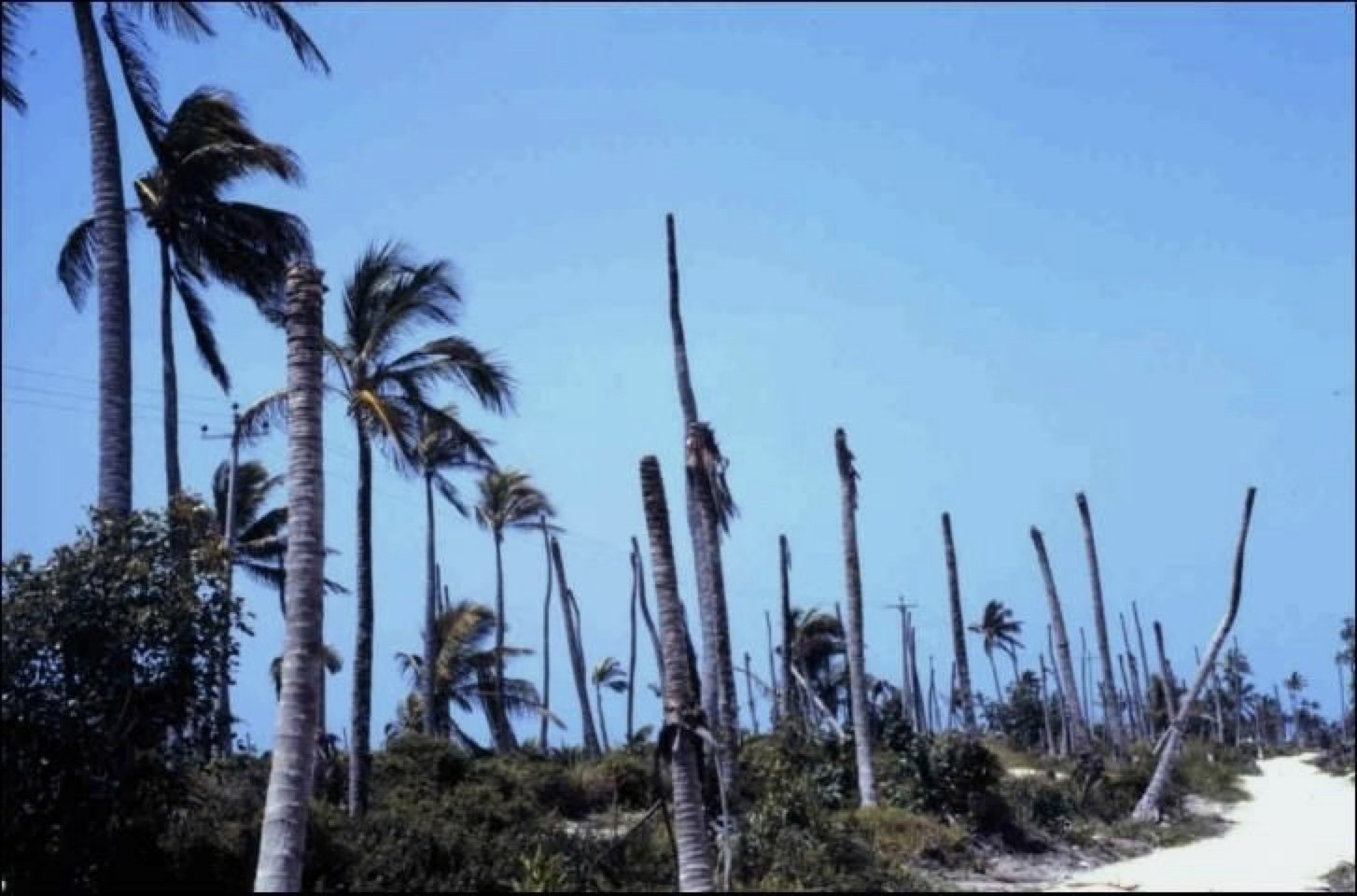
- Coconuts dropping early, with a brown to black, water-soaked look at the stem end
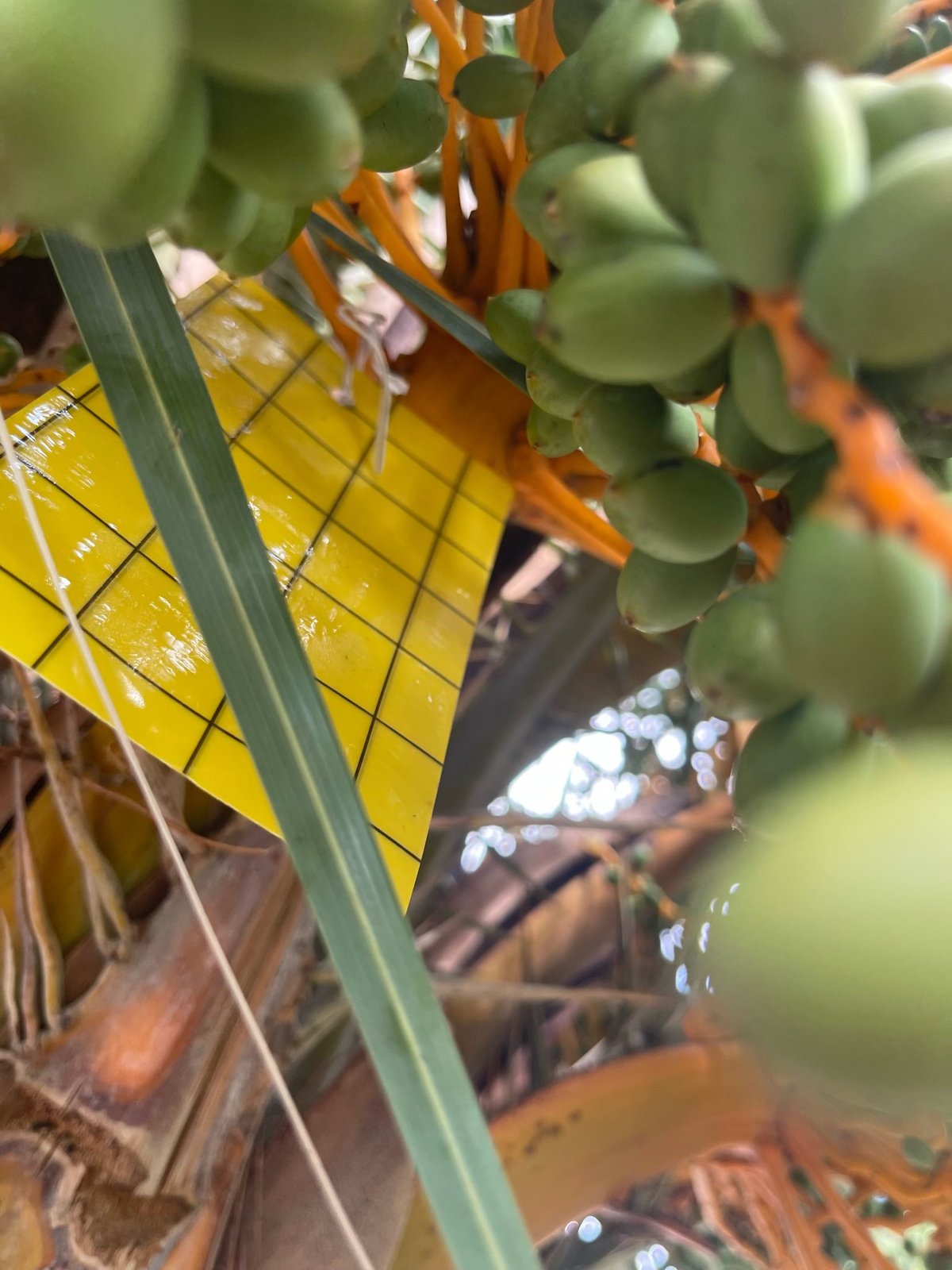
- Newly emerging flower spikes turning black, with no fruit setting
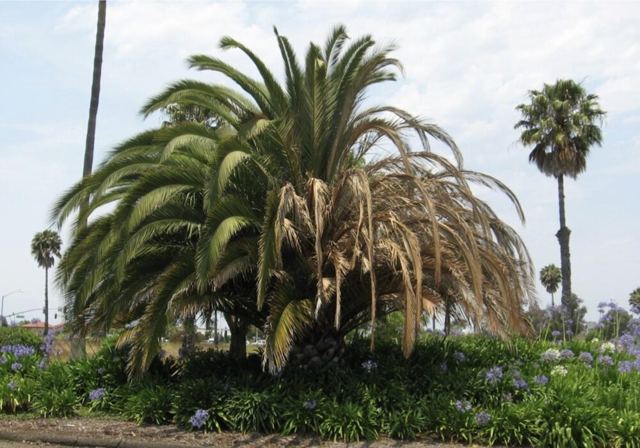
- Fronds discoloring from the oldest and lowest upward: golden yellow on tall coconuts, reddish to grayish brown on date palms and Christmas palms
- Sometimes a single discolored flag leaf in the middle of the canopy first
- The spear leaf collapsing, the sign that the bud has died
- The whole crown withering and falling, leaving a bare trunk
From the field · 1 of 2
The detail
What else to know
How it differs from lethal bronzing
Both are phytoplasmas, tiny bacteria that live in the sap stream, and both are carried by the same planthopper, the American palm cixiid. Lethal yellowing is strain 16SrIV-A. Lethal bronzing is 16SrIV-D.
Lethal yellowing centers on coconut palms, and tall coconuts turn golden yellow. Lethal bronzing hits cabbage palms and the date palms, which turn coppery and reddish brown.
On date palms the two look the same and are managed the same way. Only lab strain typing separates them. Here, a suspected case on a date palm is far more likely to be lethal bronzing.
Why it matters
A palm can carry the disease for 3 to 9 months before it shows anything. A Not Detected result today does not clear a palm for good.
How it spreads
Only by the insect. It does not pass by touch or on tools. Adults feed on palm sap, which is when they pass the disease. Their young live in the roots of nearby grass, St. Augustinegrass above all, out of reach of any canopy spray. That is why the turf around palms is part of the plan.
Where the bud dies
The bud dies at a different point by species. On a coconut it goes when half to two thirds of the canopy has discolored. On a date palm it can go at one third or less. That sets how much time there is to act.
What we do
How Ptolemy handles it
Field condition first, then the recommendation. Treatment, removal and diagnosis calls are made by an ISA Certified Arborist, and the serious ones are confirmed in a lab.
Written down before it is neededThis is covered by our lethal bronzing zone protocol (used for both).
- Lab confirmation before any call. The phytoplasma cannot be grown in a dish, so a trunk-tissue sample goes for a molecular test, with strain typing on date palms.
- Manage it the way we manage lethal bronzing: the same insect, the same zone approach, the same testing of surrounding palms.
- Treat the turf and groundcover around high-risk palms as part of the job, because that is where the insect raises its young.
- A confirmed positive is a terminal sign. We recommend removal in writing on every report while the palm stands. Keeping it is the client’s call.
- No preventive or scheduled antibiotic injections. Oxytetracycline is a last resort for a rare, high-value palm, disclosed as the client’s choice. The Palm Health Program comes first.
- Replant with palms this disease does not attack, such as royal, paurotis and thatch palms. Not cabbage palms, which are a top lethal bronzing host.
Next step
Seeing lethal yellowing on your property?
FAQ
Questions about lethal yellowing
Is lethal yellowing the same as lethal bronzing?
No. They are close cousins carried by the same insect, but they are different strains. Lethal yellowing centers on coconut palms. Lethal bronzing is the one active across Southwest Florida today, on cabbage palms and date palms. On date palms only a lab can tell them apart.
Can a palm with lethal yellowing be treated?
Not once it shows symptoms. UF/IFAS advises removing palms with more than 25 percent of the leaves discolored or a dead bud. Antibiotic injection only holds the disease down in a palm that is not yet sick, and that palm can be reinfected.
Which palms are safe to replant?
Royal palms, paurotis palms and thatch palms are not attacked by lethal yellowing. We do not replant with cabbage palms after a case, because they are a top host for lethal bronzing.
My coconut is dropping nuts. Is it lethal yellowing?
Not always. Boron deficiency also causes early nut drop, but without the dark, water-soaked stem end. A sample to the lab settles it.
Built on
Our own field records, our written specs, and these public references:
- UF/IFAS EDIS PP146, Lethal Yellowing of Palm
- UF/IFAS EDIS PP163, Lethal Bronzing
- UF/IFAS EENY-389, the American palm cixiid
Keep reading
More palm diseases
 Killer
A fatal fungal wilt that plugs a palm's water-conducting tissue.
Signs and what we do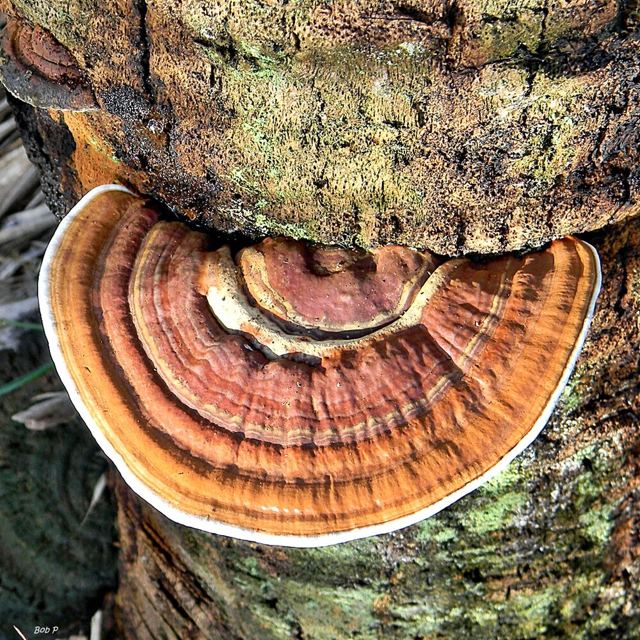 Killer
A wood-decay fungus that rots the base of the trunk and the roots.
Signs and what we do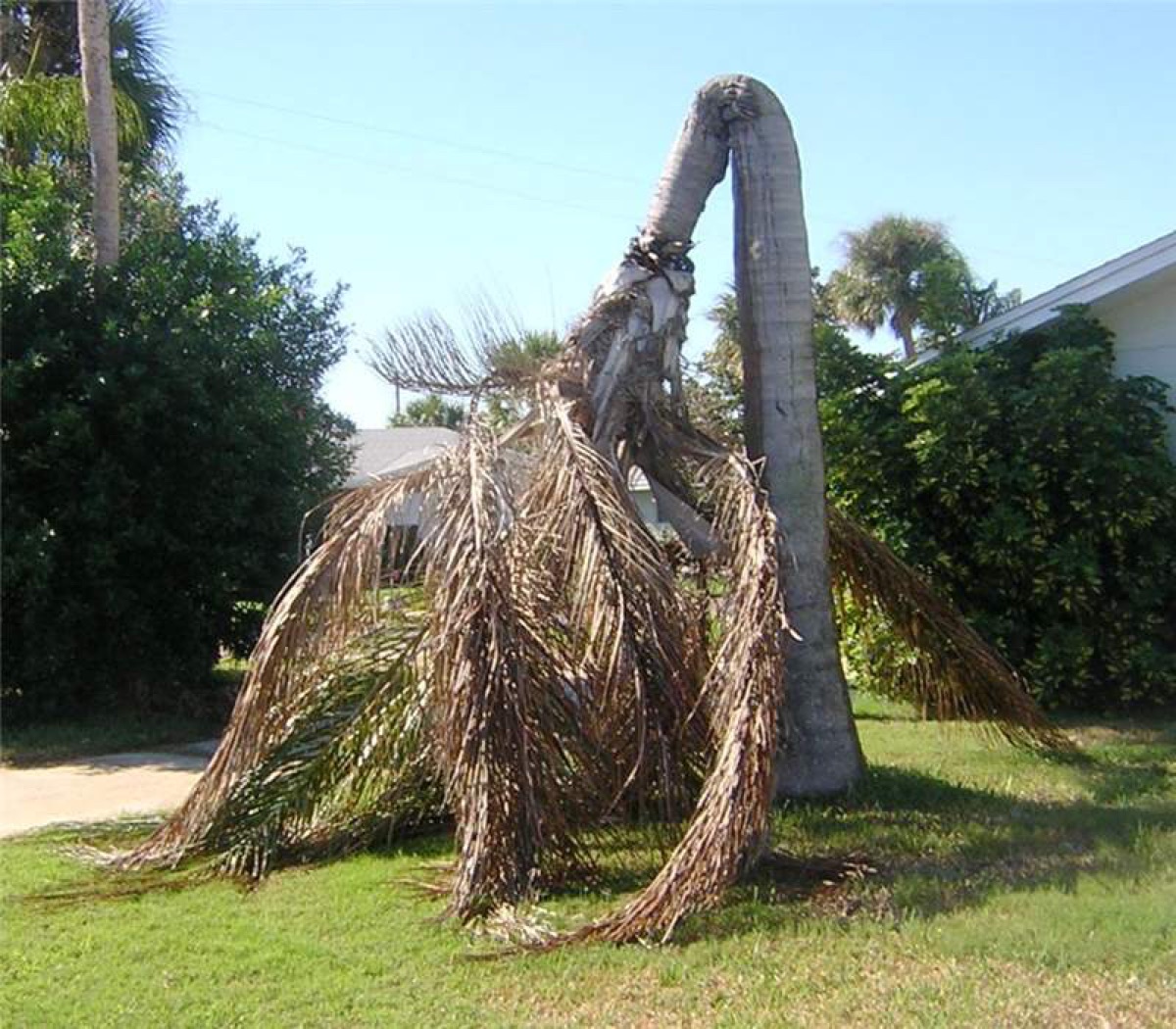 Killer
A fungus that enters through fresh trunk wounds and rots the trunk from one side inward.
Signs and what we do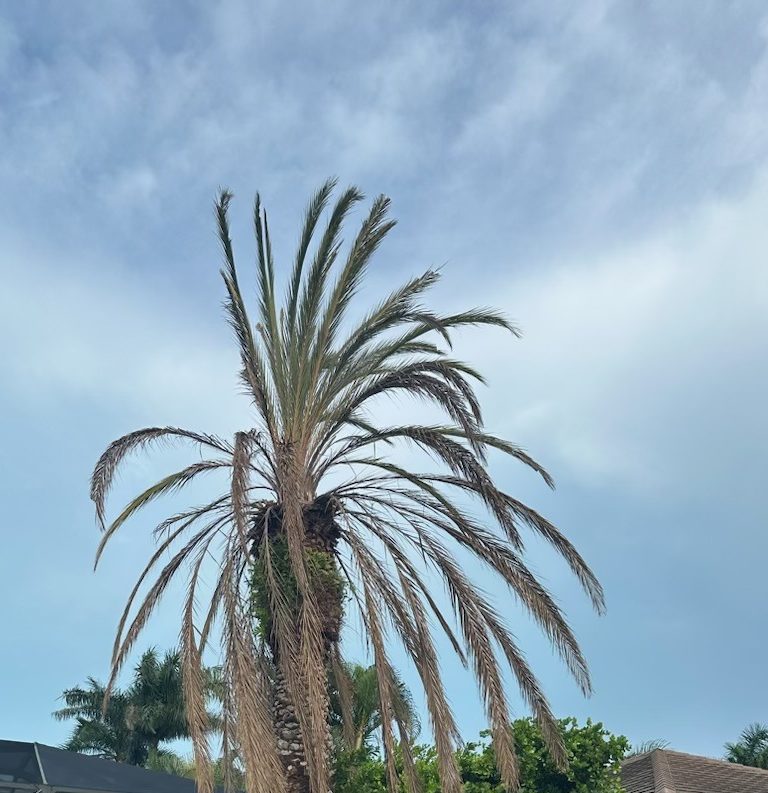 Manageable
An opportunistic fungus that gets into palms through wounds and tissue weakened by cold or drought.
Signs and what we do