
Tree disease
Hypoxylon Canker
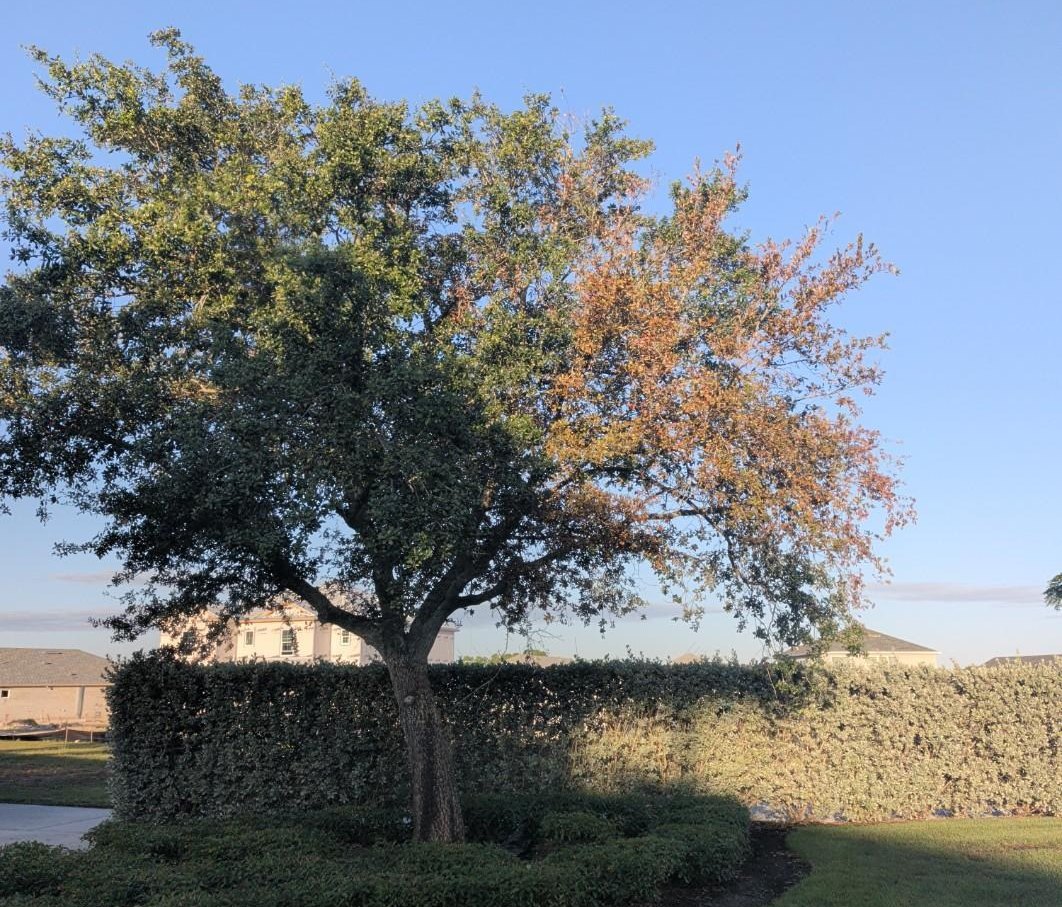
A fungus that lives quietly inside many healthy oaks and takes over when drought, root damage or construction weakens the tree. Bark sloughs off to show a crusty fungal mat. It does not start the decline. It finishes it.
Trees it affects: Laurel oak (among the most affected), Water oak, Live oak, Other hardwoods
- Affects
- Laurel oak (among the most affected), Water oak, Live oak, Other hardwoods
- When it shows
- Follows hot, dry weather and stress events such as root damage or construction.
- What we do first
- Find the stress: drought, root damage, compaction or construction.
What you see
Signs in the field
- Early crown thinning and branch dieback
- Bark sloughing off the trunk and limbs
- A crusty fungal mat under the bark: tan to olive green and powdery when young, then silvery gray, then brown to black
- Dead branches first, then the fungus running down the trunk
Why it matters
Once the fungal mat shows on the trunk, the tree is unlikely to survive. A girdled, crown-dead oak becomes a structural risk over walks, roads and homes.
Stress opens the door
The fungus is already inside many healthy oaks. Drought, root damage, soil compaction, wounding and a poor site let it take over. That is why the defense is vigor, not a spray.
What we do
How Ptolemy handles it
Field condition first, then the recommendation. Treatment, removal and diagnosis calls are made by an ISA Certified Arborist, and the serious ones are confirmed in a lab.
- Water during hot, dry spells, avoid compaction and wounding, and protect the root zone during construction.
- Remove dead and infected wood, and hazardous trees, promptly.
- A tree risk assessment where an affected oak stands over people, roads or homes.
- No fungicide is registered for it, and we do not sell one.
Next step
Seeing hypoxylon canker on your property?
FAQ
Questions about hypoxylon canker
Can Hypoxylon canker be treated?
No product is registered for it. The defense is keeping oaks vigorous: water in drought, no compaction, no root damage. Infected wood and hazardous trees come out.
Why did it show up now?
The fungus lives quietly in many healthy oaks. It takes over after a stress, most often drought, root damage or construction near the tree.
Is an infected oak dangerous?
It can be. Once the fungus girdles the crown, dead limbs and the trunk can fail. Trees over targets get a risk assessment.
Built on
Our own field records, our written specs, and these public references:
- UF/IFAS FOR338/FR407, Biscogniauxia (Hypoxylon) Canker or Dieback in Trees
Keep reading
More tree problems
 Serious
Canker fungi that live inside healthy wood and turn on a tree when it is stressed.
Signs and what we do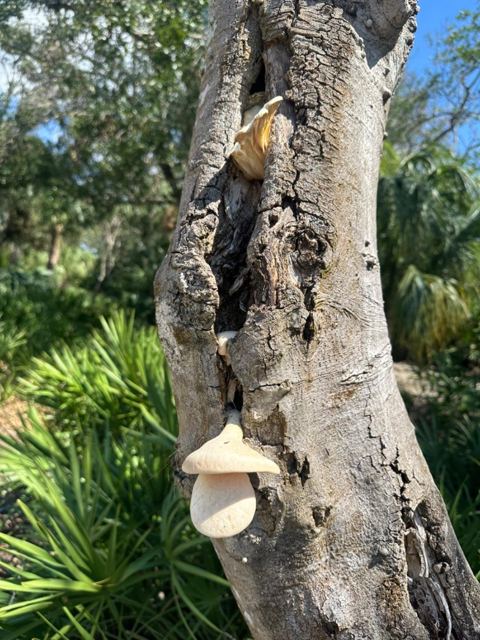 Serious
A conk on a trunk means a decay column is already inside.
Signs and what we do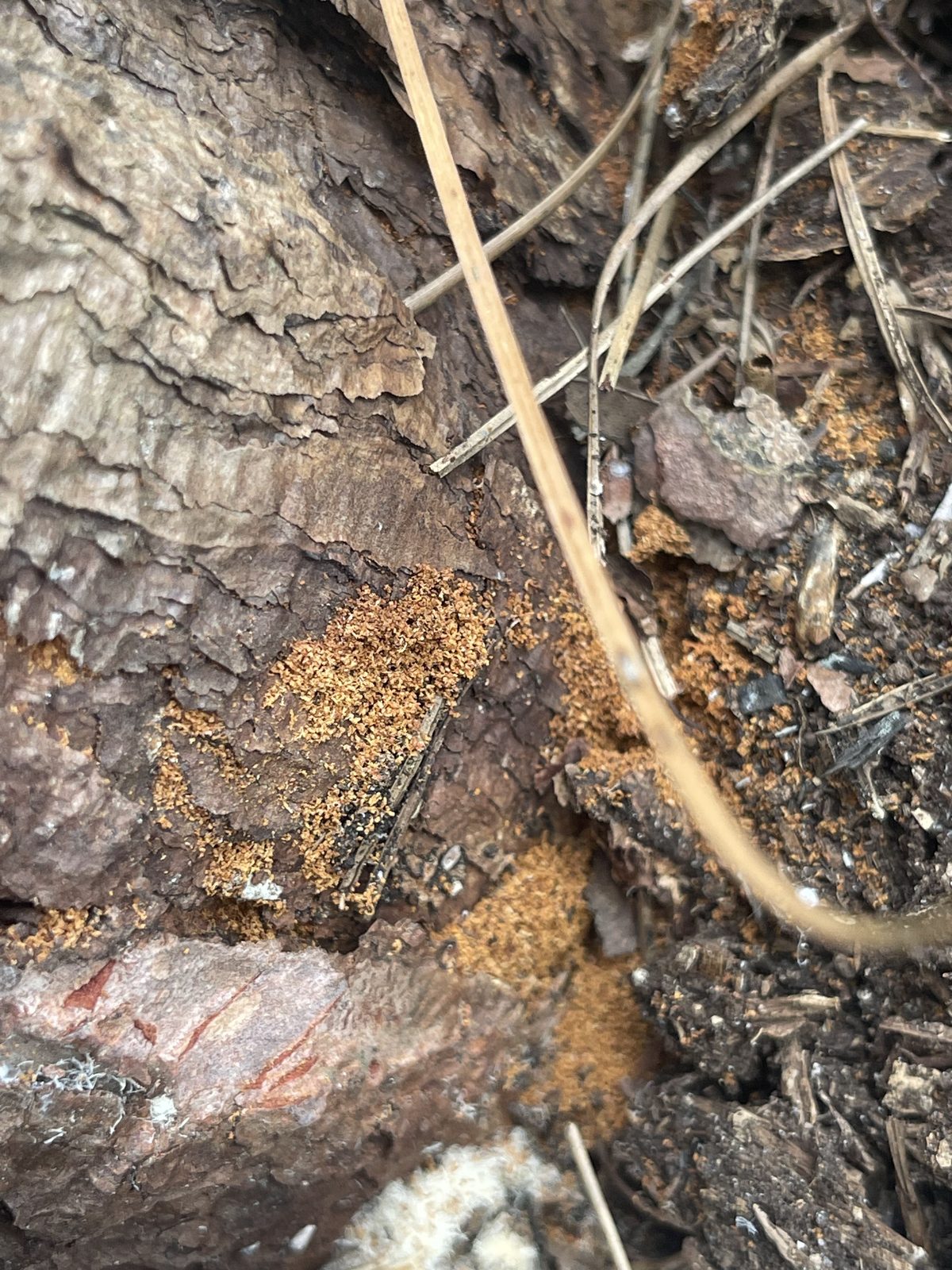 Killer
Small bark beetles that move into stressed, storm-damaged, lightning-struck or drought-stressed pines.
Signs and what we doA bacterium that lives in a tree’s water-conducting wood and slowly plugs it.
Signs and what we do