
Tree disease
Bacterial Leaf Scorch
A bacterium that lives in a tree’s water-conducting wood and slowly plugs it. Leaves scorch from the edge inward, branch by branch, over years. Oaks are the Florida case that matters most. Nothing reverses it, and only a lab can confirm it.
Trees it affects: Laurel oak, Live oak, Water oak, Turkey oak, Sycamore, Sweetgum, Elm, Red maple
- Affects
- Laurel oak, Live oak, Water oak, Turkey oak and more
- When it shows
- Worst late summer into fall, under water stress. It can look better each spring.
- What we do first
- Lab testing from several branches in late summer or early fall.
What you see
Signs in the field
- Leaves browning from the edge inward while the center stays green
- Often a yellow or reddish band between the brown edge and the green tissue, though not always
- Onset on one or two branches, spreading to more in later years
- Worst late summer into fall, under water stress
- Better-looking spring foliage that scorches again by fall
- On oaks, a whole branch can show at once
Years, not weeks
This is a chronic disease measured in years. That is the honest reassurance: the plan can be built in years too, with any replacements phased into the budget.
Only a lab confirms it
The organism leaves no visible sign, and drought produces the same picture. Confirmation takes lab testing of leaf stems and small twigs from several branches, best in late summer or early fall. One sample is not enough.
Two ways it fakes recovery
Symptoms ease each spring, and injected antibiotics hold them down for a time. Neither one is recovery.
What we do
How Ptolemy handles it
Field condition first, then the recommendation. Treatment, removal and diagnosis calls are made by an ISA Certified Arborist, and the serious ones are confirmed in a lab.
- Lab testing from several branches before a confirmed call.
- Water during hot, dry spells, the most useful single step.
- Prune dead limbs back to clean wood, for safety and for the record.
- Plan replacement over years, with species diversity, built into the budget.
- No insect spraying for it. Extension research shows it does not stop spread to healthy trees.
Next step
Seeing bacterial leaf scorch on your property?
FAQ
Questions about bacterial leaf scorch
Our oak looks better this spring. Did it recover?
Probably not. Symptoms ease every spring and return under late-summer water stress. We compare the same branches each fall.
Should we inject an antibiotic?
Injected antibiotics have eased symptoms in research but have not cleared the bacterium from a tree. We do not present it as a fix.
Do we need to remove the tree now?
Usually not. It moves over years. Trees with heavy dieback come out first, and replacement is phased into the budget.
Built on
Our own field records, our written specs, and these public references:
- Virginia Cooperative Extension 3001-1433, Bacterial Leaf Scorch
- Barnard and others, Plant Disease 82(5), Florida oak survey
Keep reading
More tree problems
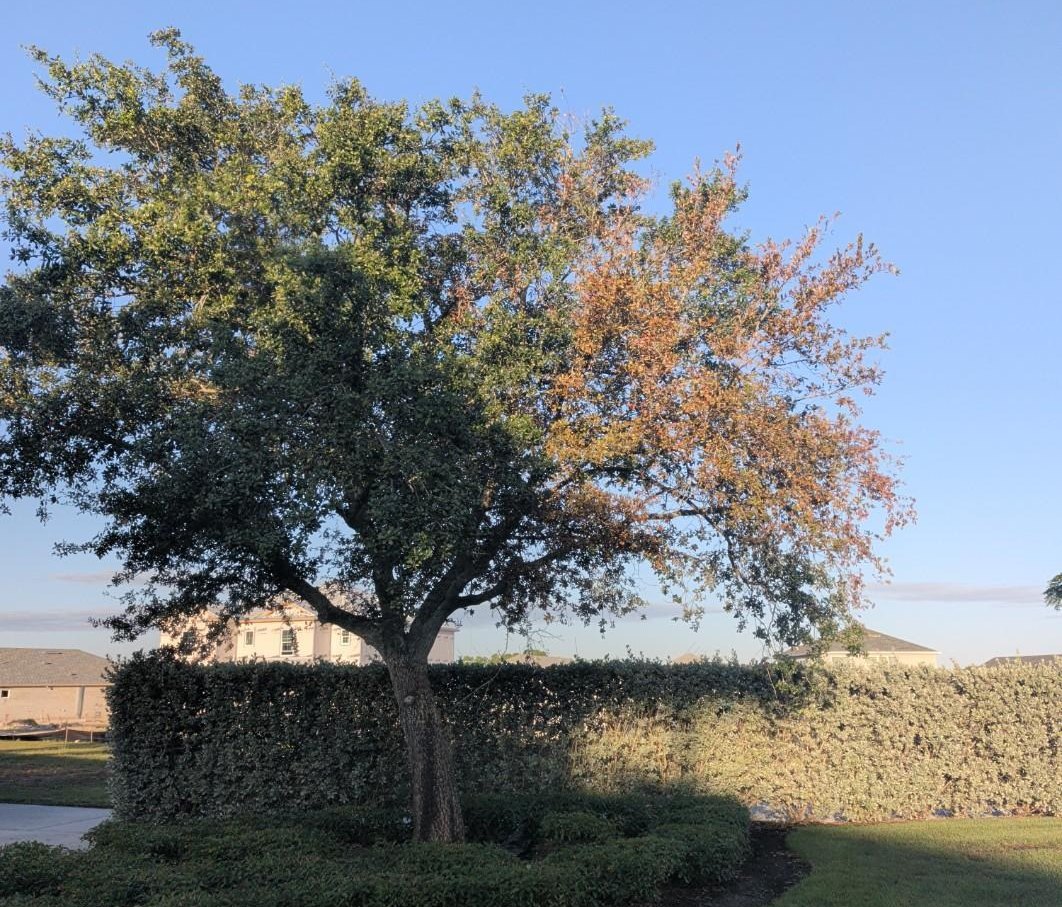 Serious
Canker fungi that live inside healthy wood and turn on a tree when it is stressed.
Signs and what we do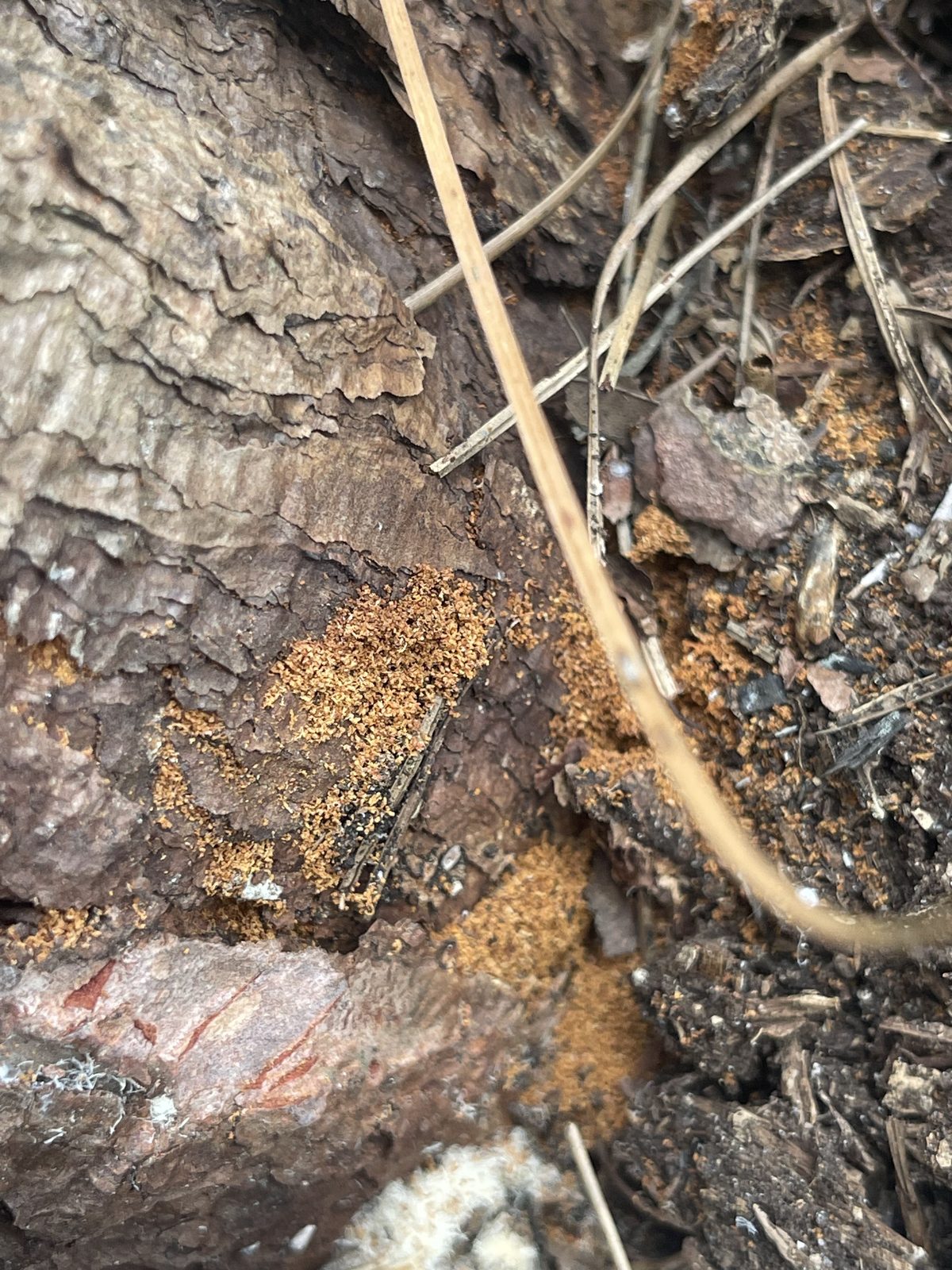 Killer
Small bark beetles that move into stressed, storm-damaged, lightning-struck or drought-stressed pines.
Signs and what we do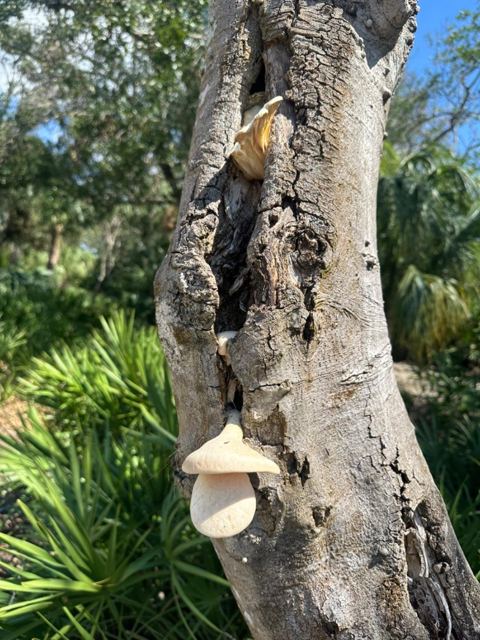 Serious
A conk on a trunk means a decay column is already inside.
Signs and what we doA fungus that lives quietly inside many healthy oaks and takes over when drought, root damage or construction weakens the tree.
Signs and what we do