
Tree disorder
Herbicide Injury (Metsulfuron)
A common lawn weed killer, taken up by tree roots that run under the turf, stunts and deforms new growth. It is regularly mistaken for disease. There is no organism to find, so the evidence is the pattern on the tree and the application record.
Trees it affects: Live oak and other oaks, Ligustrum, Crapemyrtle, Dogwood, Some palms
- Affects
- Live oak and other oaks, Ligustrum, Crapemyrtle, Dogwood and more
- When it shows
- Typically 2 to 4 weeks after an application in hot, dry weather. On palms it can take six months or more.
- What we do first
- Ask for the turf application record: product, rate and dates.
What you see
Signs in the field
- Growth stopping, then yellow growing tips, then dead tips
- Delayed leaf-out, with leaves in scattered bunches
- Cupped, undersized, misshapen new leaves
- Tight clusters of small leaves where a shoot stopped
- Leaves sprouting from the base of old stems while the stem tips stay bare
- Reddish or purple leaves and veins, then scorched brown foliage
- The same picture on two or more kinds of plants in the same treated area
How the lawn reaches the tree
Tree roots spread close to three times the width of the canopy, with many in the top 2 inches (5 cm) of soil, mixed in with the turf roots. A herbicide applied to the lawn is applied to the tree. Most labels already warn against use where tree roots extend.
The pattern is the clue
A canker kills at a point, so a dead branch sits beside a healthy one. Root uptake lands on everything growing at once: the whole outer flush, often on more than one plant and more than one species. Deformed new leaves are the strongest single sign.
Rate alone does not settle it
The research disagrees on whether label rates injure trees. UF work on live oaks in irrigated turf found injury at labeled rates. So we do not tell a client that a label-rate application over a root zone is safe, and a label-rate record does not clear the product.
What we do
How Ptolemy handles it
Field condition first, then the recommendation. Treatment, removal and diagnosis calls are made by an ISA Certified Arborist, and the serious ones are confirmed in a lab.
- Read the canopy pattern and the application record together before naming a cause.
- Recommend stopping further applications over the root zone. That decision belongs to the property and its turf contractor.
- Support vigor with water first. Fertilizer is a salt, so feeding an injured tree is a careful call.
- Set a review date and say what we will be watching, then report what changed.
- No antidote exists, and we do not sell one.
Next step
Seeing herbicide injury on your property?
FAQ
Questions about herbicide injury
Our lawn company used the label rate. Can it still be the herbicide?
Yes. UF research found injury to live oaks at labeled rates in irrigated turf. Rate alone neither proves it nor rules it out.
Can a lab test prove it?
Residue tests exist, but they are slow, costly and may not show whether the amount found caused the damage. The application record and the pattern on the trees are better evidence.
Will the tree recover?
It depends on the dose and on whether the exposure stops. A healthy tree that got a low dose often pushes normal growth the next flush. We set a review date and watch.
Built on
Our own field records, our written specs, and these public references:
- UF/IFAS FOR332, Metsulfuron-methyl Injury to Landscape Trees
- University of Arkansas FSA2183
Keep reading
More tree problems
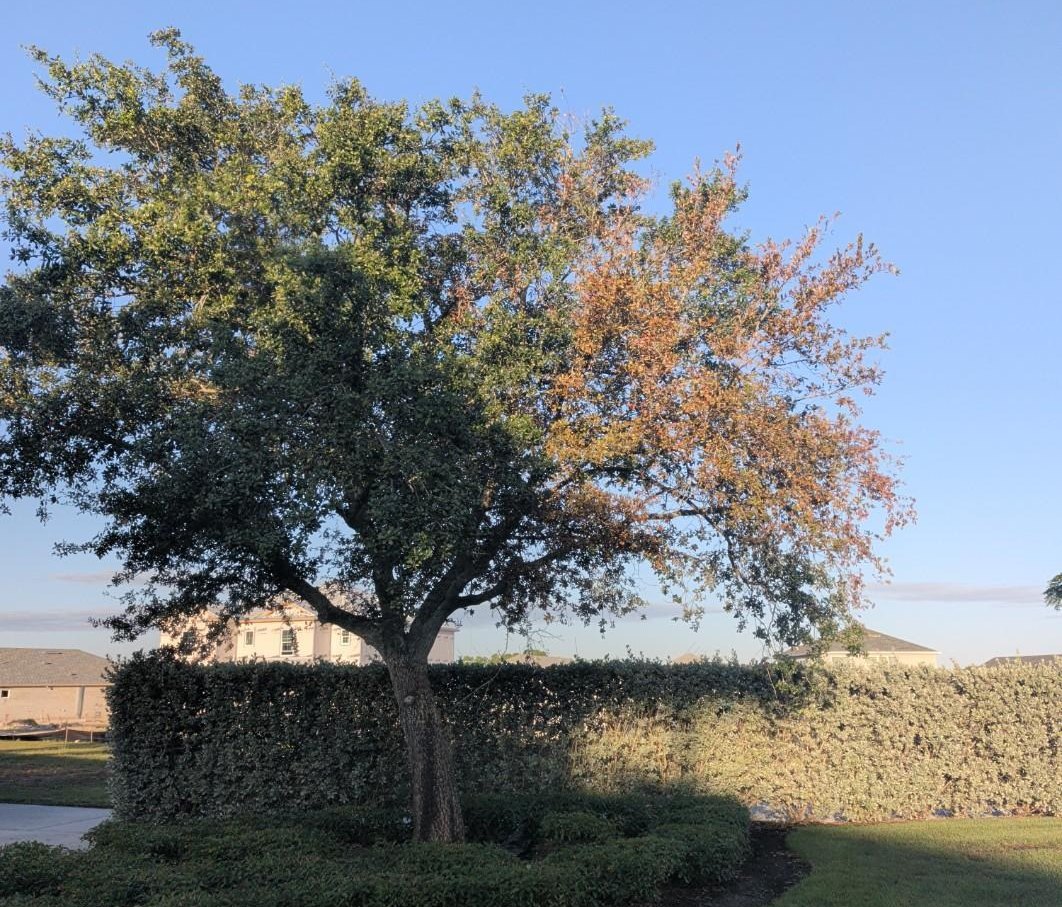 Serious
Canker fungi that live inside healthy wood and turn on a tree when it is stressed.
Signs and what we do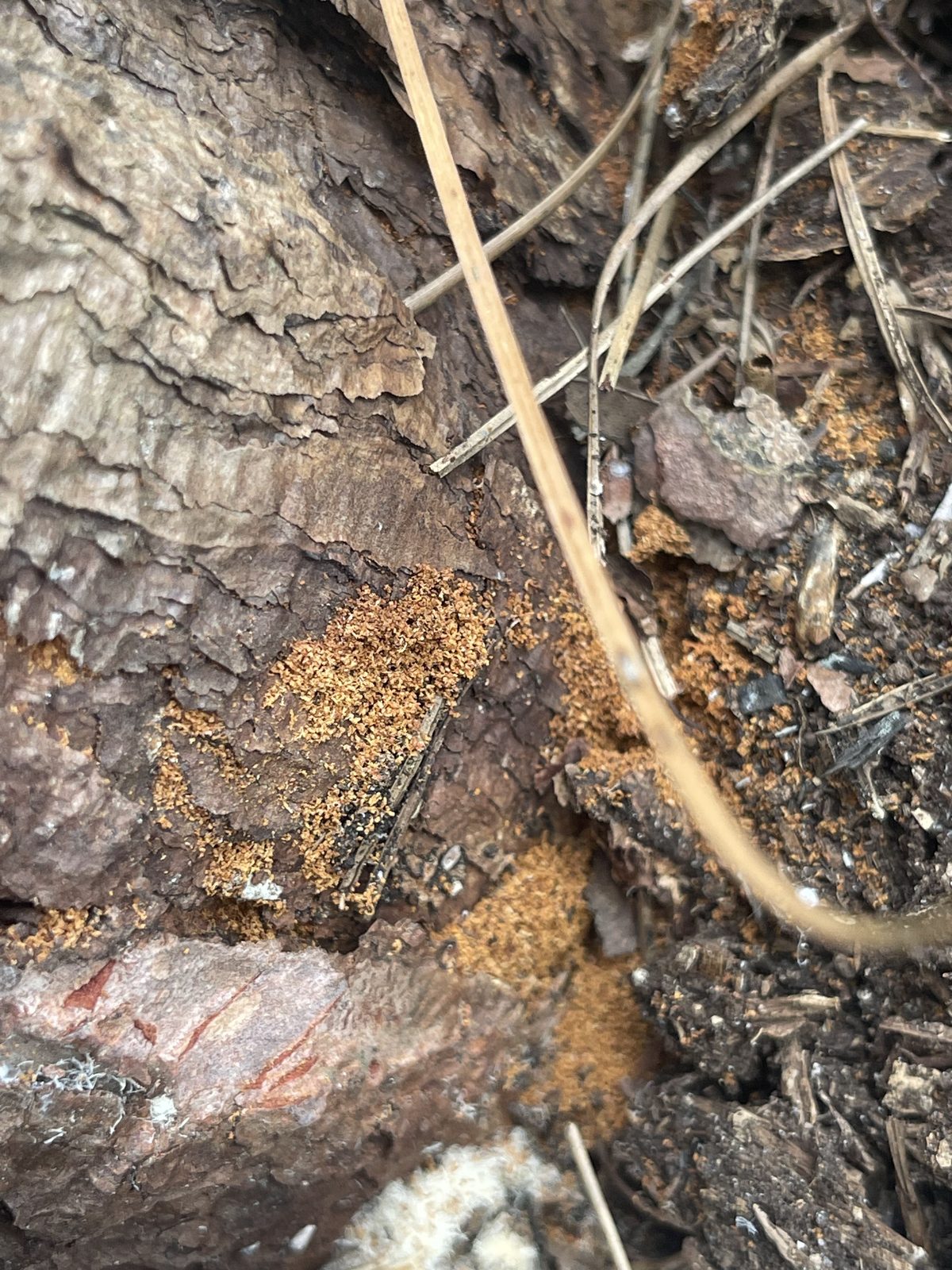 Killer
Small bark beetles that move into stressed, storm-damaged, lightning-struck or drought-stressed pines.
Signs and what we do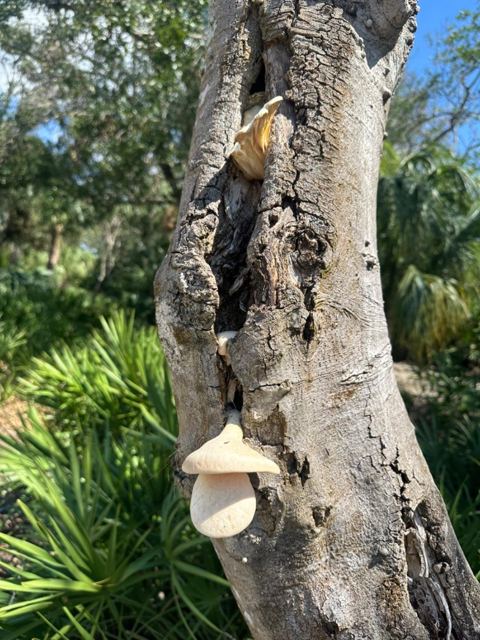 Serious
A conk on a trunk means a decay column is already inside.
Signs and what we doA bacterium that lives in a tree’s water-conducting wood and slowly plugs it.
Signs and what we do