
Tree disease
Bot Canker and Diplodia Dieback
Canker fungi that live inside healthy wood and turn on a tree when it is stressed. A canker girdles a twig or branch from the inside, and the dead leaves stay attached. In Florida it shows up mostly on planted live oaks, and the same family attacks hundreds of other plants, pines included.
Trees it affects: Live oak (planted), Red oaks, Pines (Diplodia tip blight), Hundreds of woody plants
- Affects
- Live oak (planted), Red oaks, Pines (Diplodia tip blight), Hundreds of woody plants
- When it shows
- Florida reports began in the 2010 drought. Spores release in rain and in sprinkler water.
- What we do first
- Fix the stress at the root flare and the irrigation, then prune out cankers in dry weather.
What you see
Signs in the field
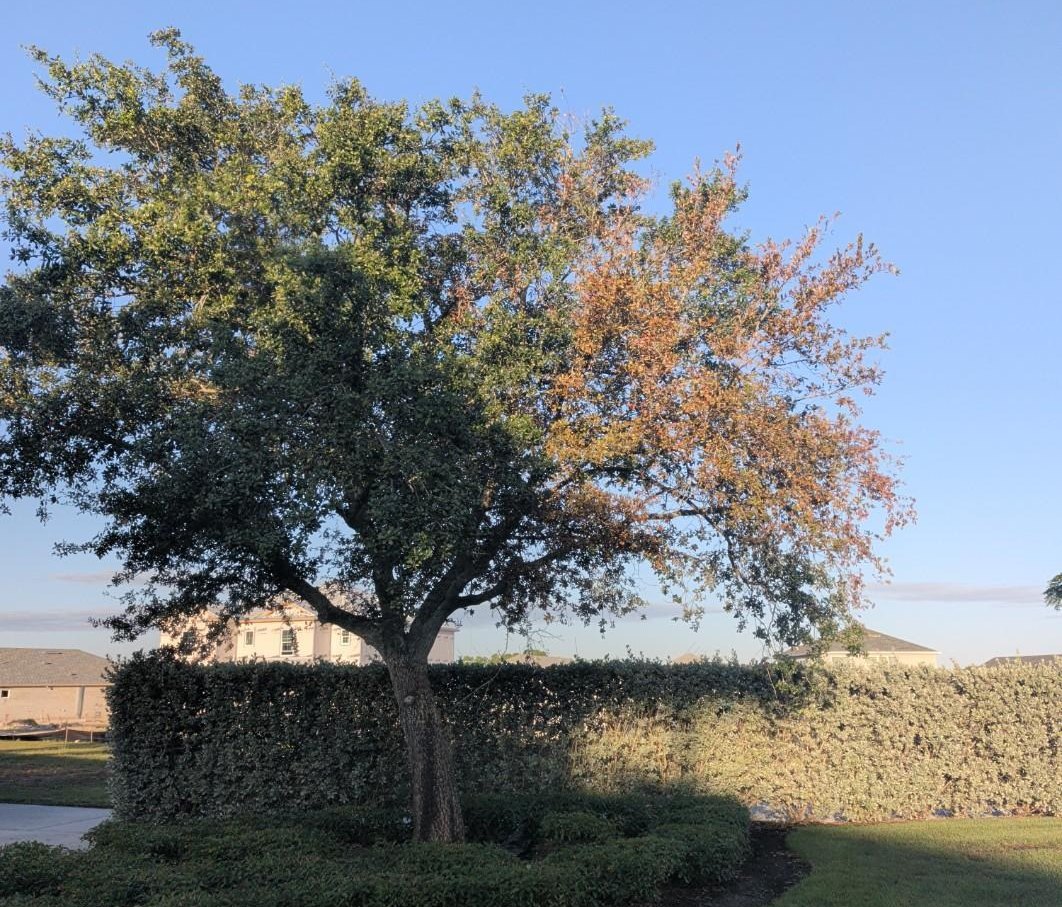
- Flagging: a twig or branch section turning brown with the leaves still attached
- Clumps of dead branches scattered at random through an otherwise green crown
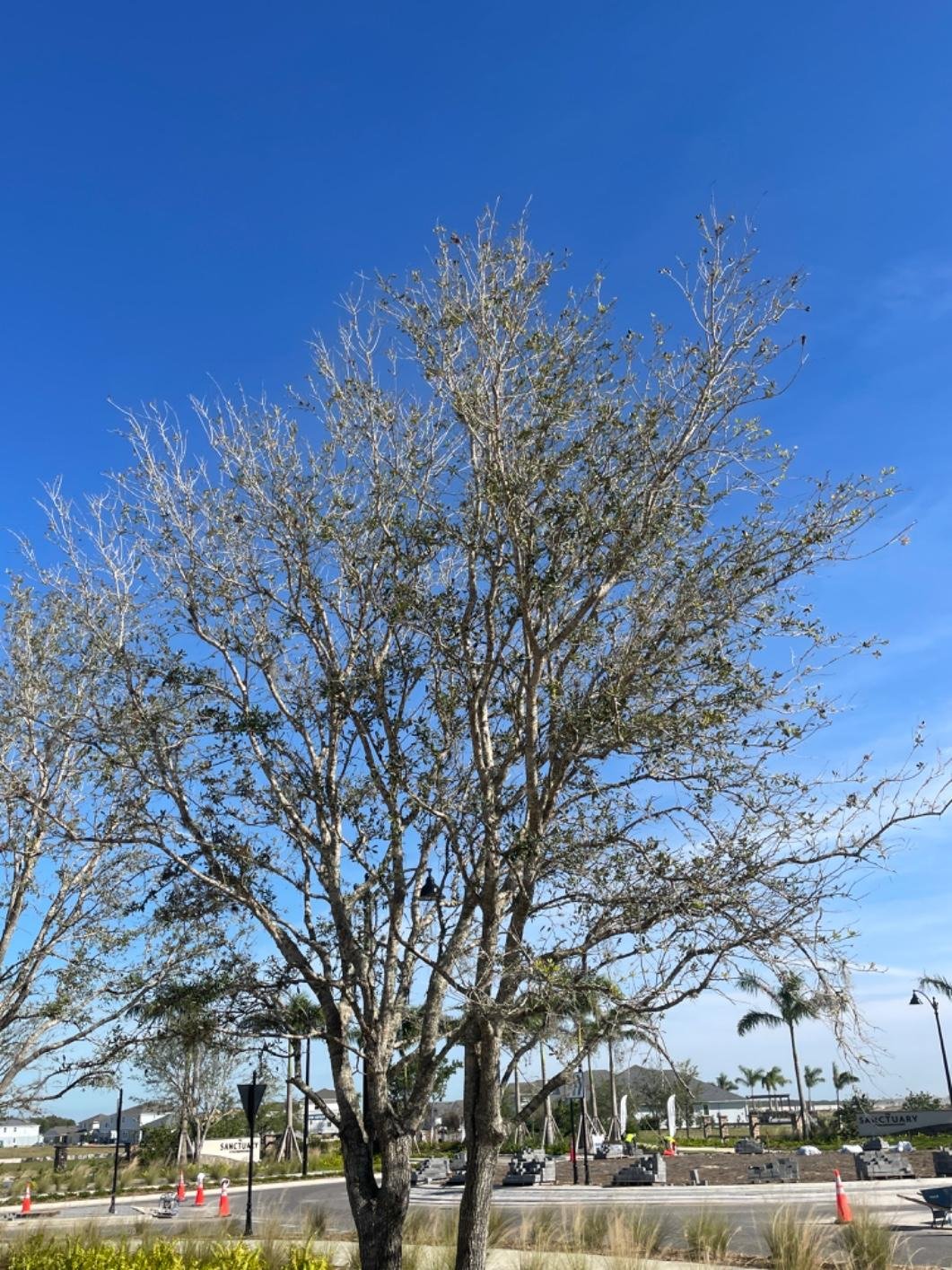
- Twig dieback throughout the tree
- A sunken canker with a defined edge, and discolored wood at that edge when cut
- Tiny black fruiting bodies on dead bark, seen with a hand lens
- Wounds that do not close
From the field · 1 of 2
The detail
What else to know
Stress turns it on
These fungi sit in symptomless wood. Transplanting, pruning, herbicides, drought and flooding tip the balance. Planted oaks in managed communities face all of those, which is why nearly every Florida case has been a planted live oak.
What we have seen in the field
On one planted stand of live oaks at a master-planned community, about half the trees showed it, from a few brown leaves on one twig to a canopy nearly all brown. The same stand had no visible root flare, mulch and soil against the bark, and turf irrigation running to the trunk.
Nothing reverses it, and that sets the plan
No fungicide has been shown to control it in oaks. Management is stress correction and sanitation pruning, with fungicide used only to protect fresh wounds and new growth.
What we do
How Ptolemy handles it
Field condition first, then the recommendation. Treatment, removal and diagnosis calls are made by an ISA Certified Arborist, and the serious ones are confirmed in a lab.
- Correct the stress first: expose the root flare, pull mulch off the bark, move turf irrigation off the trunk.
- Sanitation pruning in dry weather, cutting 6 to 12 inches (15 to 30 cm) past the canker into clean wood, with tools disinfected between branches.
- Haul the dead wood off the property, because the fungus keeps fruiting in it.
- Fungicide only as a protectant for fresh wounds and new growth, on our certified arborist’s call.
- A lab culture from the edge between live and dead wood before a confirmed call.
Next step
Seeing bot canker and diplodia dieback on your property?
FAQ
Questions about bot canker and diplodia dieback
Can spraying stop it?
No spray has been shown to control it in oaks. A protectant can guard fresh wounds and new growth. The real work is fixing the stress and pruning out the cankers.
Why is it in our new oaks?
Planted oaks face transplanting, pruning, herbicides and swings between drought and wet soil. Buried root flares and irrigation at the trunk add to it. Stress lets a fungus already in the wood take over.
Why prune only in dry weather?
Spores release in rain and sprinkler water. A fresh cut in wet weather is an open door.
Built on
Our own field records, our written specs, and these public references:
- UF/IFAS FOR318, Bot Canker of Oak in Florida
Keep reading
More tree problems
 Killer
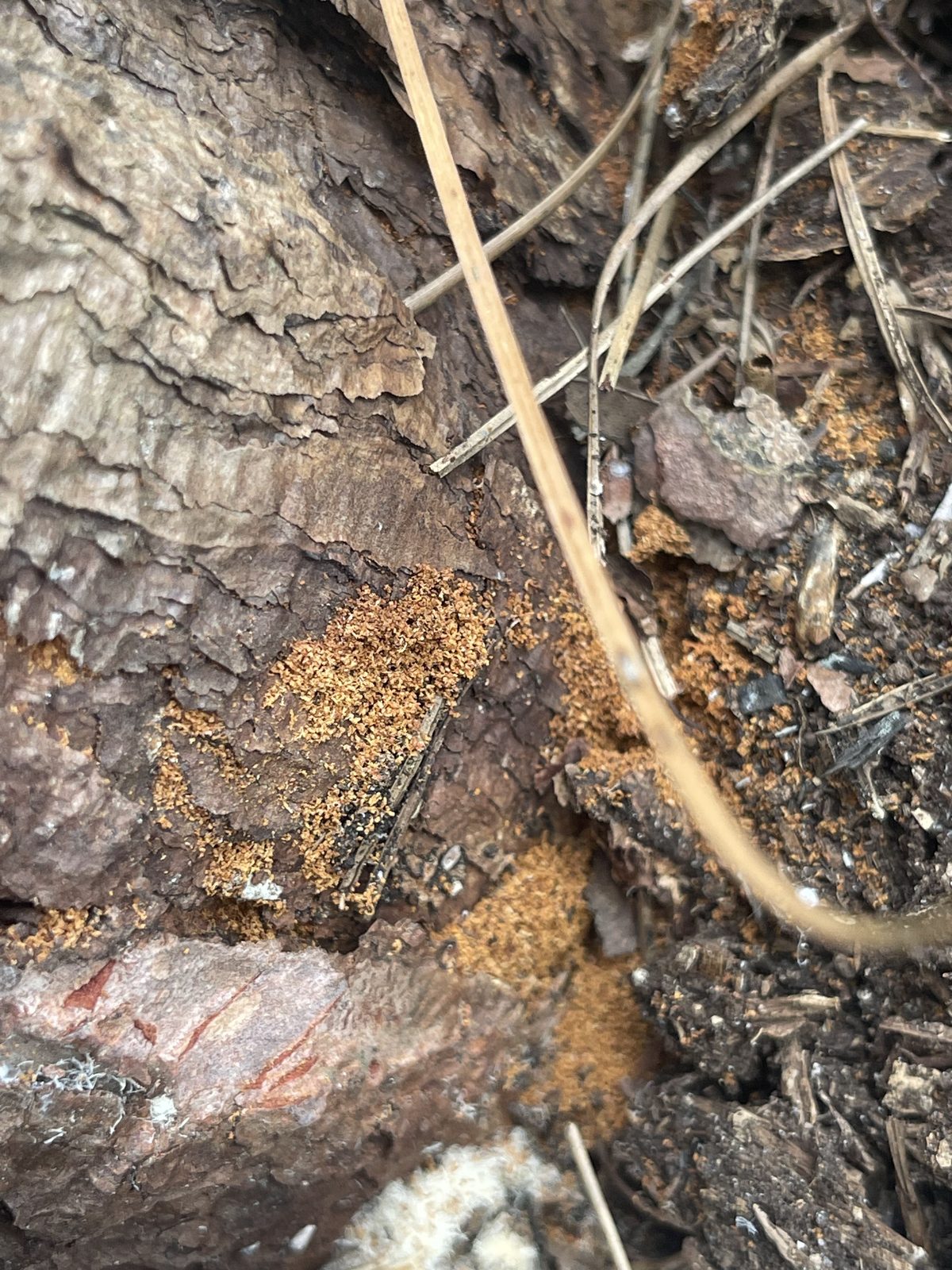
Small bark beetles that move into stressed, storm-damaged, lightning-struck or drought-stressed pines.
Signs and what we do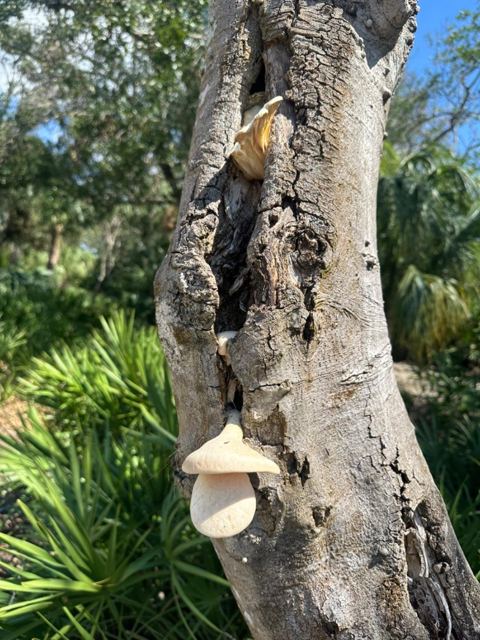 Serious
A conk on a trunk means a decay column is already inside.
Signs and what we doA fungus that lives quietly inside many healthy oaks and takes over when drought, root damage or construction weakens the tree.
Signs and what we doA common lawn weed killer, taken up by tree roots that run under the turf, stunts and deforms new growth.
Signs and what we do