
Tree pest
Oak Galls and Twig Girdlers
Insects that leave dead twigs on oaks. Gall wasps make the tree grow a woody swelling around their larvae. Twig girdler and twig pruner beetles cut twigs off. Most of it is cosmetic, and the right answer is often to do nothing.
Trees it affects: Laurel oak, Water oak, Live oak, Twig girdler: hickory and pecan, with oak
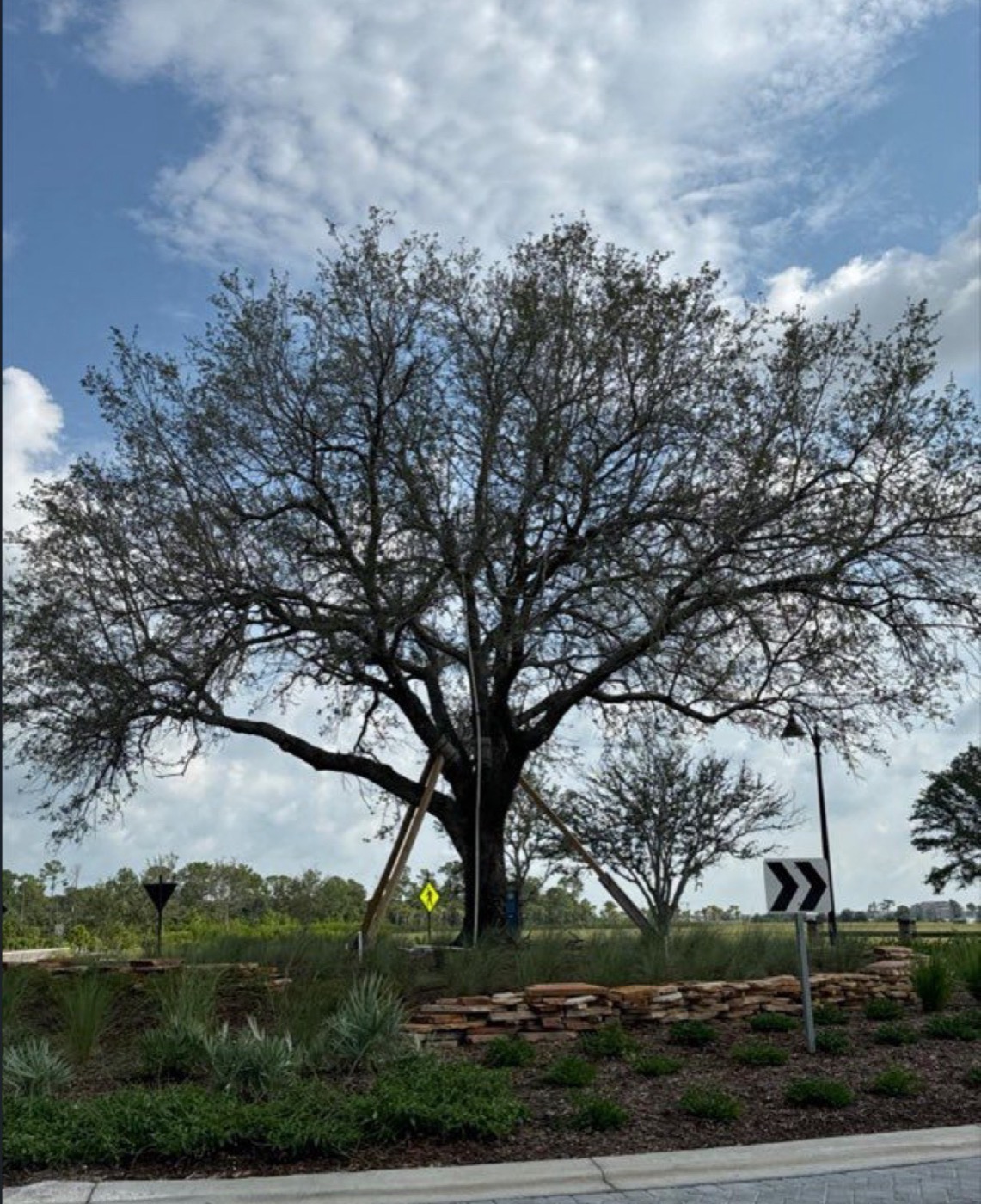
- Affects
- Laurel oak, Water oak, Live oak, Twig girdler: hickory and pecan, with oak
- When it shows
- Twig girdlers cut in fall. Gall wasps emerge in late fall through winter and again in spring.
- What we do first
- Ask one question: does the dead twig stay on the tree or fall off?
What you see
Signs in the field
- Woody swellings on twigs, sometimes with horns or spines
- Twigs dead past a gall, with the brown leaves still attached
- Twigs on the ground with a clean, whittled cut across the end (twig girdler)
- Cut twigs with ragged bark scraps around the end and an oval hole plugged with sawdust-like frass (twig pruner)
- Leaf galls, which are cosmetic
One question in the field
Does the dead twig stay on the tree or fall off? A girdler or pruner leaves a twig on the ground with tool marks on the end. A gall or a canker leaves dead wood in the canopy with the leaves still on.
A gall is the tree’s own tissue
The wasp triggers the tree to overgrow around its larva. More than 2,000 gall-making insects occur in the United States, and the great majority of galls are harmless.
When it matters
Woody twig galls in large numbers on a declining tree can thin the crown. Severe infestations go with dense plantings on sandy, acidic, low-fertility soils. The Florida records of the damaging twig gall wasps are in north and central Florida.
What we do
How Ptolemy handles it
Field condition first, then the recommendation. Treatment, removal and diagnosis calls are made by an ISA Certified Arborist, and the serious ones are confirmed in a lab.
- Cut a gall open to see what is inside before any call.
- Most galls need no treatment, and we say so.
- Heavy woody galls on a declining tree: prune out galled wood where it can be reached.
- Twig girdler and twig pruner: pick up and destroy the fallen twigs.
- No insecticide program for gall wasps. It does not work well.
- Look for the real cause of decline when galls are only part of the story.
Next step
Seeing oak galls and twig girdlers on your property?
FAQ
Questions about oak galls and twig girdlers
Do oak galls hurt the tree?
Most do not. Leaf galls are cosmetic. Woody twig galls matter only in large numbers on a tree that is already declining.
Should we spray for them?
No. By the time a gall is noticed the insect is protected inside it or already gone, and sprays do not work well.
Why are there cut twigs all over the ground?
Twig girdler or twig pruner beetles. It is a cleanup nuisance more than a tree problem. Picking up and destroying the twigs removes the next generation.
Built on
Our own field records, our written specs, and these public references:
- UF/IFAS EENY-368/IN664, Gall Wasps of Oaks
- UF/IFAS EENY-817/IN1446, Twig Girdler
Keep reading
More tree problems
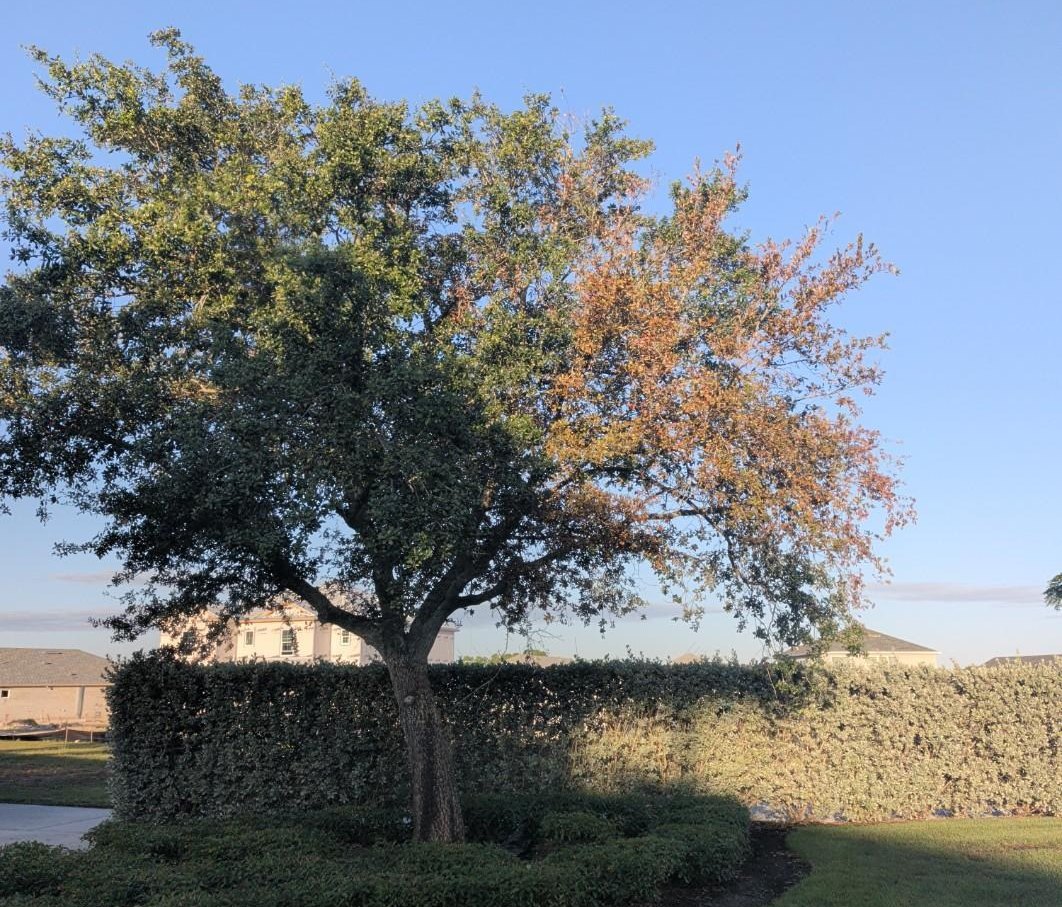 Serious
Canker fungi that live inside healthy wood and turn on a tree when it is stressed.
Signs and what we do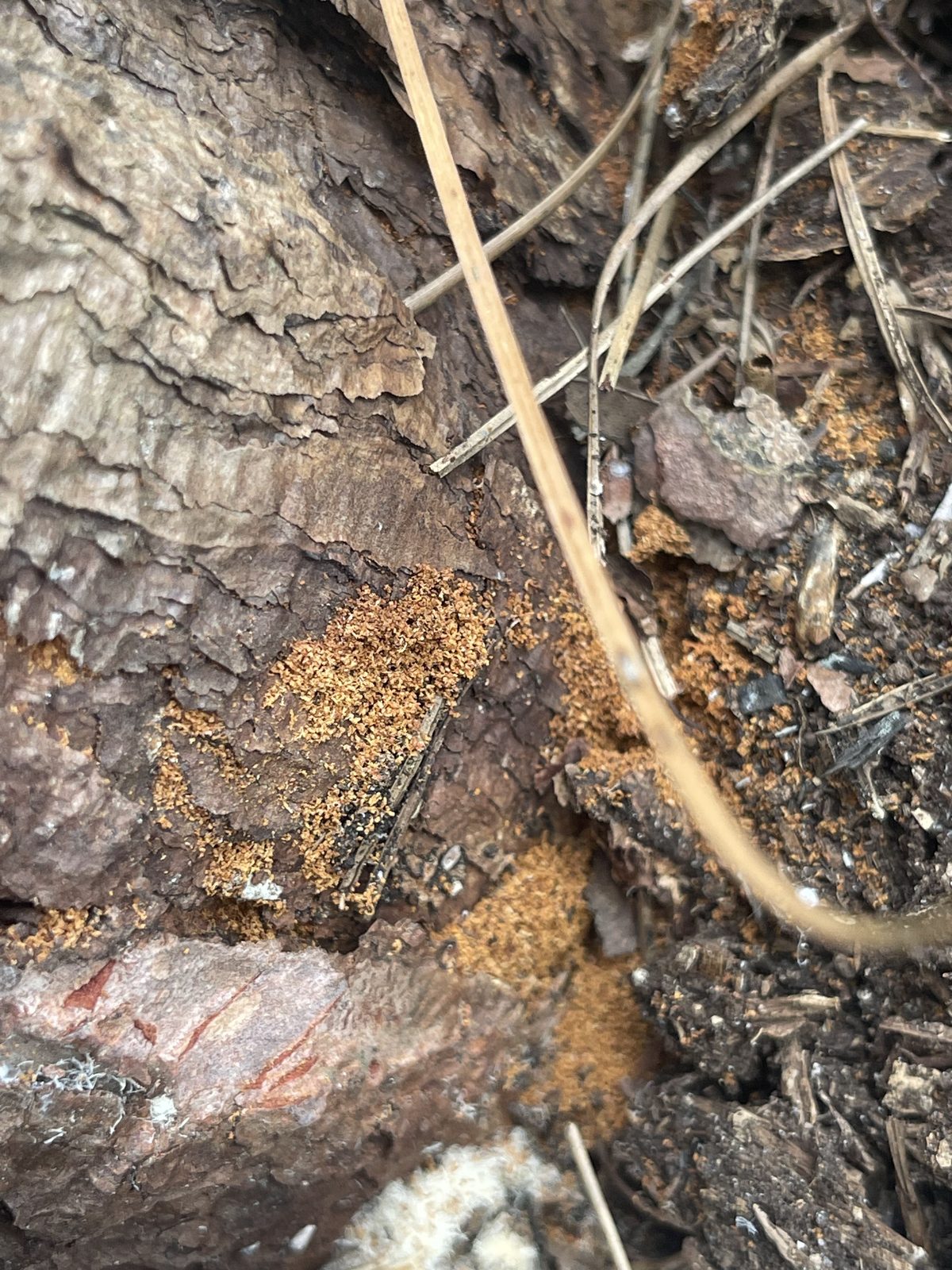 Killer
Small bark beetles that move into stressed, storm-damaged, lightning-struck or drought-stressed pines.
Signs and what we do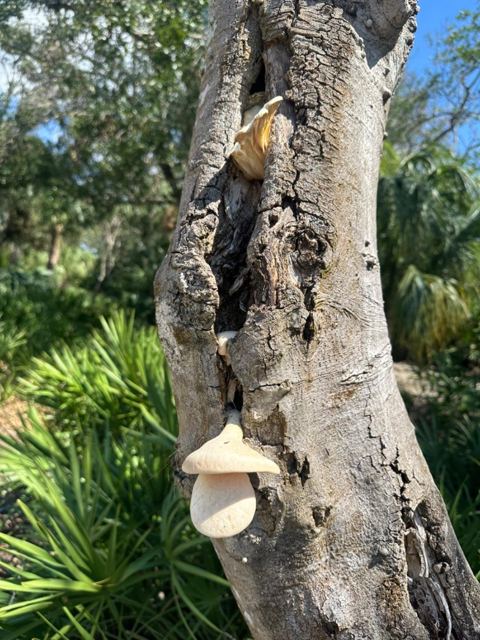 Serious
A conk on a trunk means a decay column is already inside.
Signs and what we doA common lawn weed killer, taken up by tree roots that run under the turf, stunts and deforms new growth.
Signs and what we do