Palm Pruning: The 9-and-3 Rule and Why We Stop at the Line
Every cut on a palm is permanent, so we prune to one line: everything below it off, nothing above it cut, timed by species.
 Jeff Kaulbars
A tree can wall off a wound and grow over it. A palm cannot. It has no cambium, so a palm does not wall off a wound. The surface hardens, but the damage stays for life. That one fact sets our whole palm pruning standard.
The 9-and-3 rule
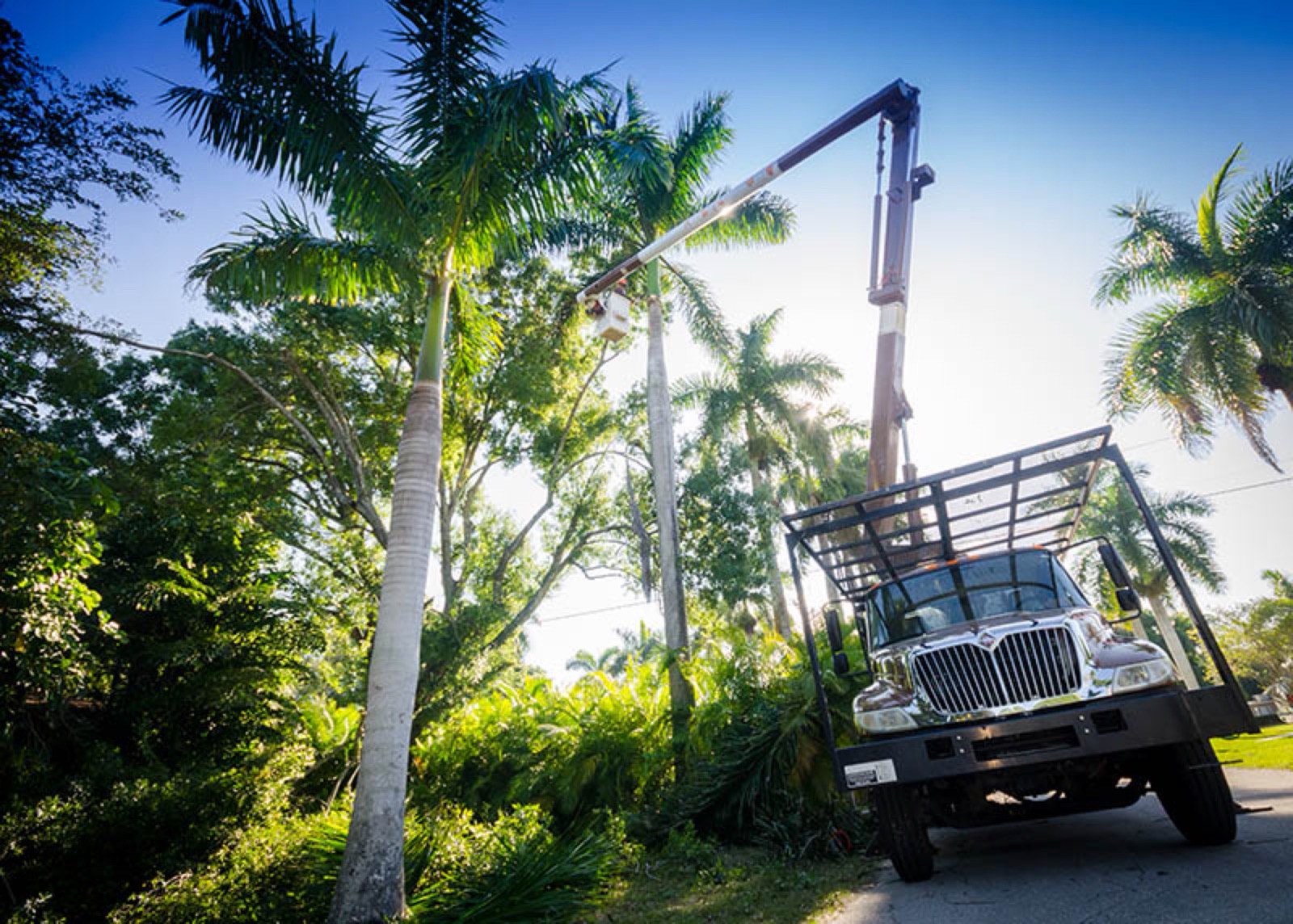
Picture a clock face on the palm, with a line from 9 to 3. Everything below the line comes off: dead fronds, spent flower and seed stalks, and every frond below the line, green or brown. Nothing above the line is cut.
The line is where we stop, on every palm. Where a frond above the line hangs over a walk or a wall, it can be tip-pruned to lift it instead of cut off.
Why the fronds above the line stay
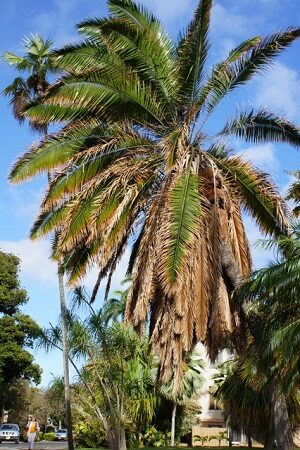
Fronds store potassium and magnesium. UF/IFAS and ANSI A300 both say to keep the fronds above horizontal, because over-pruning speeds potassium deficiency. Above the line, a yellowing frond stays. On many palms that yellowing is potassium deficiency, and cutting those fronds moves the deficiency to the next fronds up. A pencil-thin top is a deficiency symptom, not a pruning style.
We do not recommend hurricane cuts, which strip a palm to a few upright fronds. Over-pruning also opens wounds for Thielaviopsis and palmetto weevil. Boots are trimmed cleanly, never skinned to the trunk.
No climbing spikes
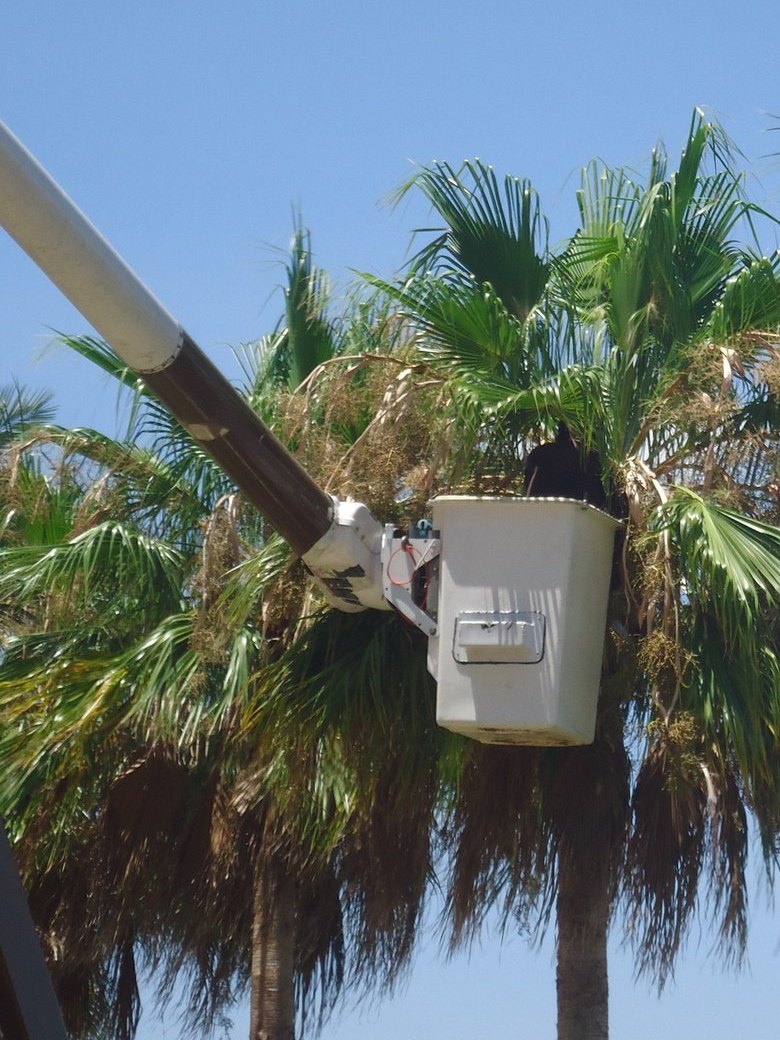
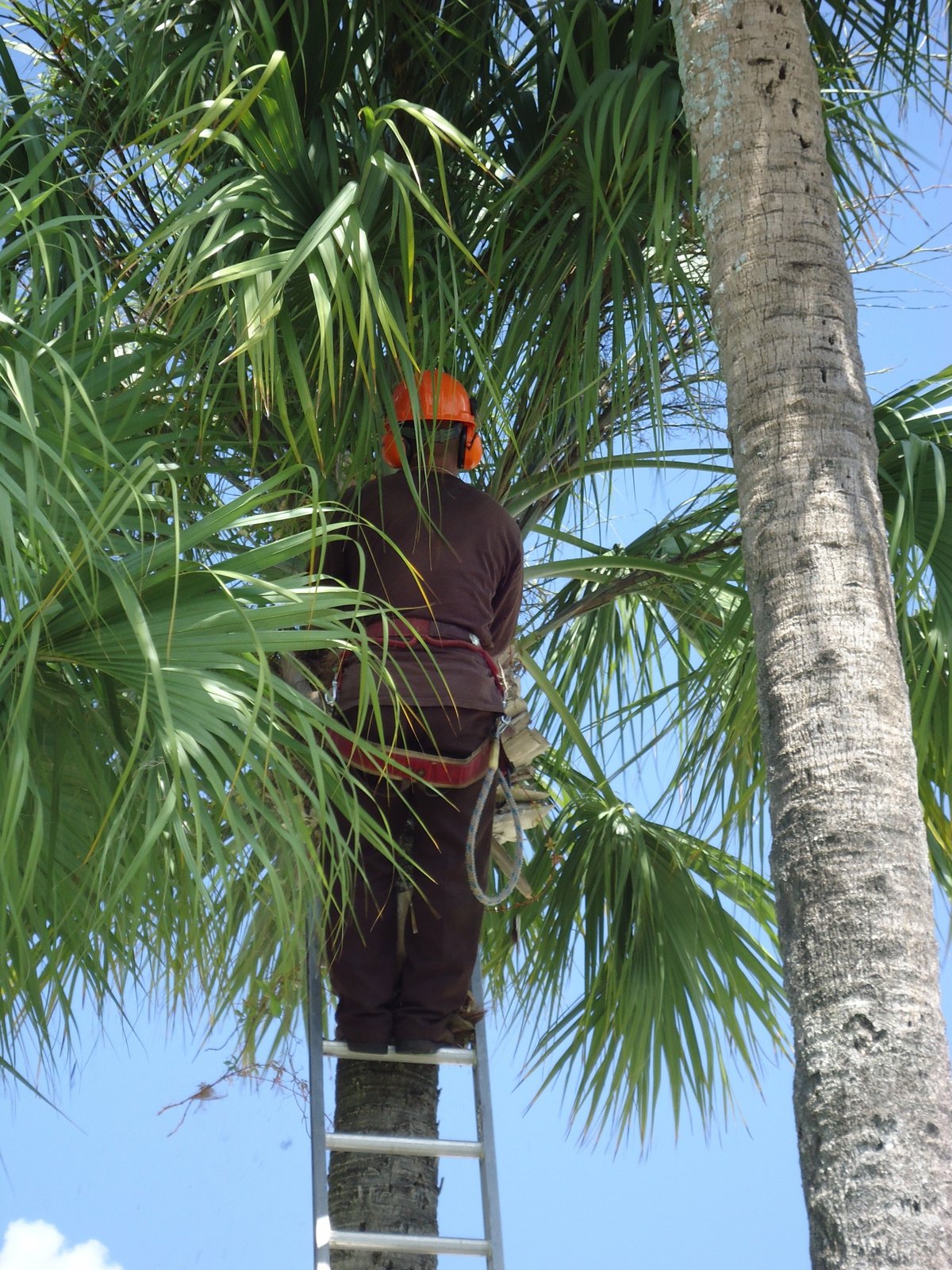
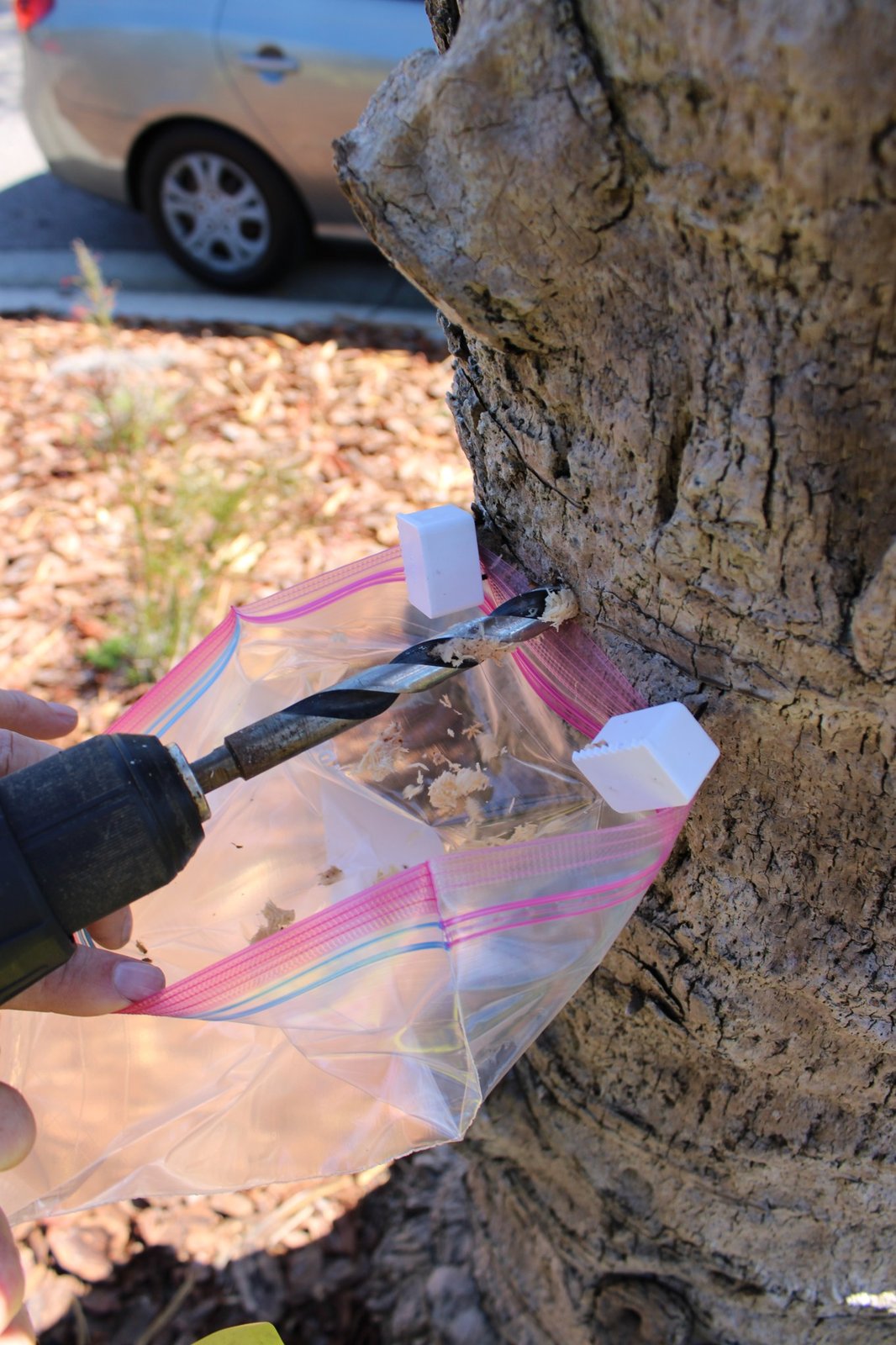
Spikes punch holes up the trunk, and each one is permanent. Fresh wounds are how Thielaviopsis trunk rot gets in, and climbing spikes are among the wounds we see most. We do not spike a palm that is staying. If a palm is out of reach of a ladder or lift, spiking needs the client's written sign-off first. Removals are the exception.
Timing by species
- Sabal (cabbage) palm: best August to October. December to May is the budget window, with a few late pods.
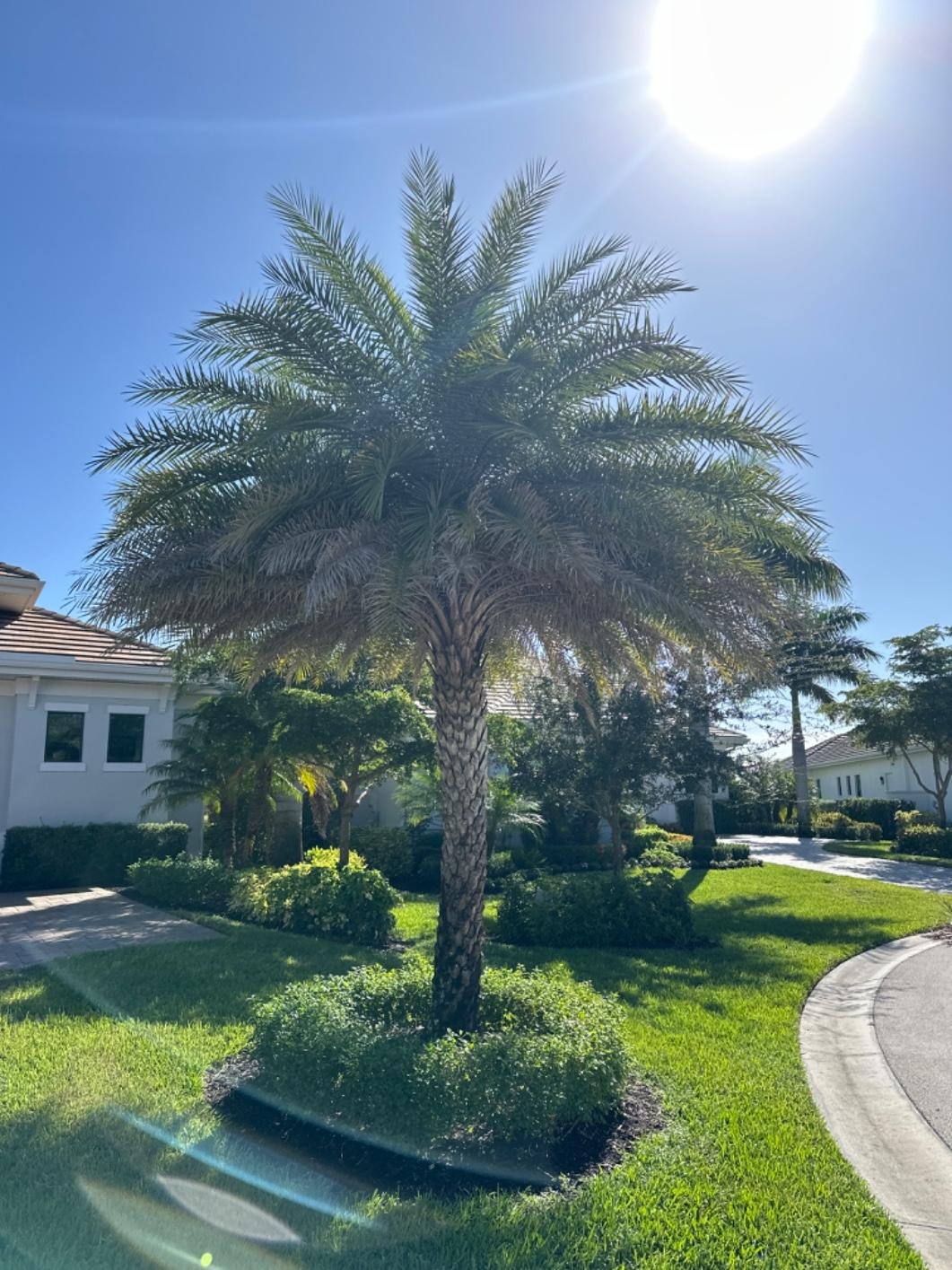
- Sylvester, Medjool, Canary Island date, and Senegal date: April to May, once seed pods develop.
- Sylvester, Medjool, and Bismarck on a protective soil drench: April to May, so flowers and seed stalks are off before drench season and bees stay off a treated palm.
- Coconut: every 6 months.
- Queen: twice a year recommended.
- Most other palms: yearly.
Dead fronds off before June 1 reduce storm debris. Nothing above the line comes off for that reason. Cold-damaged fronds stay until the cold season has passed.
Seed pods on thorny date palms are a balance, by palm sex. Only females set pods, so on females we remove every pod we can reach. On males we take only the easy flower stalks. We never cut into the thorny leaf bases to chase the last few pods, because a pod is not worth a permanent wound.
Where thorns block a pod, they are cleared with sterilized hand snips, not a saw. On a palm in a health program, we remove as many pods and flower stalks as we can, males included, to keep bees off a treated palm.
What to do
Ask us for the free master plan. We list your palms by species, set the pruning windows, and write the 9-and-3 standard into the plan, so every crew, ours or a partner crew, is held to the same line.