What a Hurricane Cut Costs a Palm
Stripping a palm to a few upright fronds looks storm-ready, but it takes away the fronds that feed it and opens the door to pests.
 Jeff Kaulbars
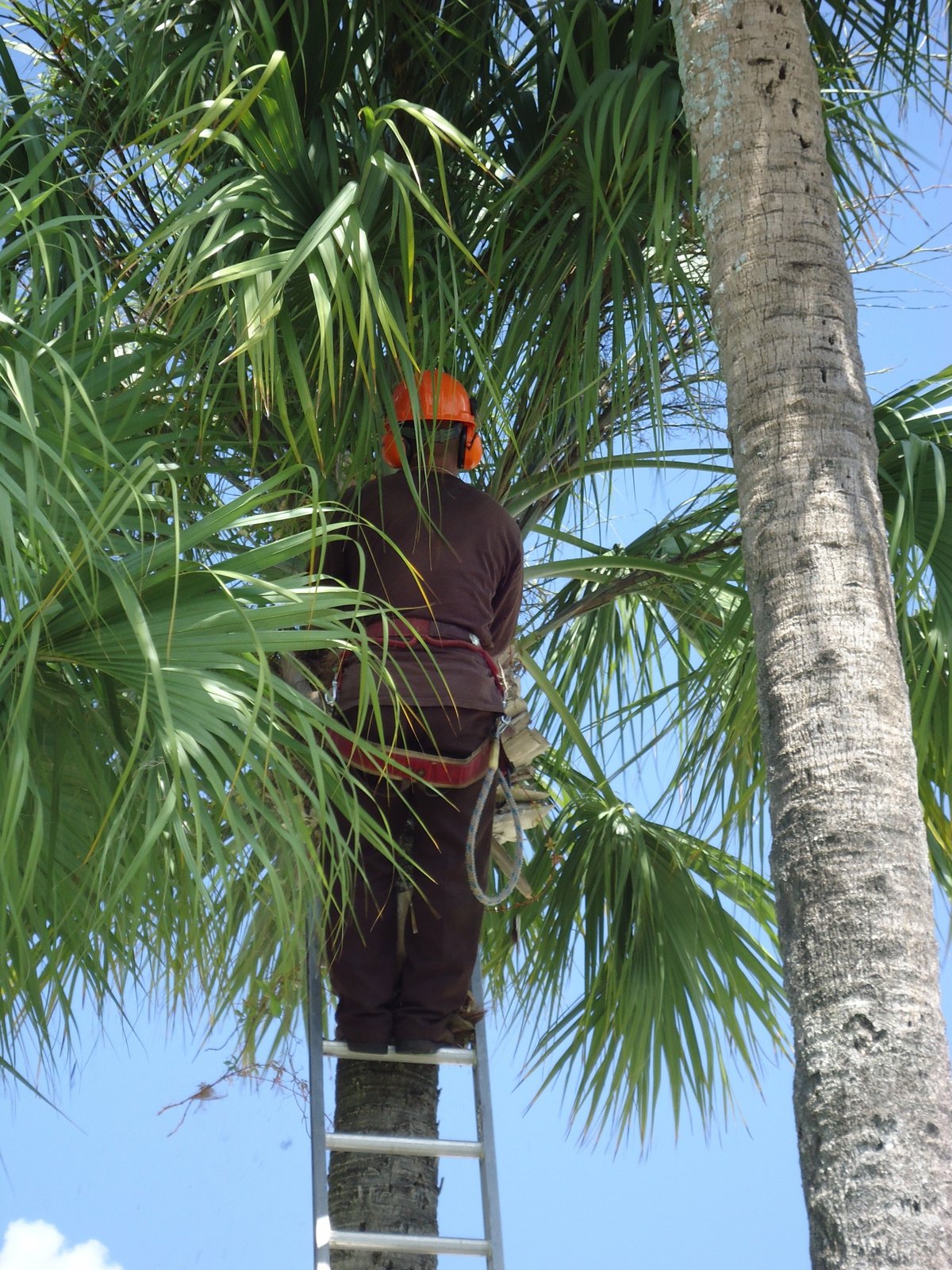
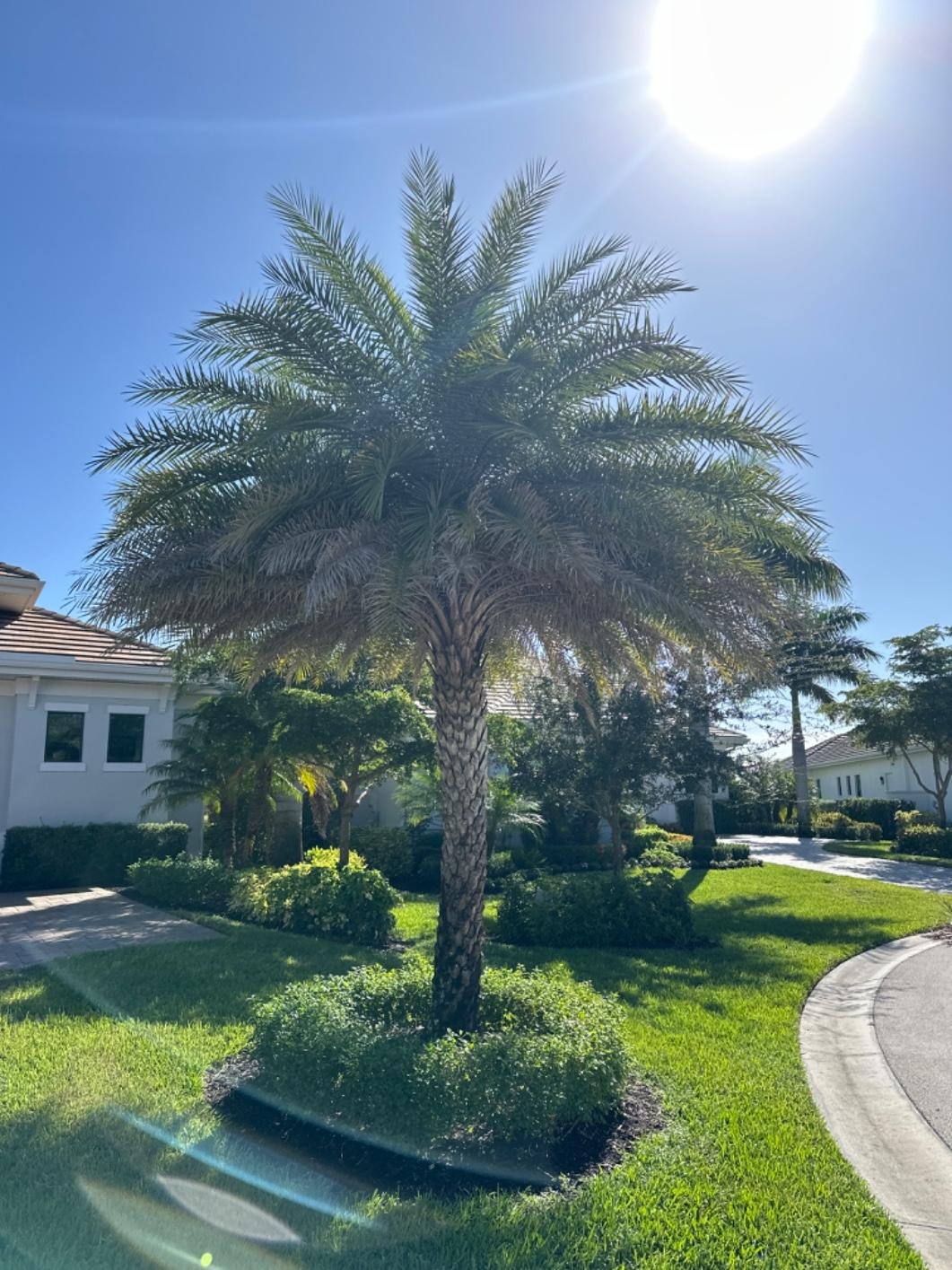
A hurricane cut takes a palm down to a few upright fronds, a tight tuft at the top of a bare trunk. It is common in Florida, and plenty of good crews do it because clients ask for it. We understand why. It looks tidy, and it feels safe. Here is what it costs the palm, so the choice is an informed one.
The fronds are the pantry
Living fronds store potassium and magnesium, two nutrients palms in Florida are short on. When a palm runs low, it pulls them out of its older fronds. Cut those fronds off and the palm loses its reserve. The university guidance and the national pruning standard both say to keep the fronds above horizontal, because over-pruning speeds potassium deficiency.
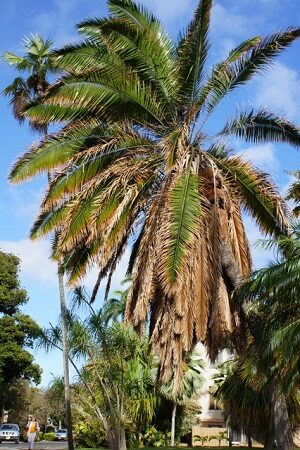
Repeat the cut year after year and you often see the result: a canopy that gets smaller, older fronds that turn orange early, and in the worst cases a trunk that narrows at the top. That pencil point is a deficiency symptom, not a pruning style.
Every cut is permanent
A tree can wall off a wound and grow over it. A palm cannot. The surface hardens, but the damage stays for life. Each green frond cut is a fresh wound, and fresh wounds are how Thielaviopsis trunk rot gets in. Stressed, freshly cut palms also give off the signal the palmetto weevil looks for. Its adults are most active from late spring into early summer, so heavy pruning in that window is the worst timing of all.
Our standard: 9 and 3
Picture a clock face on the palm, with a line from 9 to 3. Everything below the line comes off: dead fronds, spent flower and seed stalks, and every frond below it, green or brown. Nothing above the line is cut. Boots are trimmed cleanly, never skinned to the trunk.
Before the season, dead fronds come off by June 1 to cut down storm debris. Nothing above the line comes off for that reason.
Timing by species
- Cabbage palm (Sabal): best August to October.
- Sylvester, Medjool, Canary Island date and Senegal date: April to May, once the seed pods develop.
- Coconut: every 6 months.
- Queen: twice a year recommended.
- Most other palms: yearly.
Two more timing rules matter here. For cabbage palms, December to May is the budget window, with a few late pods to expect. And after a freeze, cold-damaged fronds stay on until the cold season has passed, because they still shade the bud. A good pruning calendar is part of the palm's health plan, written down before the season starts.
When a board wants a tighter look
Some properties have real reasons for more clearance: a sight line at an entrance, fronds over a walkway, a tidy look the community has always had. A frond in the way can often be tip-pruned to lift it rather than cut off.
Where the board still wants more off than the standard allows, we write down what will be removed and what it may cost the palms, and the board signs off before the work starts. That way the decision is the board's, and it is on paper.
What it saves
A palm that keeps its green fronds tends to need less corrective feeding, carries fewer wounds into storm season, and keeps a fuller canopy for residents to enjoy. No pruning style makes a palm storm proof. Keeping the fronds it lives on is the better bet.
What to do
Look at your pruning contract. If it says "hurricane cut" or does not say anything at all, ask us for the free master plan. We list your palms by species, set the months, and write the 9-and-3 line into the pruning standard so every crew, ours or a partner crew, works to it.