Fusarium Wilt Travels on Pruning Saws
Fusarium wilt moves palm to palm on contaminated tools and hides for months, so the defense is a clean saw and no susceptible replant.
 Jeff Kaulbars
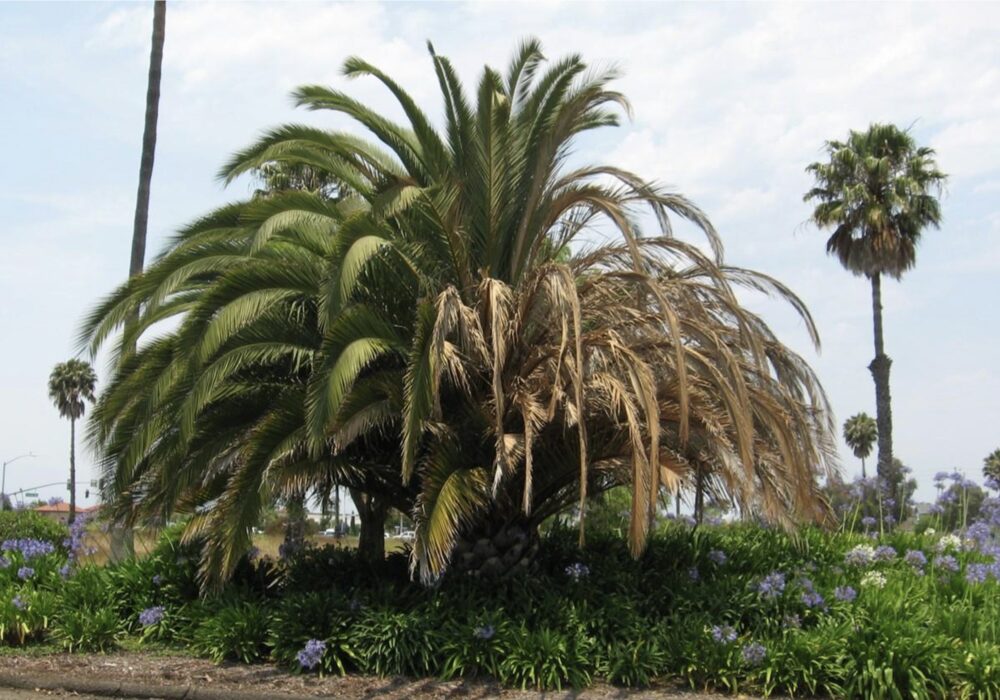
Fusarium wilt is a fungus that plugs the tissue a palm uses to move water. The palm dies of thirst with water at its roots. There is no curative fungicide, and on that point we agree with the university guidance completely.
How it spreads
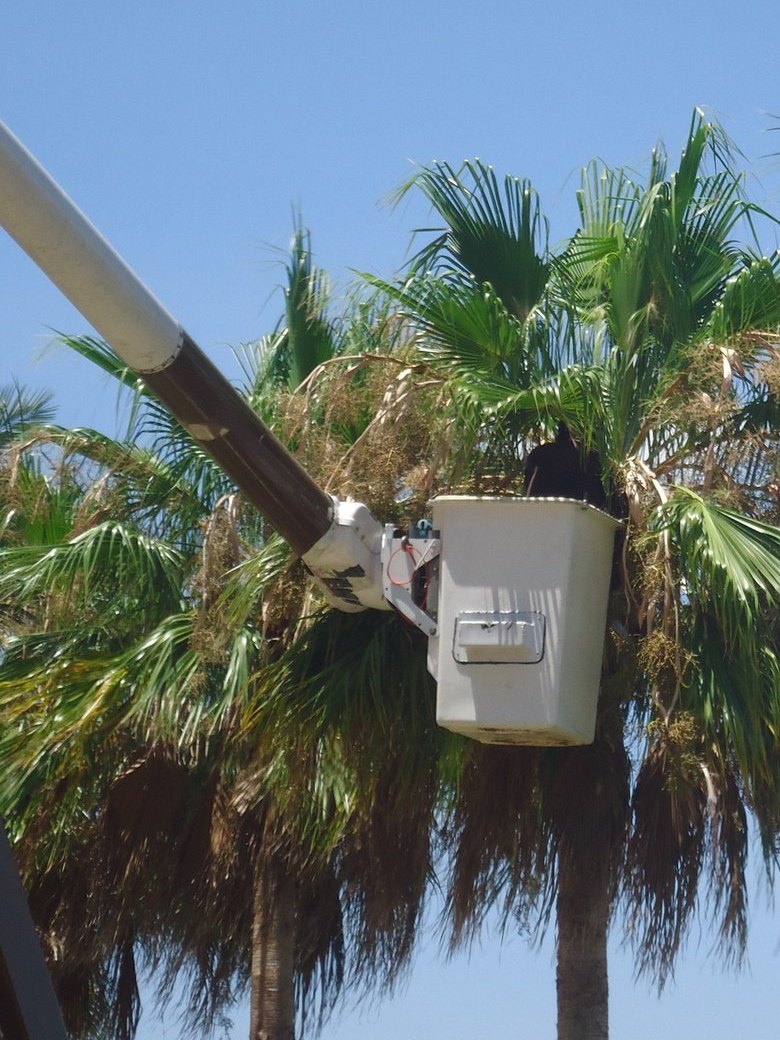
Almost entirely on contaminated pruning tools: chainsaws, loppers, handsaws, and shears. It also arrives on infected seed and planting stock. One shared chainsaw run down a row of date palms in an afternoon can expose every palm in that row.
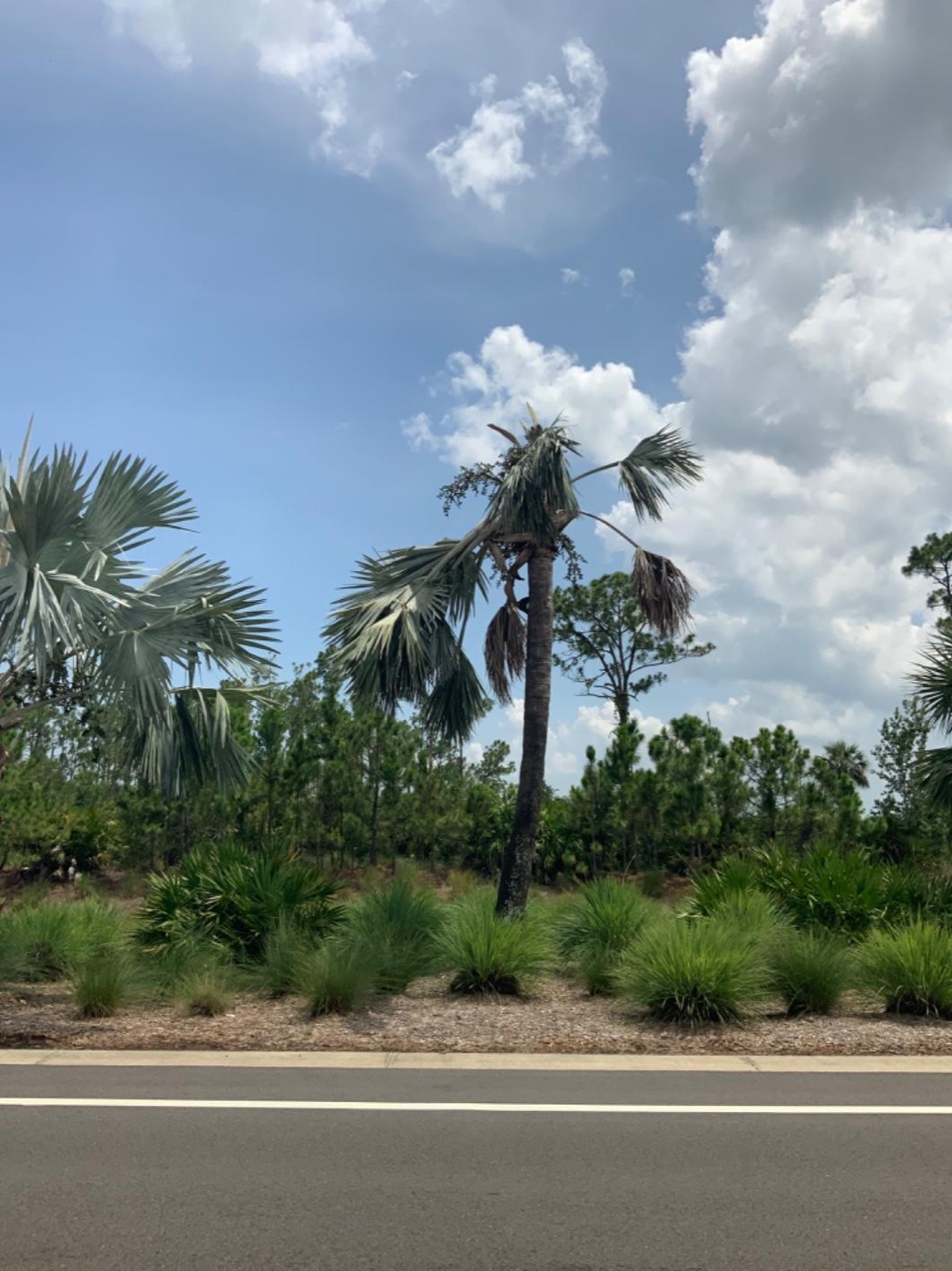
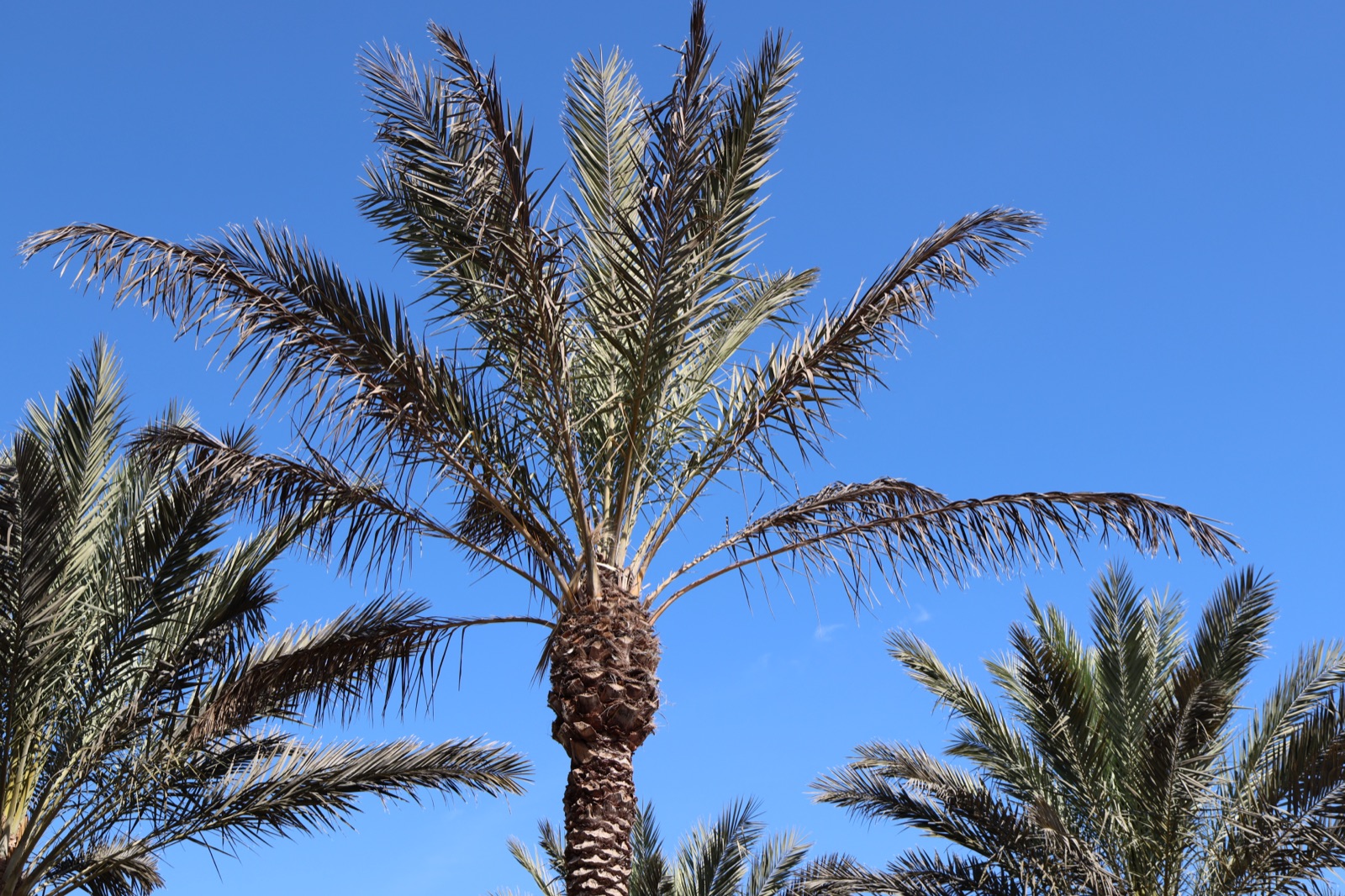
The Canary Island date palm is the primary host. Our own photo records confirm it in Medjool date palms as well. A related strain hits queen and Mexican fan palms. For pruning, we treat seven palms as tool-transmission hosts: Canary Island date, Medjool, Sylvester, Senegal date, queen, Washingtonia, and Sabal (cabbage palm), where we recommend it at a lower strength. The list can change as UF/IFAS updates it.
A long silent period
After exposure, a palm can carry Fusarium for 6 to 18 months with nothing to see. A property can be infected long before the first symptom. When symptoms come, they include one-sided frond browning, a reddish-brown stripe on a frond stalk, a trunk lesion with ooze, or a collapsed crown. Our crews stop on that palm, set those tools aside, switch saws, flag the office, and recommend a lab test.
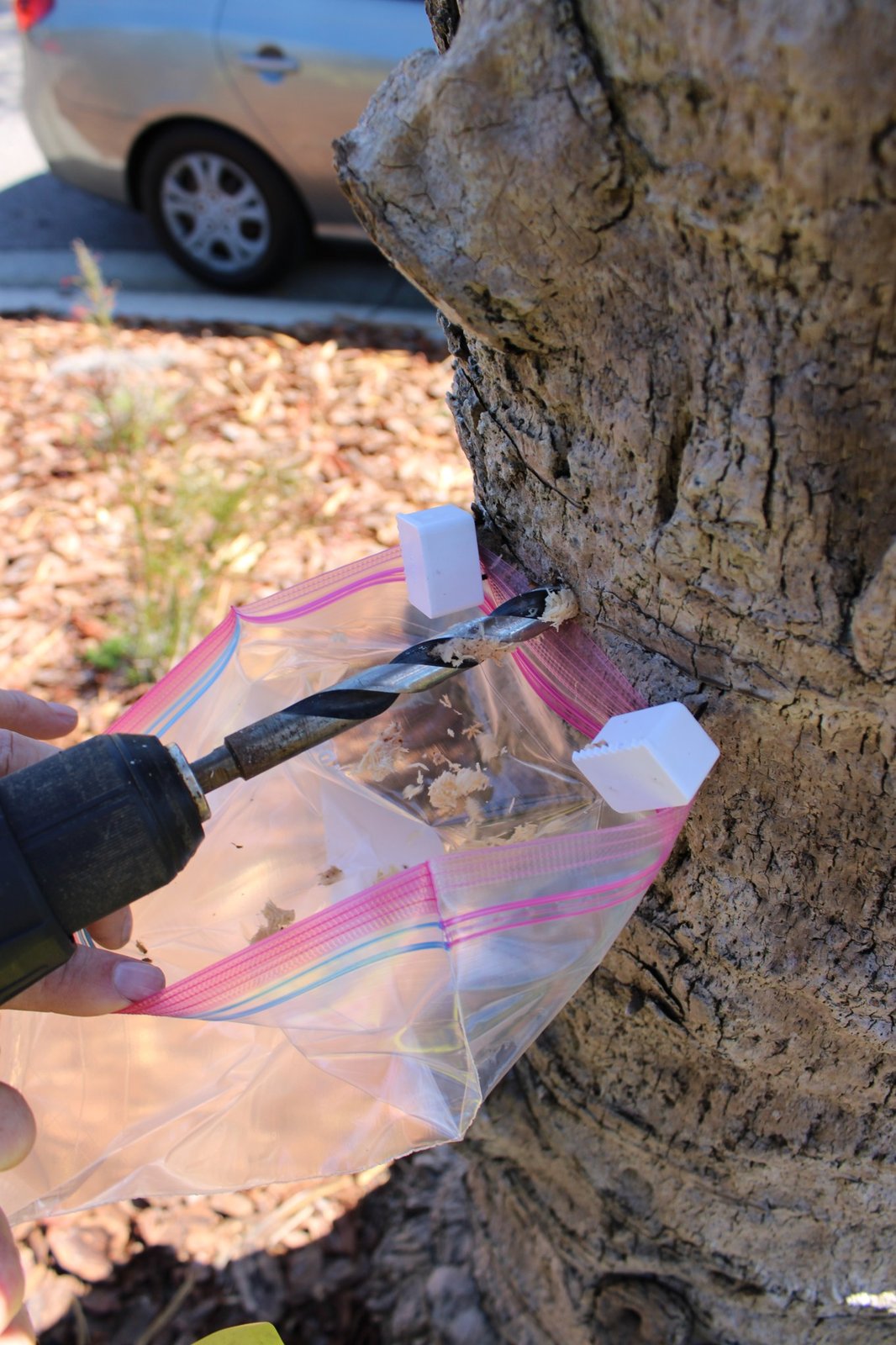
Confirmation takes two lab steps: growing the fungus in culture, then a molecular test for the strain. Culture alone is not proof, because harmless look-alike strains exist. We do not carry a removal recommendation to a client on a presumptive call.
Why a chainsaw cannot be cleaned in the field
UF/IFAS calls for a new or disinfected tool on every Canary Island date palm, and we agree in principle. Its guidance says a chainsaw should be taken apart and soaked, which is not workable in the field. Residue hides in the bar groove, clutch housing, air intake, and chain links. A spray-down does not reach it, so we do not call that sterilization.
A handsaw can be cleaned. Between palms, our crews:
- Wire-brush the blade clean of sap and sawdust.
- Spray it with disinfectant (25% household bleach or 50% isopropyl alcohol).
- Give it a quick torch pass.
- Let it cool before the next cut.
No torch goes on in burn-ban or high-fire-danger conditions. Sterilization is an add-on the client elects species by species on the pruning proposal. We highly recommend it on Canary Island date, Medjool, and Sylvester palms. On a large community with hundreds of palms in rotation, we usually do not push it unless Fusarium is lab-confirmed on or next to the property.
No susceptible replant at a confirmed site
The fungus's resting spores persist in soil and root debris for years, possibly indefinitely. There is no established safe waiting period and no established safe distance. At a confirmed site, we do not replant any Phoenix palm or queen palm. Replace it with a non-host species or move the planting. This is a firm rule, not a judgment call like Ganoderma. Removed palms go to a landfill or incinerator, never back into the mulch.
What to do
If your property has Canary Island, Medjool, or Sylvester date palms, ask us for the free master plan. It lists the sterilization choice by species, so the decision is on paper before the saws arrive.