After a Cold Snap, Check the Spear Before You Cut Anything
Brown fronds after a freeze look worse than they are, so we test the bud, wait out the cold season, and only then prune.
 Jeff Kaulbars
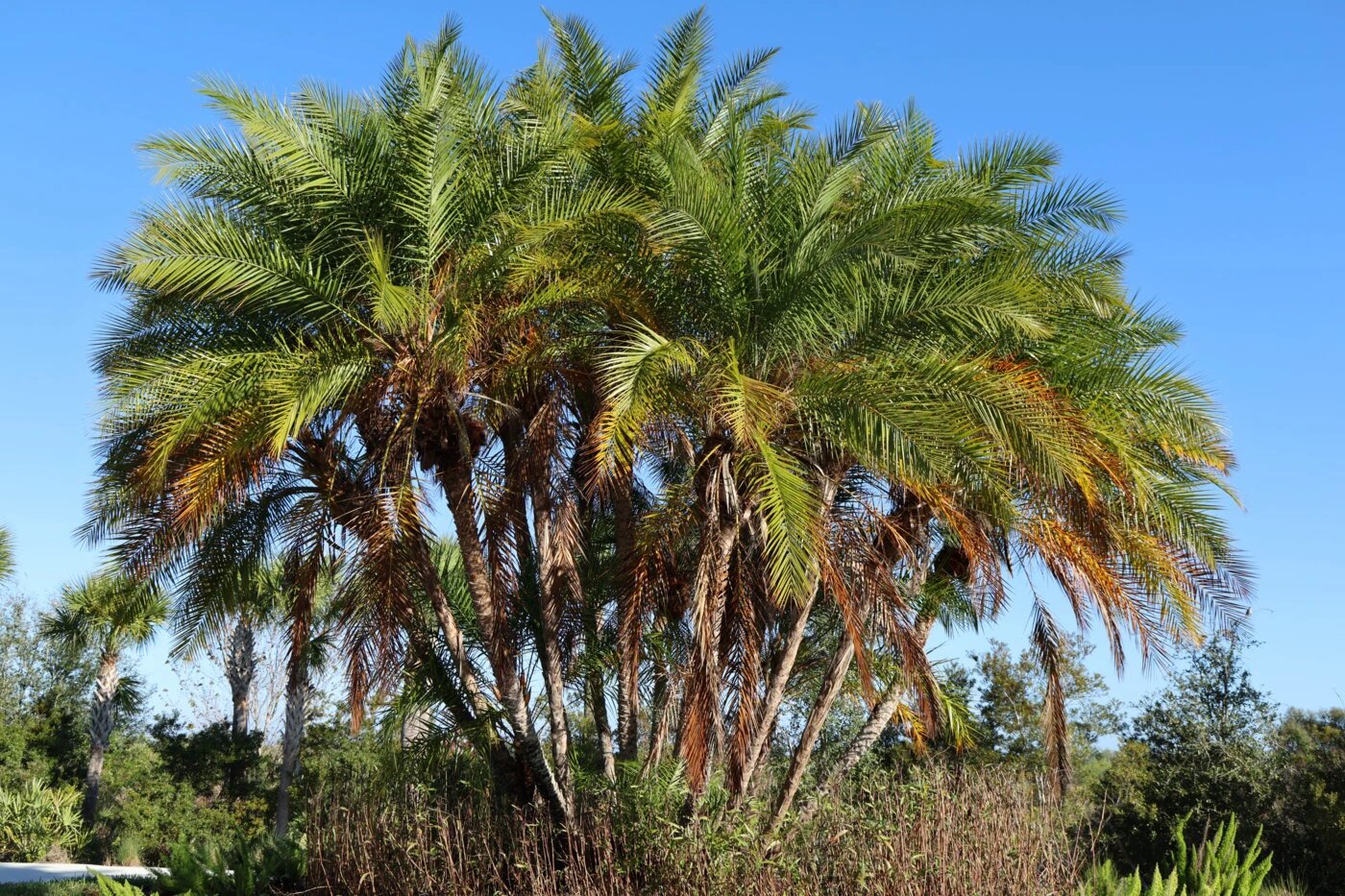
This winter has been a hard one for palms. At one site we monitor, the low hit about 25°F (minus 4°C) on February 3, and the site had already logged repeated freezes since January. Many properties now have brown, burned fronds and residents asking whether the palms are dead.
Most are not. The fronds took the hit. The question is the bud.
Three kinds of cold injury
- Chilling injury: days of cold above freezing, below about 50°F. The most tropical palms, coconut and adonidia (Christmas palm), can be hurt with no frost at all.
- Frost injury: leaf temperature at or below 32°F. Ice forms in the leaf tissue and the fronds brown.
- Hard freeze: hours below 32°F. This is the one that can kill the spear and the bud.
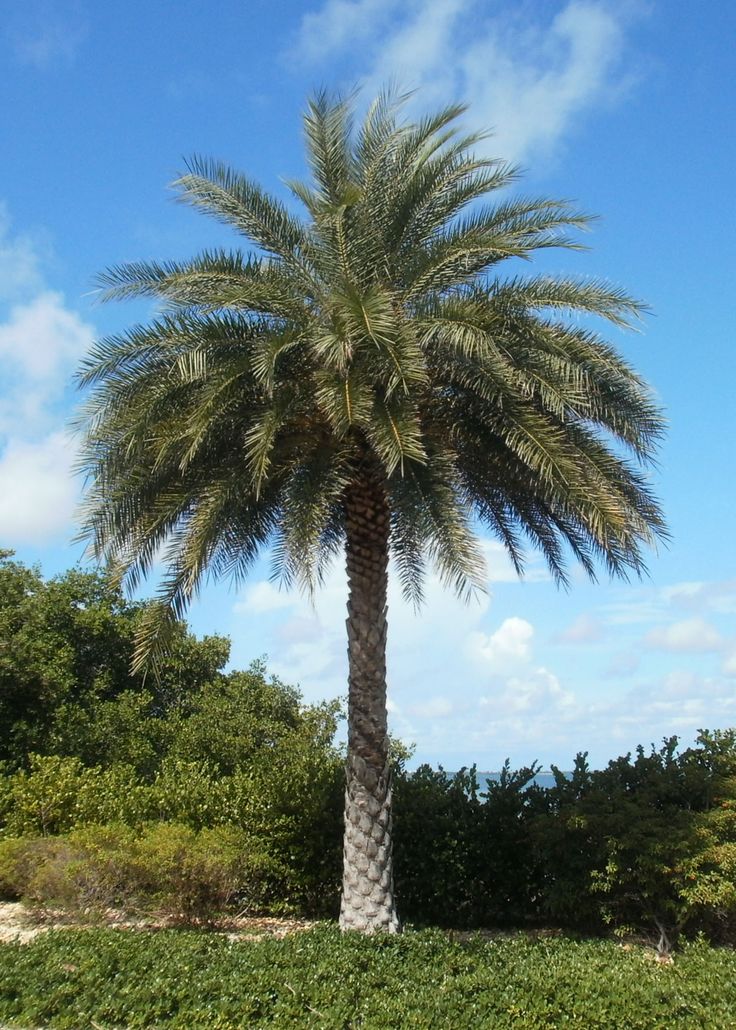
Coconut, adonidia and royal palms are the most sensitive here. Queen, Washingtonia, Bismarck and Sabal palms tolerate cold better.
The spear test
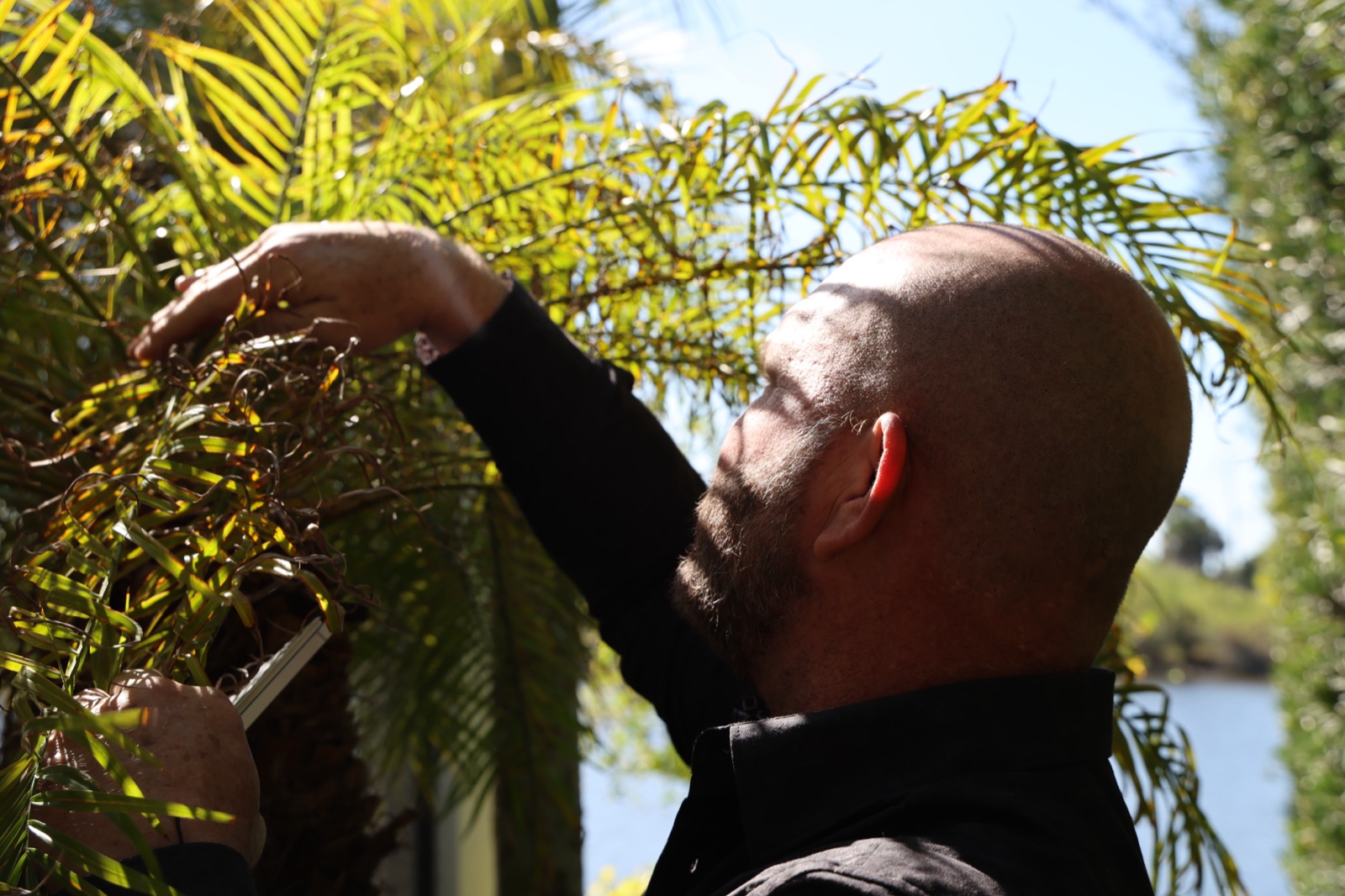
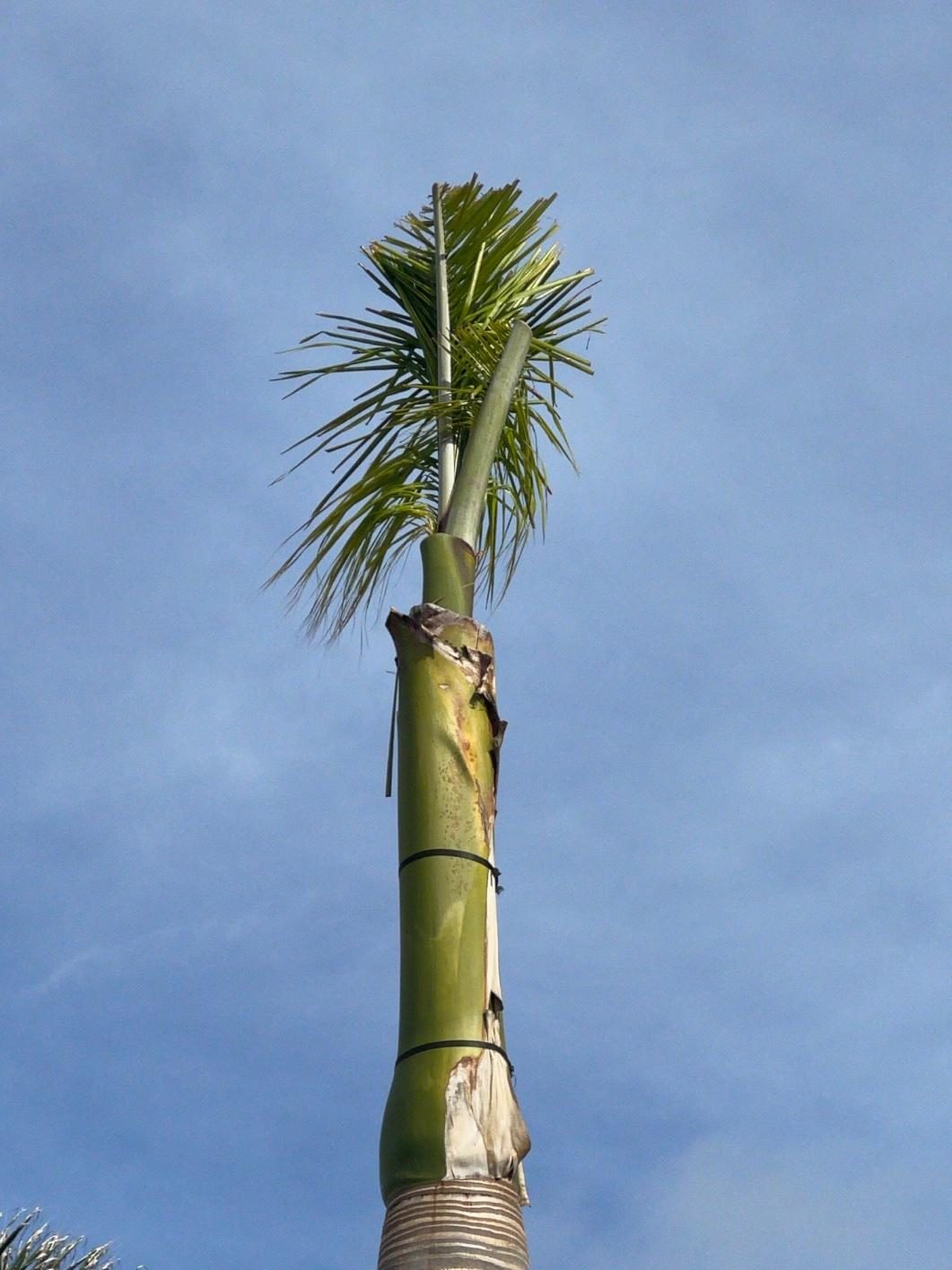
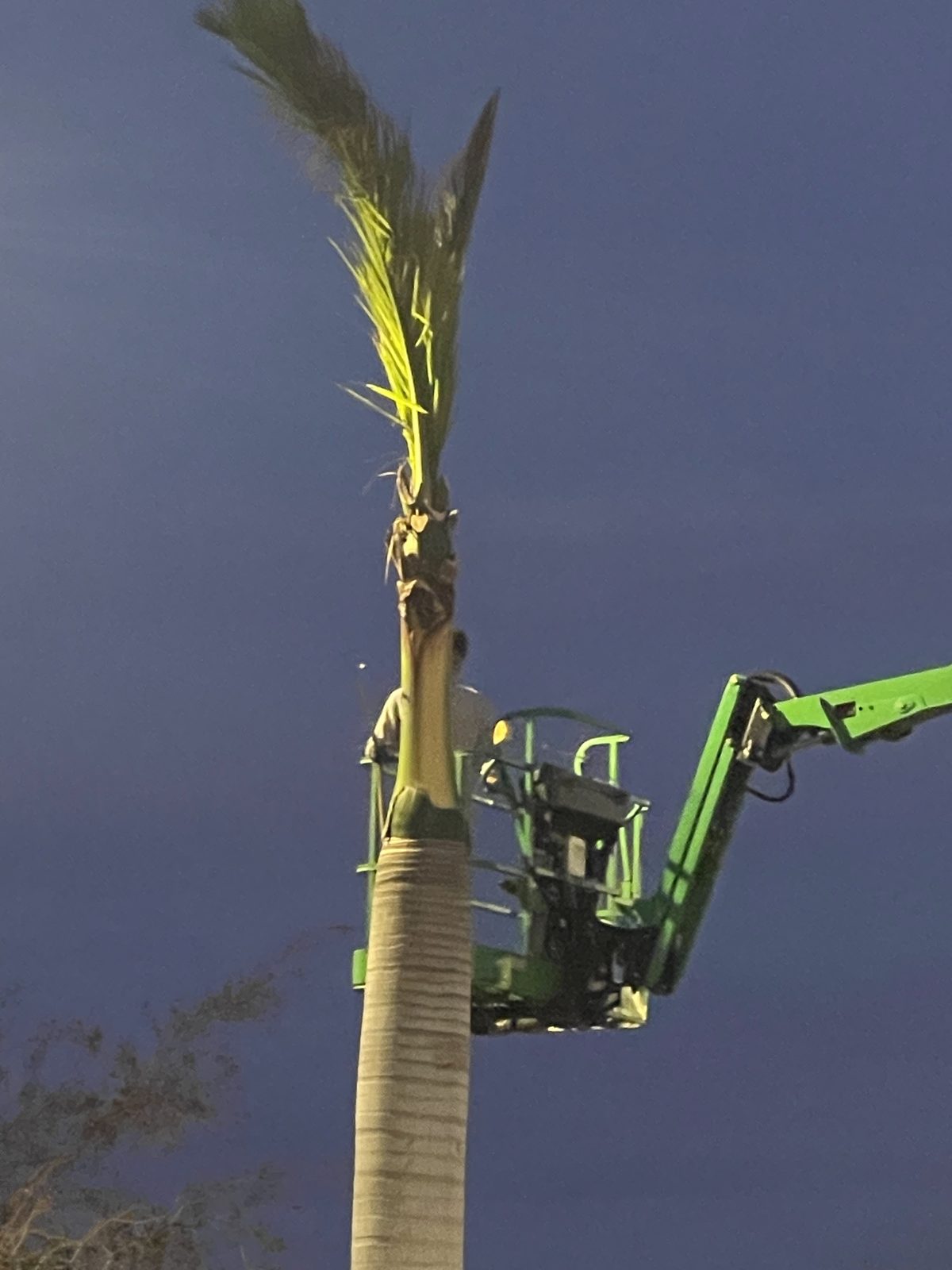
A palm grows from one bud. If the bud lives, the palm can grow a new canopy. If it dies, the palm dies, even if the old fronds stay green for weeks or months. So after a freeze we test the spear, the newest, unopened leaf. A firm upward pull tells us two things: does it resist, and does it smell? Firm and odor free is a good sign. A spear that slides out with a rotten smell means the bud is in trouble.
Do not prune yet
Brown fronds still shade the bud through the rest of the winter, and partly green fronds still feed the palm. Our pruning standard follows the university guidance: cold-damaged fronds stay until the risk of more cold has passed. In Southwest Florida that usually means late February or March. Then only fully brown fronds come off. Green tissue is never cut, and nothing above the 9-and-3 line comes off.
Cold-killed tissue never turns green again. A palm does not repair tissue the way a tree does. The canopy comes back through new fronds from a living bud. For mild frond burn, that takes about 3 to 6 months. For heavier damage, 6 to 12 months.
The weeks after are the risky part
Often the cold is not what kills the palm. Damaged spear tissue starts to break down as it warms up. Bud rot organisms and insects move into it. Pink rot, a fungus that feeds on stressed tissue, spikes in late winter and early spring after cold. So the weeks of warm-up after a freeze need eyes on the spears as much as the fronds.
Protective treatment
When a cold front is forecast or has just hit with temperatures under 50°F, we reach out first. For Advanced-tier and high-value palms, a protective drench with copper may be a good idea, and it works best before damage sets in.
It is an option the client chooses, on our certified arborist’s call. After a freeze, copper is applied by drench, never by injection, and no more than twice, because too much copper harms palms. It is preventive only. It does not bring back a bud that is already dead.
Cold also hits nutrition
Cold slows root uptake and slows the release of slow-release fertilizer at the same time. The palm draws on its reserves while taking in less. That shortfall often shows up a few fronds later, in late winter and spring. Keeping the feeding program on schedule matters more after a cold winter, not less.
What to do
Leave the brown fronds on for now. If a spear looks wrong, leans or pulls loose, call us. Ask for the free master plan in March, after the cold season, and we will grade every palm and set the cleanup to the standard.