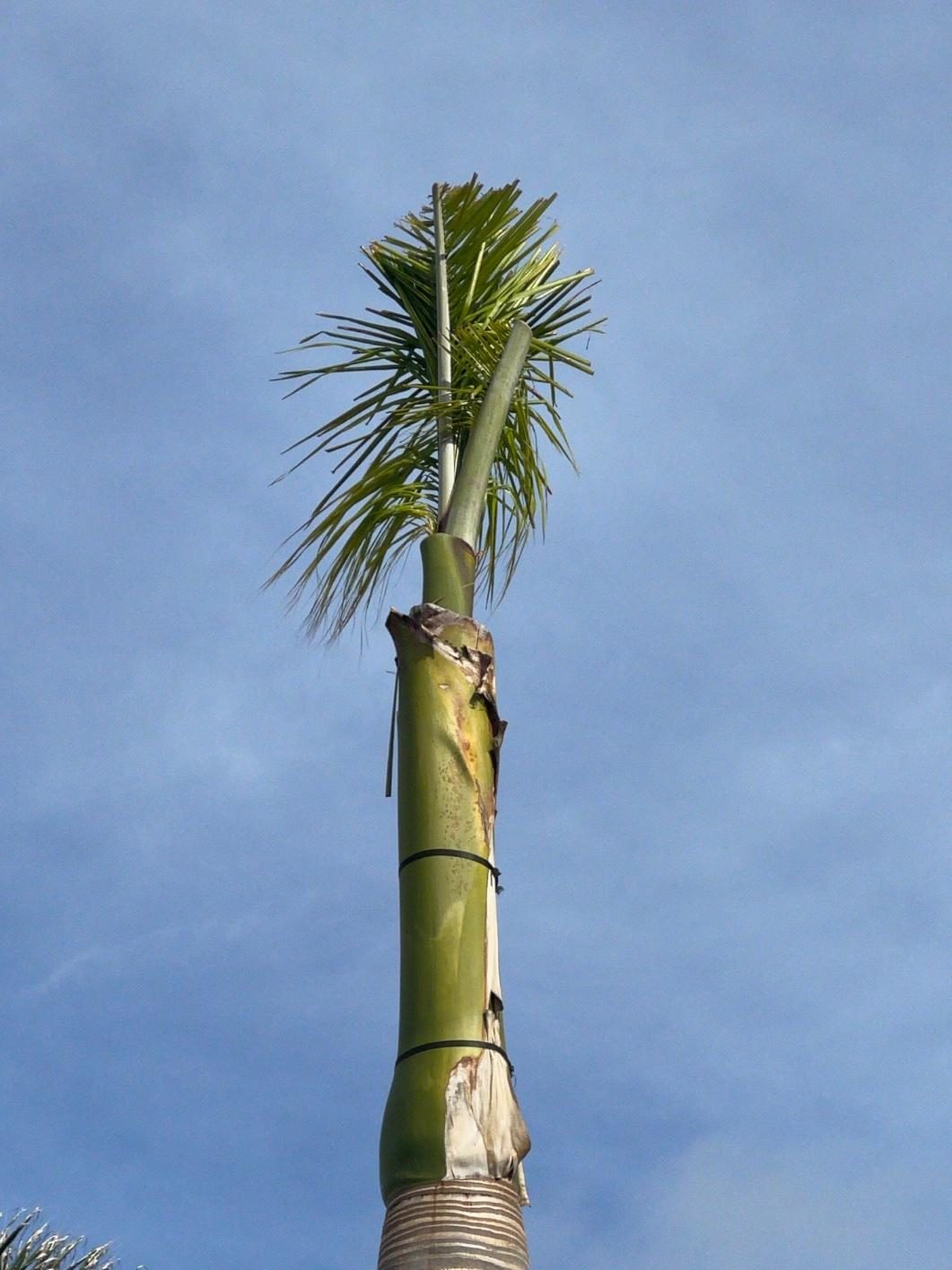
Bud Rot After a Storm: Watch the Spear, Not the Fronds
Wind, water and wounds raise bud rot risk for weeks after a tropical storm, and the spear is where it shows first.
 Jeff Kaulbars
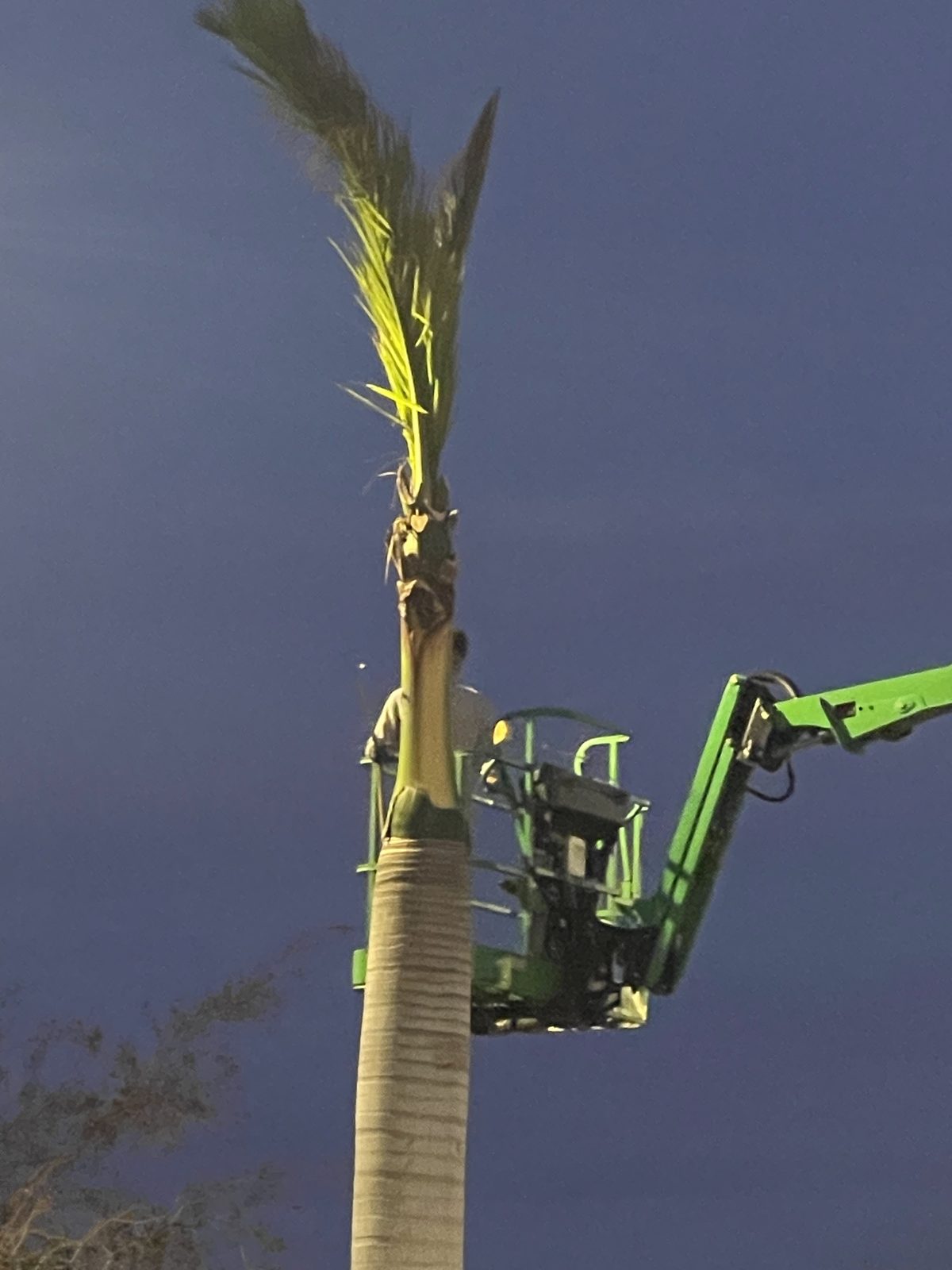
After a tropical storm, people look at the broken fronds and the leaning trunks. The palm that is in real trouble often looks fine for a while. What decides whether it lives is the bud, the single growing point hidden inside the crown.
What bud rot is
Bud rot in Florida palms comes from two organisms: Phytophthora, a water mold, and Thielaviopsis, a fungus. Both can kill the bud. A palm has one bud and cannot grow another. Once it is dead, the palm is dead, even if the old fronds stay green for weeks.
Bud rot peaks in the rainy season and in the days and weeks after a tropical storm or hurricane. Its spores move on wind and water, in splash from rain or overhead irrigation, on tools, and on insects and rodents. A storm brings all of that at once, plus wounds and water standing in damaged crowns.
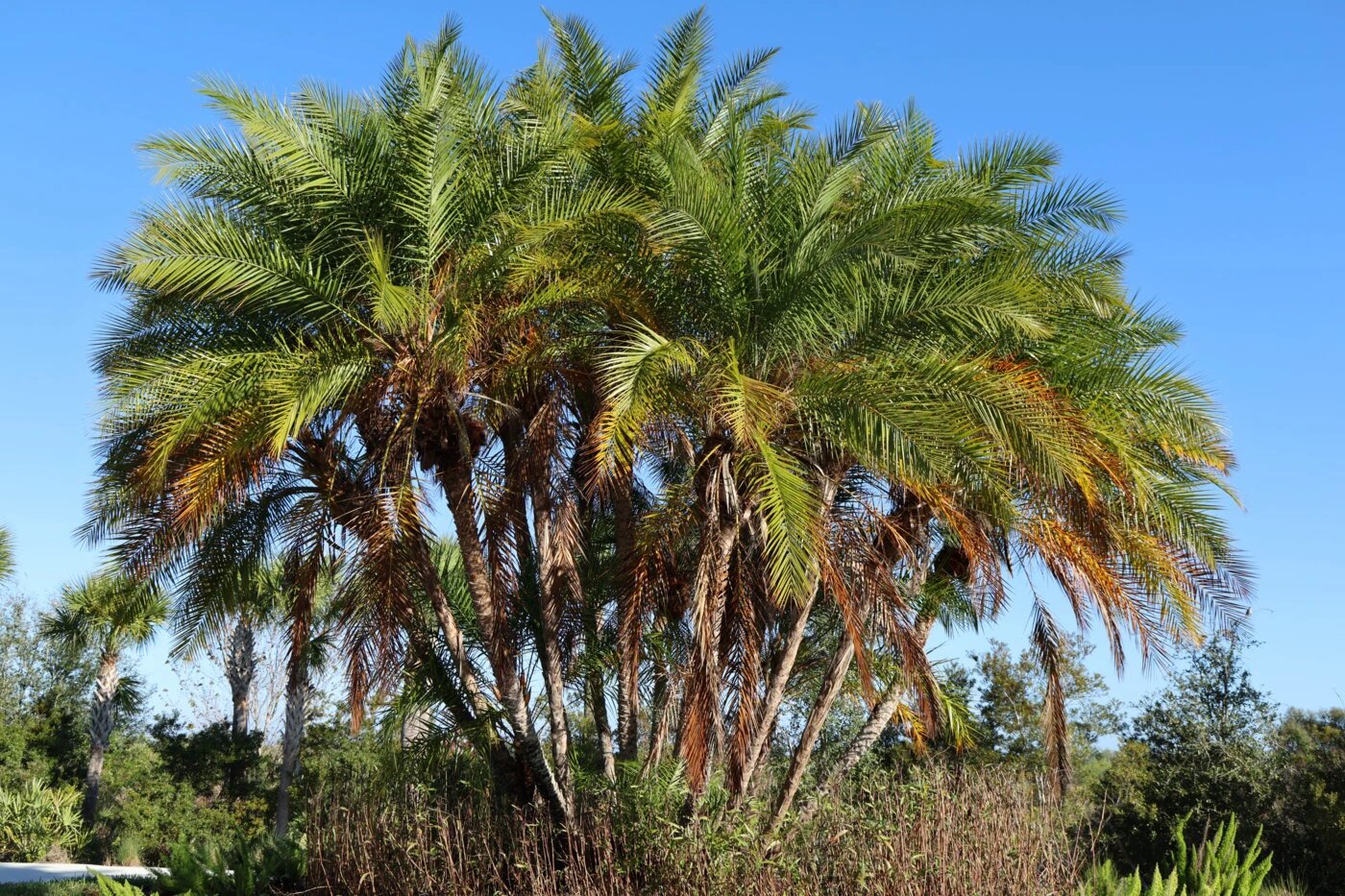
Every landscape palm is a potential host. Cases in Florida landscapes include coconut, Washingtonia, Canary Island date, date and queen palms. Young palms with the bud near the ground carry extra risk from spores in the soil. Irrigation heads that spray into the crowns of young palms add to it, and are worth turning away after a storm.
Signs to watch
- A spear (the newest, unopened leaf) that turns brown, leans, or does not open.
- A spear that pulls free with a light tug, often with a foul smell at its base.
- New fronds that come out stunted or discolored while the older fronds look normal.
- On trunks, a dark, wet lesion, often in the upper third, where a wound let Thielaviopsis in.
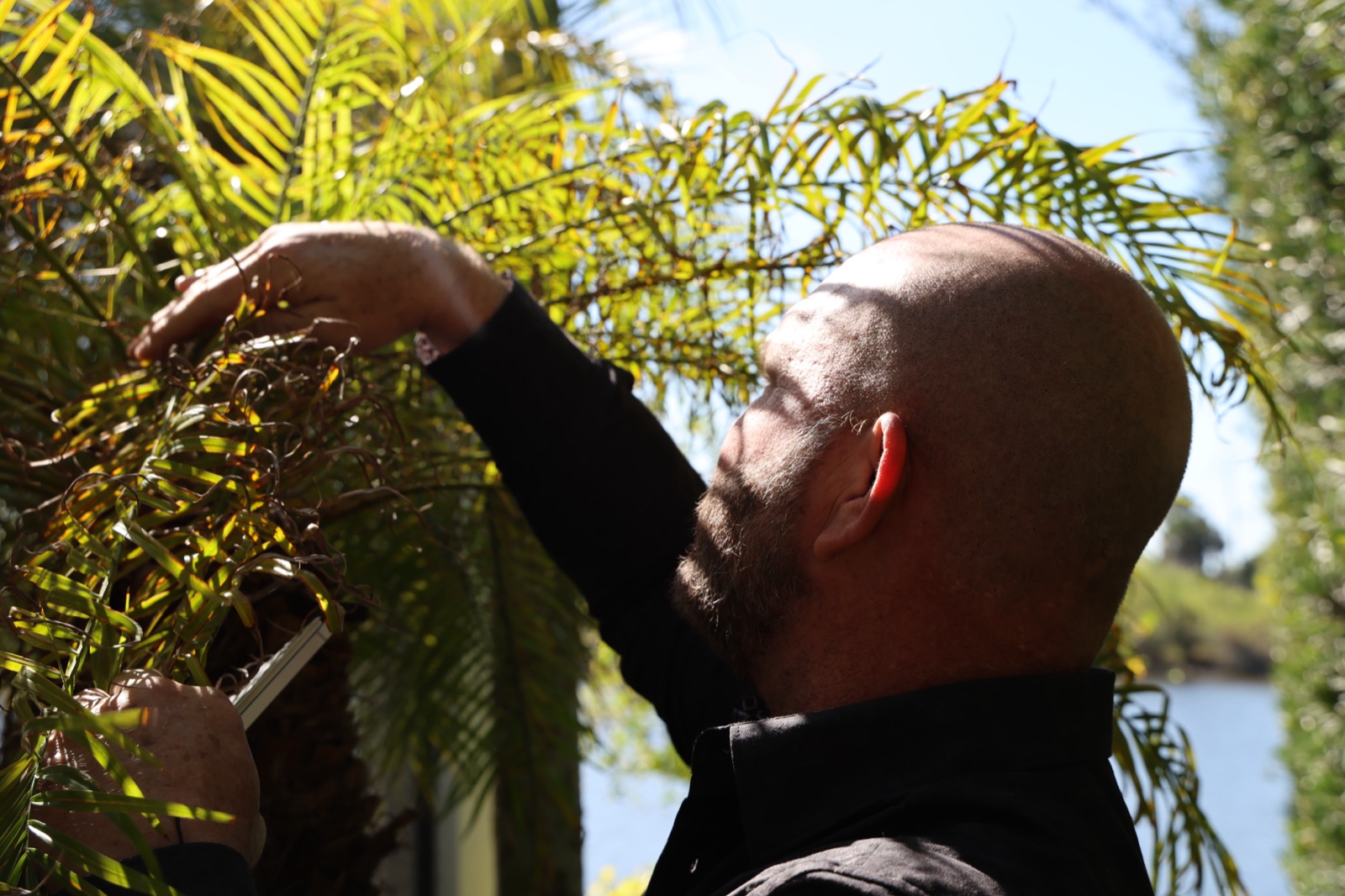
The spear test is our field check: a firm upward pull on the spear. Resistance and no smell is a good sign. A spear that slides out with a rotten base means the bud is gone.
What we do after a storm
Our storm spec puts recovery checks at 30, 90 and 180 days for exactly this reason. Between those visits, managers can help by reporting any spear that looks wrong.
On Advanced-tier and high-value palms with crown damage or standing water, our certified arborist may call for a protective bud drench after a storm. It is billed separately, on any tier. It is preventive only. It protects living tissue. It does not bring back a bud that is already dead, and we will not pretend otherwise.
Do not add wounds
Thielaviopsis needs a fresh wound to get in. So after a storm, the pruning is light on purpose:
- Broken fronds only. Boots are not touched.
- No green fronds stripped to tidy up the canopy. The palm will look uneven for 12 to 18 months, and that is fine.
- No climbing spikes on a palm that is staying. Every spike hole is permanent.
- Untie any fronds that were tied up before the storm. Tied fronds hold water around the bud.
A palm flagged for trunk rot is a collapse risk. No ladder goes against it.
When a bud is lost
A dead spear on a single-trunk palm is a terminal sign. We recommend removal in writing, on every report, for as long as the palm stands. Short of that, we wait. Most storm-damaged palms that keep a living bud recover over the next year. The lab can tell Phytophthora from Thielaviopsis when it would change a treatment choice on the palms around it.
What to do
After the next storm, walk your palms with one question: do the spears look right? If one does not, call us before anyone prunes it. Ask for the free master plan to set up the 30, 90 and 180 day checks before the season ends.