
Palm pest
Palm Mites
Three kinds of mites feed on palms in Southwest Florida: spider mites, red palm mite and coconut mite. Most damage is cosmetic, and the first step is correcting the conditions that let mites build.
Palms it affects: Coconut palm, Areca palm, Christmas palm, Canary Island date palm, Sylvester palm, Medjool date palm, Foxtail palm, Queen palm, Royal palm
- Affects
- Coconut palm, Areca palm, Christmas palm, Canary Island date palm and more
- When it shows
- Hot, dry, dusty weather, mainly May through June and October through November.
- What we do first
- Check water stress and dust sources first.
What you see
Signs in the field
- Fine pale stippling on leaflets that turns bronze or rust-brown (spider mites)
- Fine webbing at the base of leaflets on the underside (spider mites)
- Yellow speckles and blotches on lower leaflets, with tiny reddish mites and no webbing (red palm mite)
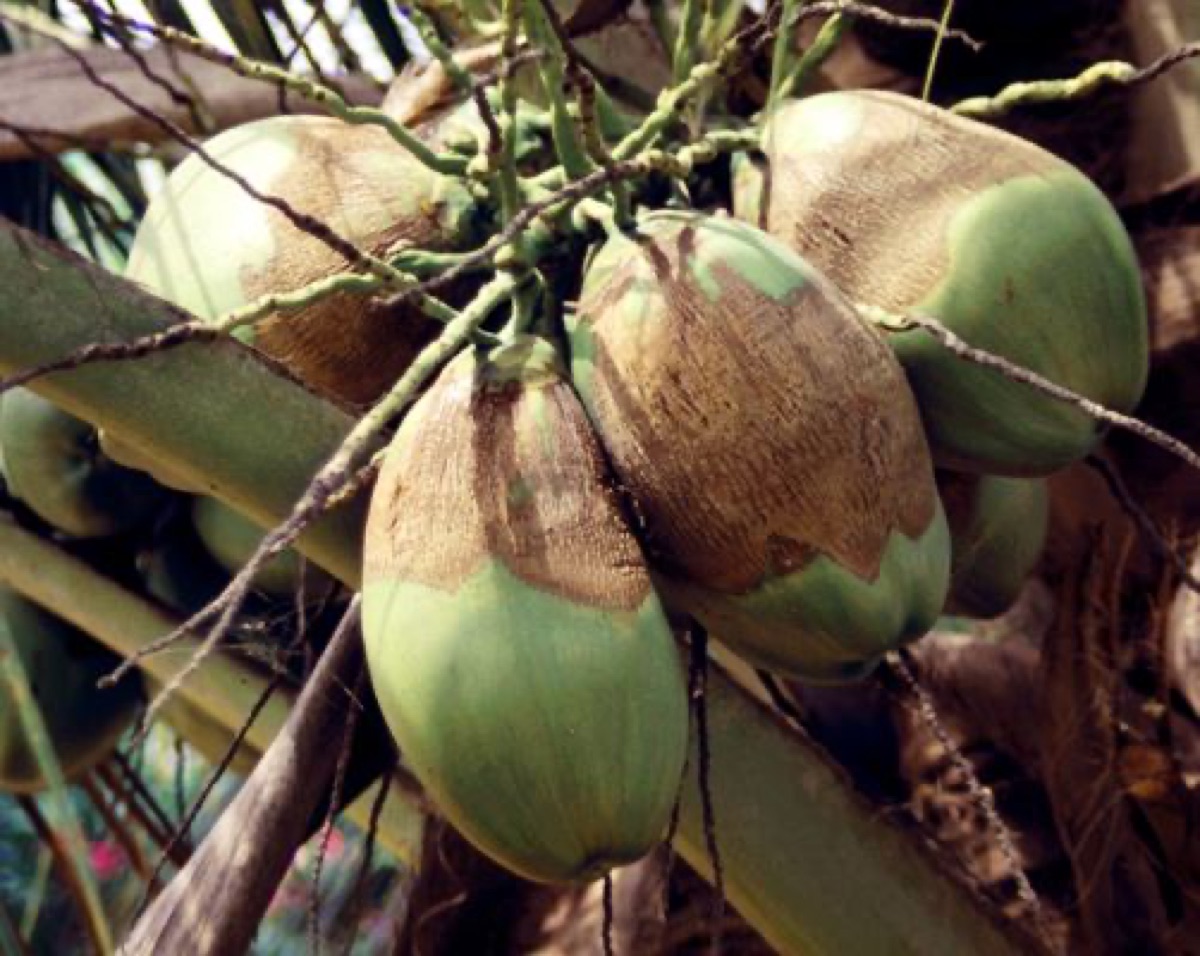
- Pale triangles under the cap of young coconuts that turn brown, corky and cracked (coconut mite)
- Tiny moving specks on white paper when a leaflet is tapped over it
From the field
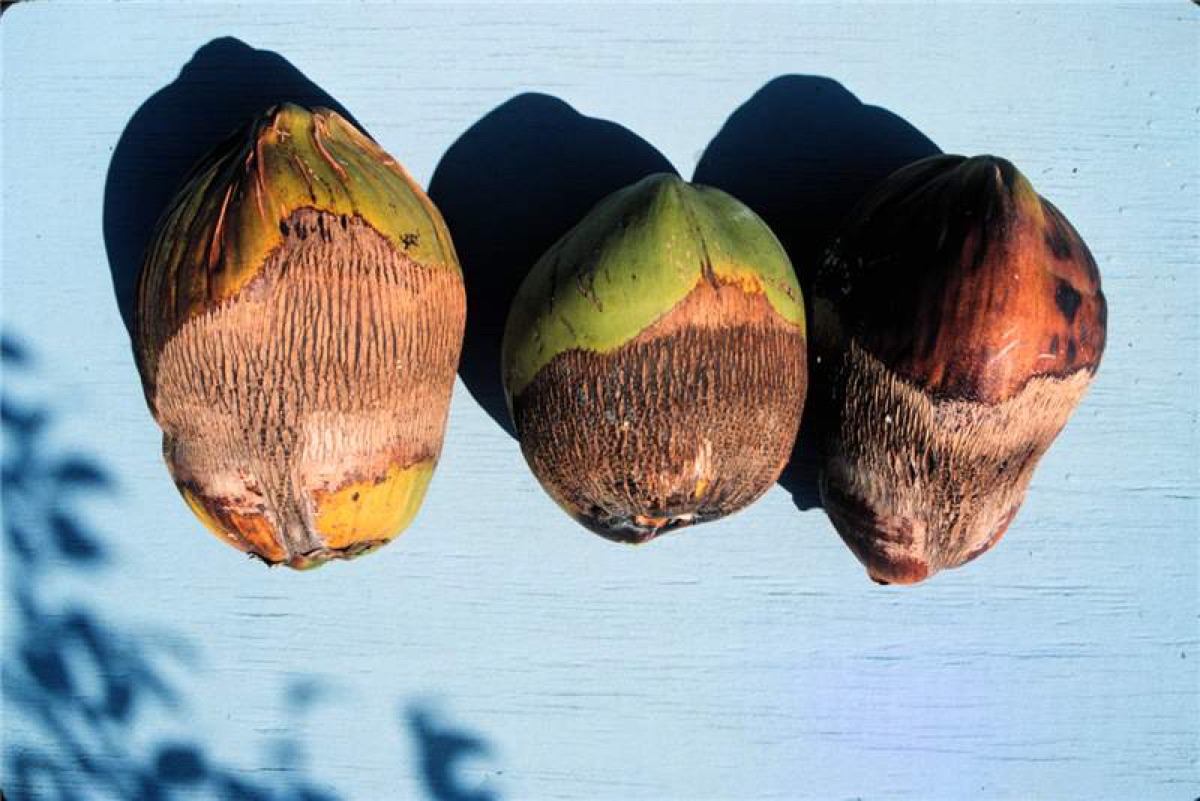
The detail
What else to know
What drives an outbreak
Mites flare in hot, dry, dusty weather, mainly May through June and October through November here. Water-stressed palms and palms near construction dust or unpaved roads are at higher risk.
A broad-spectrum insecticide sprayed for another pest can suppress the predatory mites that keep spider mites in check for 4 to 8 weeks. Spider mites rebound fast in that gap.
How serious is it
Spider mites are cosmetic to moderate. Red palm mite can yellow the whole lower canopy, and young coconut palms are hit hardest. Coconut mite damages the nuts, not the fronds, so on ornamental coconuts it is mostly cosmetic.
Mites alone rarely pull a palm below normal condition unless the infestation is severe, long-running or stacked on other stress.
How mites spread
Wind is the main route. Mites also ride on insects and birds, crawl between touching palms, and arrive on infested nursery stock.
What we do
How Ptolemy handles it
Field condition first, then the recommendation. Treatment, removal and diagnosis calls are made by an ISA Certified Arborist, and the serious ones are confirmed in a lab.
- Fix the trigger first: restore irrigation, wash dusty foliage, and hold off broad-spectrum sprays nearby. Recheck in 10 to 14 days.
- If mites keep building, horticultural oil or insecticidal soap with full coverage of leaflet undersides. A selective miticide only if that fails, chosen by our certified arborist with mode-of-action rotation.
- Tap tests on the oldest fronds during the hot, dry windows and for 6 to 8 weeks after any broad-spectrum spray.
- Inspect new palms with a hand lens before they go in the ground.
- A confirmed red palm mite find goes in the client's written assessment as an established invasive.
Next step
Seeing palm mites on your property?
Keep reading
More palm pests
 Manageable
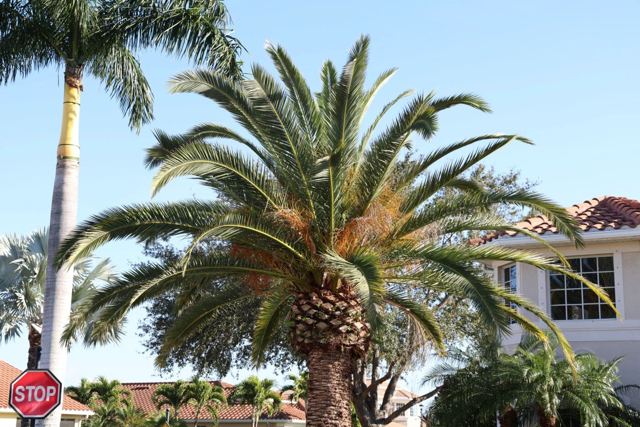
Sap-feeding insects that sit still under a waxy cover.
Signs and what we do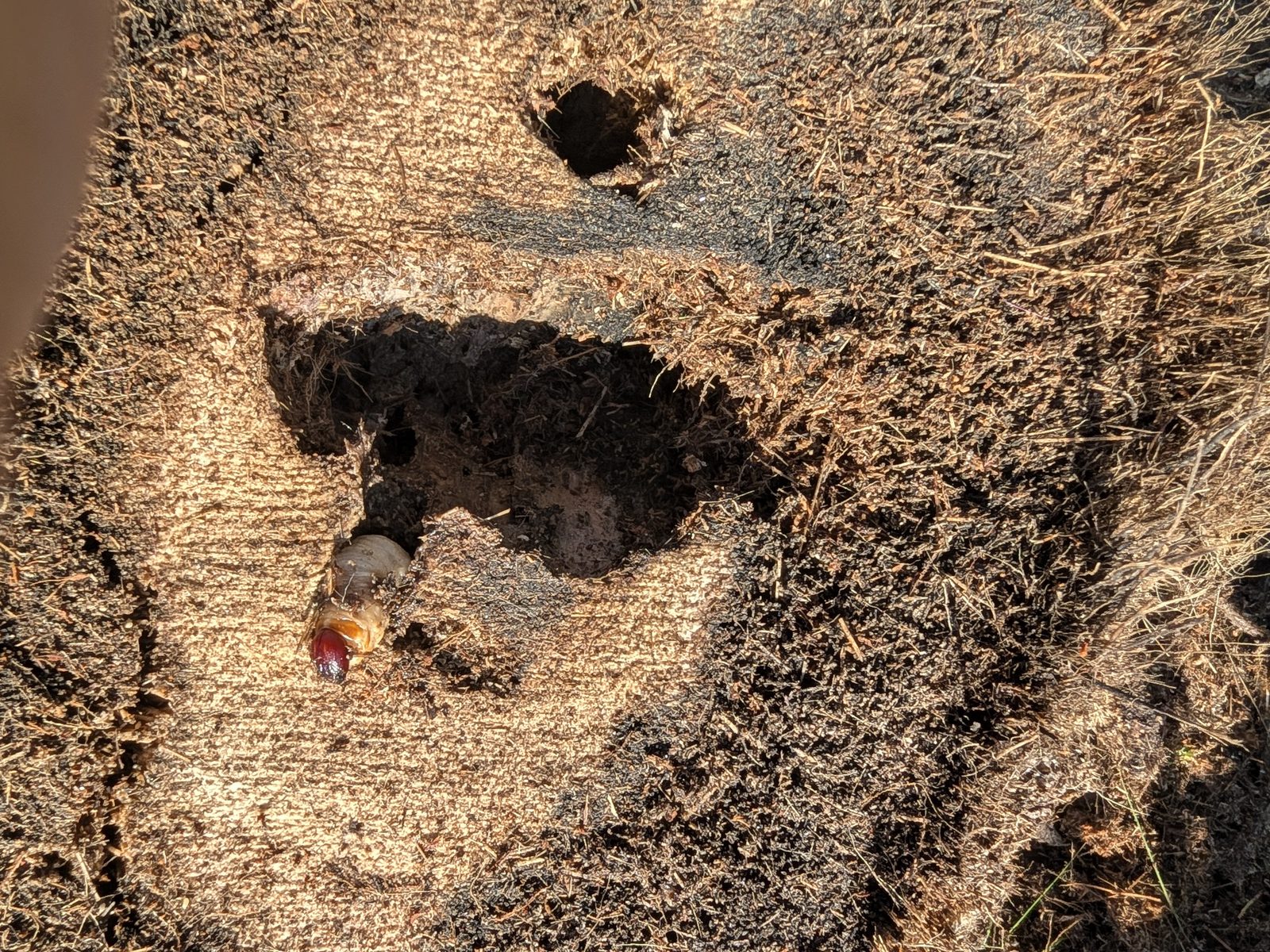 Serious
North America's largest weevil and the most lethal insect pest of palms in Florida.
Signs and what we do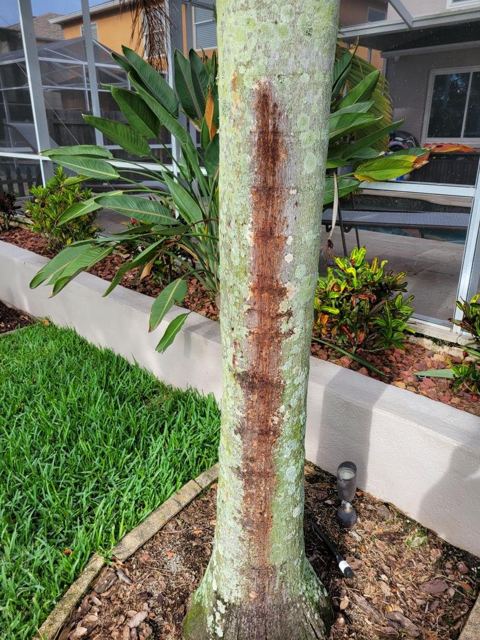 Serious
Tiny wood-boring beetles that attack palms and trees already under stress.
Signs and what we do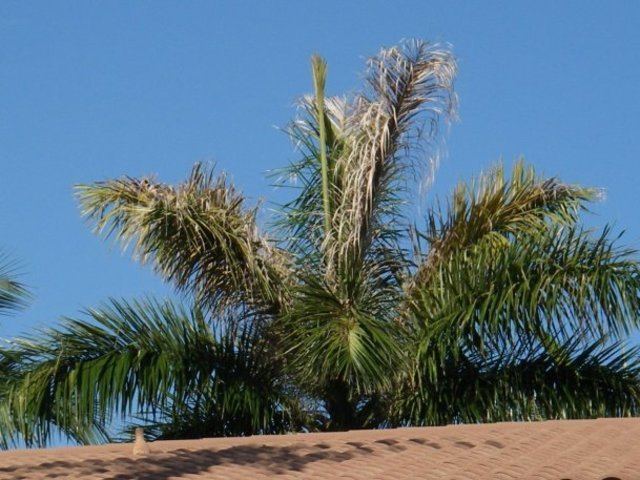 Mostly cosmetic
A tiny bug that feeds only on royal palms.
Signs and what we do