
Tree pest
Black Turpentine Beetle
The largest bark beetle in the Southeast. It attacks the base and lower trunk of stressed pines. A light attack kills patches of inner bark and the tree can live. Repeated attacks over several generations kill it.
Trees it affects: Slash pine, All Florida pines
- Affects
- Slash pine, All Florida pines
- When it shows
- Year-round. Buildup can run months to years after a hurricane, flooding or root disturbance.
- What we do first
- Count the pitch tubes against the trunk diameter in inches.
What you see
Signs in the field
- Pitch tubes up to 5 cm (about 2 inches) across, whitish to reddish, low on the trunk
- Usually below 3 m (about 10 feet), sometimes to 5 m (about 16 feet) on large trees, and on large roots
- Reddish-brown boring dust and resin pellets at the holes and at the root flare
- A hole in the center of a tube, the sign of a successful attack
- Dried tubes with no boring dust, which can mean the tree pitched the beetle out
- Under the bark: a straight gallery about 1 cm (0.4 inch) wide and 20 to 30 cm (8 to 12 inches) long, with a fan-shaped patch of feeding larvae
The survival rule
The Florida Forest Service rule of thumb: a pine with fewer pitch tubes than its trunk diameter in inches might survive, and protecting it from further attack may be worthwhile.
What sets it up
Wind damage, flooding, root disturbance and soil fill over pine roots. After a hurricane, buildup can run months to years.
How to tell it apart
Ips tubes are smaller and higher on the tree. The southern pine coneworm leaves large, milky resin masses at a wound that keep flowing for months, with no clean center hole.
What we do
How Ptolemy handles it
Field condition first, then the recommendation. Treatment, removal and diagnosis calls are made by an ISA Certified Arborist, and the serious ones are confirmed in a lab.
Written down before it is neededThis is covered by our pine bark beetle protocol.
- A field check of tube size, height and count, with boring dust at the root flare and a look under a bark flap.
- Suspected until our certified arborist confirms it on site.
- Where the survival rule says a pine may live, a bark spray on the base, up to 8 to 10 feet (2.4 to 3 m), on our certified arborist’s call. Never near ponds.
- Pines that are losing, and that could fall on people or property, are removed and the debris cleared.
- No soil fill over pine roots, and no fertilizer on pines.
Next step
Seeing black turpentine beetle on your property?
FAQ
Questions about black turpentine beetle
Will a pine with pitch tubes die?
Not always. If it has fewer tubes than its trunk diameter in inches, it might survive, and protecting it may be worthwhile. Repeated attacks are what kill.
What brought the beetles in?
Stress. Storm damage, flooding, root disturbance and soil piled over roots are the usual set-ups.
Built on
Our own field records, our written specs, and these public references:
- Florida Forest Service Leaflet 4, Black Turpentine Beetle
- UF/IFAS EENY356/IN636, Black Turpentine Beetle
- Florida Forest Service Leaflet 14, Insecticides for Bark Beetle Management
Keep reading
More tree problems
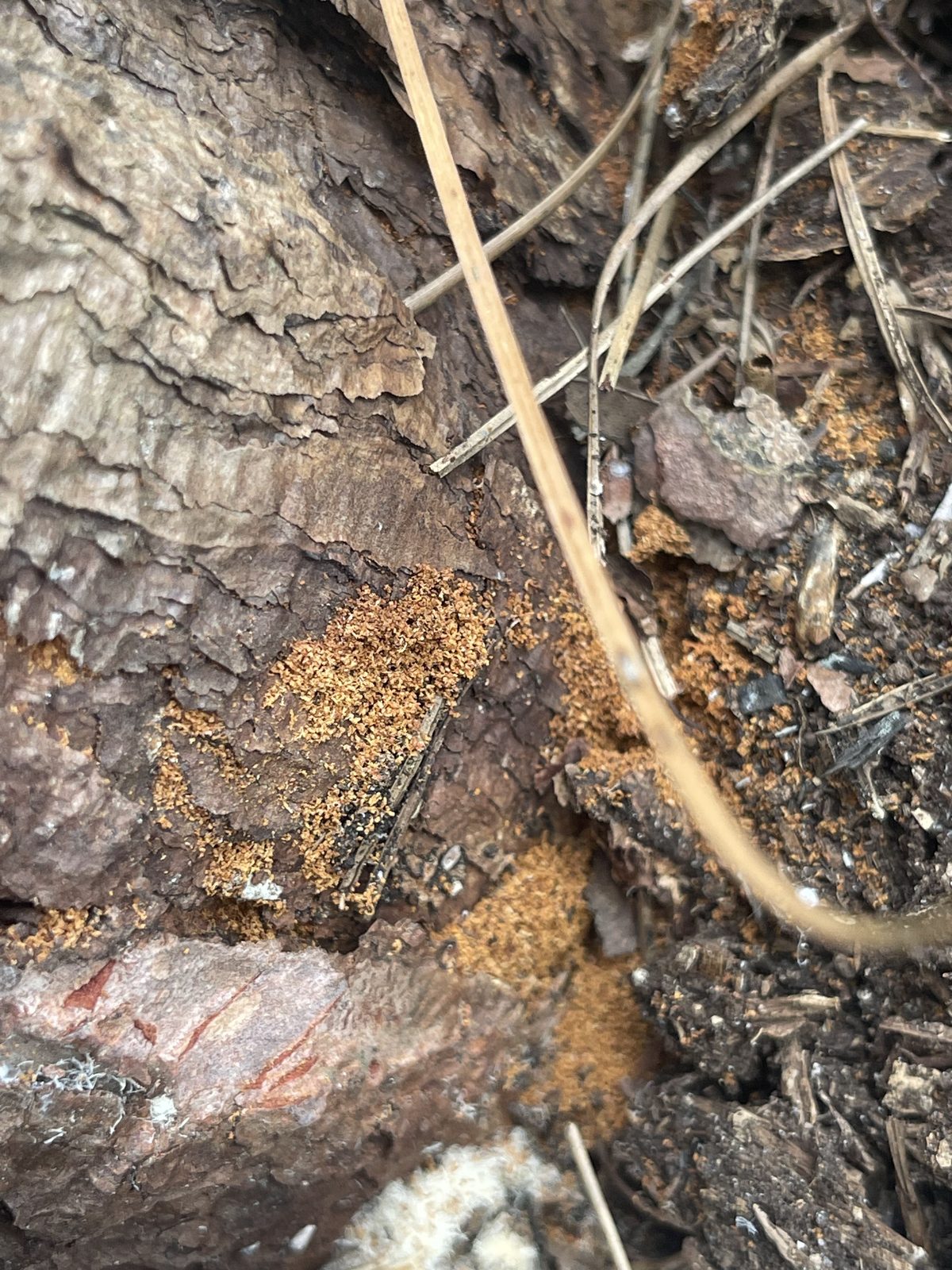 Killer
Small bark beetles that move into stressed, storm-damaged, lightning-struck or drought-stressed pines.
Signs and what we do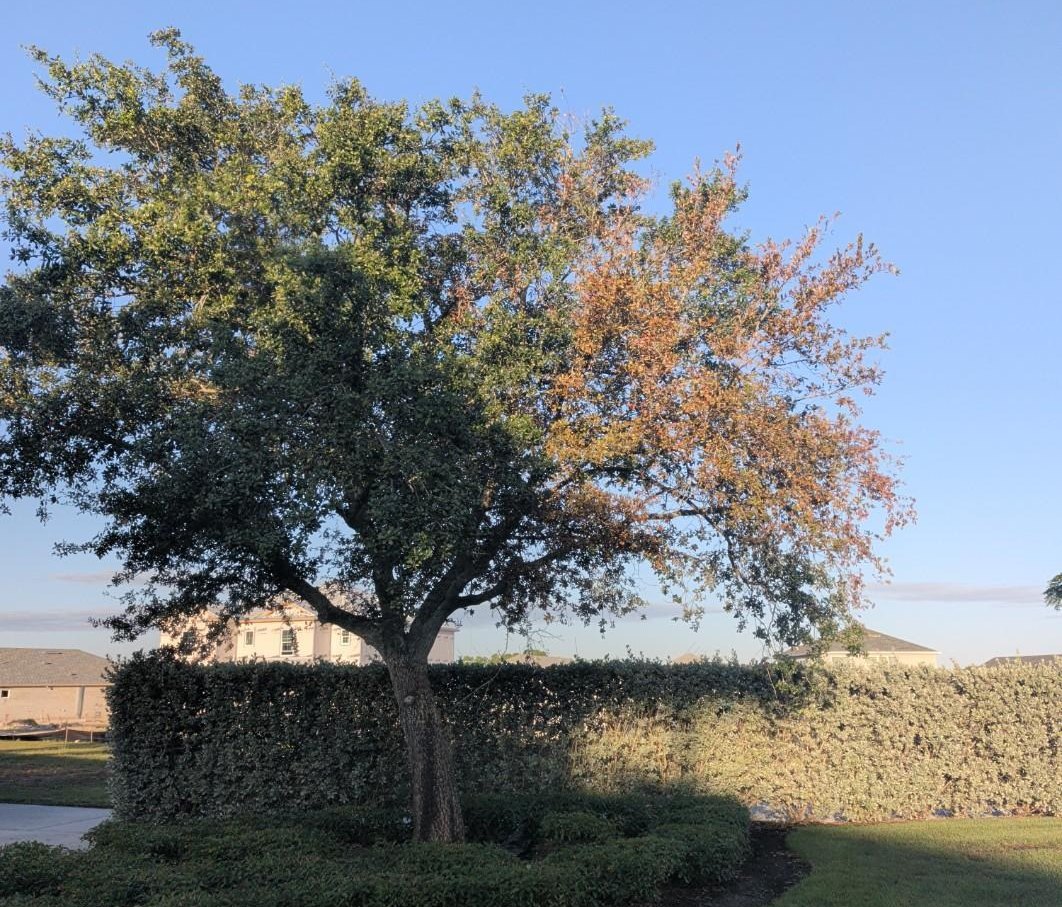 Serious
Canker fungi that live inside healthy wood and turn on a tree when it is stressed.
Signs and what we do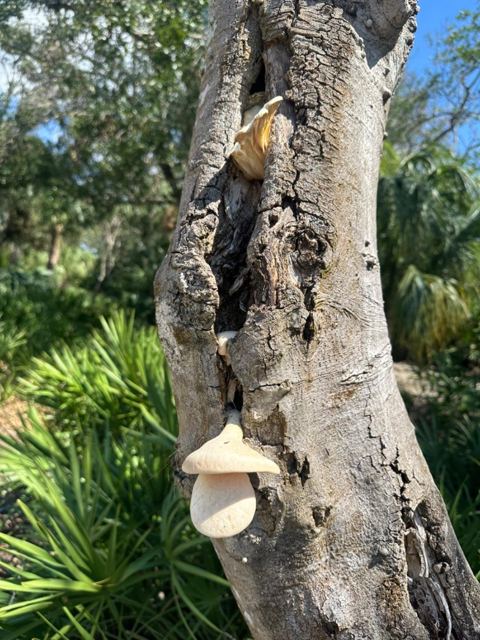 Serious
A conk on a trunk means a decay column is already inside.
Signs and what we doA fungal canker and the main disease of South Florida slash pine.
Signs and what we do