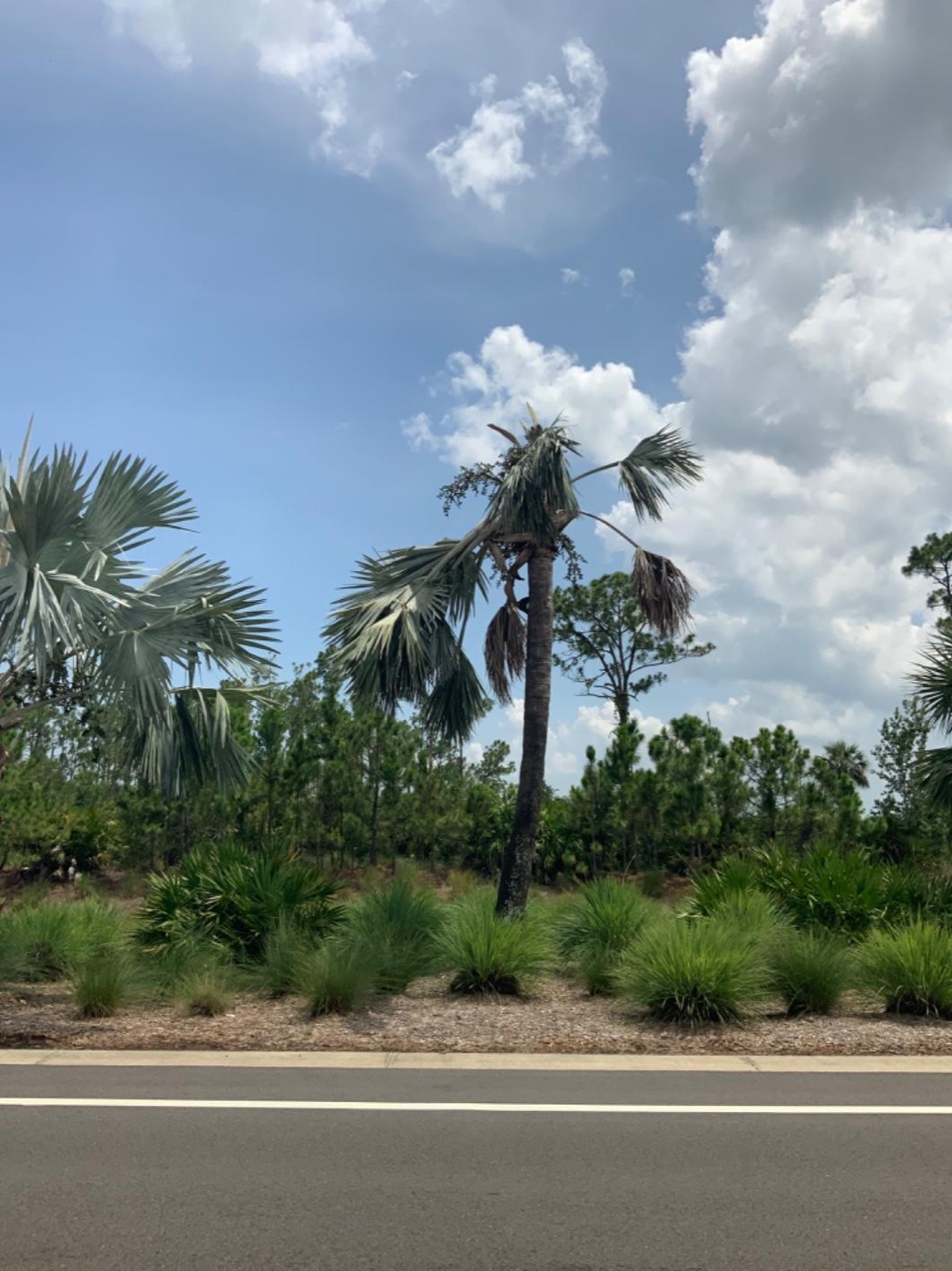
Staking After a Storm: Stand It Up Fast, Take It Off on Time
A savable tree has days, not weeks, to be stood back up, and the stakes have to come off before they do harm of their own.
 Jeff Kaulbars
After Hurricanes Helene and Milton hit two weeks apart in 2024, close to 800 trees at one large district we manage were staked or restaked. Most of them were young. With storm season three weeks out, here is how we decide what gets stood up, how, and when the hardware comes off.
Speed matters
When a tree goes over, its exposed roots start drying out. Our storm spec starts restanding within 48 hours of the assessment, small trees first, and aims to finish within 7 days. If the work is delayed, the root ball is kept watered. Live oaks have survived weeks unstaked, so a missed target is not an automatic write-off. But every day counts.
Priority goes by install age as well as size. Trees in the ground less than a year are the most vulnerable.
Method by size
- Large trees: stood up with a front-end loader, root ball set back where it was, and braced with 2x4s from several angles, with burlap between the lumber and the trunk.
- Mid-size trees: lodge poles. Three is ideal, two is acceptable, one is temporary.
- Small trees and new installs: a single stake alongside the trunk, the method Florida Grades and Standards accepts.
- A bowing young tree or buckled stakes: bamboo stake correction.
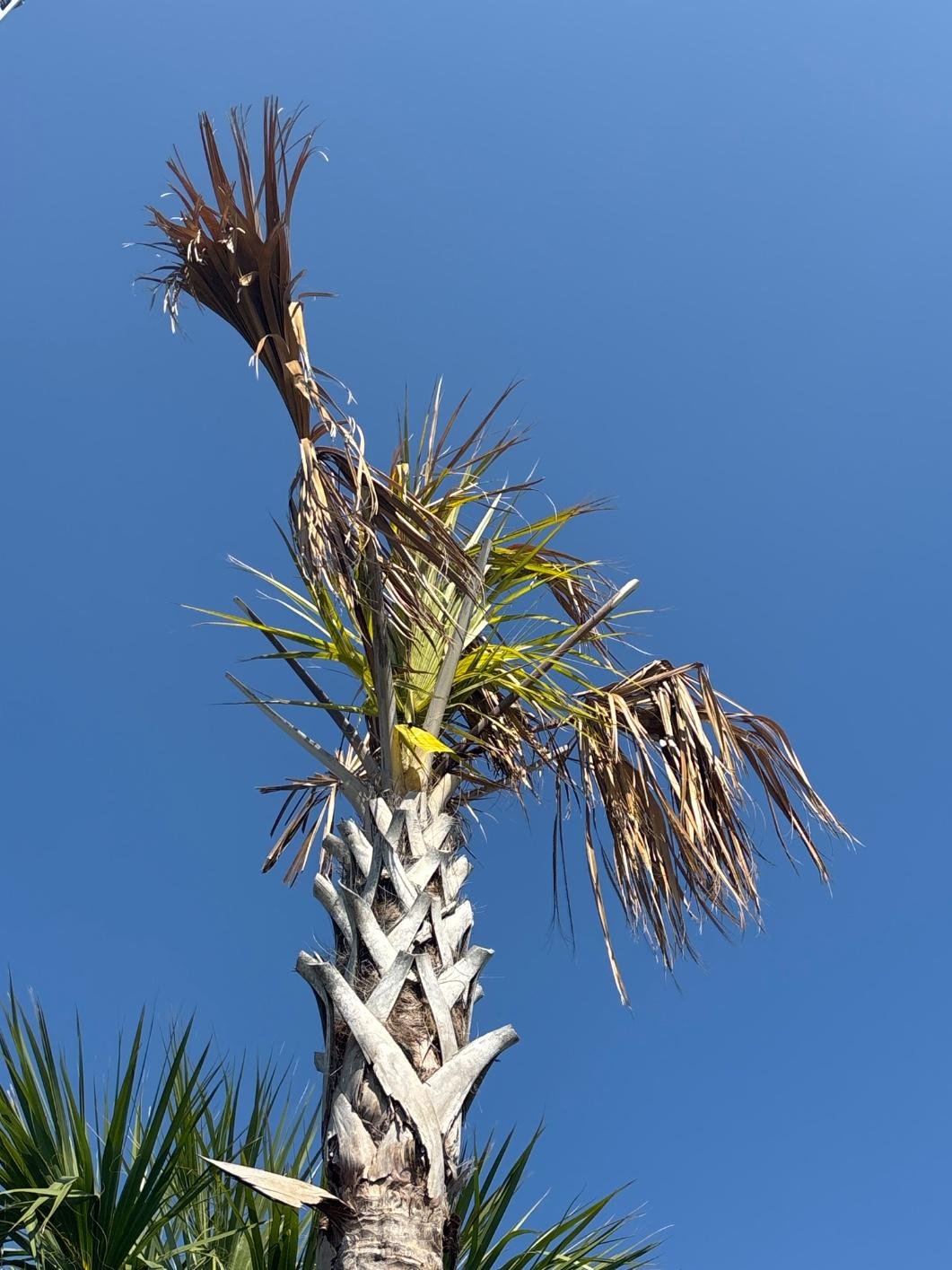
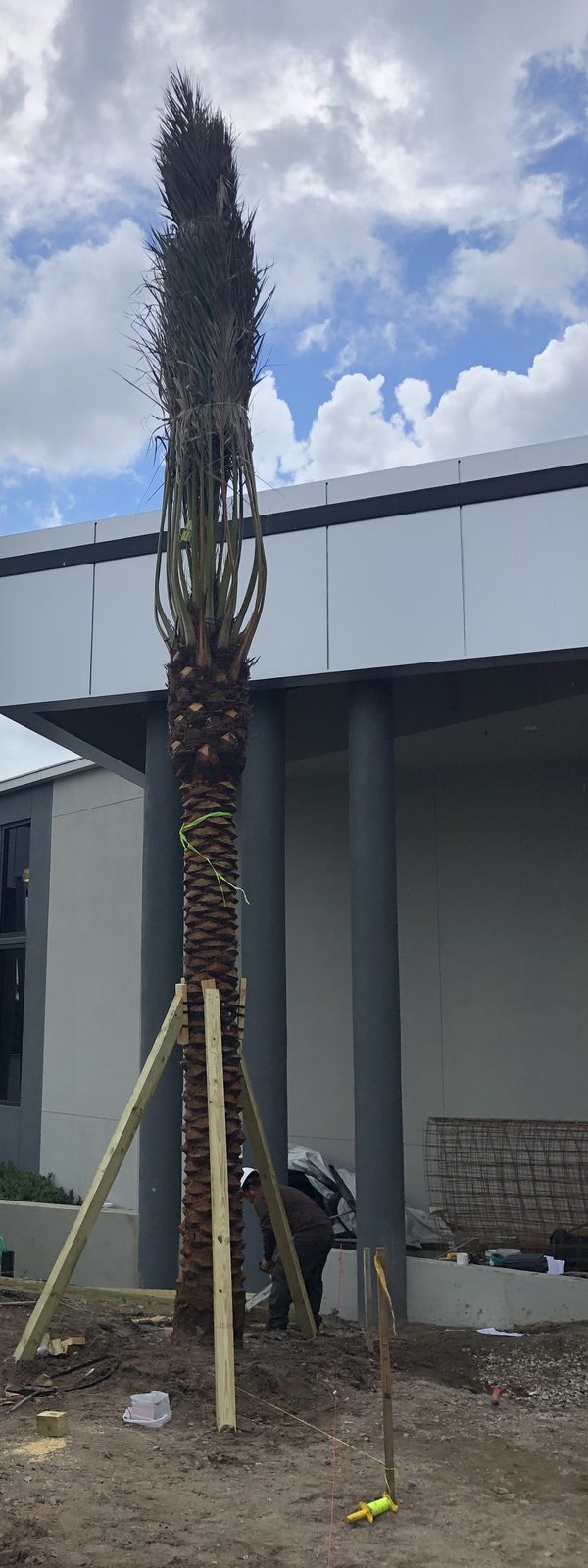
- Palms: 2x4 blocks strapped flat to the trunk, with the stakes nailed into the blocks. Never into the palm.
The rules that protect the tree
- Burlap or a soft barrier between anything rigid and the trunk. No cable or chain on bare bark.
- Anchors outside the root ball, so the ball is not speared.
- Root ball back in place. A tree is never staked at a lean.
- Nothing nailed, cabled or chained into a palm. A palm cannot wall off a wound, so every nail hole stays for life.
- A palm is never planted deeper to brace it.
Taking stakes off
Stakes are not permanent. A tree that is held still too long does not build trunk taper or roots, and ties left on start to girdle the trunk. Tree stakes and guying come off by the end of the first growing season, checked at each visit. Where Collier County code sets a 6 to 12 month window, the code governs. Palms keep their support for about a year. When a given tree is anchored is our certified arborist's call.
A healthy, established tree is not staked at all. Wind movement is how it builds strength.
Who does what
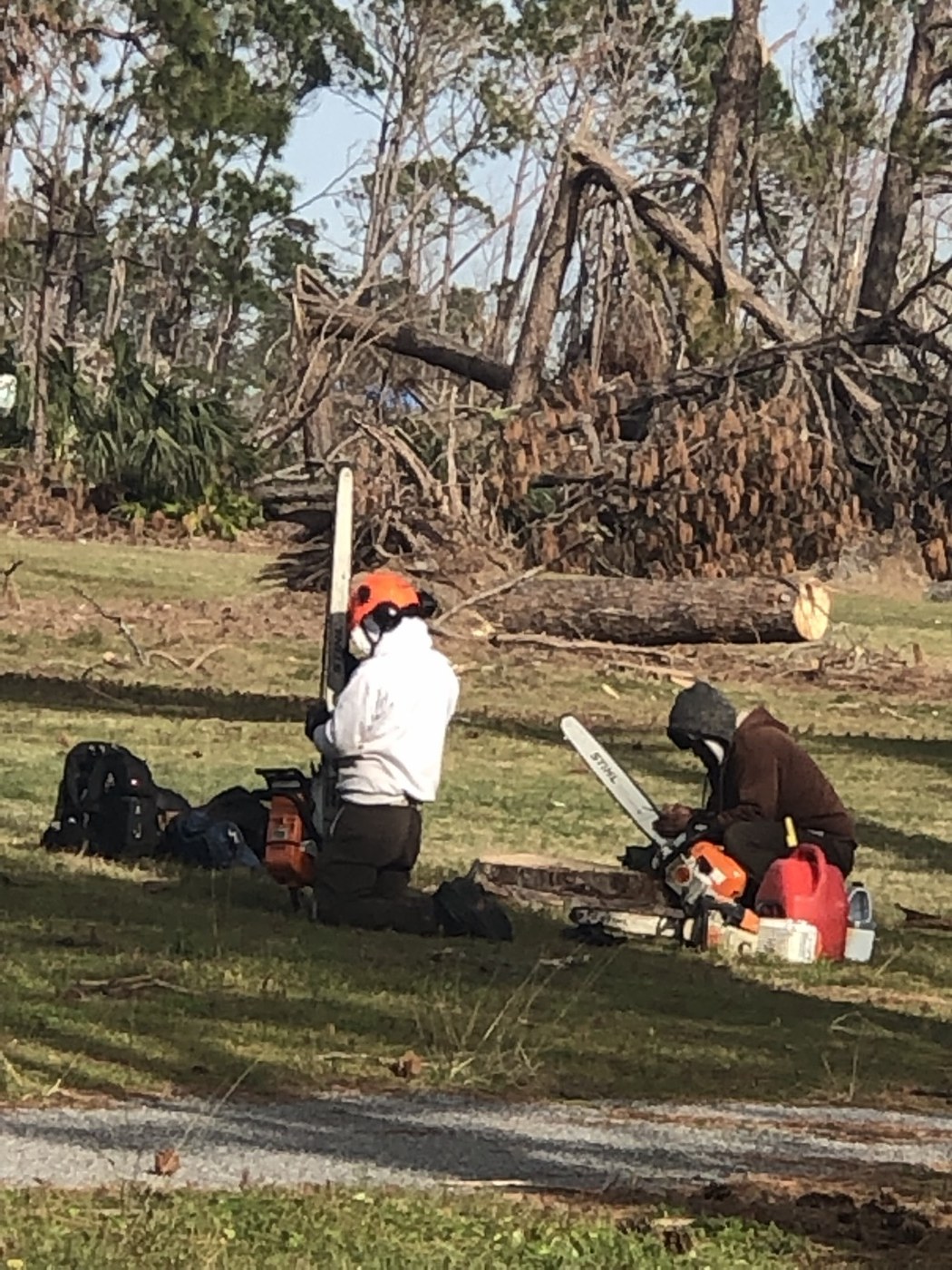
Ptolemy crews stand up and stake trees in storm recovery. On new installs, the installer stakes. We do not install, so on new trees and palms our role is advisory: we describe the method, check it against Florida Grades and Standards, and flag stakes for removal. Failed or girdling stakes get corrected, ideally before June 1.
Records you can check
Storm staking is counted per palm or tree, by method: lodge poles, 2x4 bracing or bamboo correction. Each one is tied to an inventory ID in the daily report, so the board can match every invoice line to a tree on the map. Nothing is staked or billed twice, because the whole site runs from one tracker.
After the stake
Restanding is the start of recovery, not the end. Restaked trees get checked at 30, 90 and 180 days, along with salt and flood stress, decline, pine bark beetles and palmetto weevil. Each one stays tied to its inventory ID, so the board can see which trees came back.
What to do
Before June 1, walk your newest plantings. Loose stakes, ties cutting into bark, and stakes that should have come off last year are all things to fix now. Ask us for the free master plan and we will add the staking check to the pre-season walk.