Too Deep to Thrive: Root Flares and Planting Depth
A palm planted a few inches too deep can decline for years, and a buried flare on a tree is one of the most common faults we find.
 Jeff Kaulbars
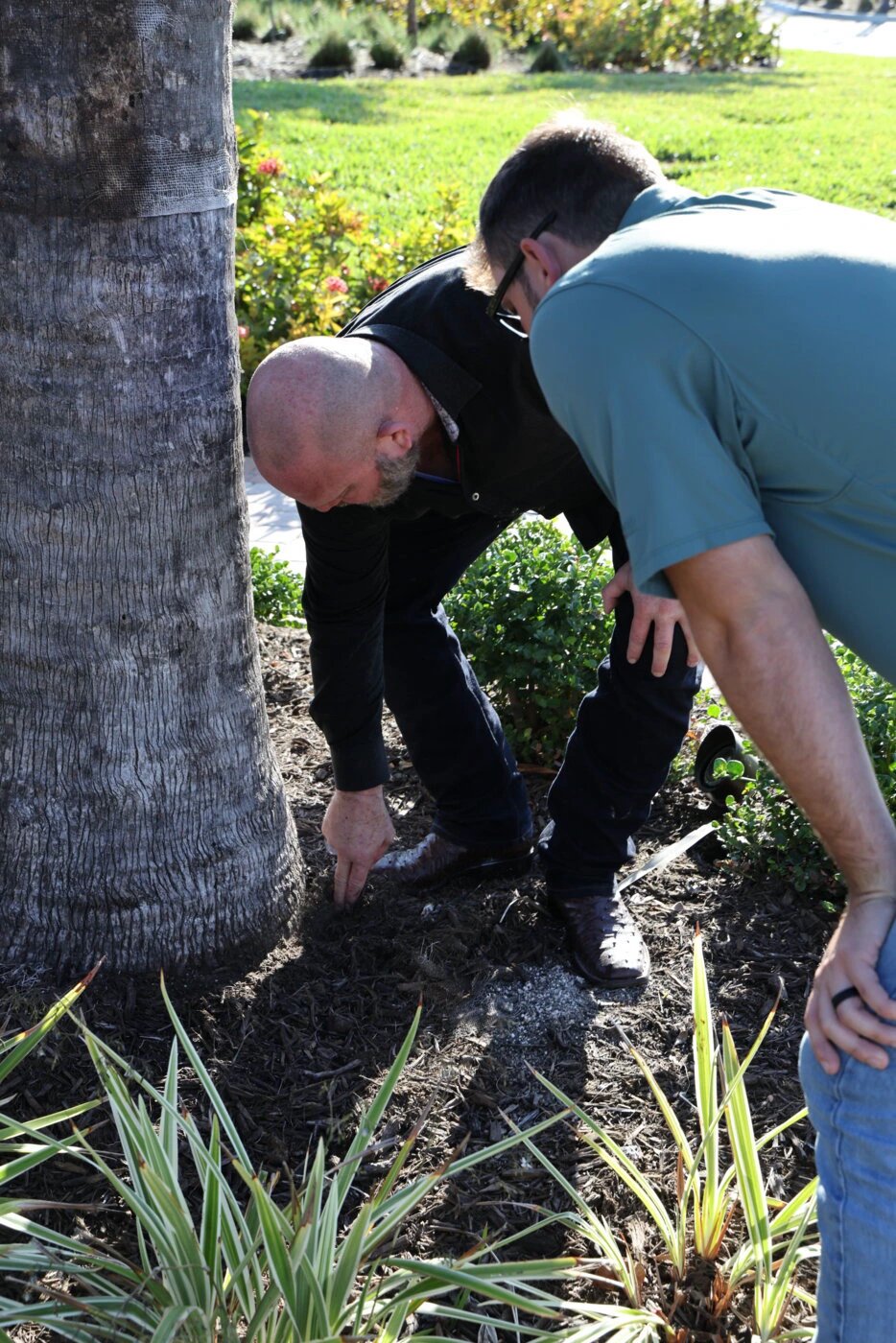
Look at the base of a healthy palm and you see the trunk swell slightly where it meets the ground. Look at the base of a healthy tree and you see the trunk flare out into its roots. When a palm goes into the ground like a telephone pole, or a tree goes in with no flare showing, something is buried that should not be.
How palms root
Every root a palm has comes from one zone at the base of the trunk, the root initiation zone. New roots grow from there and never get thicker. So a palm needs to sit at the depth it grew. Bury that zone and the roots suffocate.
University research shows how sensitive palms are. Even 1 inch too deep in a container can cause chronic iron deficiency. In a pygmy date palm study, palms buried 6 inches all lived. At 12 to 24 inches, about 10 percent died. At 35 inches, more than half died. No new roots formed more than about 6 inches above the original zone.
Our depth grades
We grade palm planting depth by the inch below correct grade:
- At grade to about 1 inch deep: Normal.
- 1 to 2 inches: Fair. Fix and recheck.
- 2 to 4 inches: Poor. Still correctable.
- 4 to 6 inches: Poor. Correct urgently.
- More than 6 inches: Critical. On a new install, rejected.
Fair to Poor usually means digging out the backfill or resetting the palm. Past 6 inches, or on a palm already in decline, removal is often the better call.
Planting a palm right
- A hole about twice the width of the root ball, and no deeper.
- No amended backfill and no root inoculants. Research shows no benefit for palms.
- Soil washed in to remove air pockets, and a berm built to hold water over the ball.
- No planting into standing water or a high water table. Mound or berm above it, and drill through a hard layer.
Trees and the buried flare
On a tree, the bottom of the trunk flare belongs at or above finished grade. When it is buried by planting too deep, or by mulch and soil piled against the trunk over the years, the bark stays wet, roots run short of air, and pests and decay find a way in. Girdling roots that wrap the trunk can form under the pile and slowly choke it.
It is common. On one district we walked in 2023, 634 trees, including oaks, black olives, buttonwoods, maples and magnolias, had excess mulch and soil over their roots and trunks.
Root collar work
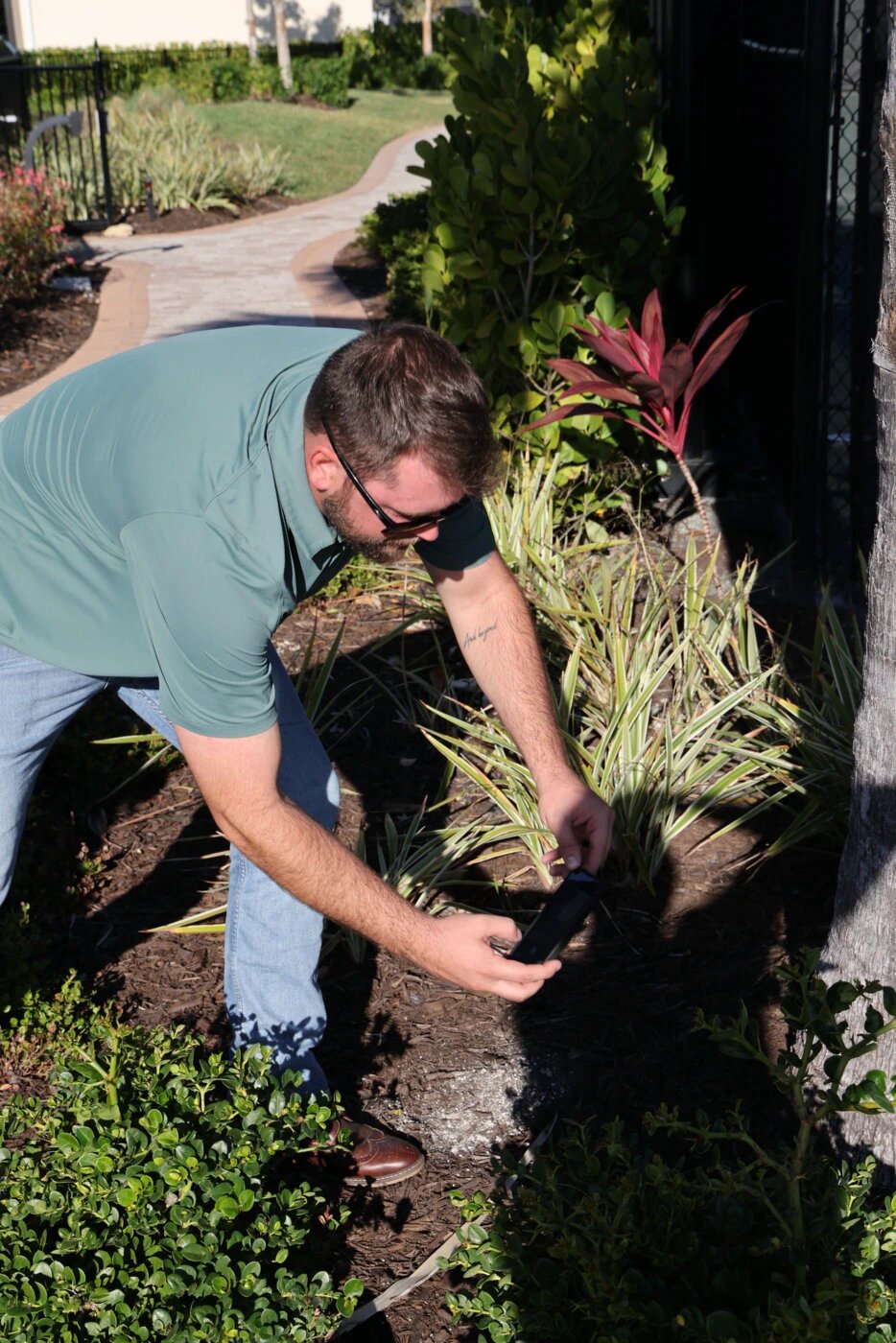
The fix is careful digging. We use compressed air to remove the soil and mulch without damaging roots, expose the flare, cut girdling roots where it is safe to, and improve drainage where water stands.
Because it breaks ground, Florida law treats it as excavation. We place the Sunshine 811 ticket at least two full business days before we dig. That marks public utility lines only. Private irrigation, lighting and similar lines are the association's to mark.
Mulch, the right way
On new trees, 4 to 6 inches (10 to 15 cm) of coarse mulch in the ring, none against the trunk, and little or none on top of the root ball, where it can catch light irrigation before it reaches the roots. Established trees need only 2 to 3 inches.
What to do
Walk your newest palms and look for the telephone pole. Walk your trees and look for the flare. If you cannot find it, ask us for the free master plan. A buried flare on a new install is reported to the installer the same day.