Built Soil: Why New Communities Are Hard on Palms and Trees
Construction packs the ground like a road bed and strips out what roots need, and the university numbers show how far it goes.
 Jeff Kaulbars
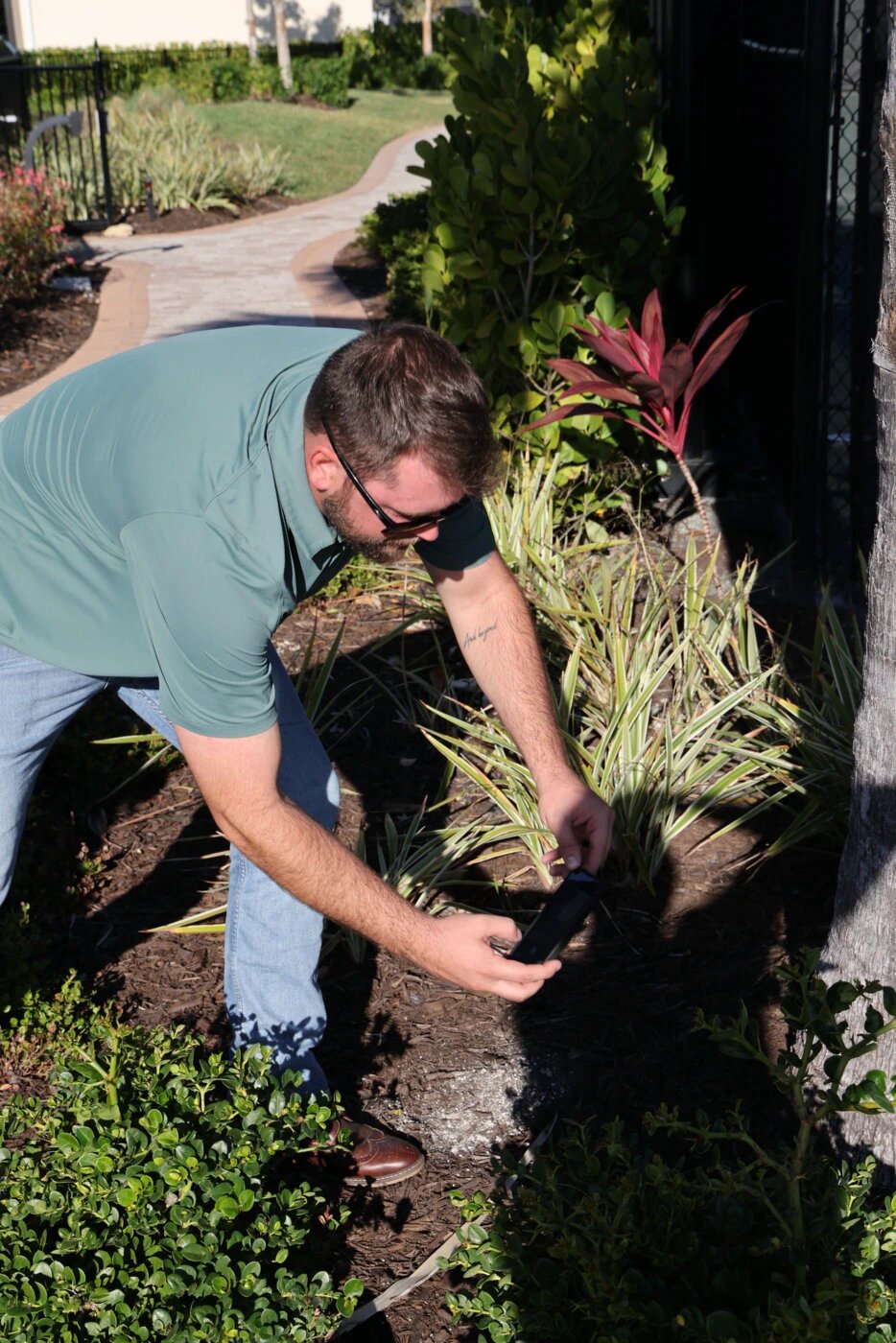
In a nursery, a palm or tree has an easy life. It is fed on a schedule, watered on a schedule, and protected from stress. Then it is planted in a new community, and almost all of that goes away at once.
How the ground gets built
University of Florida research describes how fast it happens. A home in Florida can go from a flat lot to finished in about 65 days. Grading, heavy equipment and Florida's wet and dry cycles pack the soil like a road bed. The native topsoil is usually scraped off and replaced with 18 to 24 inches (46 to 61 cm) of fill that holds little organic matter.
Tilling the sand alone does not fix it. It settles right back. Organic matter is what gives sand structure. In the same research, compost at 4 cubic yards per 1,000 square feet roughly doubled the water plants could use.
What we measure
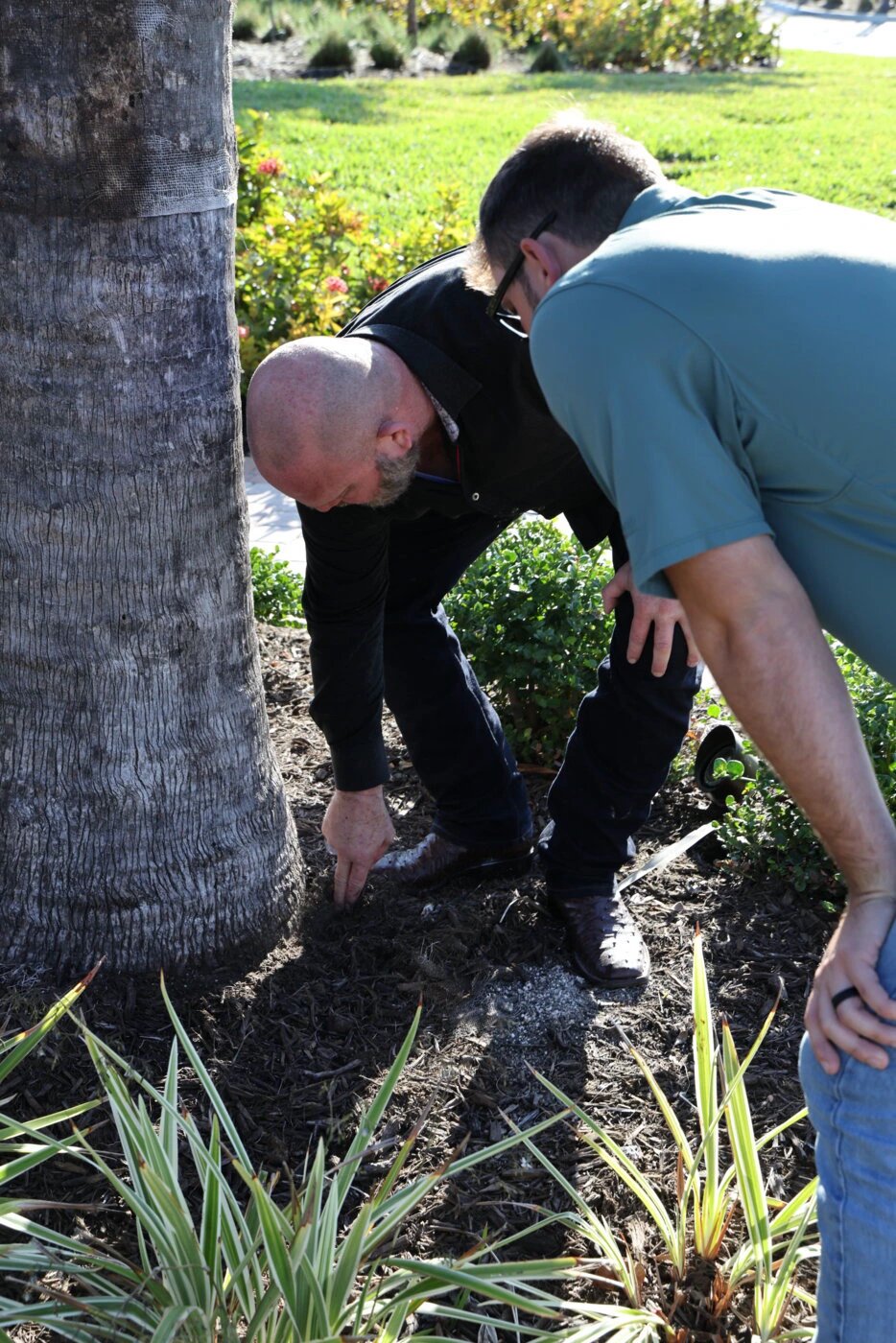
At a large special district we manage, we push a cone penetrometer into moist soil around stressed oaks and record how deep it goes before it reads 300 psi.
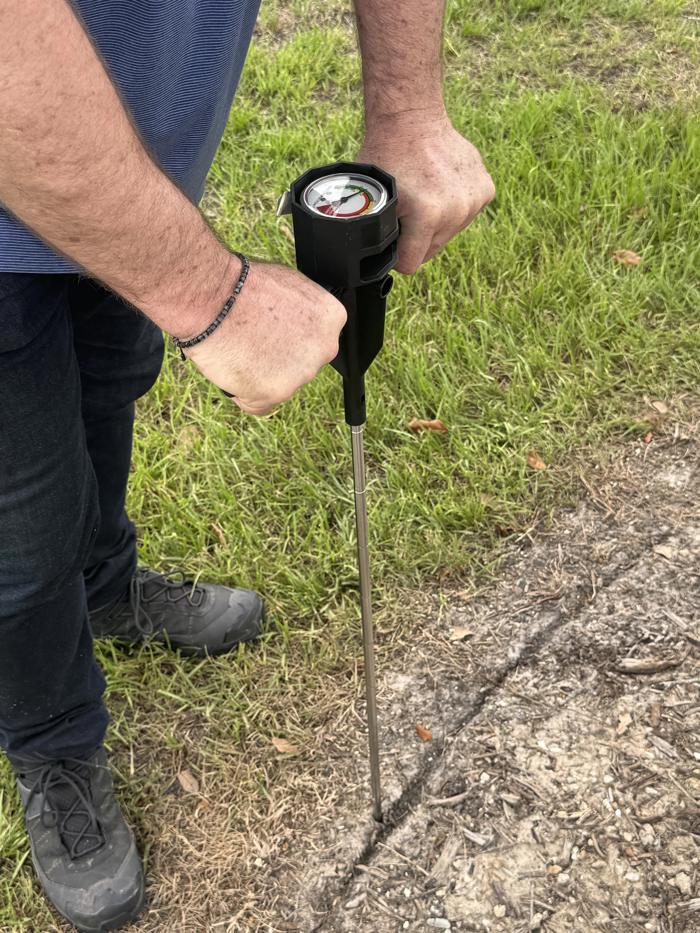
In one round, 46 of 56 readings hit that wall within 6 inches (15 cm). Absorbing roots live in the top 12 to 18 inches. When the soil is that hard that shallow, the roots are effectively planted in a pot. They stay shallow, dry out fast and lean on irrigation.
We report what we did not find too. Hardness alone did not separate the healthy oaks from the stressed ones. The next round adds a reading in open turf for comparison.
Starved, and locked
University lab soil tests at the same district compared an established oak area with newly built ground nearby. The new ground was starved:
| Measure | Established area | New ground |
|---|---|---|
| Potassium (mg/kg) | 257 | 16 |
| Manganese | 7.9 | 0.2 |
| Zinc | 6.1 | 0.2 |
| Phosphorus | 60 | 2 |
Both areas tested near pH 7.5. Much of our region sits on limestone, and above about pH 7.5, iron, manganese and zinc become unavailable to roots even when they are present. A palm can be fed and still go hungry.
Jeff Kaulbars puts the gap in the research plainly:
A lot of the research on palm care is based on not new construction, not on limestone rock soil, and not on irrigation water that is not the greatest.
That is the ground we work in every day.
Time and the three phases
Left alone, compacted soil recovers toward natural levels over about 30 years. With compost, aeration and proper irrigation, that can drop to 5 to 10. We plan care around a community's age:
- Adaption, 0 to 10 yearsThe highest risk, where early water, nutrition and soil work prevent the most problems.
- Strengthening, 10 to 20 yearsThe soil improves, roots go deeper, and care shifts to fine-tuning.
- Maturity, 20 years and upConsistency, smart replacement timing, and palms outgrowing their spots.
What can be done on a planted site
Rebuilding soil around existing roots and utilities is not realistic. The levers are coarse mulch in the ring (kept off the trunk), top dressing over time, targeted air-spade decompaction in the root zone, and water management. Decompaction breaks ground, so we place the Sunshine 811 ticket first, and we never do it in a drought. We work within the soil's pH. We do not add sulfur or gypsum to try to change it.
What to do
If your community is under 10 years old, the soil is part of every palm and tree problem you have. Ask us for the free master plan. We read the soil and the water before anyone reaches for more fertilizer.