Potassium Deficiency: Why the Bottom of the Palm Goes First
The most common nutrient problem on Florida palms starts on the oldest fronds, and cutting those fronds makes it worse.
 Jeff Kaulbars
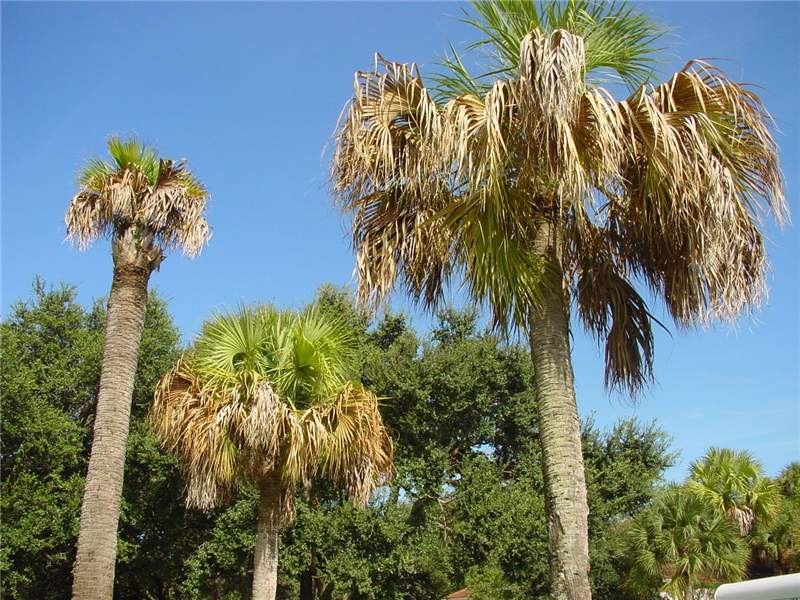
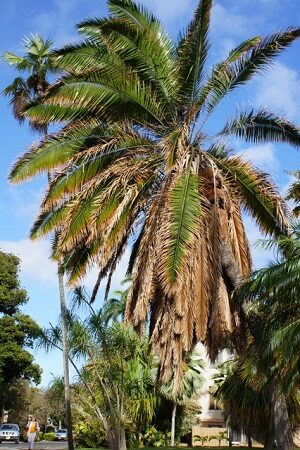
Walk any older community in Southwest Florida and look at the bottom of the palm canopies. Orange, spotted, frizzled lower fronds are common. Most of the time that is potassium deficiency, and it is the most common nutrient problem on palms in Florida. Florida's sandy soils are naturally short on potassium.
Why it starts at the bottom
Potassium is mobile inside a palm. When there is not enough coming in from the soil, the palm pulls what it has out of its oldest fronds and sends it to new growth. So the oldest fronds show it first. In effect the palm is feeding on itself.
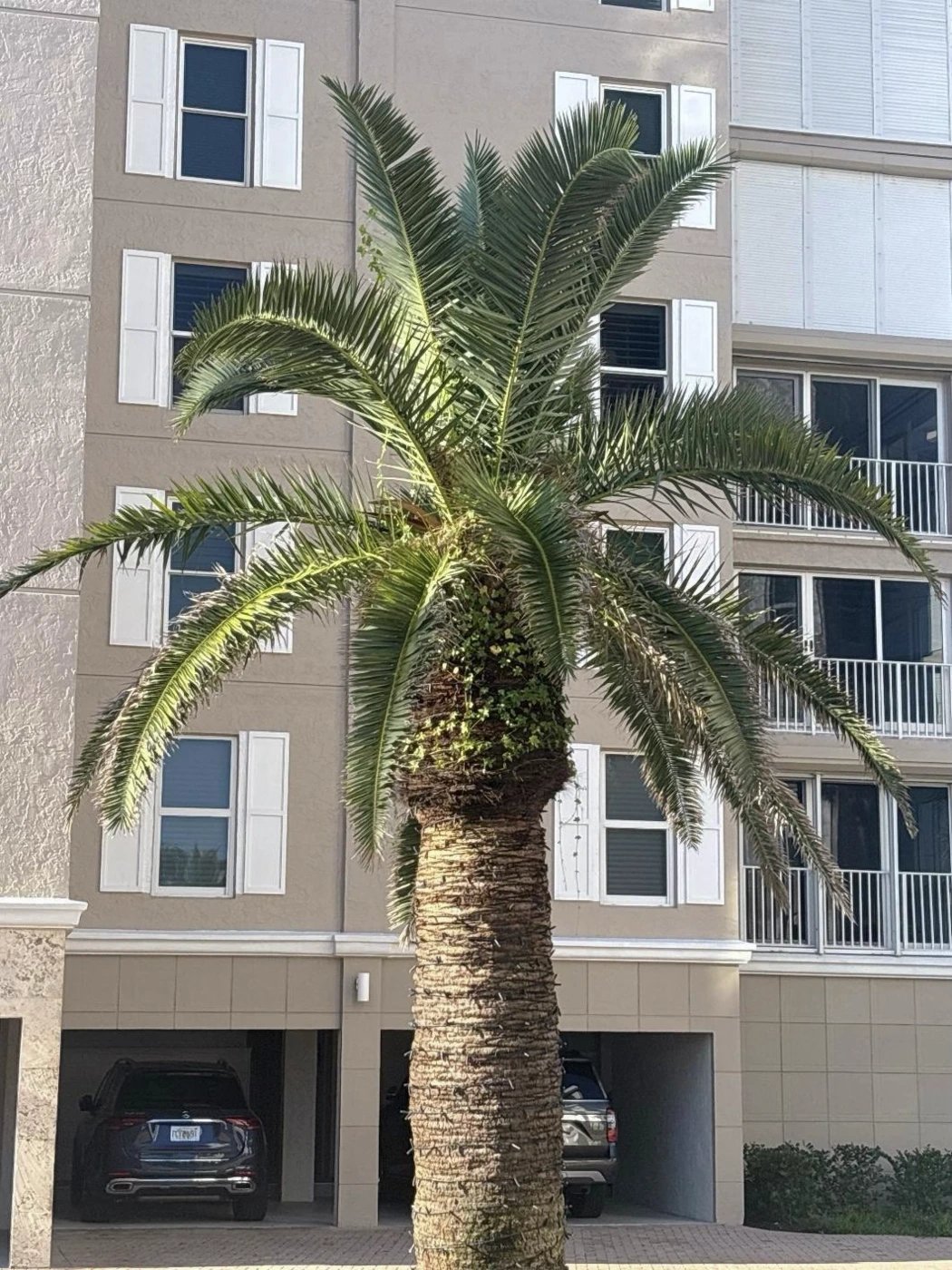
Early signs are easy to miss: translucent yellow or orange spots on the older leaflets, clearest when you hold a leaflet up to the light, and dead tips and edges. On Canary Island date palms the spots are fine, 1 to 2 millimeters (under a tenth of an inch). As it goes on, the tips die back, the old fronds die early, and the canopy shrinks.
The pencil point
Left alone, the deficiency moves from the oldest fronds up. The canopy gets smaller every year. In the last stage the trunk narrows at the top, a pencil point. From first visible symptoms to that point usually takes one to several years, depending on the soil, the irrigation and how much potassium the trunk had stored.
Once the trunk is visibly narrowing, recovery takes one to two years or more of corrective feeding, and it does not always work. The fronds that already show symptoms will never turn green again. The palm recovers by growing new, clean fronds, one at a time.
Do not cut the yellow fronds
This is the part that surprises people. Removing the discolored fronds speeds the decline. Those fronds are still feeding the palm. University research showed experimentally that stripping potassium-deficient fronds can kill a palm early. That is why our pruning standard keeps every frond above the 9-and-3 line, even when it yellows.
Lawn food is not palm food
Turf fertilizer is heavy on nitrogen. Put it near palms and it can push growth the palm cannot support with the potassium it has, which makes the deficiency worse. The university's own presentation on palm care puts most deficiencies down to improper fertilization, especially high-nitrogen turf products.
Many communities assume the landscape contract covers palm nutrition. It usually covers ground-level fertilizing, which is often shrub or turf product. That is not palm nutrition.
What correct feeding looks like
- A complete palm fertilizer, with potassium, magnesium and micronutrients, all slow release. The university standard is an 8-2-12 analysis with 4 percent magnesium.
- Applied on a schedule, not once a year. Frequency beats one big dose on sand, where a heavy rain can wash out a single application.
- Potassium and magnesium kept in balance. They compete for uptake, so adding potassium alone can cause a magnesium problem.
- Patience. Results may show in about 3 months. Correcting an extreme deficiency can take 3 years.
Make sure it is not something worse
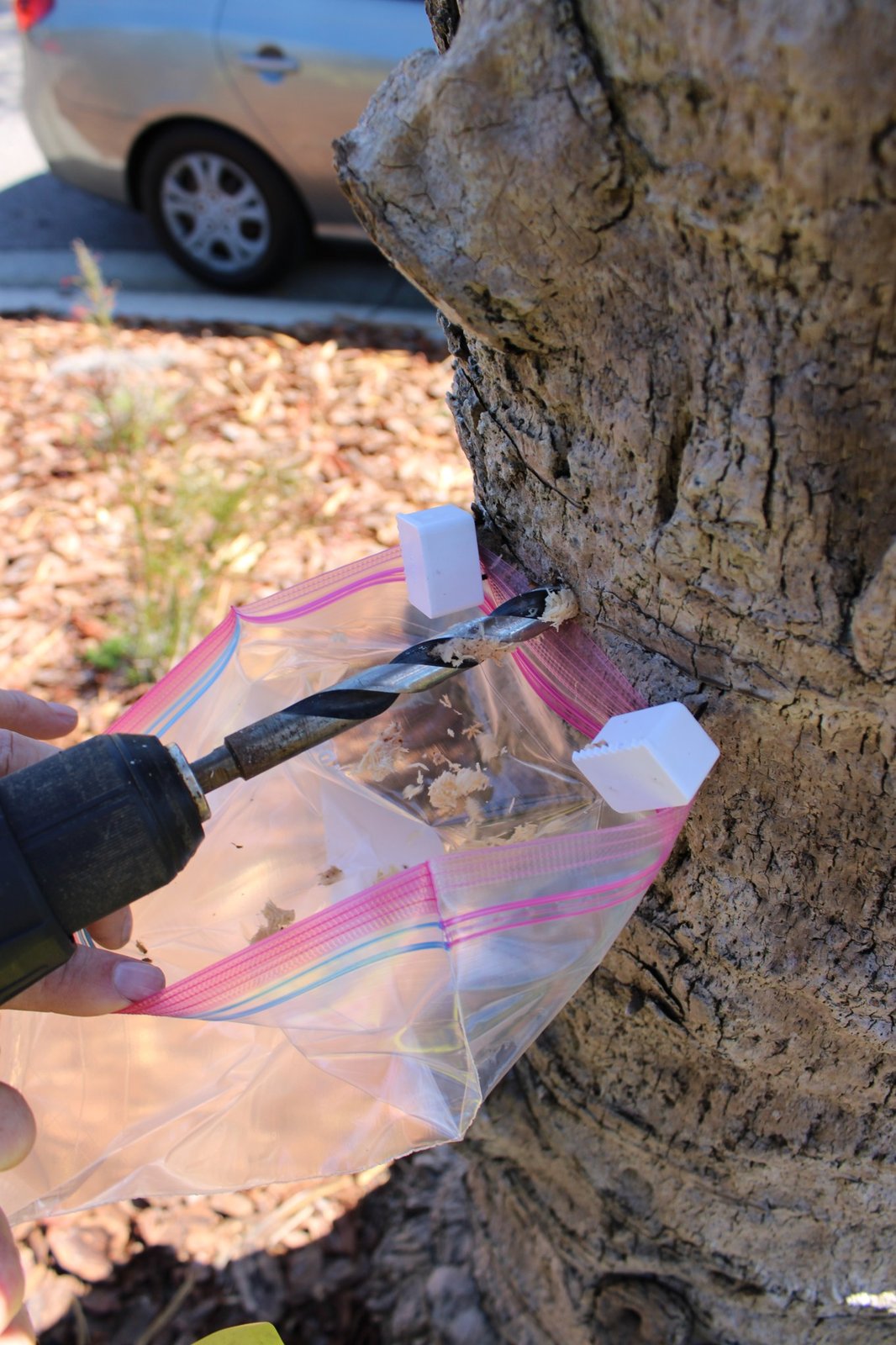
Bronzing lower fronds can also be the first sign of lethal bronzing, a fatal disease. When a palm on a property looks worse at both the top and the bottom at once, or one palm declines while its neighbors stay green, we test before we call it nutrition. A lab can tell the two apart. The eye cannot.
What to do
Look at the bottom third of your palms. If the oldest fronds are orange and spotted, keep the saws below the 9-and-3 line and ask us for the free master plan. On the Standard tier, every palm gets a real palm nutrition program and a full inspection at every visit.