Frizzletop and the pH 7.5 Problem
A palm can be fed on schedule and still starve for manganese, because limestone soil locks it up before the roots can take it.
 Jeff Kaulbars
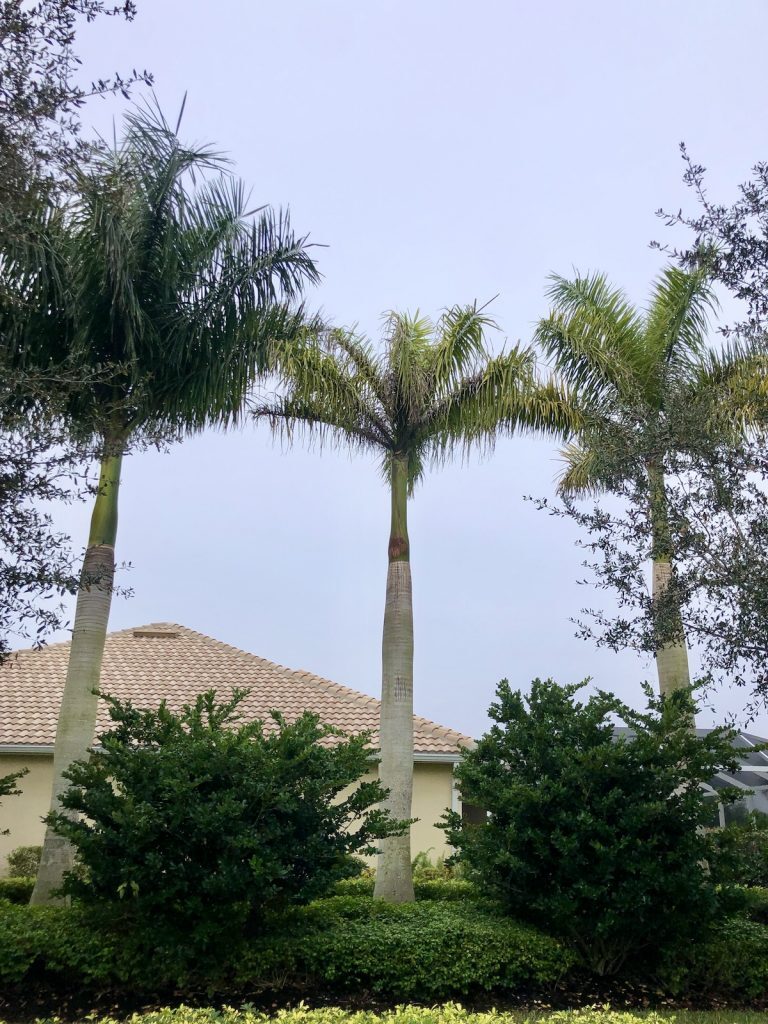
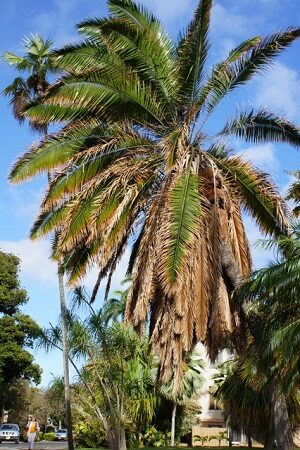
The newest fronds on a palm should come out clean and green. When they come out yellow, streaked, withered and curled tight around the stem, that is frizzletop. It is the classic sign of manganese deficiency, and unlike most nutrient problems, it can kill the palm.
Top versus bottom
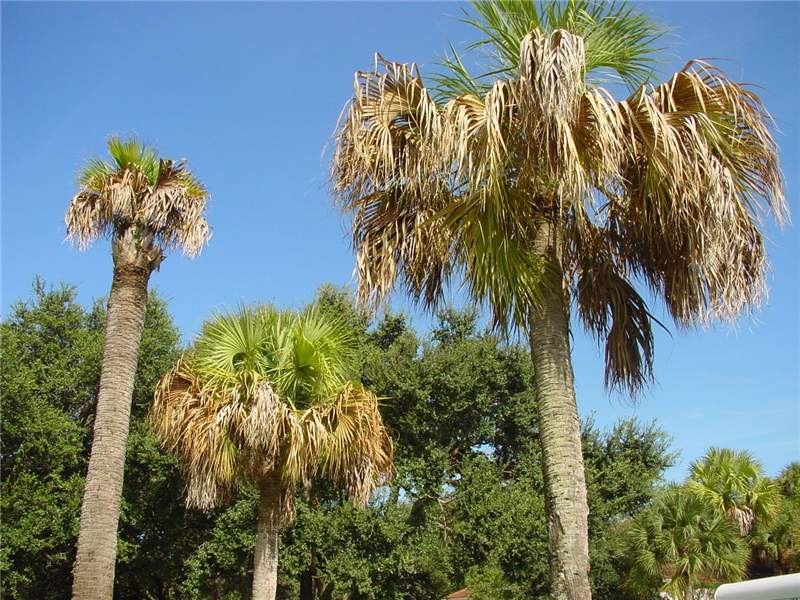
The quickest field read on a palm is to look at the top of the canopy, then the bottom. Potassium and magnesium move inside the palm, so their shortages show on the oldest fronds first. Manganese, iron and boron do not move. A palm cannot pull them out of old fronds, so the newest growth goes without.
- Frizzled, streaked new growth at the top points to manganese, iron or boron.
- Orange and brown at the bottom points to potassium or magnesium.
- Both ends bad at once points to late potassium deficiency, or to lethal bronzing, which needs a lab test.
Late potassium deficiency can look frizzled too. The tell is where the damage sits on each frond. Manganese damage is worst at the base of the leaflets. Potassium damage is worst at the tips.
Why fed palms still go short
Much of Southwest Florida sits on limestone, and the soil runs alkaline. Above about pH 7.5, iron, manganese and zinc become chemically unavailable even when they are in the ground. Boron locks up too. When a palm on a feeding program shows a micronutrient deficiency, the problem is often access, not supply.
Three things defeat an application: high-pH soil loaded with bicarbonate from irrigation water, drought that keeps nutrients from moving, and cool weather that slows uptake. Rain opens a short window. Rainwater is slightly acidic.
It briefly lowers the pH around the roots, dissolves bicarbonate, flushes salts and frees locked micronutrients. That window is when the palm feeds. In a dry winter and spring it barely opens, which is why the decline you see in February often started in November.
What we found in new ground
At a large special district we manage, university lab tests compared newly built ground with an established area nearby. Manganese measured 0.2 mg/kg in the new ground against 7.9 in the established area. Both tested near pH 7.5. A new palm planted in that fill starts out short and stays locked.
Other ways palms lose manganese
- Overwatering leaches manganese out of sandy soil.
- Composted sewage sludge and manure products near palms bind manganese.
- Deep planting cuts oxygen to the roots and reduces iron and manganese uptake. It is the most common cause of chronic iron deficiency in landscape palms.
How we handle it
We manage for availability. The amount applied is only half of it. That means a complete palm fertilizer with micronutrients on a steady schedule, timed to the seasons when it can move, plus attention to irrigation water and drainage. For acute frizzletop, our certified arborist may call for supplemental manganese. Even then, a soil application can take 3 to 6 months to show.
We do not try to change the soil pH. We add no sulfur or gypsum to a palm program on limestone soil. The sulfur already in a complete palm fertilizer is the only acidifying the program needs, delivered gradually in the root zone. Fighting the bedrock is a fight nobody wins.
We also do not sell leaf tissue tests as a routine add-on. Tissue levels shift with the season, recent feeding, irrigation and which frond is sampled. Visual reading by symptom, frond age and pattern is the reliable tool. A tissue test helps in narrow cases, such as telling late potassium from manganese deficiency.
What to do
Look at the top of your palms. If the newest fronds are coming out frizzled or streaked, call us. Manganese deficiency is urgent because the next frond to suffer is the bud. The free master plan tells you which palms need attention now and whether the water is part of the problem.