Palm Leaf Diseases vs. the Killers
A spotted frond is rarely the emergency, four palm diseases have no cure, and a lab test is how we tell them apart.
 Jeff Kaulbars
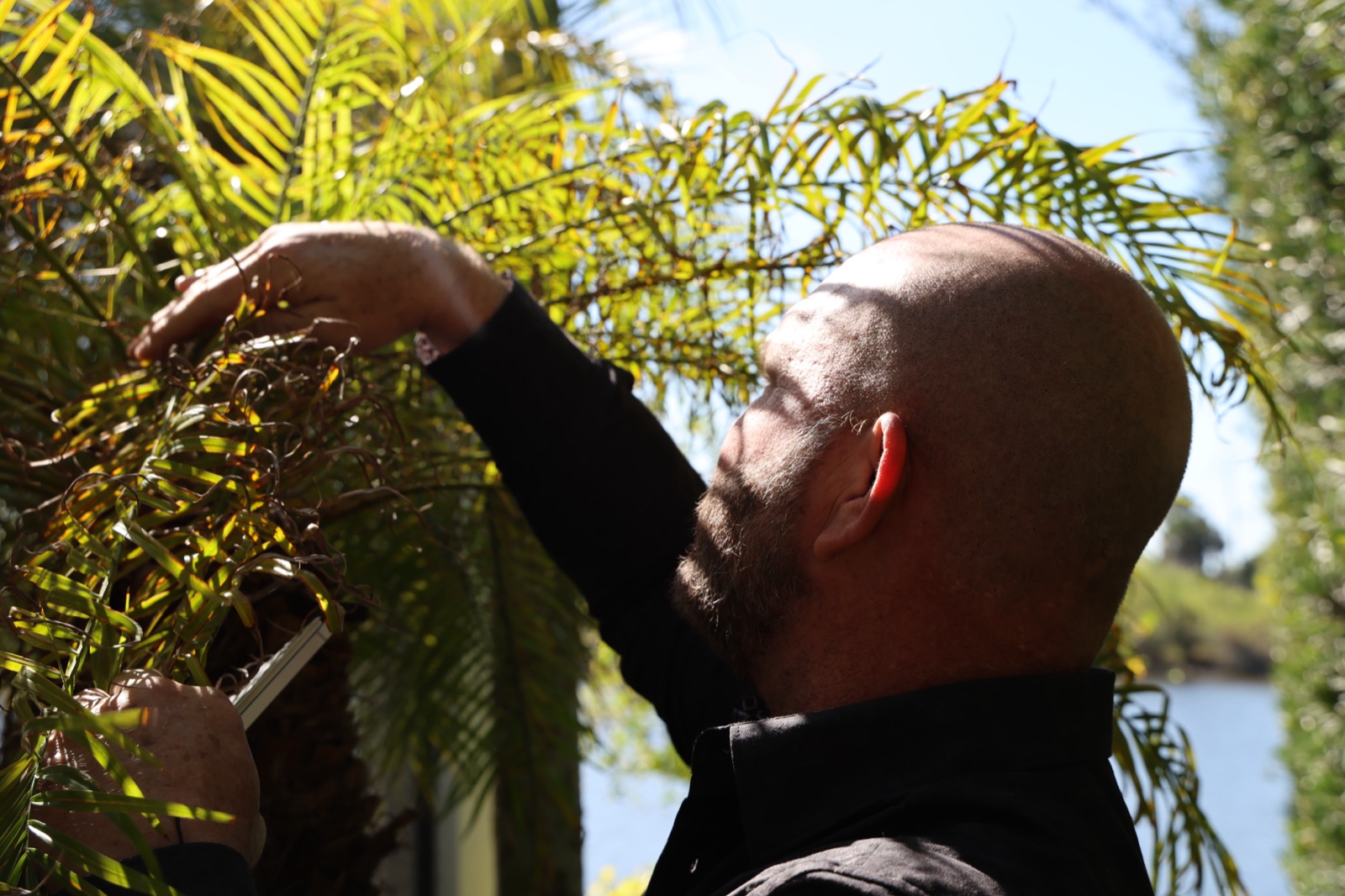
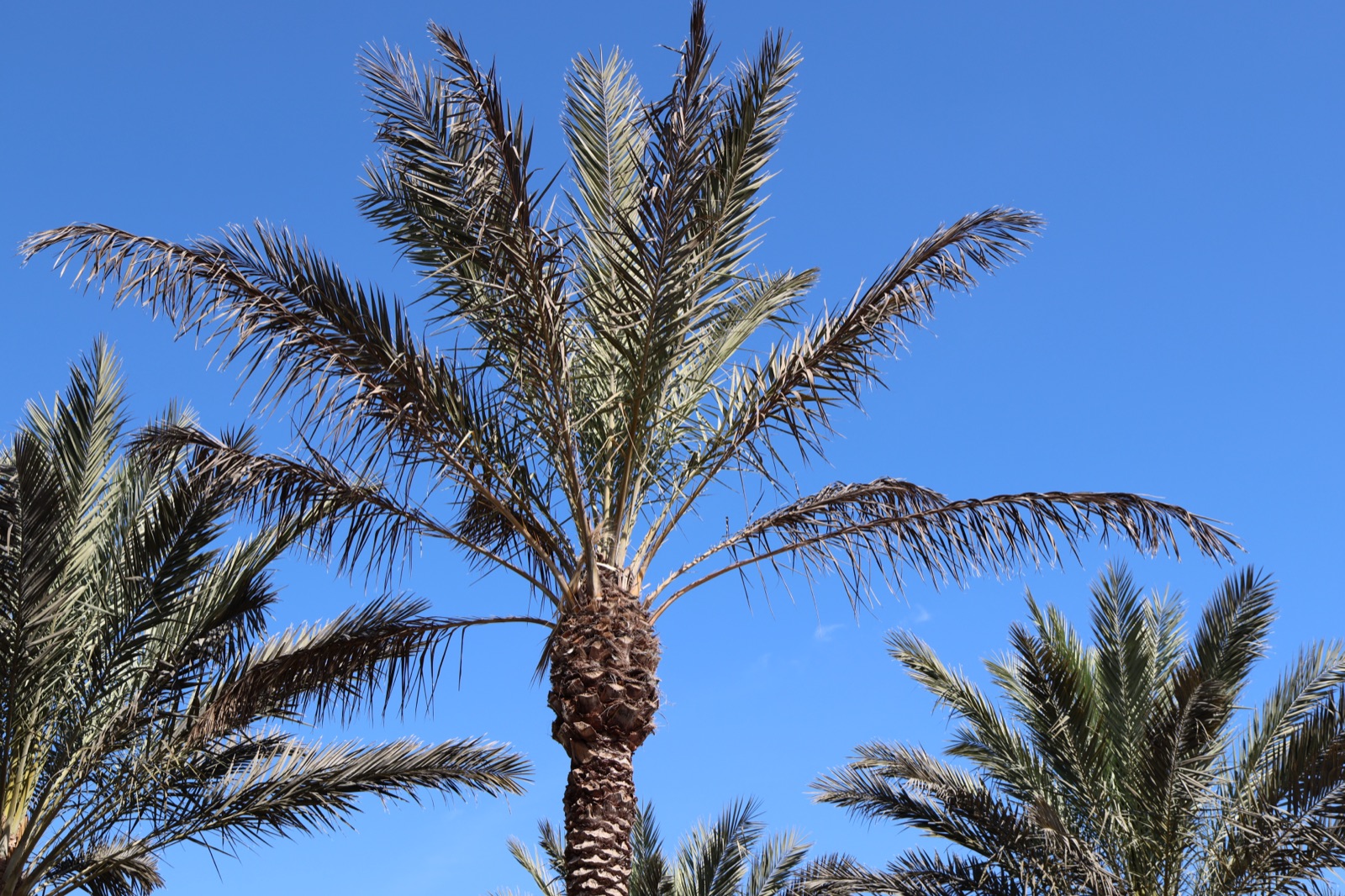
Black spots on the lowest fronds of a Canary Island date palm. Brown streaks up a frond stem on a Washingtonia. Usually that is disease a palm lives with. Four palm diseases are different, and some can pass for ordinary leaf trouble.
The leaf problems a palm lives with
- Graphiola false smut: tiny black, cup-shaped bumps on the oldest leaves of Canary Island date and date palms, firm enough to feel with a finger. It takes 10 to 11 months from infection to show. Cosmetic. The potassium deficiency that often spots the same old leaves is the bigger threat by a wide margin.
- Pestalotia leaf blight (Pestalotiopsis): gray spots with dark edges on the leaf blade and the frond stem. It usually enters through a wound or a deficiency lesion. Cosmetic on mature palms when it stays on the leaves. The exception is pygmy date palm, where lesions at the base of young leaves can move into the bud and kill it.
- Petiole and rachis blight: brown streaks along the stem of the oldest fronds, with leaflets dying on one side. It seldom kills a palm.
- Pink rot: salmon or orange-pink spore masses on wounded or stressed tissue. It follows cold, drought, and injury rather than starting the problem. On a small palm it can rot the bud, and on a trunk it can work inward.
Water, airflow, and feeding come first
Moisture drives nearly all of these, mostly overhead irrigation and crowded plantings. The fix is cultural: keep water off the fronds, open up airflow, and correct nutrition, because deficiency lesions are the wounds these fungi use. We do not run fungicide programs for leaf spots. Fungicide protects clean tissue but does not remove spots already there.
Do not strip spotted old fronds. An old frond feeds the palm until it is more than half yellow or brown, and removing it speeds the deficiency.
The four with no cure
- Fusarium wilt: kills every infected palm. It hits Canary Island date palm hardest, with a related form on queen and Mexican fan palm. It moves mainly on pruning tools, and symptoms can take 6 to 18 months to appear. At a confirmed site we do not replant a Phoenix or queen palm.
- Ganoderma butt rot: a fungus that rots the base of any palm species. A shelf-like conk at the base confirms it. Death usually follows within 6 months to a year once the conk forms. No fungicide or injection stops it, and a flagged palm gets no ladder because the base can fail without warning.
- Thielaviopsis trunk rot: needs a fresh wound to get in, most often in the upper third of the trunk, and rots from one side inward. There is no treatment, and the palm can fail structurally. We find it most on Bismarck palm.
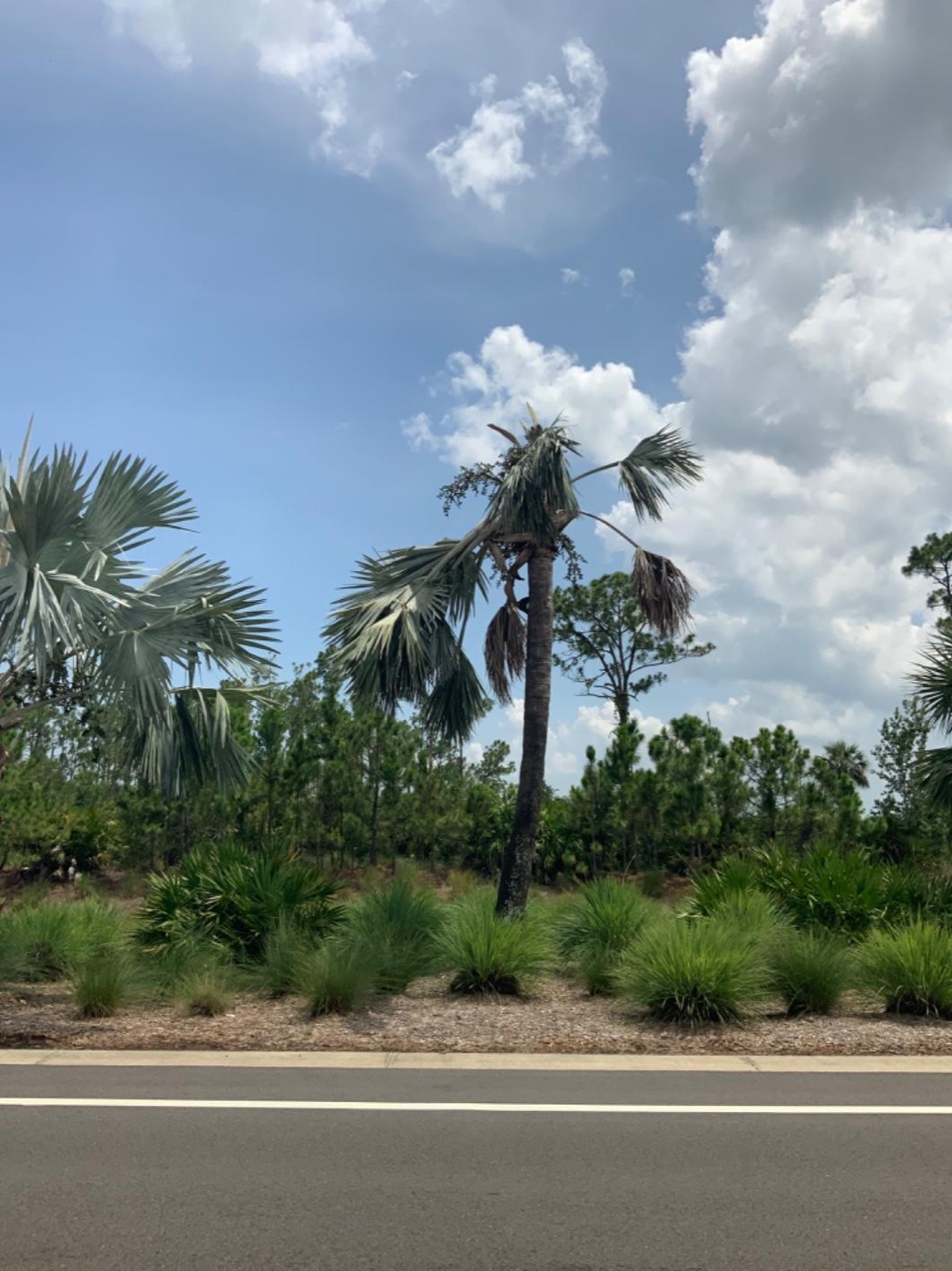
- Lethal bronzing: a bacterium-like organism carried by one planthopper. Every infected palm dies. Sabal, Phoenix palms, and coconut are among its hosts. Antibiotic injection only slows it and leaves a permanent wound, because a palm does not wall off a wound. We do not recommend it. At-risk palms go on our Palm Health Program instead.
A lab test settles the serious calls
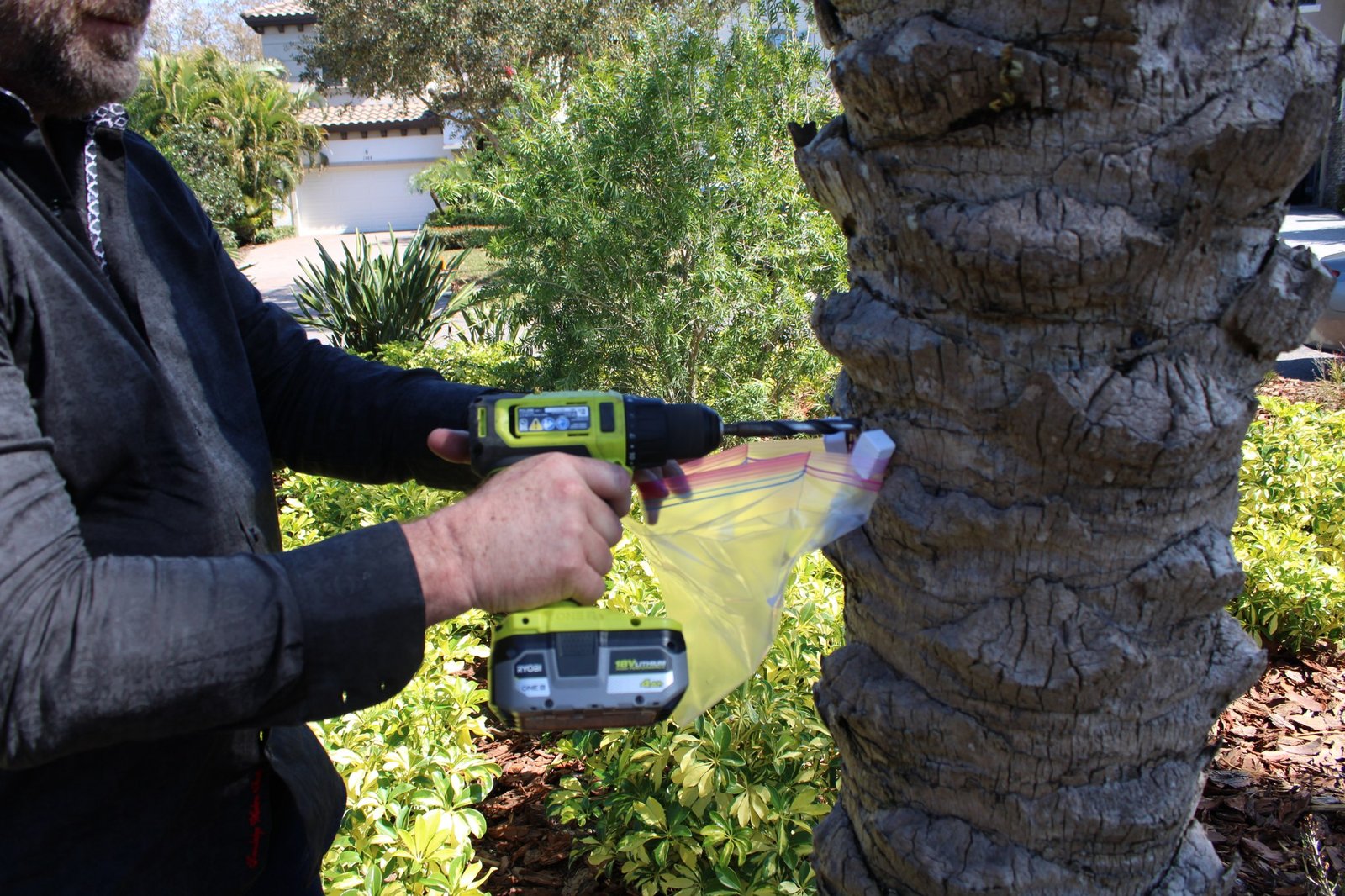
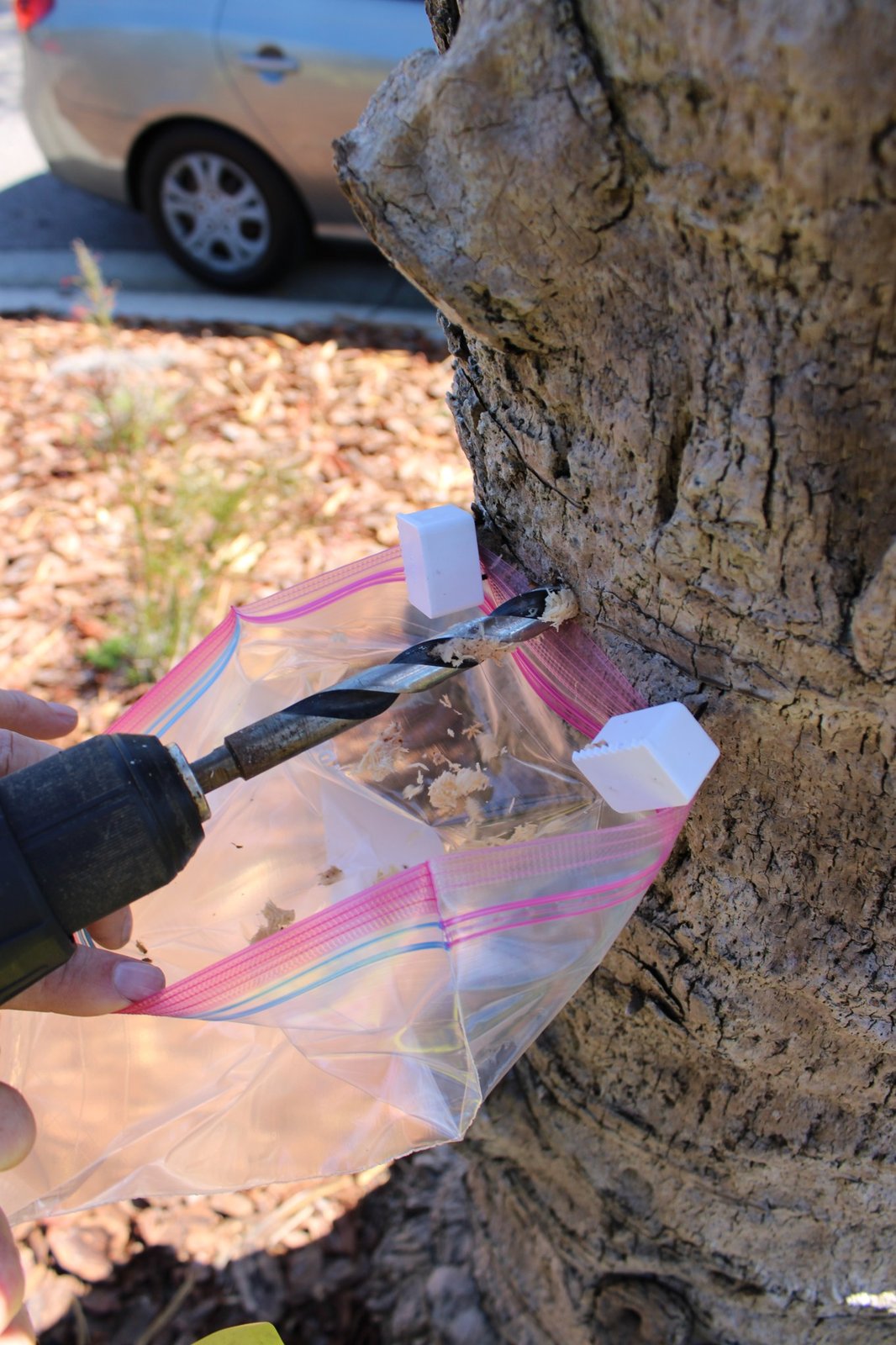
Some of these look alike in the field. On Phoenix, queen, and Washingtonia palms, petiole blight and Fusarium wilt produce the same one-sided frond death, and only a lab can separate them. Bronzing fronds can be lethal bronzing or plain potassium deficiency. Ganoderma can be caught with a lab assay before any conk appears on a declining palm. Our arborist chooses the lab and the test for each sample.
When a lethal disease is confirmed, we recommend removal in writing on every report while the palm stands. Keeping it is the owner's call.
What to do
Spots on old fronds: start with irrigation and nutrition, not a spray. One-sided frond death on a Canary Island date, queen, or Washingtonia, or a conk at any palm's base: call us before anyone prunes or removes it. The free master plan shows which palms need a lab test and which need better care.