Shade on the Greens: Which Trees Are Costing You Turf
Grass cannot make up for missing morning sun, so a shade study maps the trees that matter and lays out one plan to fix it.
 Jeff Kaulbars
A superintendent can irrigate, fertilize and aerate. None of it adds sunlight. When a green or tee sits behind a tree line, the turf pays for it every day, and the fix is not in the agronomy shed.
Why morning sun matters
- Fertilizer supplies building blocks, not energy. Grass that does not get enough light grows thin, weak leaves that wear poorly and recover slowly.
- Turf has to wake up each morning to start growing. A green that gets light at 7 a.m. outgrows one that waits until 11 a.m. behind a tree line.
- Morning shade plus poor air movement keeps the surface wet longer, which invites fungal disease, moss and algae on greens and tees.
- Trees close to a green take water and nutrients from the same root zone the turf depends on.
What a shade study is
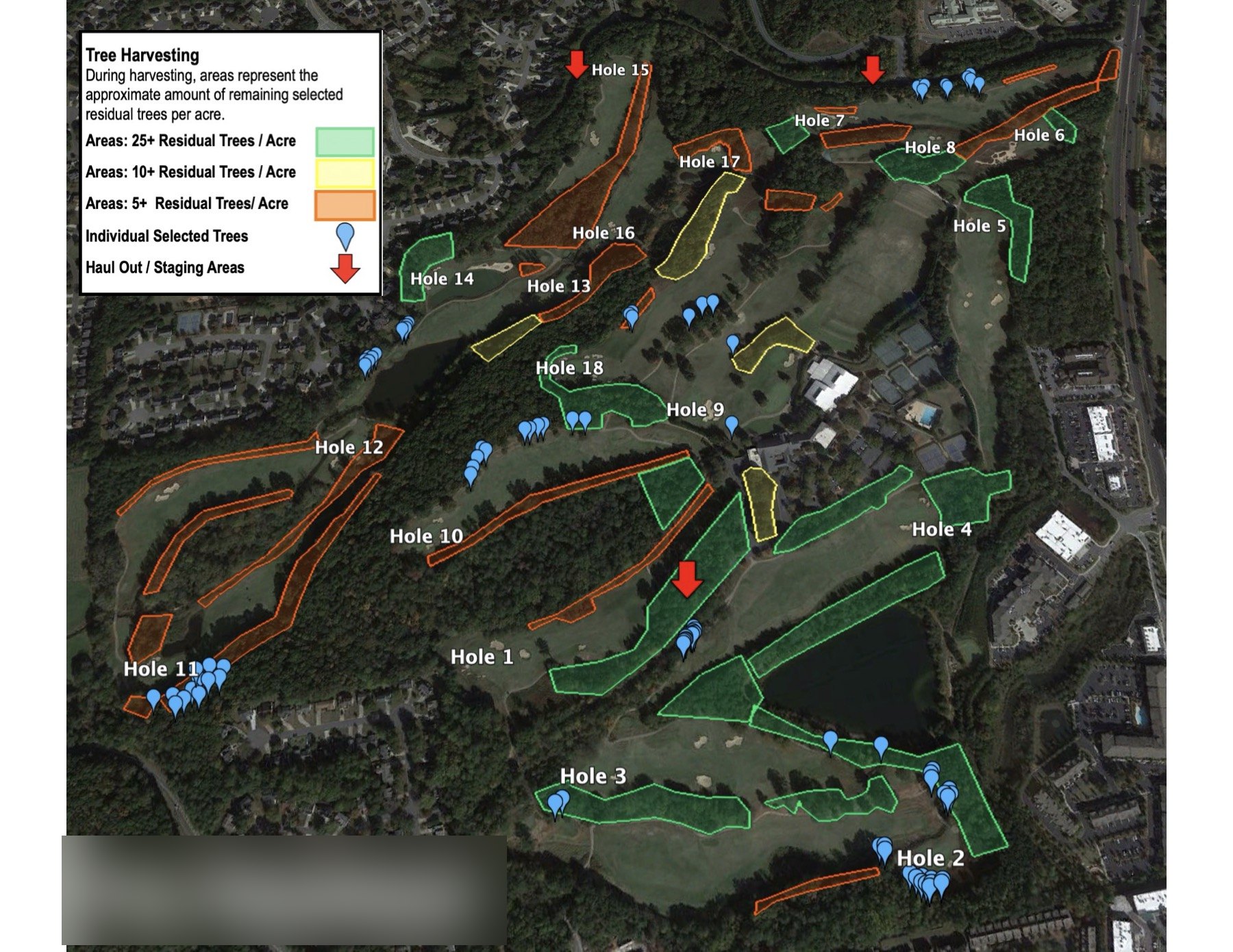
A shade study finds the trees that are starving greens and tees of sun and air, maps them, and lays out a tree management plan. For one private golf club in Georgia, our team spent four days on the course with the superintendent and agronomy staff, read the sun on every problem green and tee, and delivered a written shade study and plan with maps for the whole course.
- A multi-day walk with the superintendent and agronomy staff.
- Sun-path readings on every problem green and tee, showing how shade moves through the day and across the seasons.
- Problem trees identified and mapped, including trees that will become problems as they grow.
- A treatment for each area: selective removal, thinning to a set number of trees per acre, vista pruning or forestry mulching.
- A written plan with maps, a schedule, and daily progress reports by hole once work starts.
The treatments
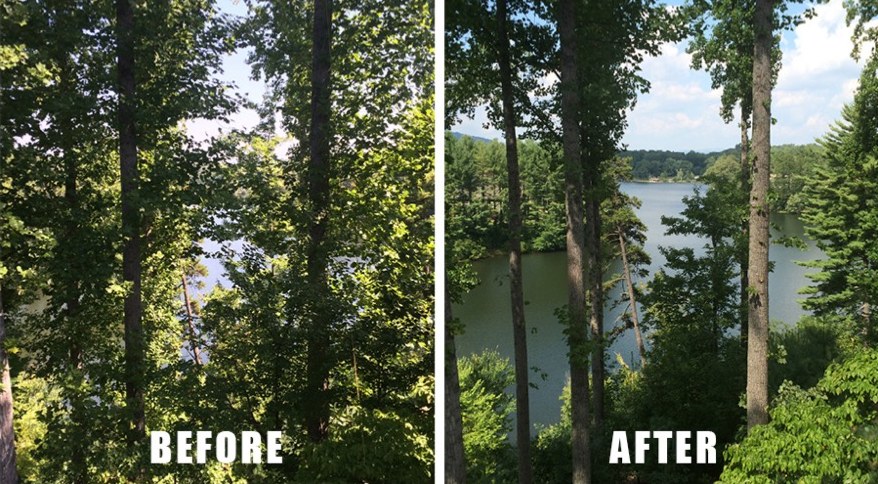
Thinning takes mapped areas down to a target density, 25, 10 or 5 trees left per acre, plus individually marked trees. Vista pruning takes out deadwood, raises canopies and removes selected limbs to open views of water, greens and fairways, pruned to the ANSI A300 standard.
Forestry mulching processes dense understory in place, so the soil stays intact and grass grows back through the mulch. Equipment runs on turf tires, with lightweight lifts and self-driving stump grinders, to keep course damage to a minimum.
One pass, not ten years of arguments
We look at three, five and ten year options with every club. Most find one complete pass works best. It costs less to mobilize once, the course recovers once, and the membership has one conversation about trees instead of one every season.
Budgets still decide. One superintendent told us exactly how it works at his club:
“I did review the program and it looks put together well. I am in the budgeting process at the moment. I am waiting for some direction on where they want me bottom line, and will let you know when this process is complete.”
A phased plan is there for clubs that need it. Either way, the maps and counts give the green committee something concrete to vote on.
The trees that stay
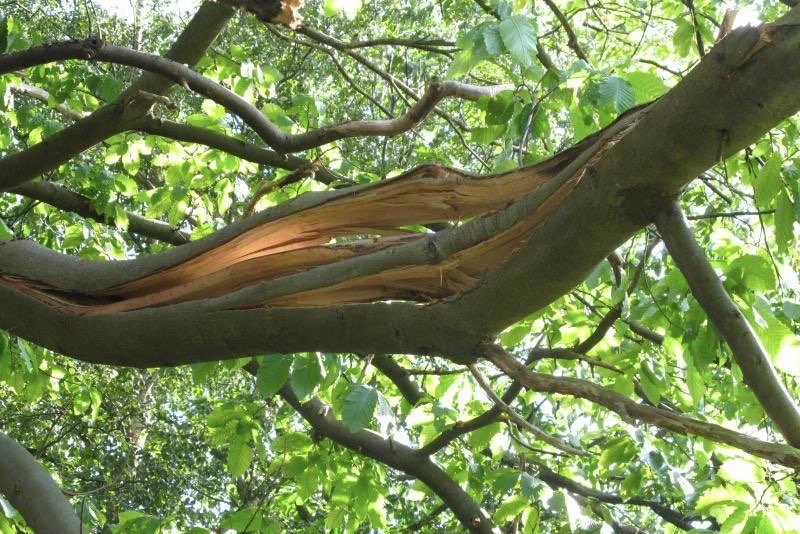
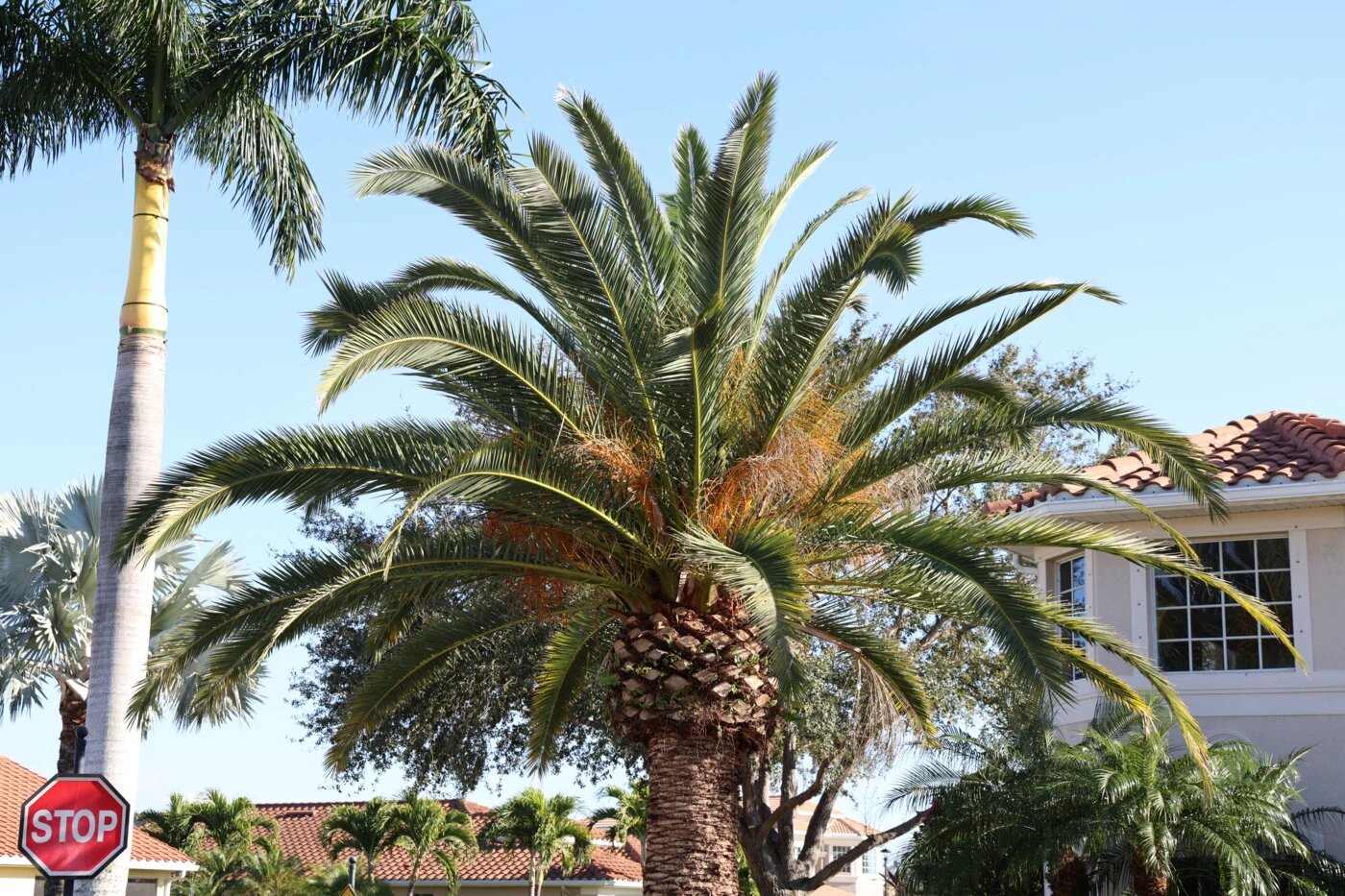
Shade work is also a chance to care for the trees a club keeps. Signature oaks near tees and cart paths get a risk assessment, so a defect over a busy path is handled before it fails. Keeper trees get a written pruning prescription instead of a general trim. Isolated trees on open ground are candidates for lightning protection. And after years of removals, many clubs want trees back in the right places:
“Do you have a count of trees being trimmed and or treated. The club has had a few years of removing trees for whatever reason and we want to begin the process of adding trees back over the next few years.”
What to do
If a green or tee has struggled for more than one season, ask us for a shade study. We walk the course with your team, read the sun, and map the plan. For every tree on the course, ask for the free master plan.