
Palm and tree questions
Why is my palm tree turning yellow?
Most yellow palms in Southwest Florida are hungry, not sick. Where the yellow shows tells you what is missing: the oldest, lowest fronds point to potassium, magnesium or nitrogen, and the newest fronds at the top point to manganese, iron or boron.
Reviewed by Jeff Kaulbars, ISA Certified Arborist FL-10118A, Ptolemy Inc.
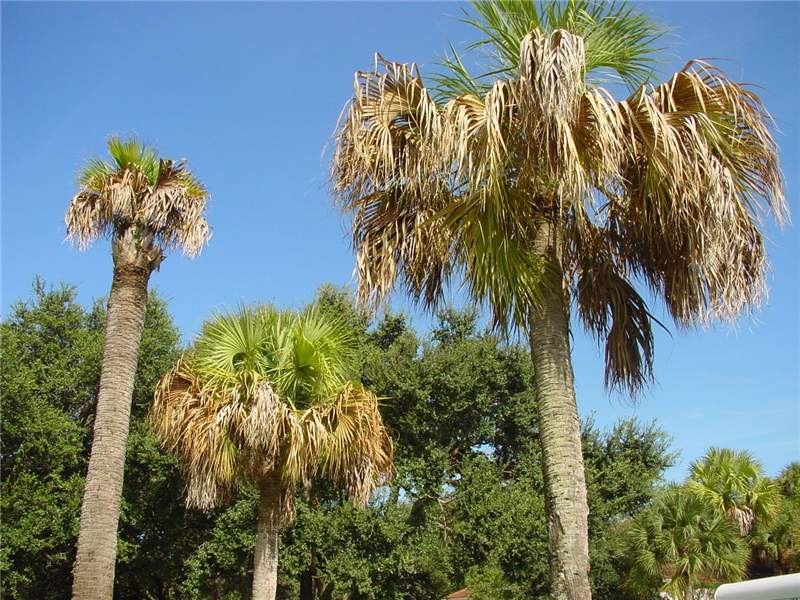
Read the palm from the bottom up
Potassium is the most common palm deficiency in Florida. It shows as translucent yellow-orange spotting and frizzled tips on the oldest lower fronds.
Magnesium shows as broad yellow bands along the edges of older fronds, with a green center. It is never fatal on its own.
Manganese shows at the top: new growth comes in weak, streaked and curled, often called frizzletop. Pale new fronds usually point to iron, and that is more often a soil pH or root problem than a true shortage.
Why palms go hungry here
Southwest Florida soil is sandy and fast-draining, so nutrients leach below the roots, sometimes in a single heavy rain. Soil and irrigation water often run alkaline, and high pH locks iron and manganese out of reach even when they are in the ground. Reclaimed irrigation water raises pH a little more with every cycle.
Lawn fertilizer makes it worse. It is heavy on nitrogen and can push growth the palm cannot support, which deepens the deficiencies you are trying to fix.
Do not cut the yellow fronds above the line
A yellowing frond still holds nutrients the palm is short of. Cut it, and the palm pulls those nutrients from the fronds that are left, so the decline speeds up. Everything below the 9-and-3 line comes off at pruning. Above the line, leave it, even when it yellows.
Potassium and magnesium symptoms stay on the fronds that show them. The palm recovers by growing new, clean fronds over one to two years.
When yellow is not just hunger
Lethal bronzing also starts on the oldest fronds, but the color is reddish bronze, not yellow, and fruit and flowers often drop first. When the bottom and the top of the canopy both look bad at once, suspect late potassium deficiency or lethal bronzing, and test. Only a lab test confirms lethal bronzing.
Also asked
- Will yellow palm fronds turn green again?
- Usually not. Potassium and magnesium symptoms stay on the fronds that show them, and the palm recovers by growing new fronds over one to two years. Nitrogen and iron are the exceptions: those leaves can regain color once the cause is fixed.
- We already fertilize. Why are the palms still yellow?
- The blend, the form and the soil all matter. Many landscape fertilizers are not built for palms, and high soil pH from construction debris or irrigation water can lock up nutrients that are already there. Soil pH is the first thing to check, not more product.
Read more
Sources: UF/IFAS EDIS EP269 (potassium), EP266 (magnesium), EP267 (manganese), EP265 (iron), EP263 (physiological disorders of landscape palms).